
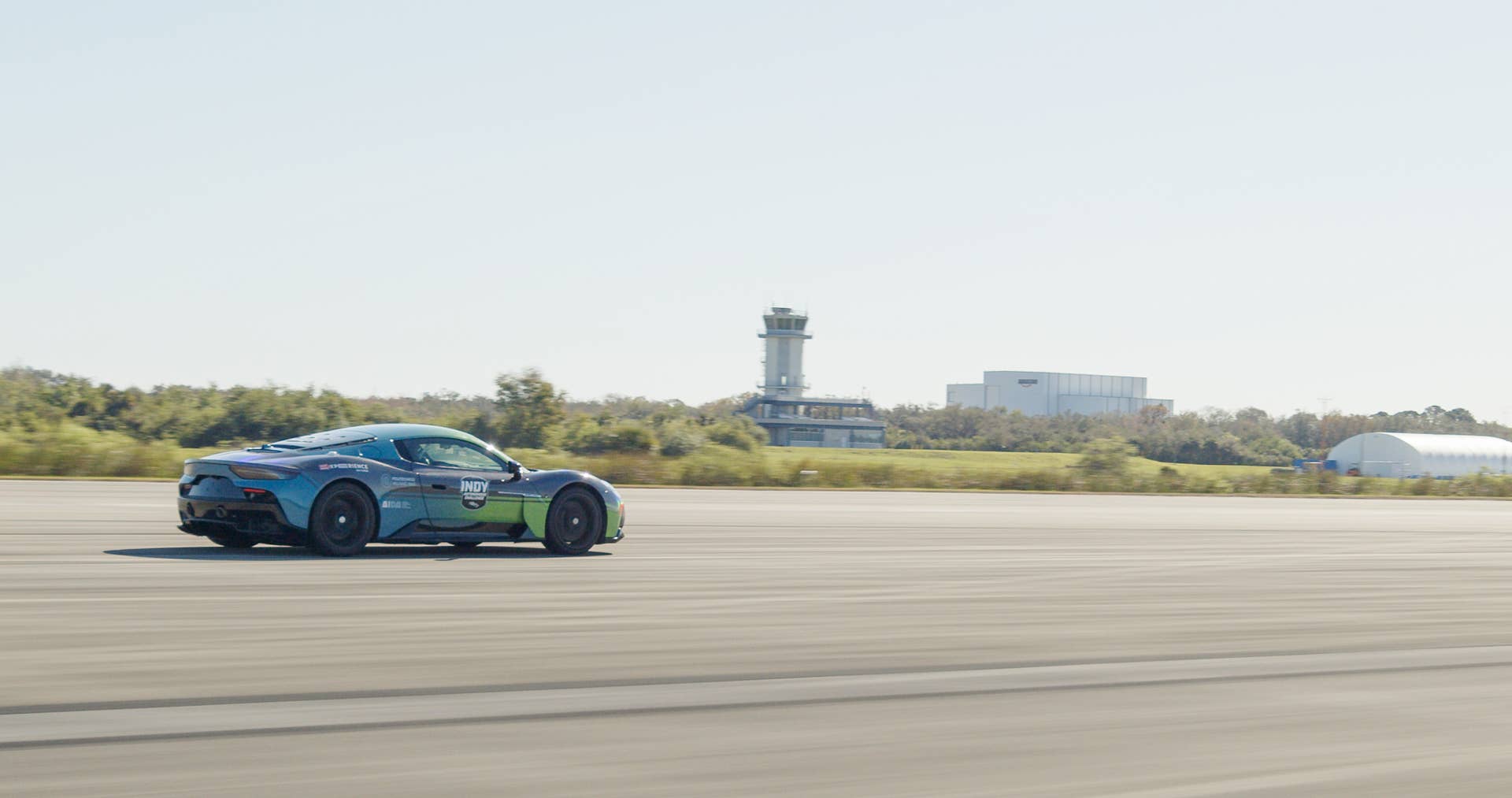
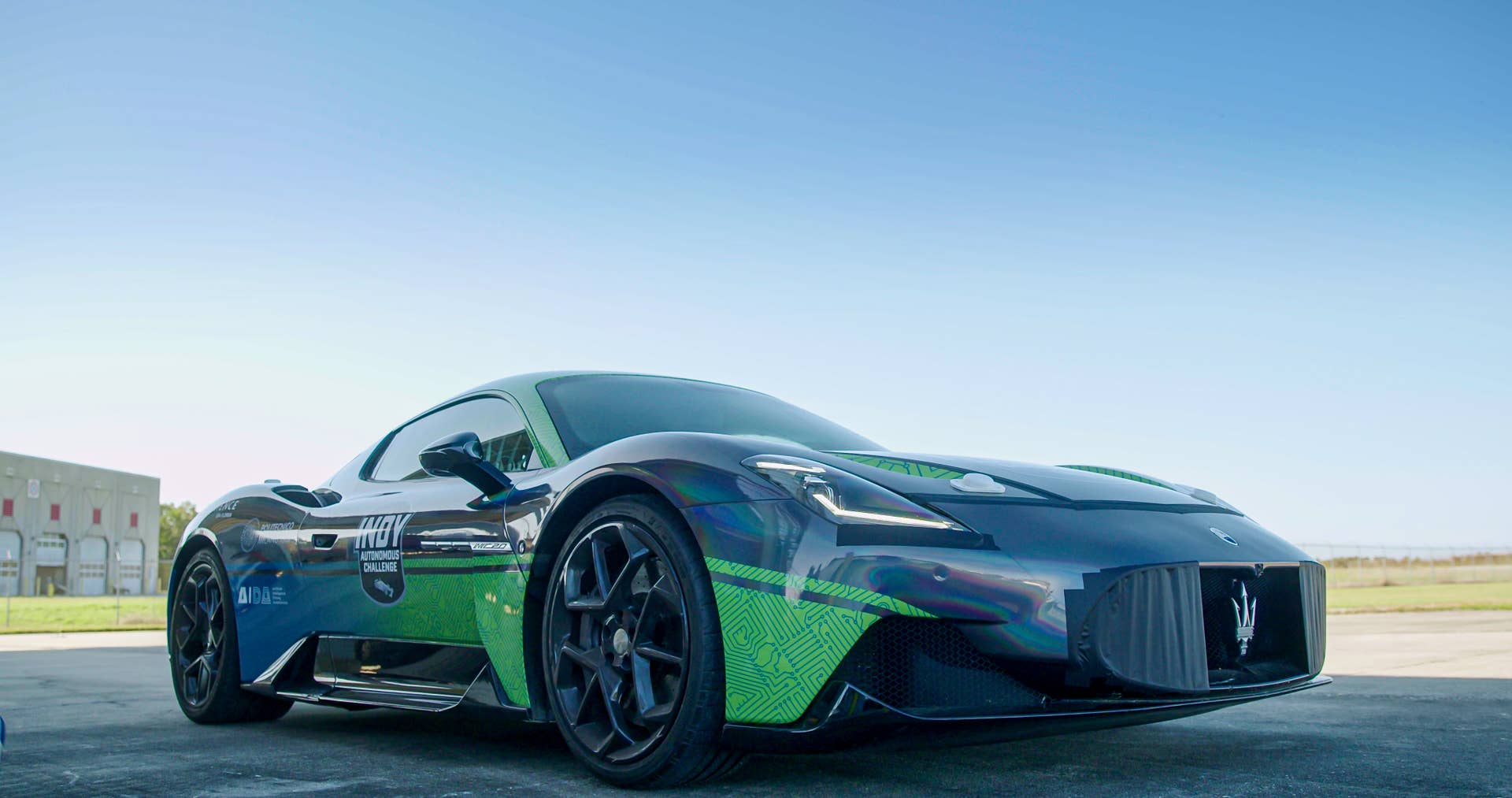
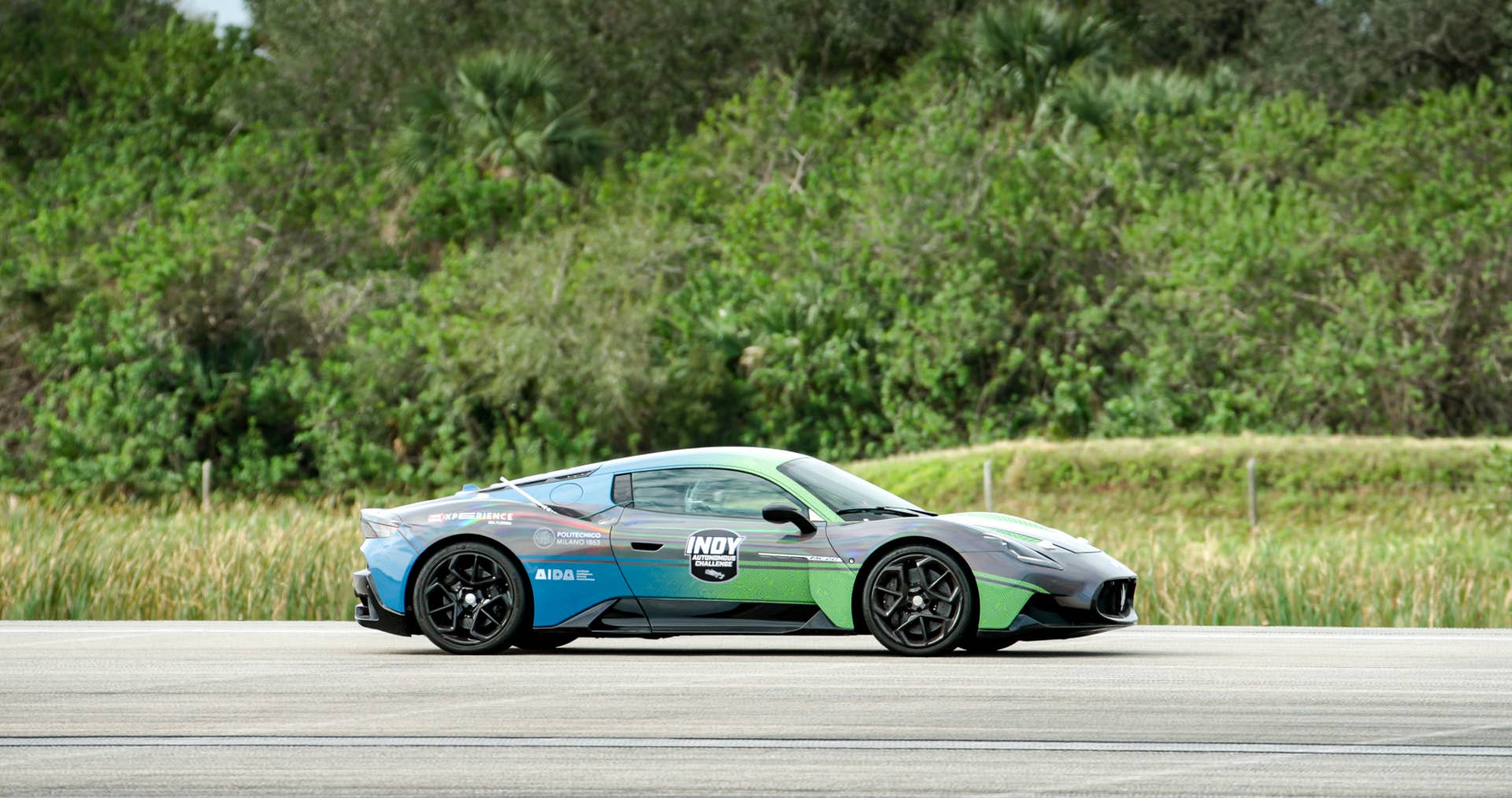
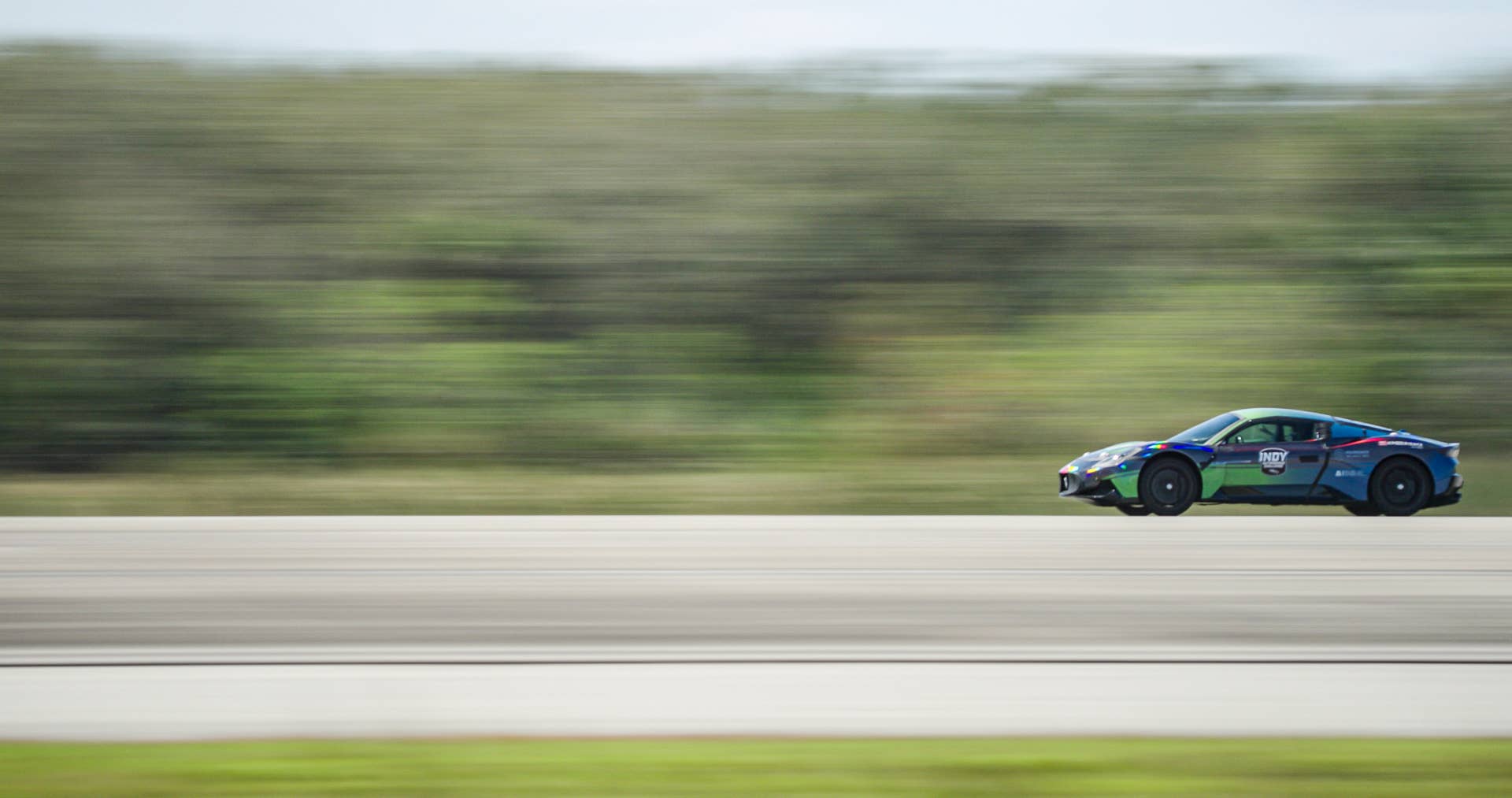
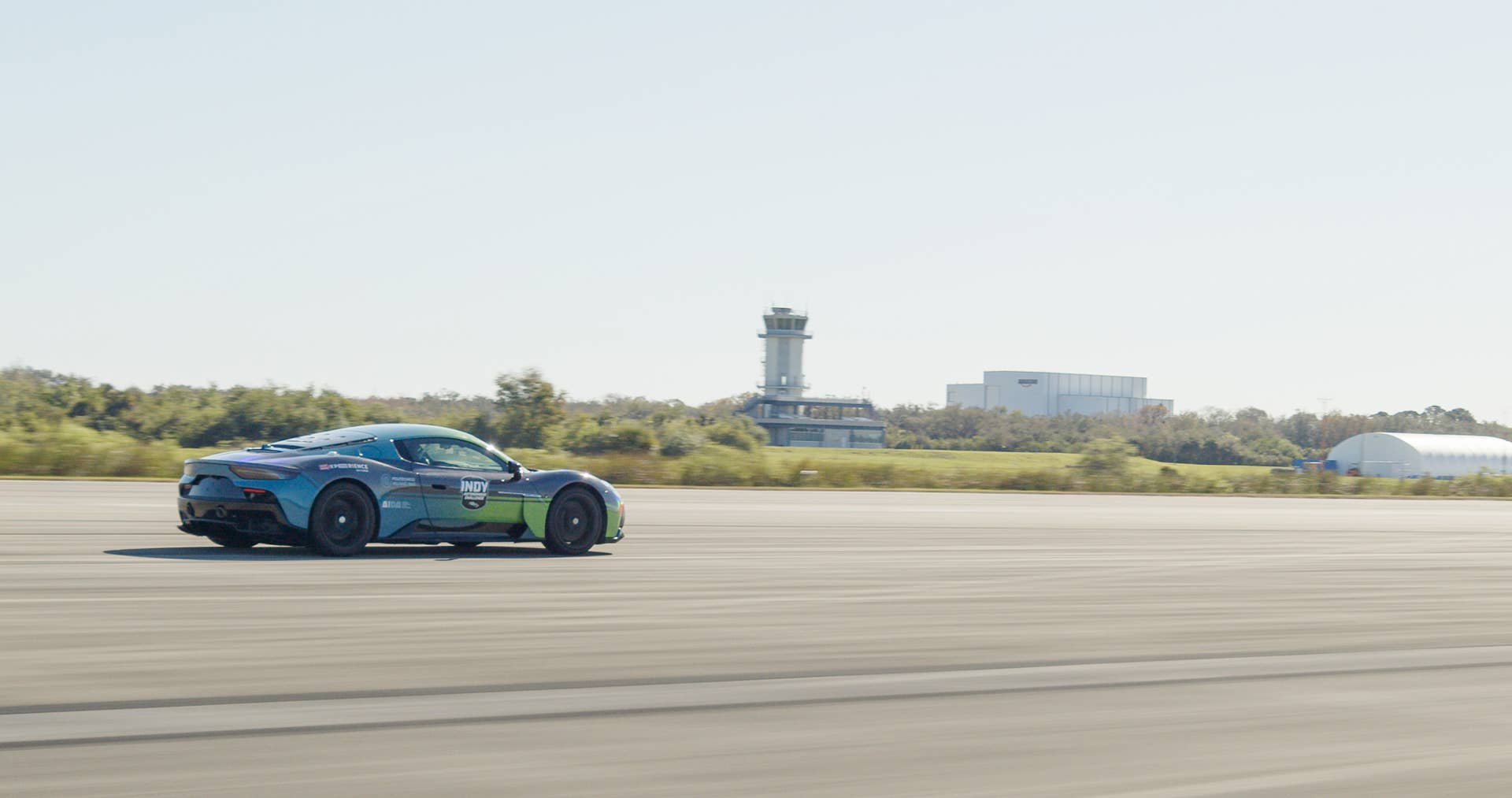
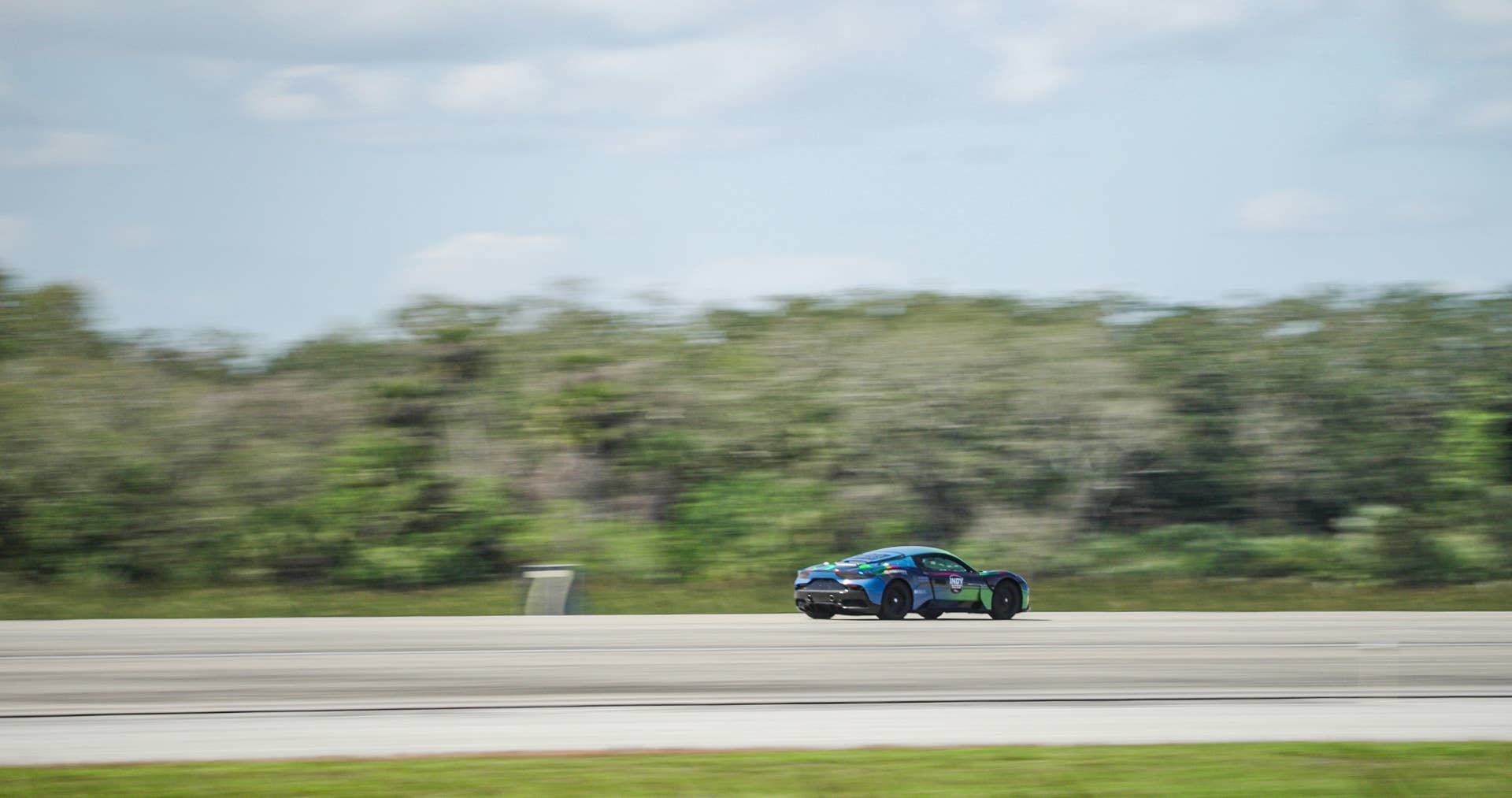
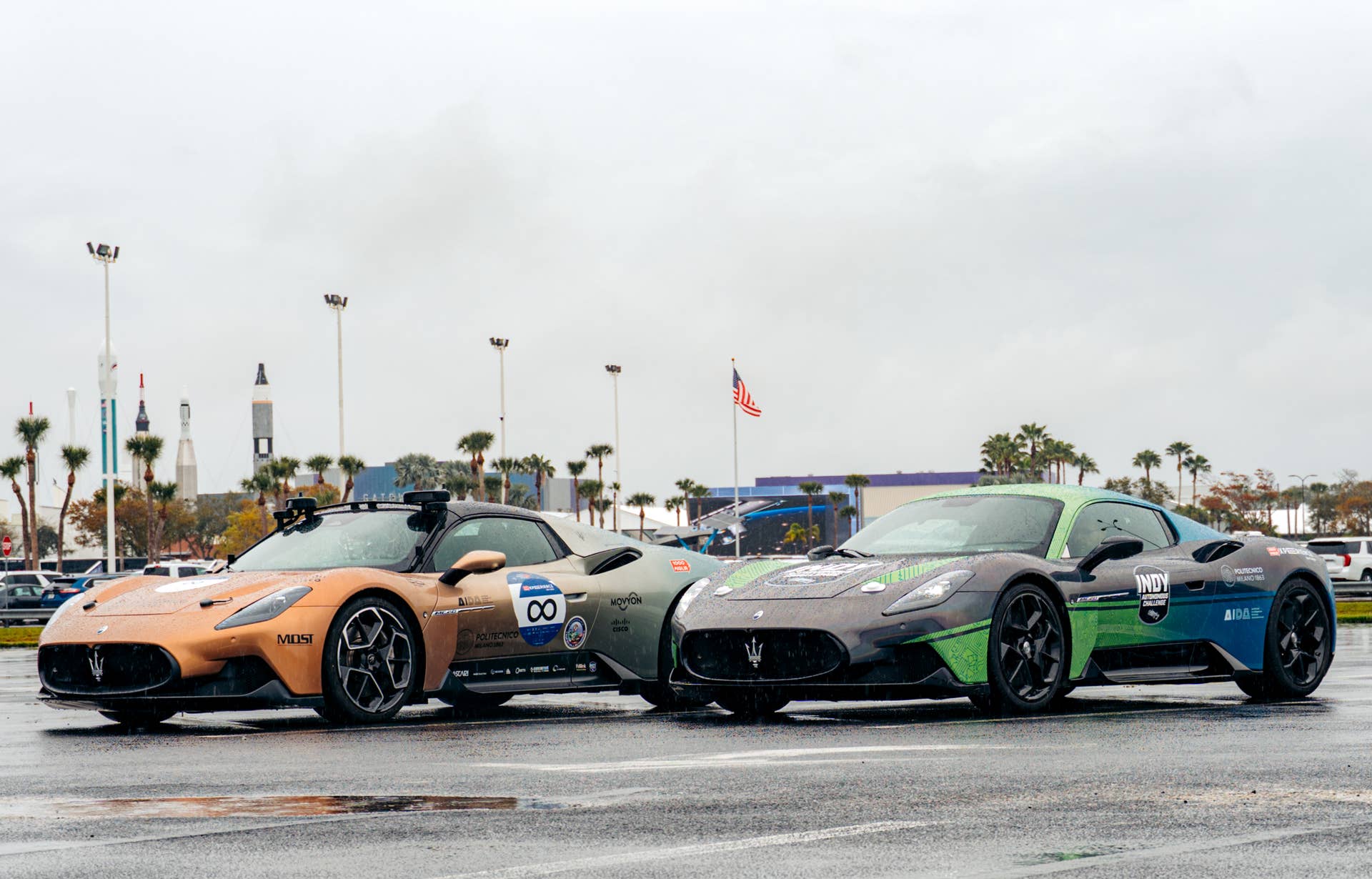
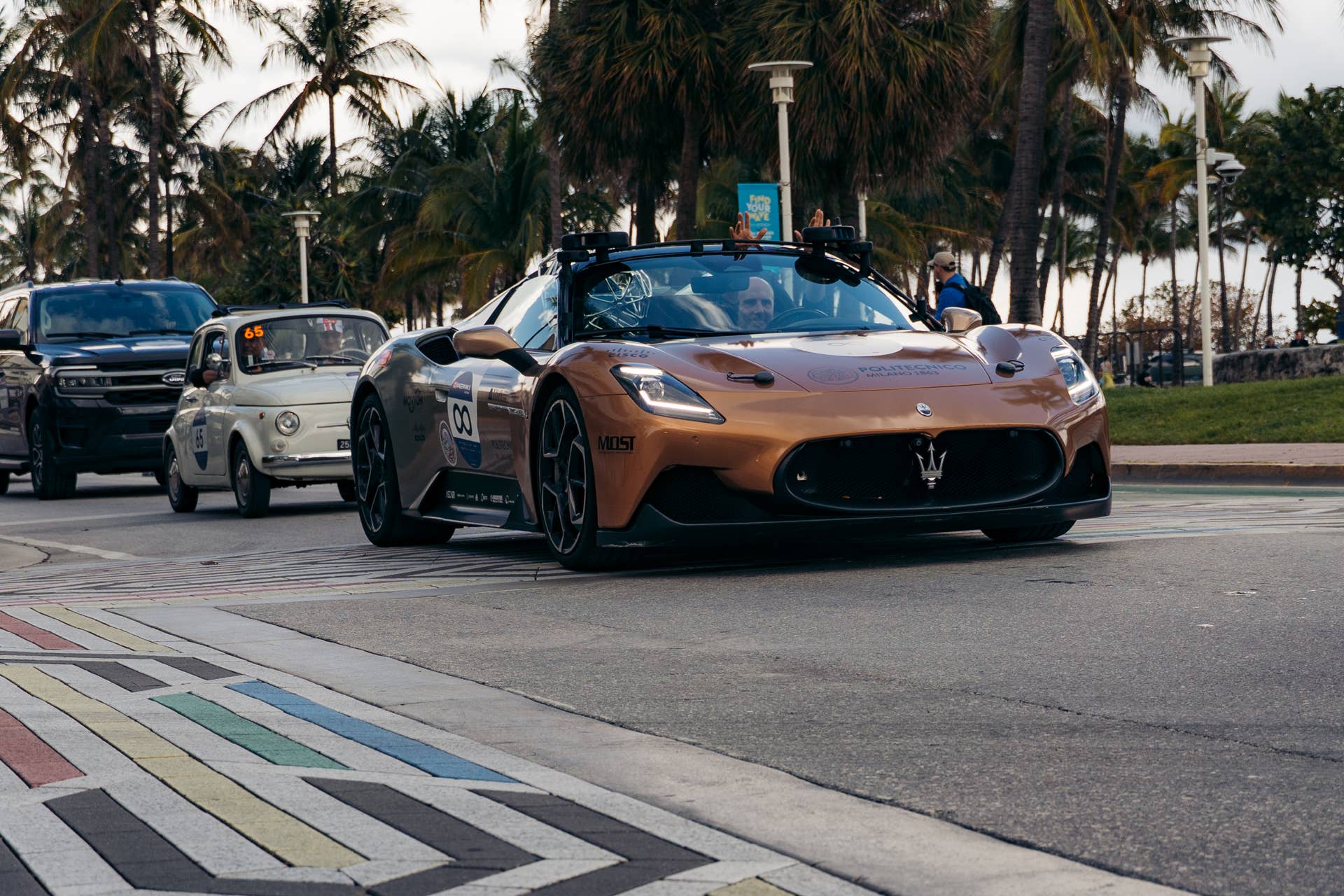
On top of making some sexy cars, Maserati is now dabbling in world records, as well. Their MC20 supercar just became the world’s fastest autonomous vehicle, reaching a top speed of 197.7 mph without a human at the helm.
The previous record of 192.8 mph was set by the Indy Autonomous Challenge and PoliMOVE, a team from the performance division of Artificial Intelligence Driving Autonomous of Politecnico di Milano, at the same location in April 2022 with an IAC AV-21 racecar.
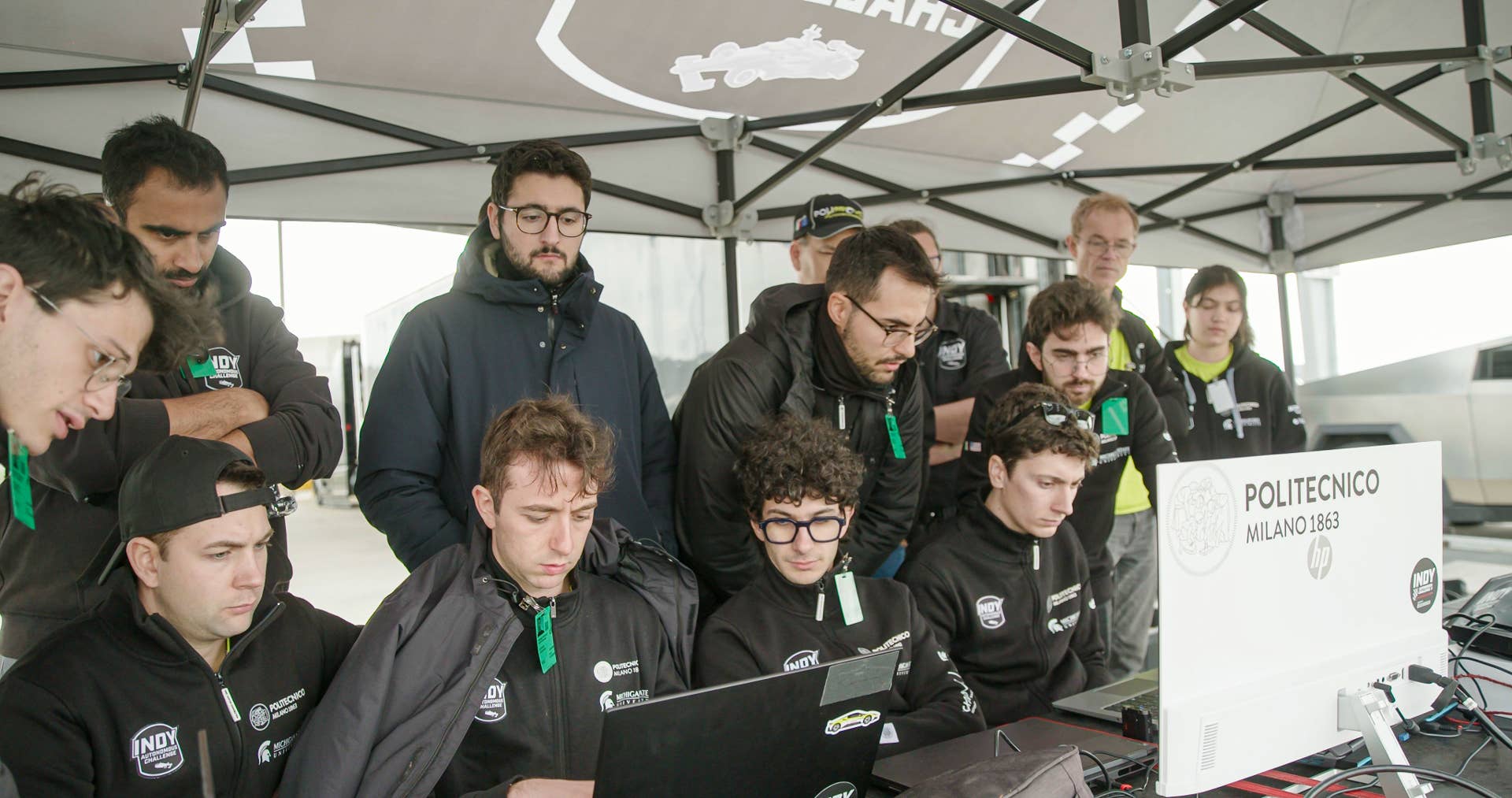
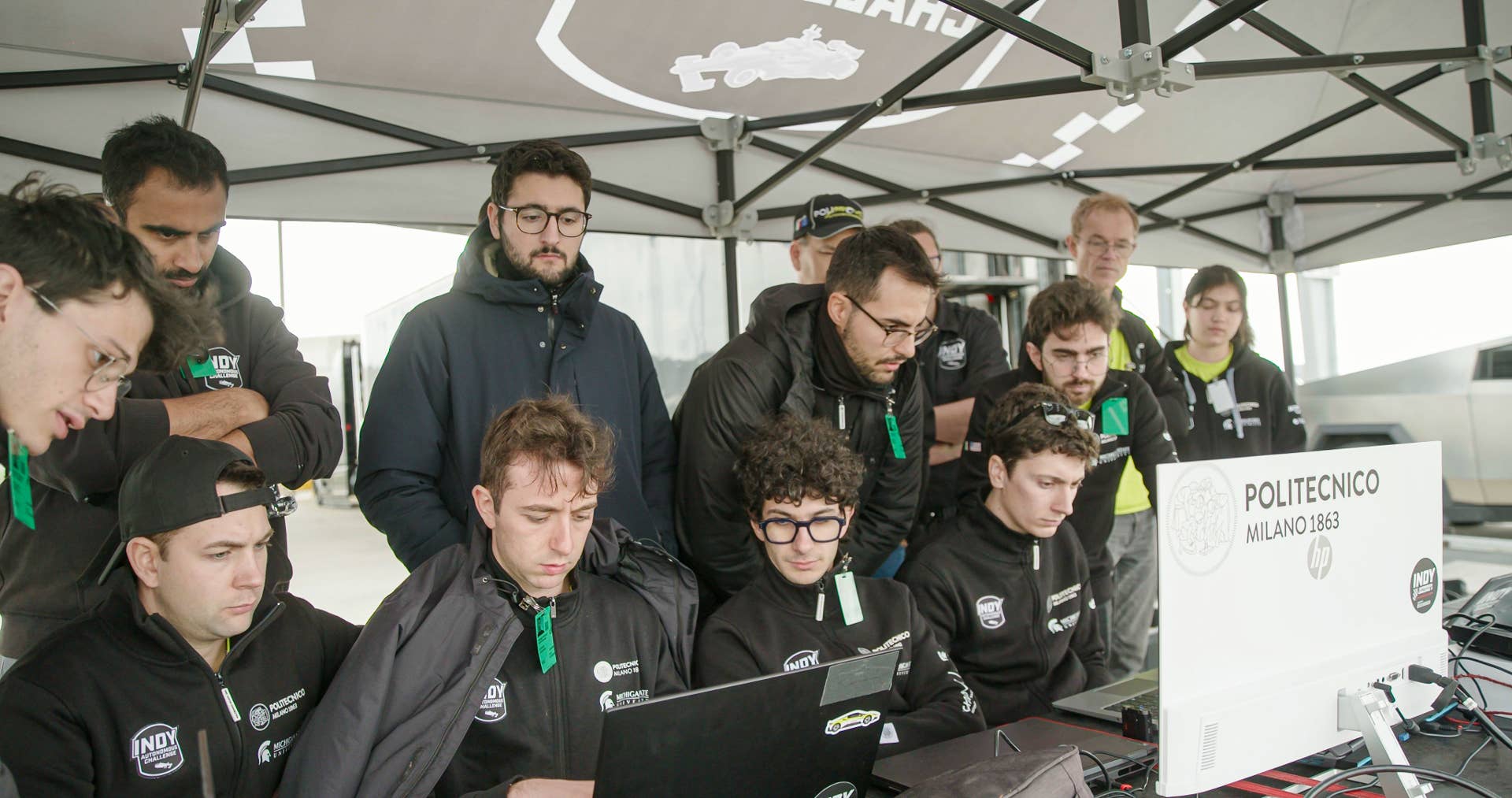
That same PoliMOVE team developed the AI driver software that piloted Maserati’s record-breaking supercar.
For reference, the Maserati MC20 sports a twin-turbocharged 3.0-liter V6 that makes 621 horsepower and has a top speed of 202 mph.

Maserati
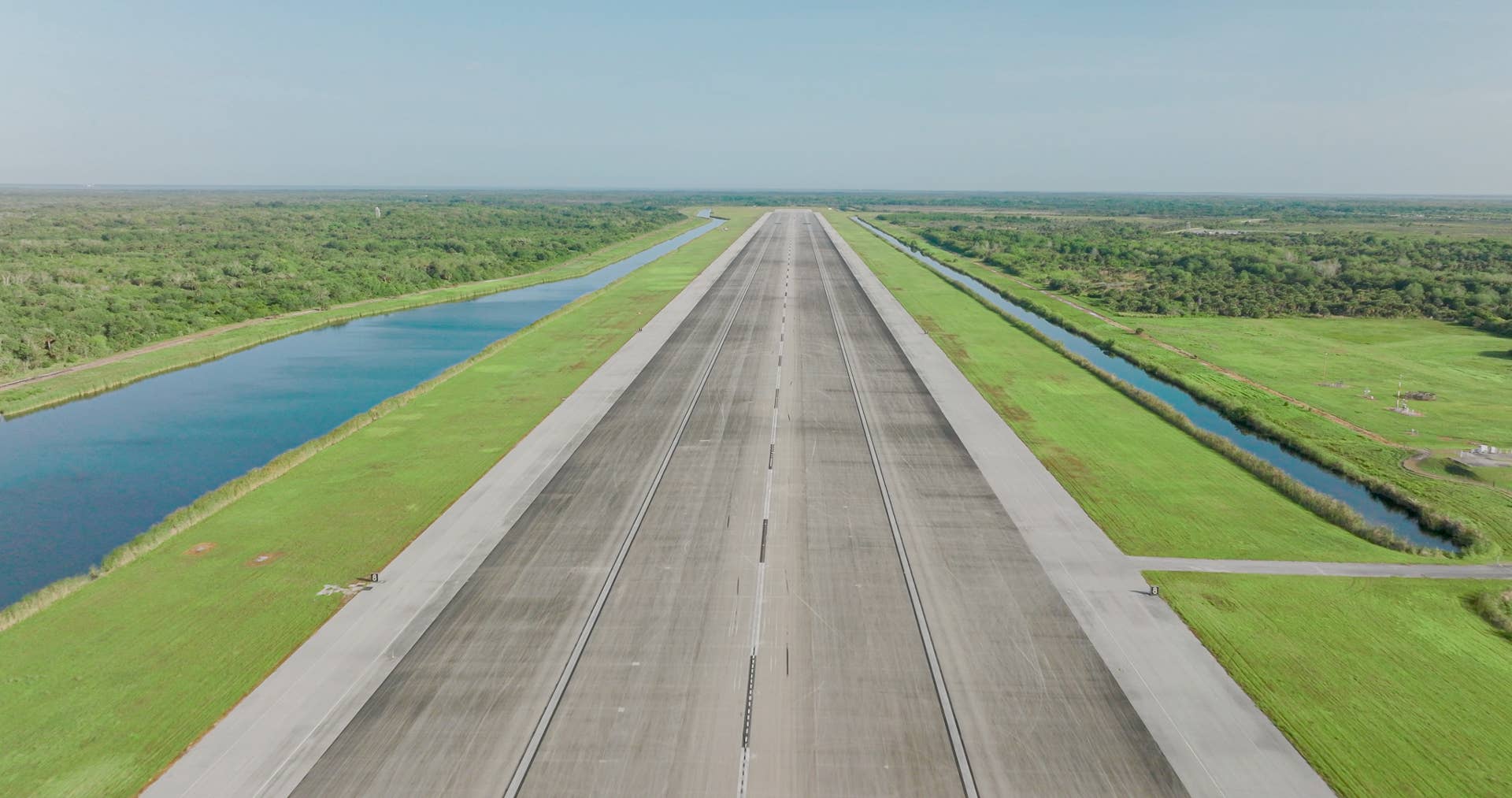
Maserati chose the location of the Space Shuttle landings for the run
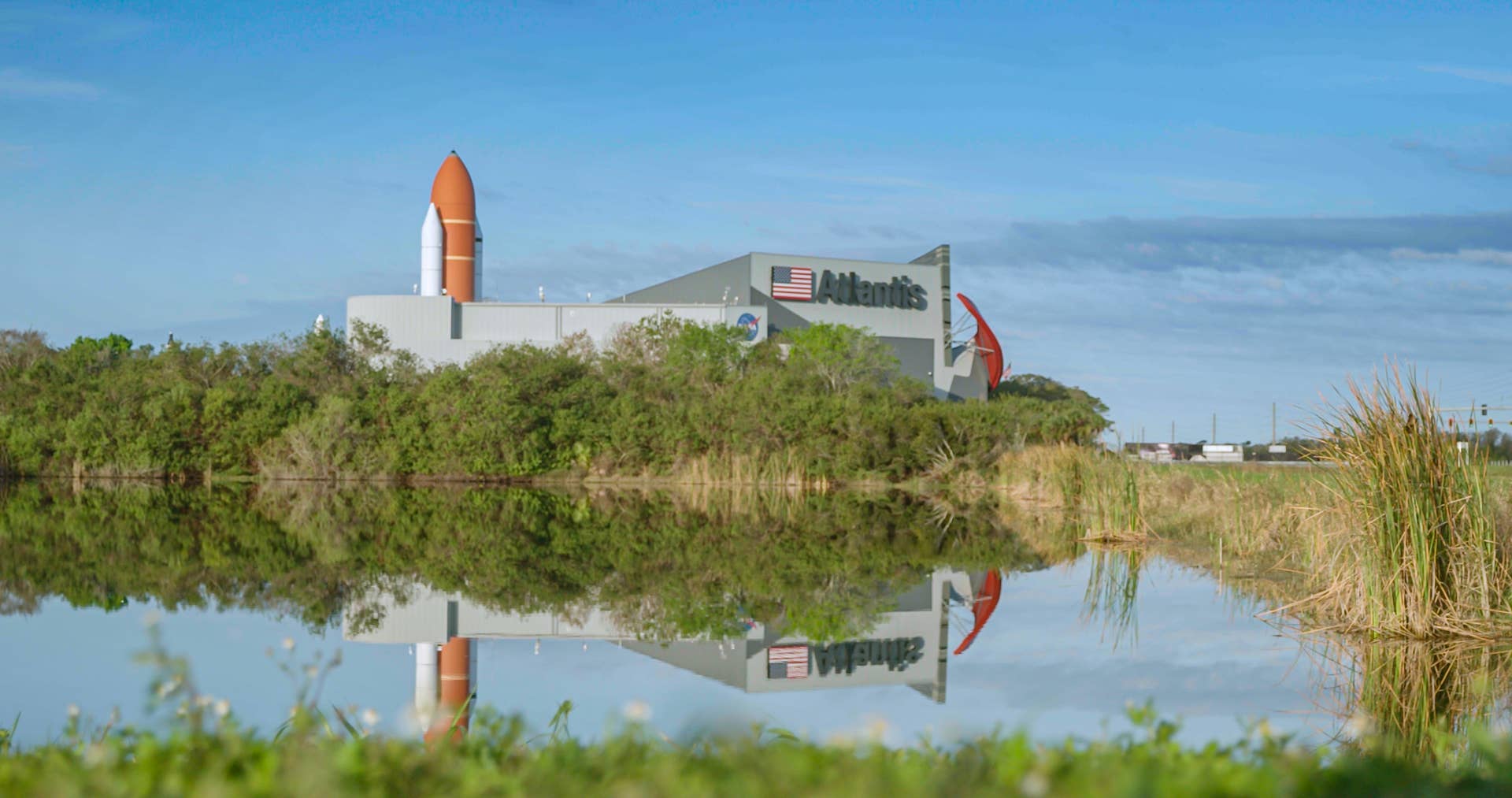
The run was done in collaboration with the Indy Autonomous Challenge, the Italian university Politecnico di Milano, as well as the newly established 1000 Miglia Experience Florida. The four partners took the MC20 to the fabled Space Florida Launch and Landing Facility at the Kennedy Space Center in Florida, a 2.8-mile-long runway that is an absolute godsend for any top speed runs.
“These world speed records are much more than just a showcase of future technology; we are pushing AI-driver software and robotics hardware to the absolute edge. Doing so with a streetcar is helping transition the learnings of autonomous racing to enable safe, secure, sustainable, high-speed autonomous mobility on highways”, said Paul Mitchell, CEO of Indy Autonomous Challenge and Aidoptation BV.
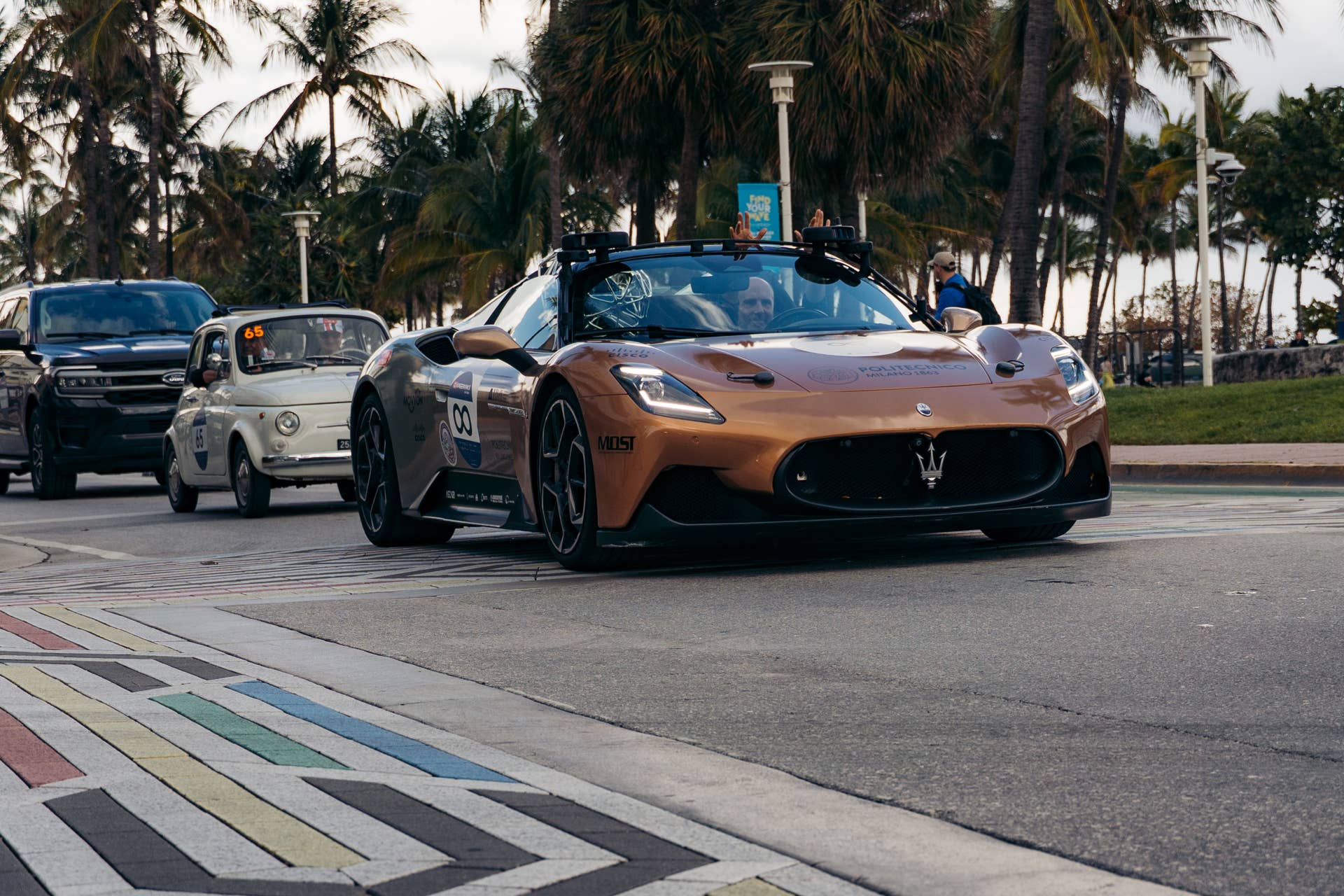
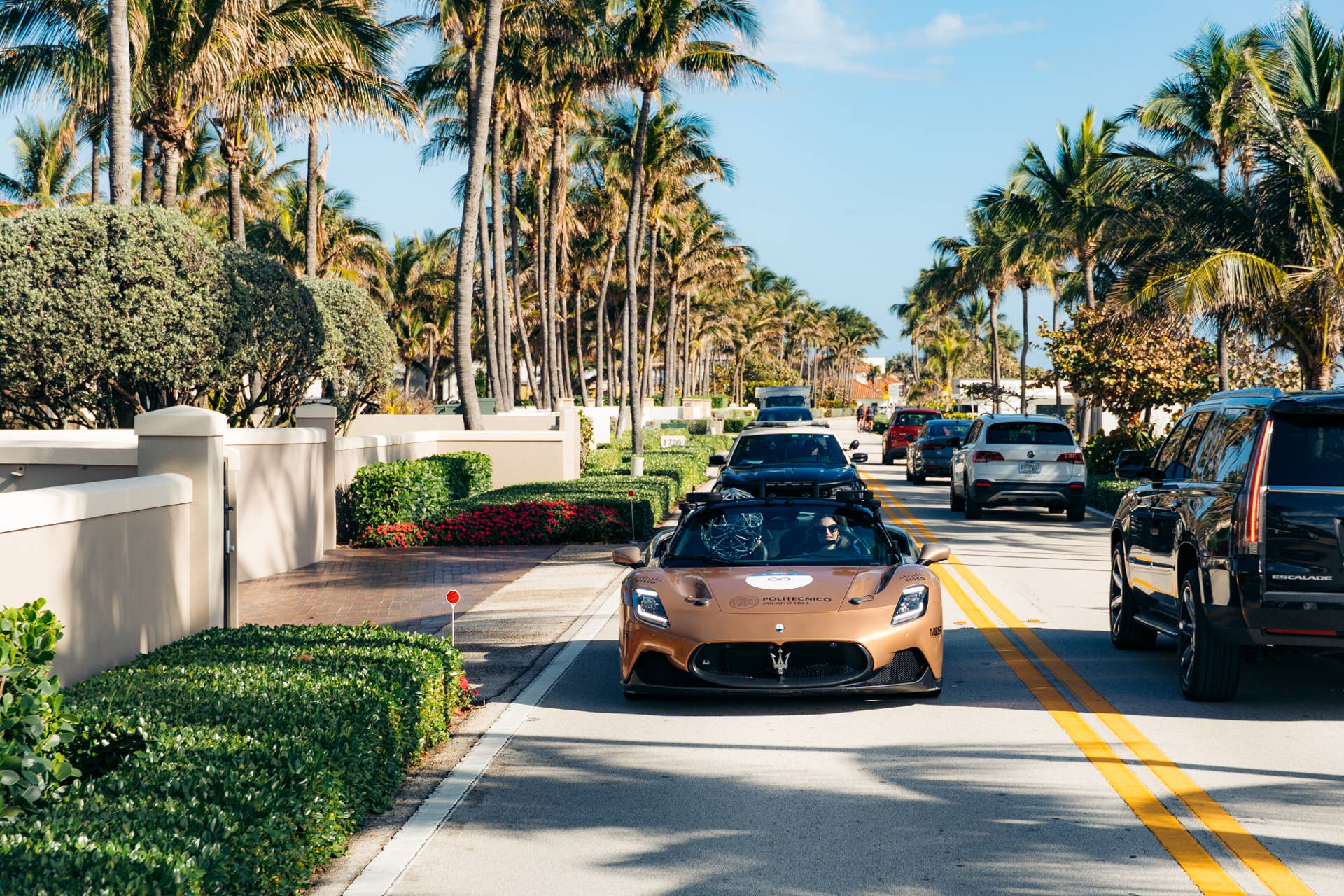
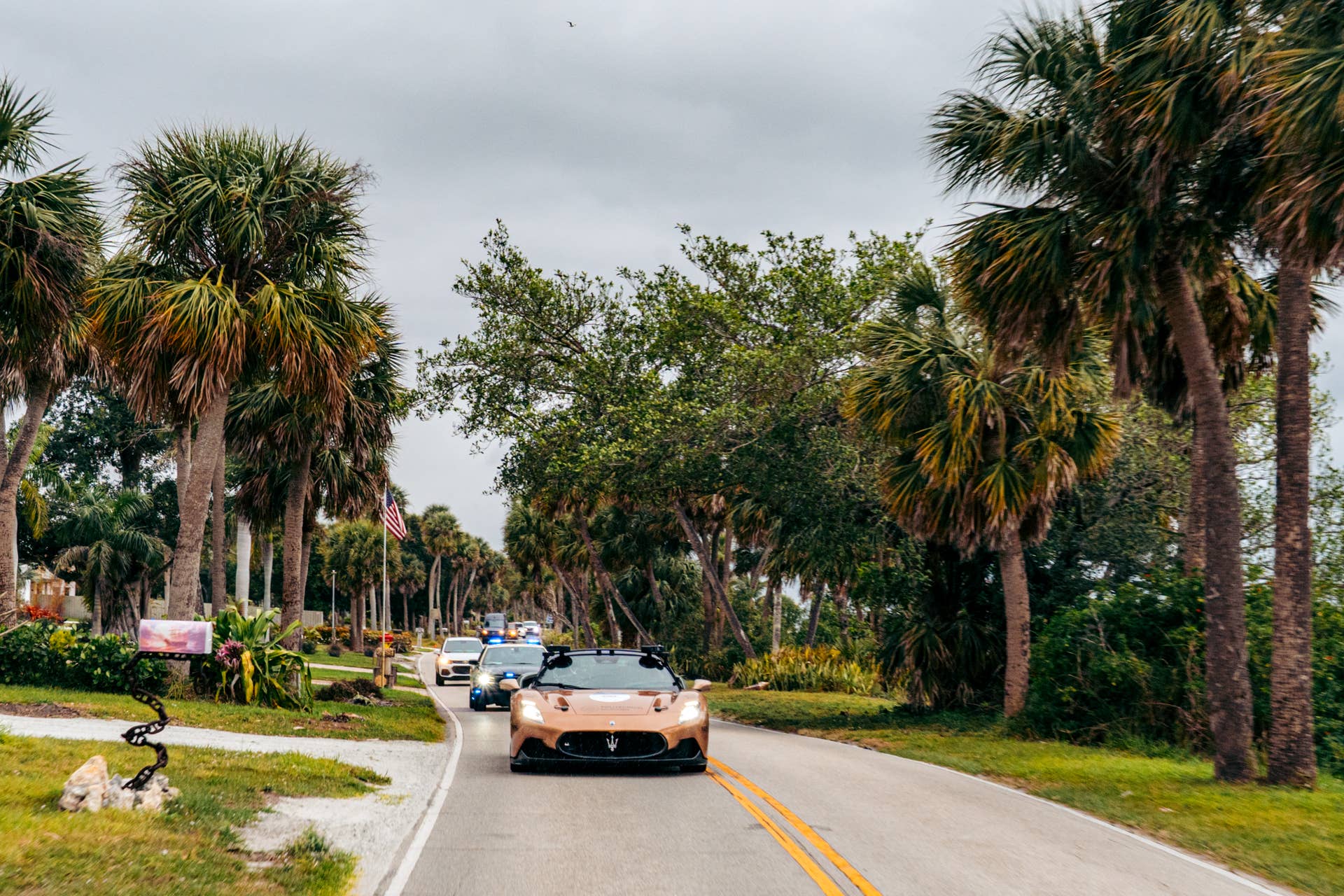
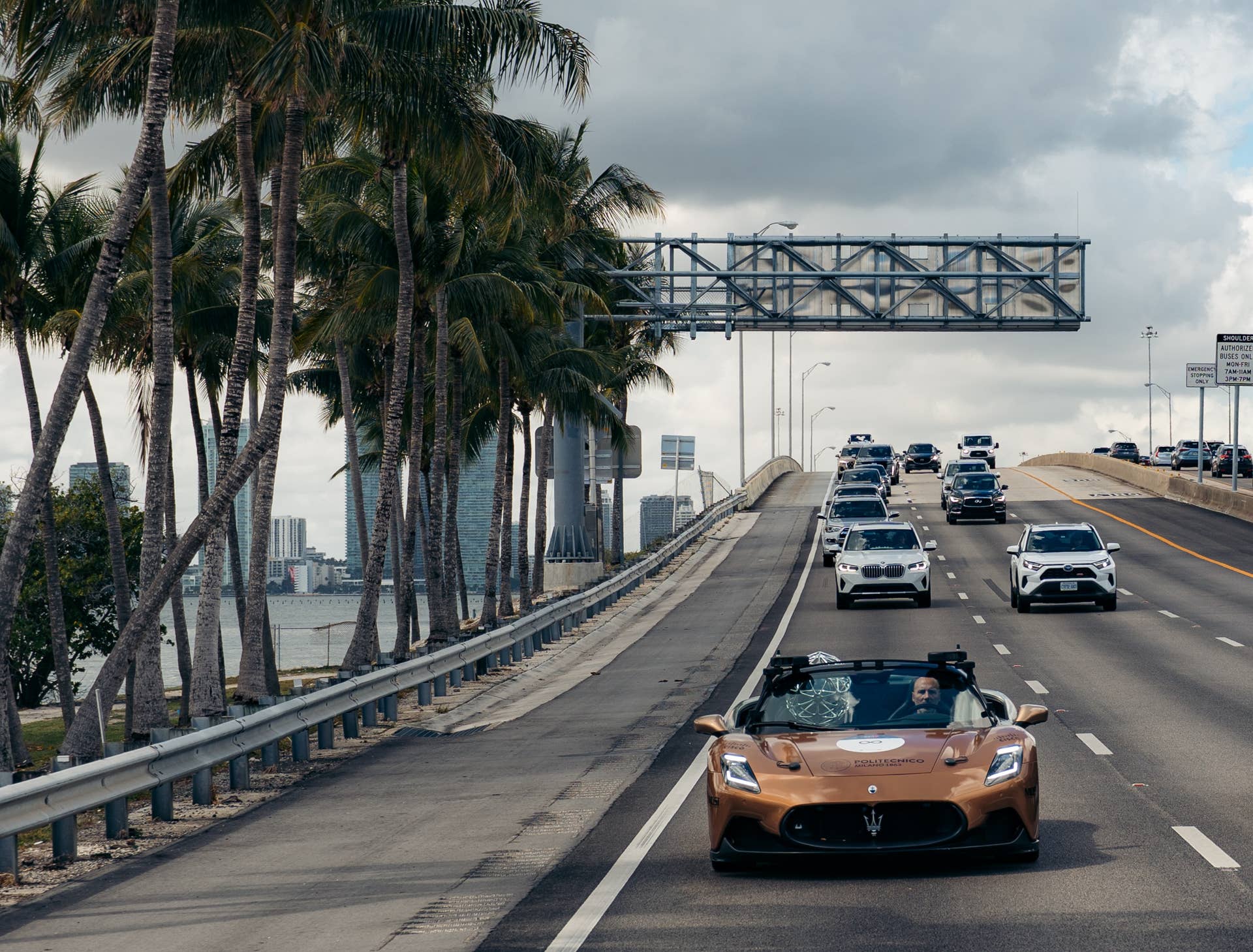
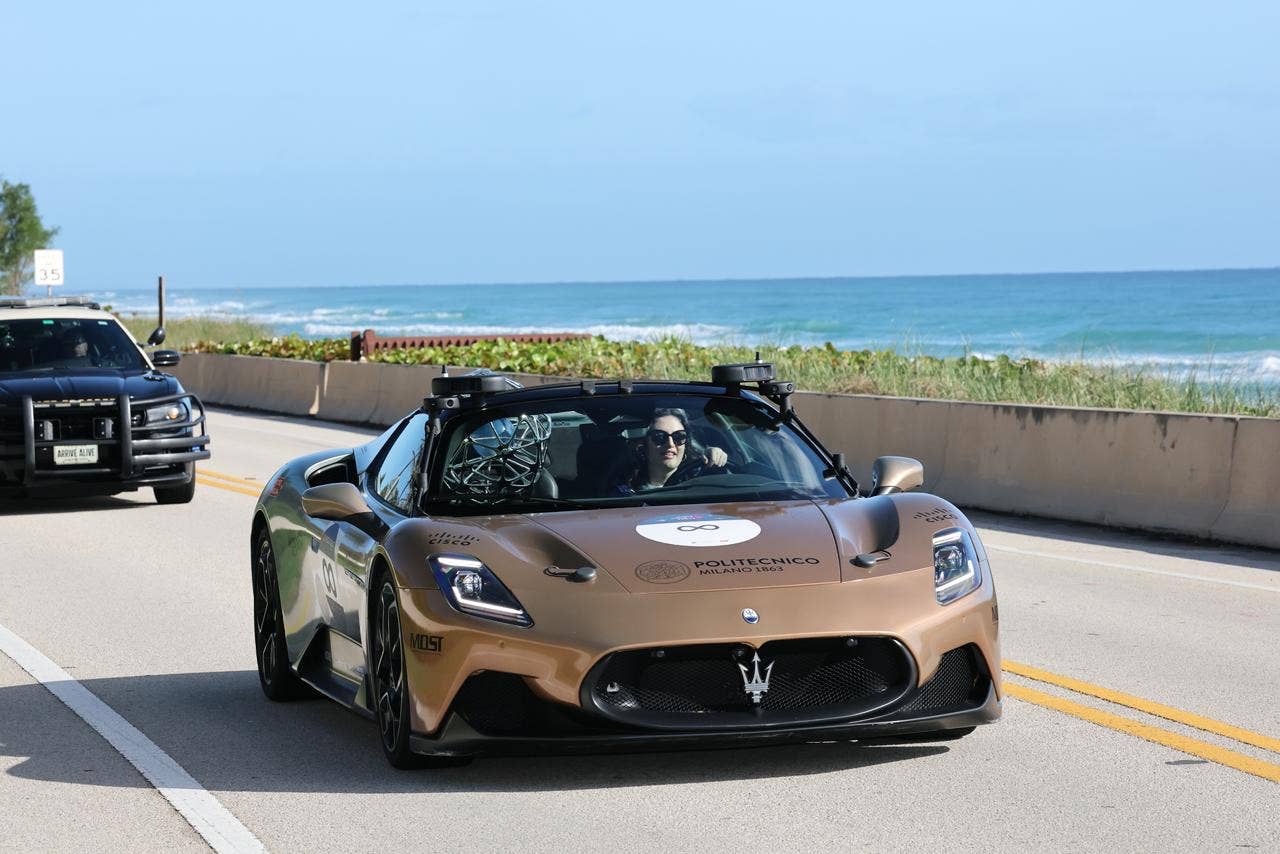
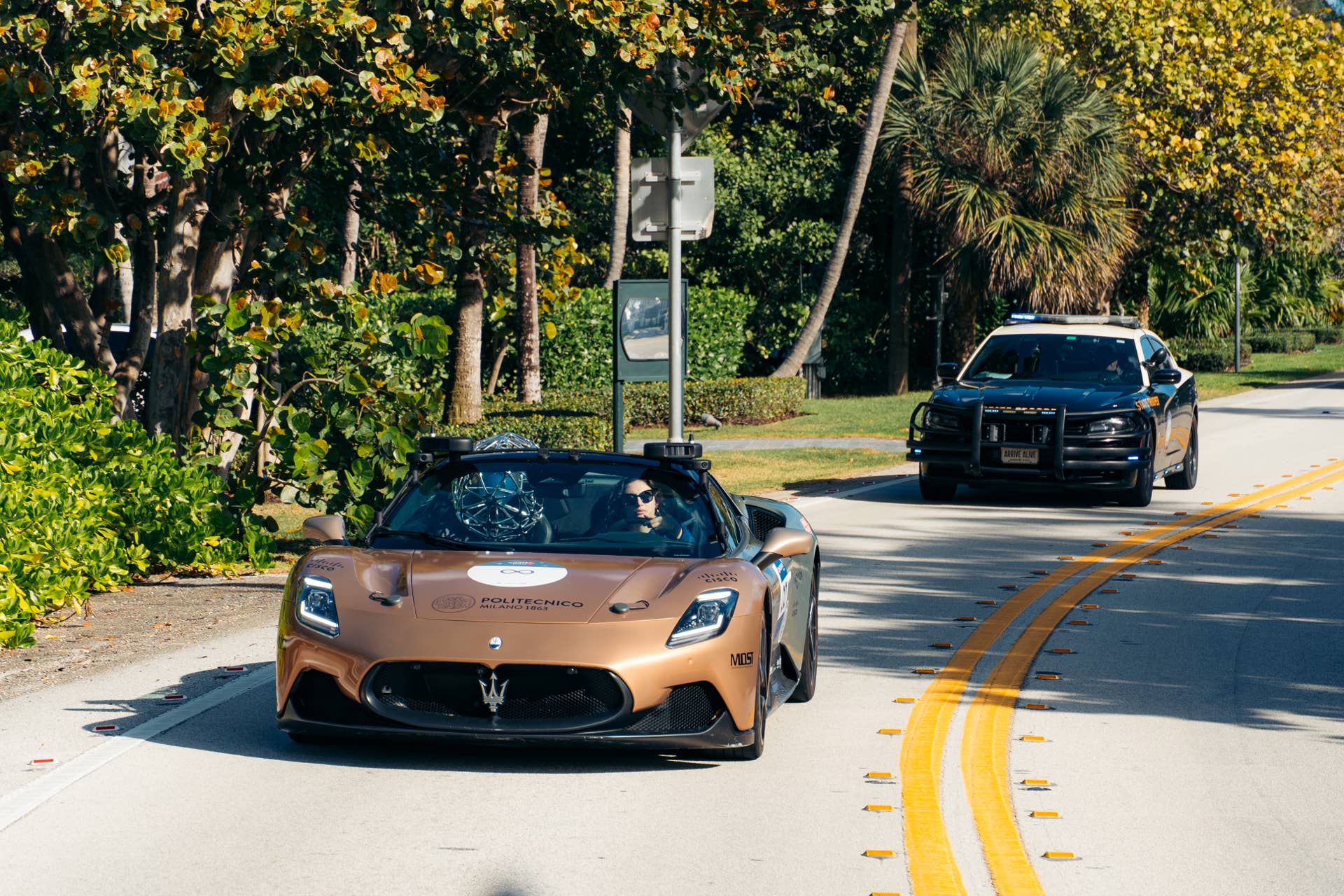
After the autonomous high-speed run, a Maserati MC20 Cielo went on to participate in the 1000 Miglia Experience Florida. This same MC20 Cielo was part of the Italian 1000 Miglia in 2023 where it drove approximately 60 kilometers (about 37 miles) in autonomous mode.
Maserati
What’s the point of all of this, though?
It may seem strange to test how fast a robot can drive a car, but as it turns out, there is a lot of thought behind the process.
The goal of high-speed tests is to evaluate the behavior of robo-drivers in extreme conditions. These AI systems have been tested in production vehicles at legal road speeds in the Indy Autonomous Challenge races since 2021,” said Prof. Sergio Matteo Savaresi, the Scientific Director of the project and Director of the Department of Electronics, Information, and Bioengineering at the Politecnico di Milano.
“The AIDA team used this test to push the boundaries of autonomous driving, improving safety and reliability. Conducted in controlled environments without a human driver, the test assesses the AI’s stability, robustness, and reaction time, ultimately enhancing safety for low-speed urban mobility situations.”
Maserati
Final thoughts
The frequent developments in self-driving technology are nothing short of astonishing. Perhaps, at this rate, full self-driving will actually become what its name claims to be.
That said, we really hope the autonomous driving trend doesn’t fully extend to supercars. While we understand that using them as test beds to prove what your technology is capable of makes sense, part of the reason for owning a supercar is the joy of driving it. We imagine Maserati knows all about that, though.
Featured Gallery
Love reading Autoblog? Sign up for our weekly newsletter to get exclusive articles, insider insights, and the latest updates delivered right to your inbox. Click here to sign up now!
About the author

Gabriel Ionica
Senior Editor, Autoblog