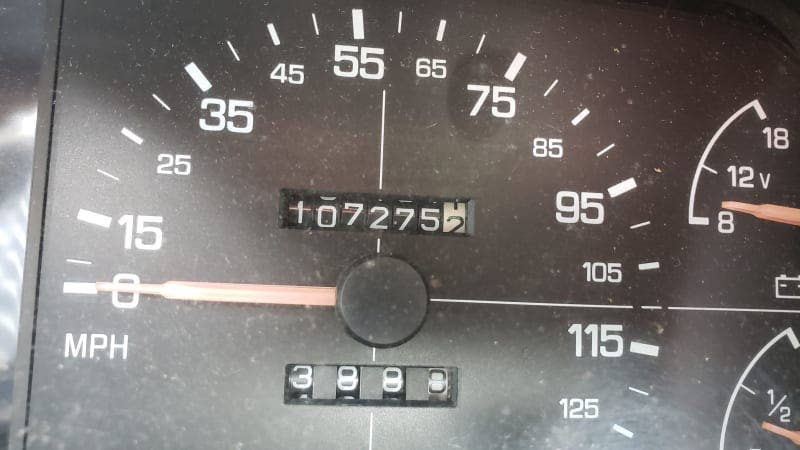
The mileage on this car is so low as to make me suspect a broken speedometer cable. This comes to just a bit over 3,000 miles per year of its life.
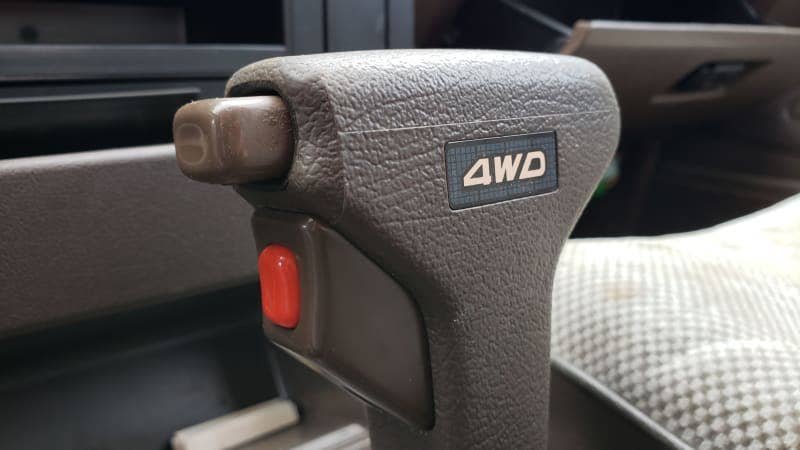
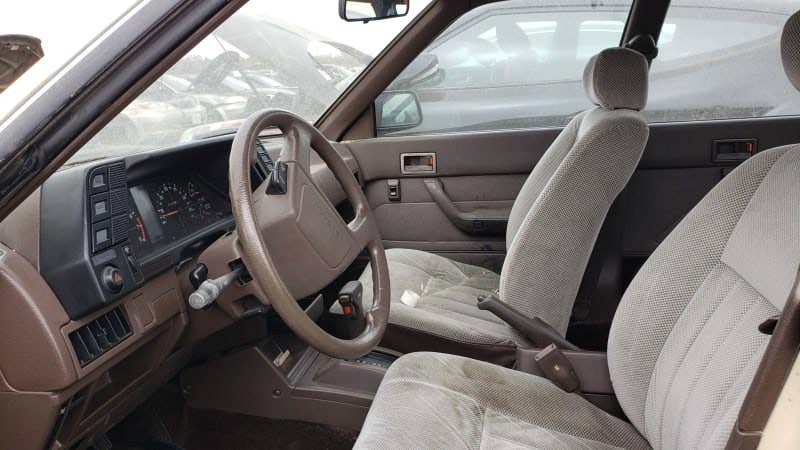
This car has an automatic transmission, an unusual and expensive option for a Subaru of the 1980s. The red button on the shifter switches between front-wheel-drive and four-wheel-drive; if you wanted a true, no-driver-input-required all-wheel-drive car in 1987, you had to get a Quattro-equipped Audi, Syncro-equipped Volkswagen, or a final-year-of-production AMC Eagle. Toyota began selling All-Trac-equipped AWD cars here during the 1988 model year. If you drove this Subaru for too long on dry pavement in the 4WD mode, you’d eat up the tires and maybe break something in the powertrain.
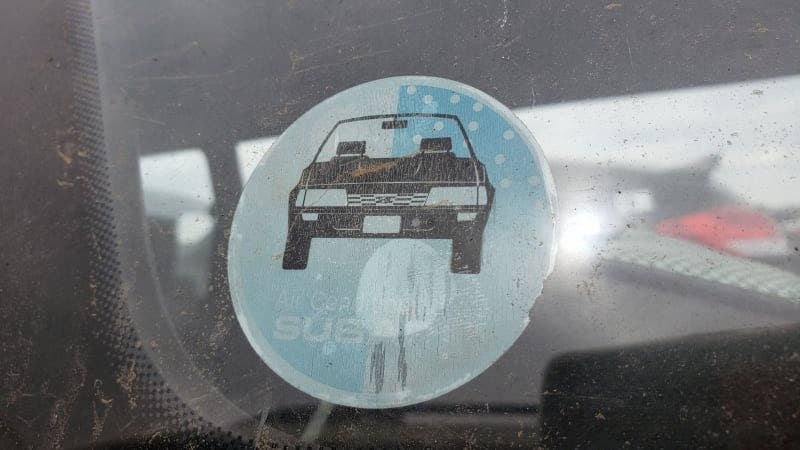
In addition to the automatic transmission and four-wheel-drive, this car has factory air conditioning. That’s something you wouldn’t have seen in many Subarus of this period.
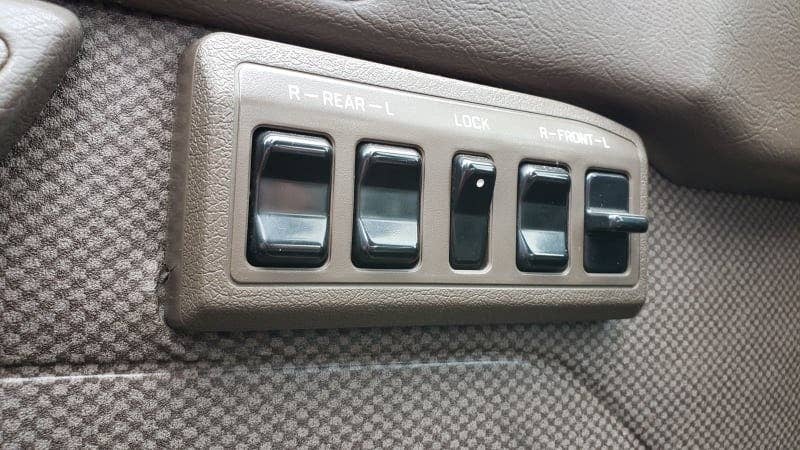
Power windows and locks! This car was probably the one sitting in the big window in the Subaru showroom when it was new.
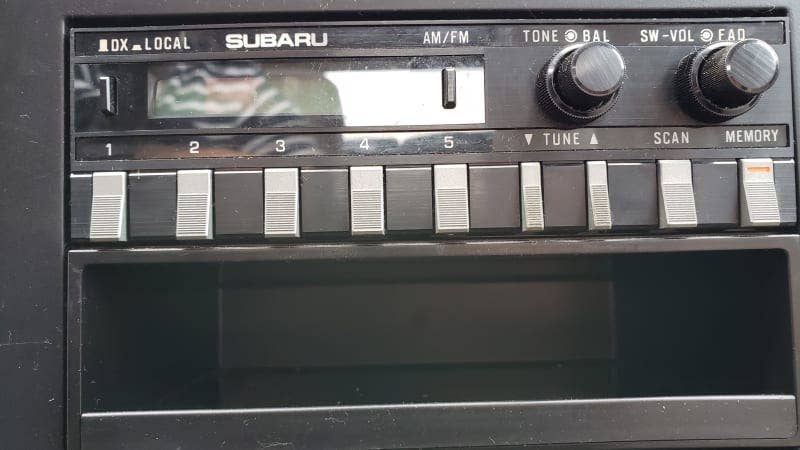
While it has the optional AM/FM radio, there’s no cassette player here. Perhaps the A/C and power windows used up the buyer’s entire budget.
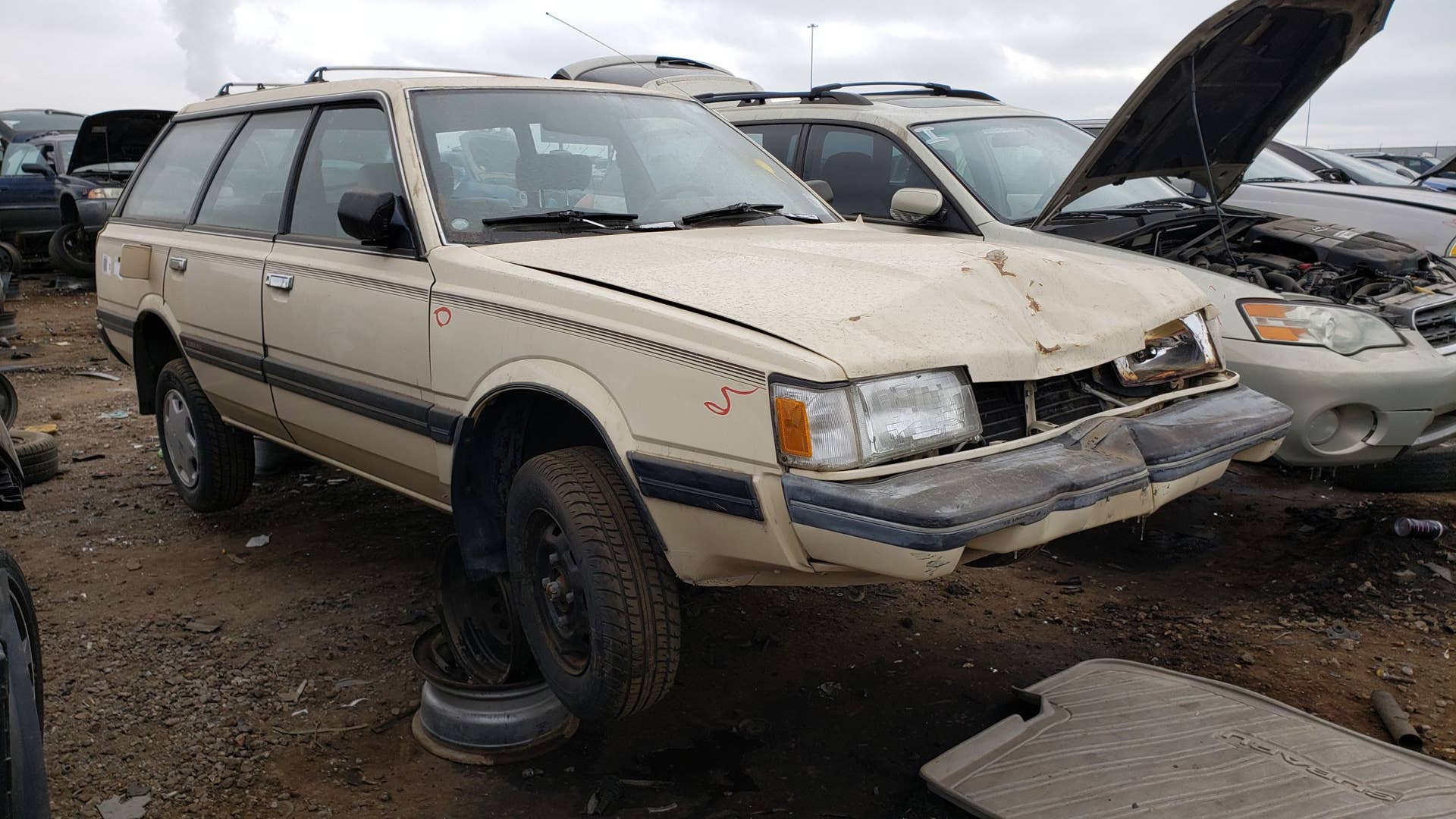
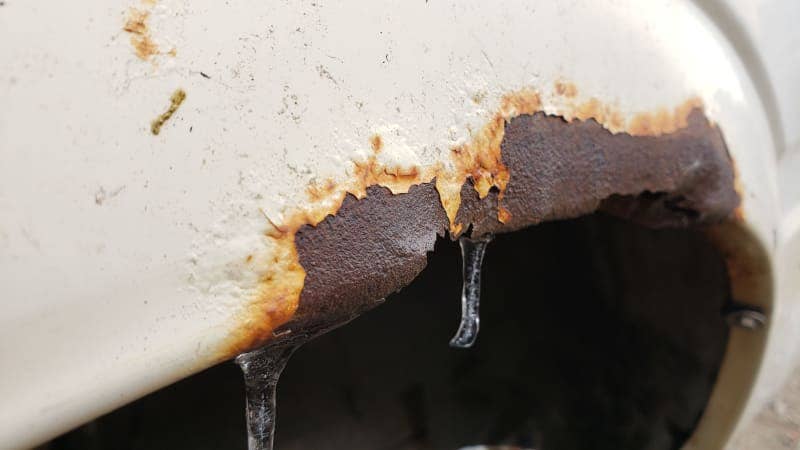
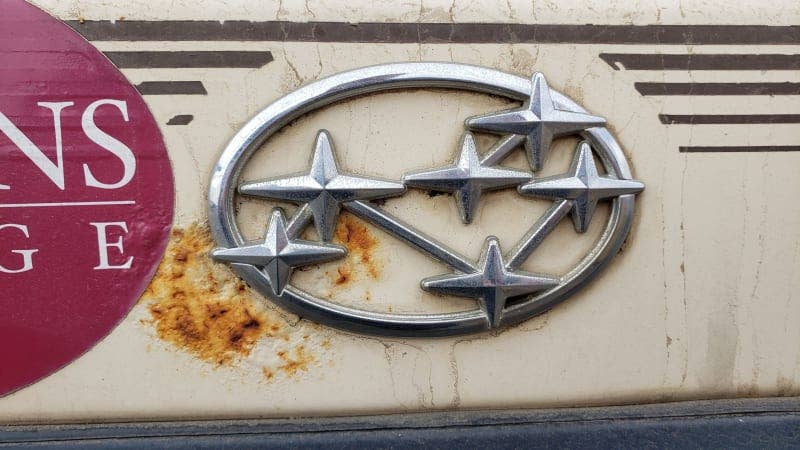
By the standards of 1980s Subarus, this one isn’t particularly rusty.
The interior seems very nice, so perhaps we really are looking at a 107k-mile car here.
All US-market Subarus got real all-wheel-drive for the 1996 model year, but most of these cars were front-wheel-drive machines (with manual transmissions) a decade earlier. This ’87 was ahead of its time.
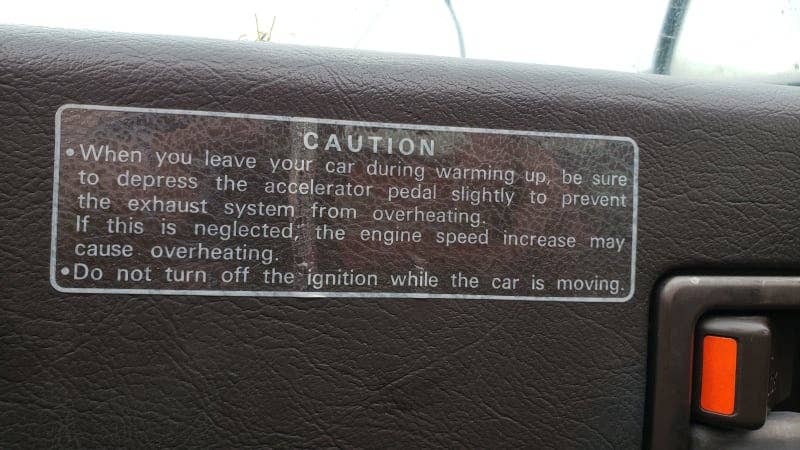
Ah, those finicky catalytic converters of the carburetor era!
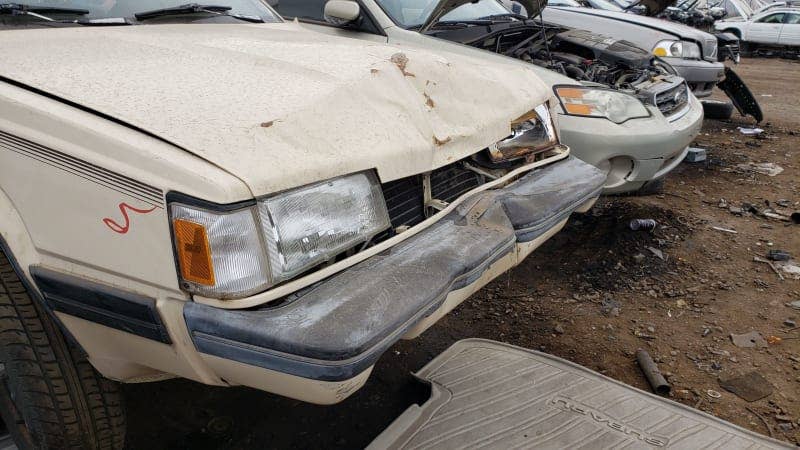
It appears that this car ran into a tree or light post, and that’s all she wrote. The resale value on a bent, 34-year-old Subaru with wheelwell rust is very low, and this crash damage ensured a quick trip to the crusher‘s waiting room.
In its homeland, this car was known as the Leone Touring Wagon.
Beautiful. Inexpensive. And built to stay that way.