
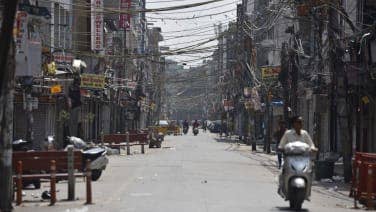
According to to Swiss firm IQAir, around half of the world’s 50 most polluted cities are in India, with much of the blame going to the sheer number of vehicles cramming overcrowded streets. After Prime Minister Narendra Modi called on Indians to observe voluntary confinement on Sunday, roads that are usually crammed with cars, rickshaws, motorbikes and buses were clear. At least 75 Indian districts are under lockdown to help control the spread of the coronavirus, and that’s had an immediate positive effect on air quality in New Delhi, which is the world’s most polluted capital city.
On Monday, New Delhi’s Air Quality Index was recorded at around 93, which is considered moderate. Air quality is deemed to be good when the number drops below 50. New Delhi’s air is regularly considered unhealthy, and AQI averaged around 161 in March of last year, according to IQAir. In financial capital Mumbai, levels were at 90, versus an average of around 153 in March 2019. India’s toxic air claimed 1.24 million lives in 2017, according to a study published in Lancet Planetary Health.
“(The drop) is mainly because of a huge reduction in vehicular traffic,” said Dr. Gufran Beig, project director at the government environment monitoring agency SAFAR.
As a result, skyscrapers usually shrouded in smog were visible and some residents reported spotting more stars than usual.
“We went for a walk and my wife found that breathing was easier,” said retired sea captain Francis Braganza, 74, whose wife suffers from chronic breathing problems he attributed to pollution.
Some research also links air pollution to an increased risk of respiratory virus infections — which include COVID-19, the disease caused by the coronavirus.
“Once we get over this crisis, it will be as bad as before,” Braganza said while walking on a quiet Mumbai road.
Reuters contributed to this report.
Related Video: