
Chrysler today announced it is investing more in Detroit and Southeast Michigan and adding another 1,250 jobs on top of thousands it has added since emerging from bankruptcy three years ago.
The automaker, which is owned by Italian automaker Fiat and the United Auto Workers healthcare trust, and markets Chrysler, Dodge, Jeep, Ram and Fiat brands, will invest $240 million at three Michigan plants to increase production of Ram pickup trucks, as well as engines.
Check out our review of the new Ram 1500 here
“Today is another important milestone in living up to the commitment we made more than three and a half years ago to our employees, this city, this region and our country to transform this company,” Chrysler/Fiat CEO Sergio Marchionne said. “Together, and with the support of our UAW partners, we are committed to building something that will have a long-lasting, direct impact on this community.”
A hot-button issue during the presidential campaign, Marchionne said the investment is proof that the federal government’s decision to lend Chrysler money in 2009 as it emerged from Chapter 11 bankruptcy was a good one.
“Those who still doubt that we would use the second chance taxpayers granted to us to build something better and long lasting…only have to come here and see for themselves how seriously we have taken our responsibility,” Marchionne said today at Chrysler’s engine plant in Detroit.
The investments, first reported by the Detroit Free Press, include:
• $198 million at Chrysler’s Mack Avenue Engine I plant where Chrysler will add about 250 workers to build its V6 Pentastar engine. This is especially welcome as it is investment in downtown Detroit, which sorely needs it.
• $40 million at Chrysler’s Trenton North engine plant to build Pentastar and Tigershark four-cylinder engines.
• The addition of a third shift at Warren Truck in Warren to build more Ram 1500 pickups.
With this announcement, Chrysler’s investments at it U.S. plants since it emerged from Chapter 11 bankruptcy in 2009 now tops $4.75 billion. The company also has added nearly 6,000 hourly jobs in the U.S.
Marchionne entered the political fray last month when former White House hopeful Mitt Romney began running ads in swing-state Ohio suggesting that Chrysler was moving jobs out of Ohio to build Jeeps in China. Marchionne fired a rebuke at Romney for misleading the public.
Chrysler is considering investments in China that would enable the company to sell more Jeeps to Chinese consumers. Automakers have to build in China to sell to the Chinese or face stiff tariffs that would make a Jeep Grand Cherokee cost the equivalent of about $75,000.
Please consider liking us on Facebook here, which is step-one to becoming eligible for all of our AOL Autos Giveaways. In just a few months, we have given away a 2012 MINI Countryman, an Escort radar detector, an OnStar FMV and now a package of auto cleaning and detailing supplies.
Featured Gallery
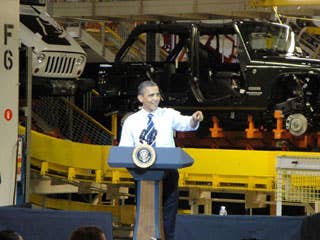
There is little doubt that the taxpayer rescue of the U.S. auto industry authorized by President Obama in 2009 was key to his re-election, boosting his popularity in Michigan, Ohio, Wisconsin and Pennsylvania.
This President, who engineered direct investment into General Motors and Chrysler in order to keep them whole and in-tact instead of being chopped up, will be more associated with the auto industry than any other U.S. president that has gone before him.
The next four years of the Obama Administration will continue to reverberate through the cars we buy in the form of regulation about emissions, fuel economy, safety and more market penetration of electric vehicles. Here is what to expect:
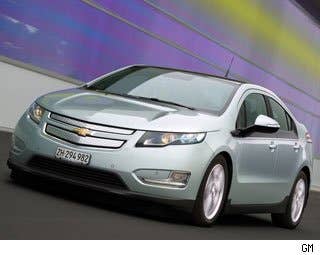
The current tax credit for electric vehicles and extended-range electric vehicles is $7,500. President Obama has said that he would like to jack up the tax credit for cars likeChevy Volt, Nissan Leaf, Toyota Prius Plug-in and Ford Focus EV to $10,000.
There is much controversy over whether subsidy of EVs should continue. Consumers have been lukewarm to the new vehicles. Many believe the government should not be subsidizing certain kinds of vehicles over others. There are a few causes holding back these vehicles: a lack of education about how they work; lack of extended infrastructure of charging stations; and high starting sticker prices.
But expect the Obama Administration to keep up the investment, as well as the attention on EVs and extended-range EVs and hybrids.
Check Out: Chevrolet Volt Real-World Test Drive

This is mostly guesswork, but there is likelihood that the President will greenlight the sale of the 26% stake the government currently holds in General Motors.
An equity stake in the automaker is the way that the White House Task Force chose to finance the rescue back in 2009. GM shares trade in the mid-$20 range on the New York Stock Exchange, well below its initial-public-offering price. So, if the feds sold their shares today the taxpayer would incur a big loss. The break-even point for the government is $53 a share, a price that is pretty far from analysts projections in the next two years.
Now that President Obama doesn’t have to run for re-election, and there are experts who say GM would be better off in the market without the government stake, there is an expectation that the tax-payer will be out of GM by the end of his second term.
Check Out: The Truth Squad: Arguing The Auto Rescue Between The Campaigns
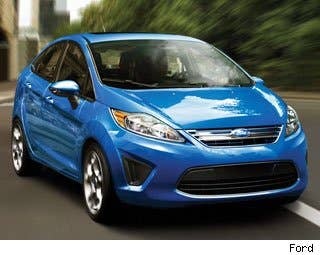
The Obama Administration already finalized new fuel economy rules that set annual targets that ramp up to the equivalent of 54.5 mpg by the 2025 model year.
Candidate Mitt Romney had been campaigning that he would look to lighten the standards. Now, they will go into effect without major changes through the end of Obama’s second term in 2016. This will mean a continuation of fewer 8 cylinder vehicles coming to market, more four-cylinder vehicles, more fuel saving technology such as”stop-start” systems that cut off the engine at idle and more hybrids and electric vehicles.
Check Out:How Stop-Start Systems Work, And What Cars Come With Them
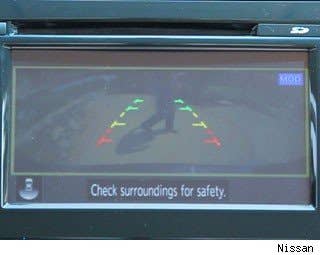
There is a pending mandate to put back-up cameras in every new car sold by 2014. It was actually introduced in 2008 under President Bush. But President Obama put a hold on the rule earlier this year to give automakers a chance to make changes. At issue is the $58 to $203 per car it will cost to implement. It doesn’t sound like much, but it adds up to millions of dollars for each of the 200-240 lives the mandate is supposed to save (children who die from cars backing up on them). The challenge is to equip cars that wouldn’t otherwise come with dashboard video displays.
Look for the Obama Administration to find a way to make it happen as backing off of a child safety mandate won’t look good for him, his party or the National Highway Traffic Safety Administration.
Check Out: Techsplanations: Pedestrian Safety Design