
Two muscle cars, one big choice
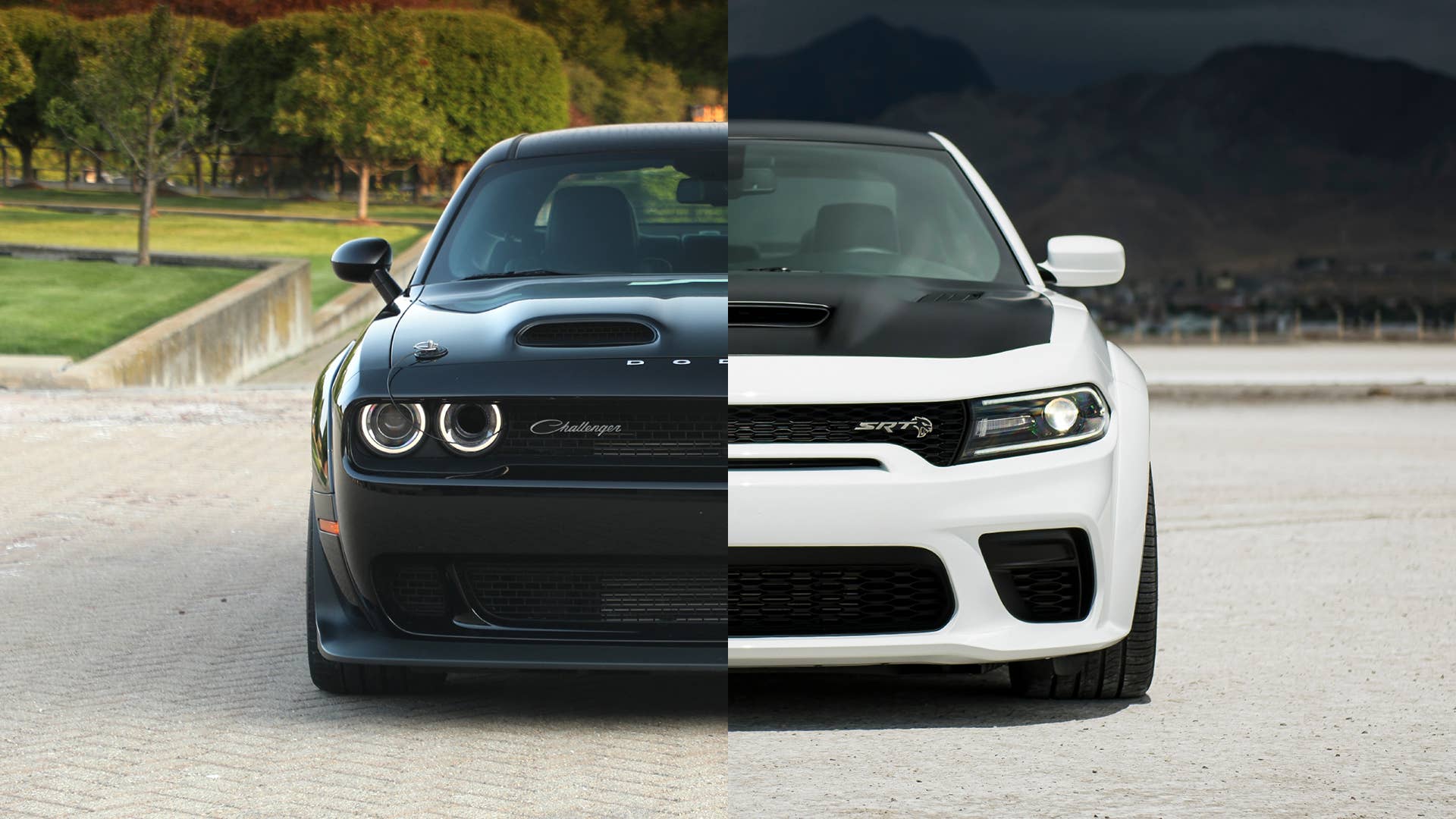
Dodge has moved its muscle car into a completely new era with the two- and four-door Chargers, including fully electric versions. With the new generation, the Challenger name has been dropped entirely, as has the iconic V8 engine. For many, the outgoing generation of the Challenger and Charger—based on the LX platform—is still the peak of the modern muscle-car era. If you want one of these high-horsepower Dodge models, you’ll need to buy used, but what’s better between the Charger vs the Challenger? Here, we’ll unpack all the differences between the 2023 versions of both, the last model year for these legendary tire-shredders.
Design and Size: Dodge Challenger Vs. Charger
Stellantis
Stellantis
Stellantis

Stellantis
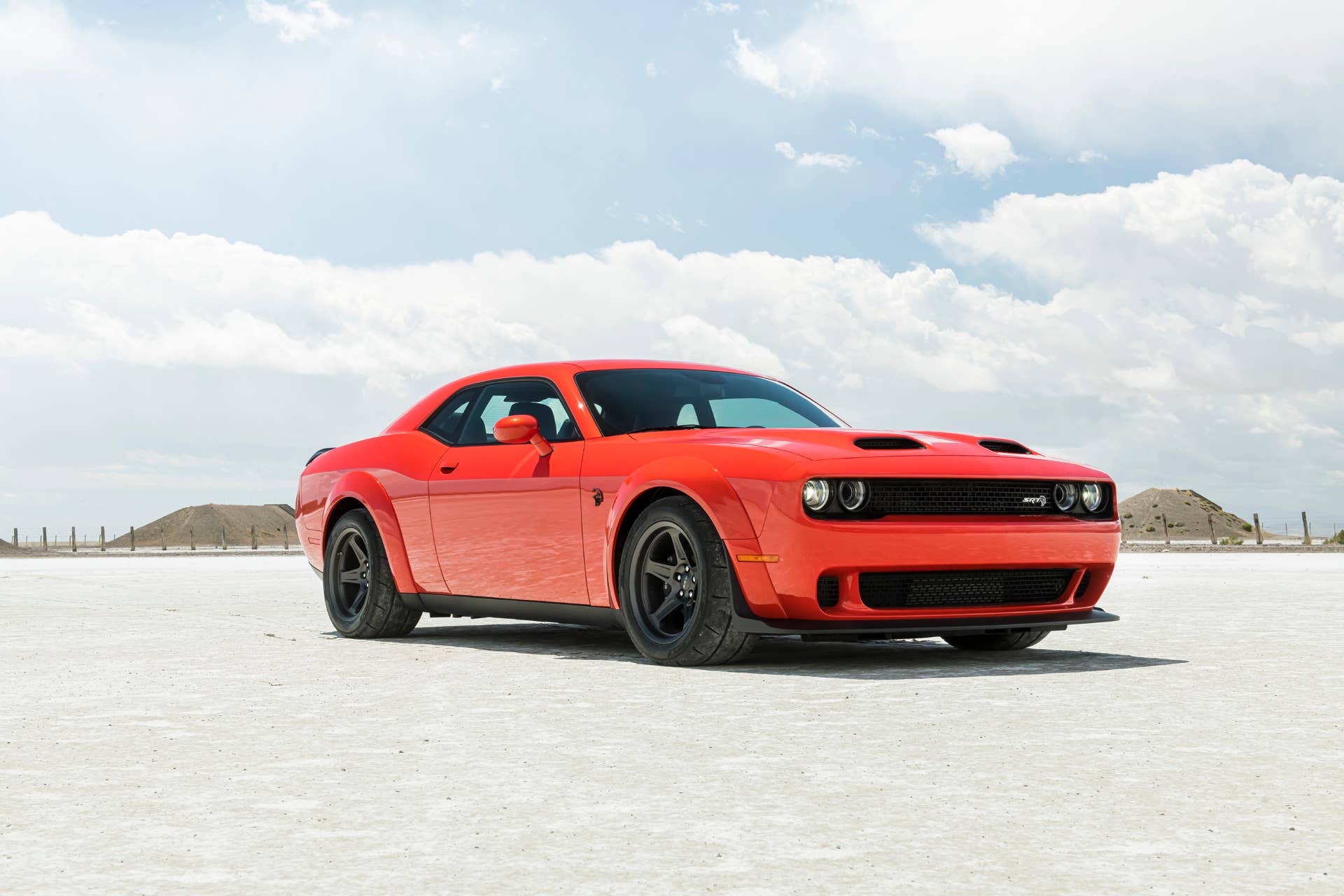
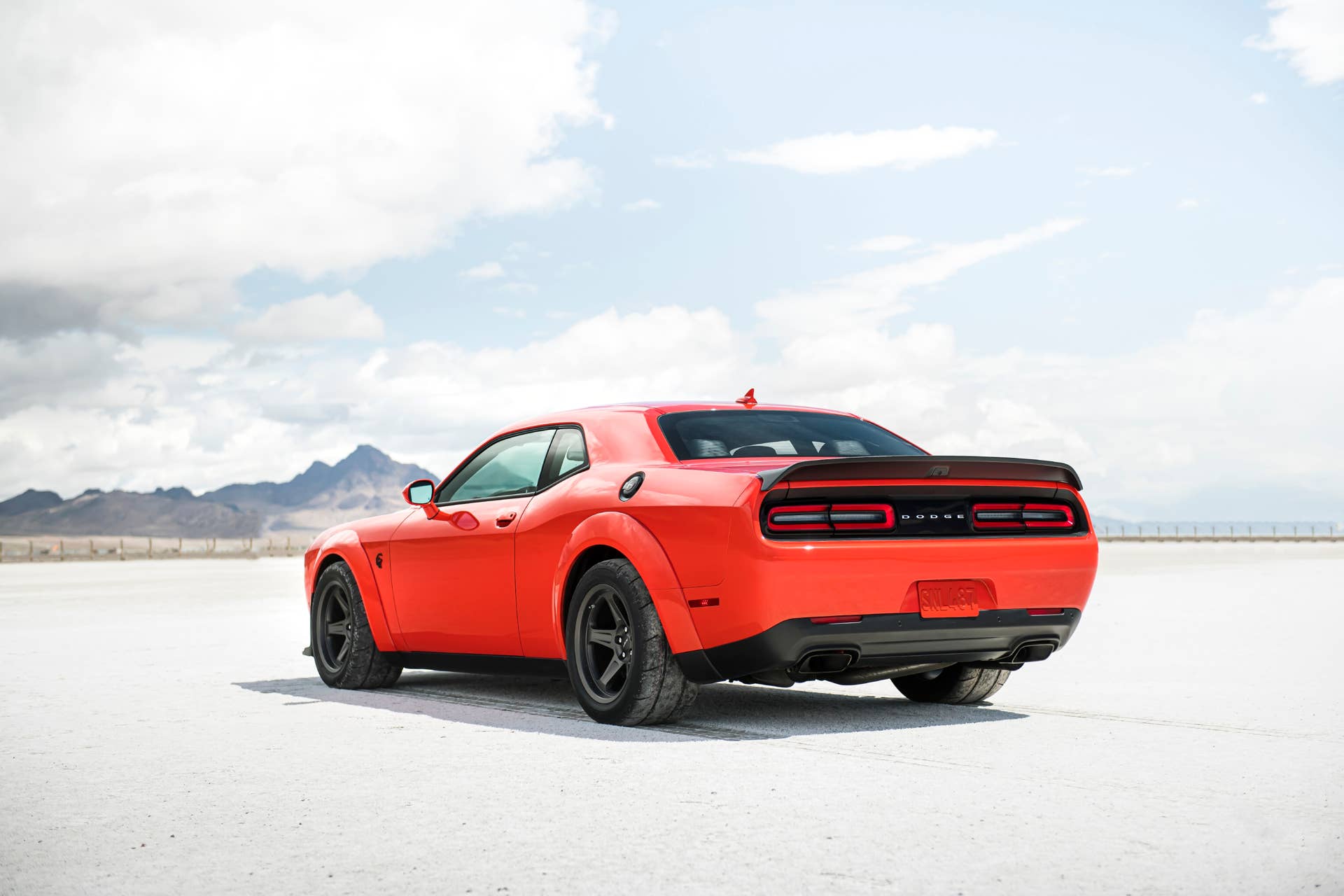
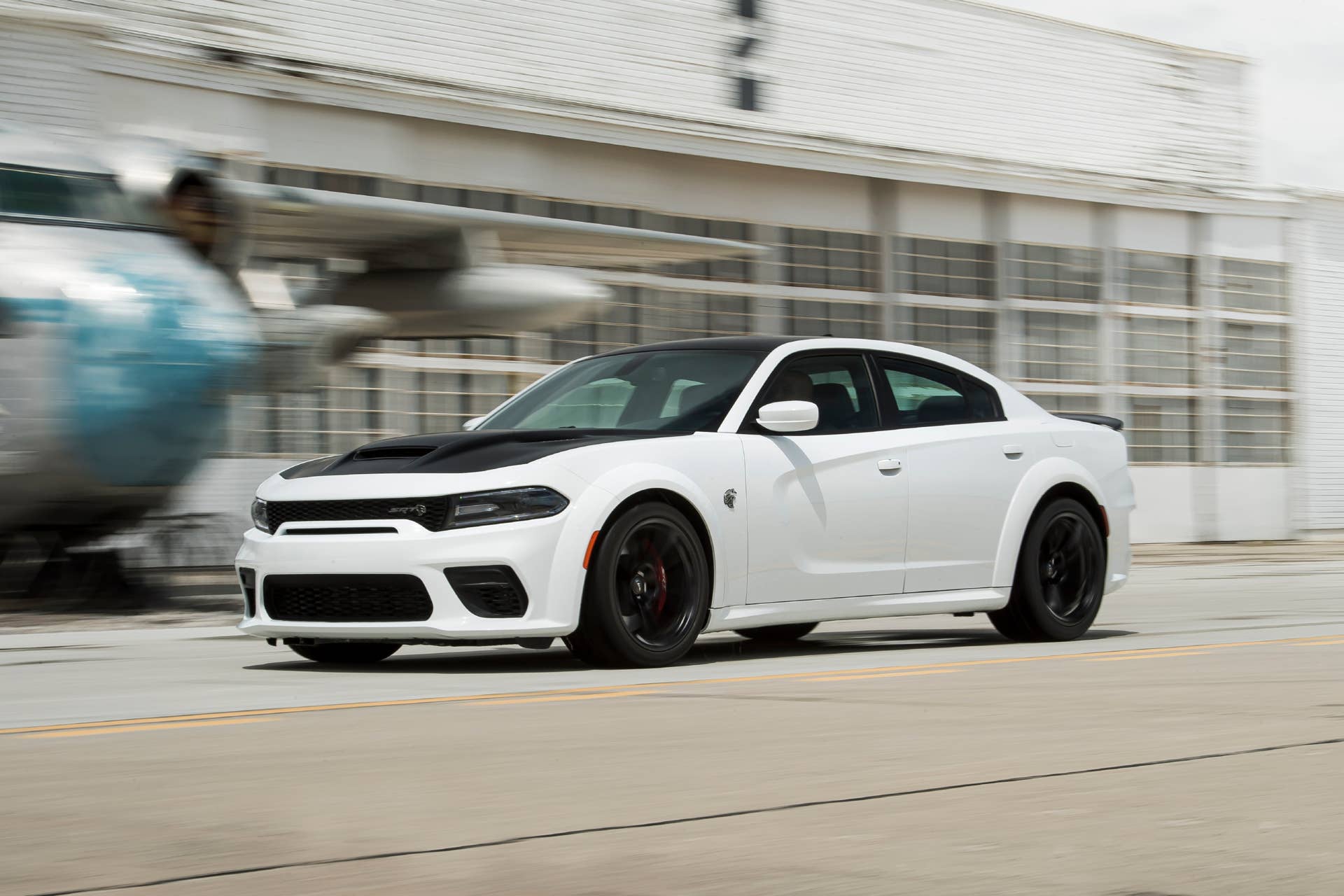
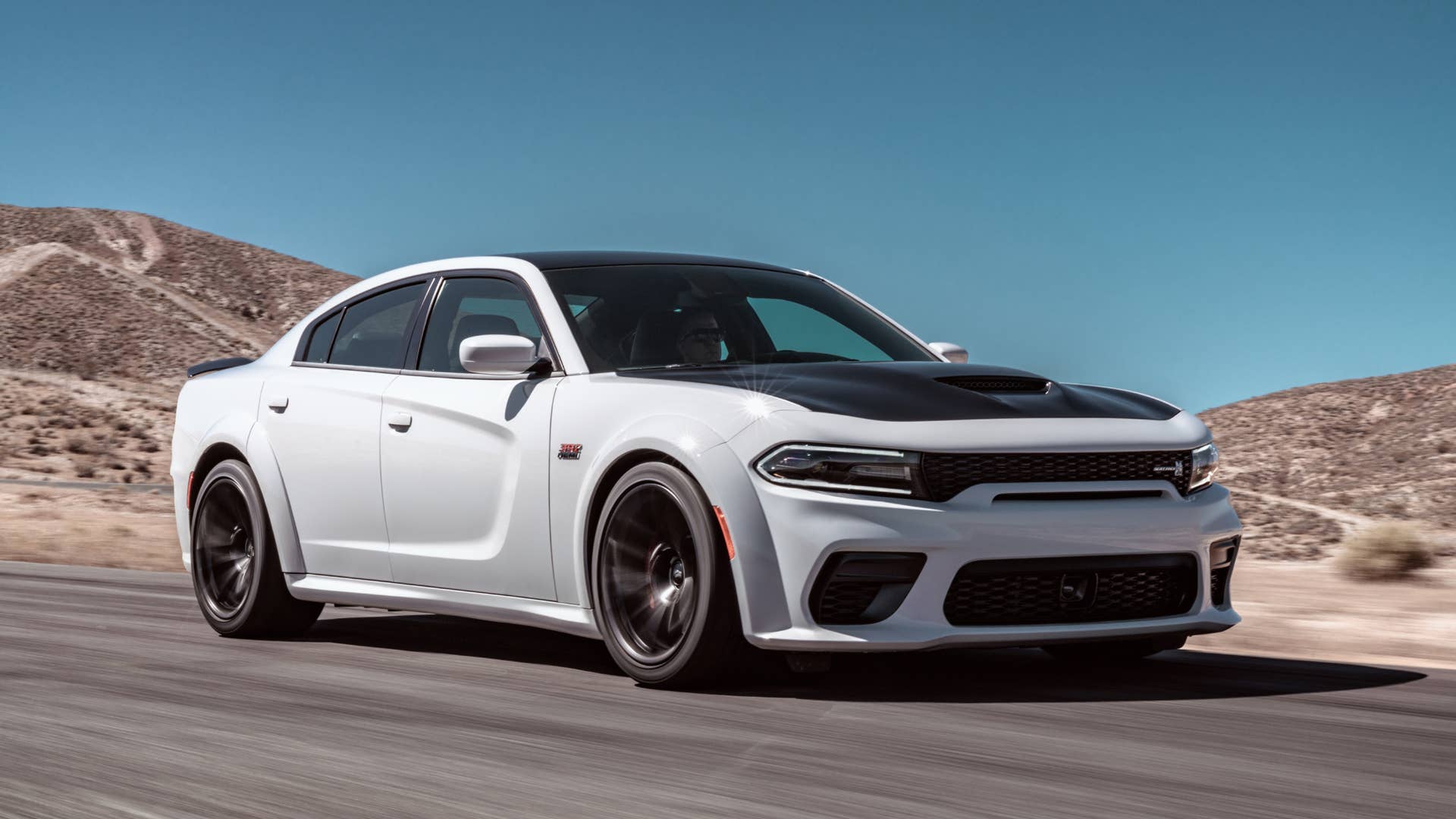
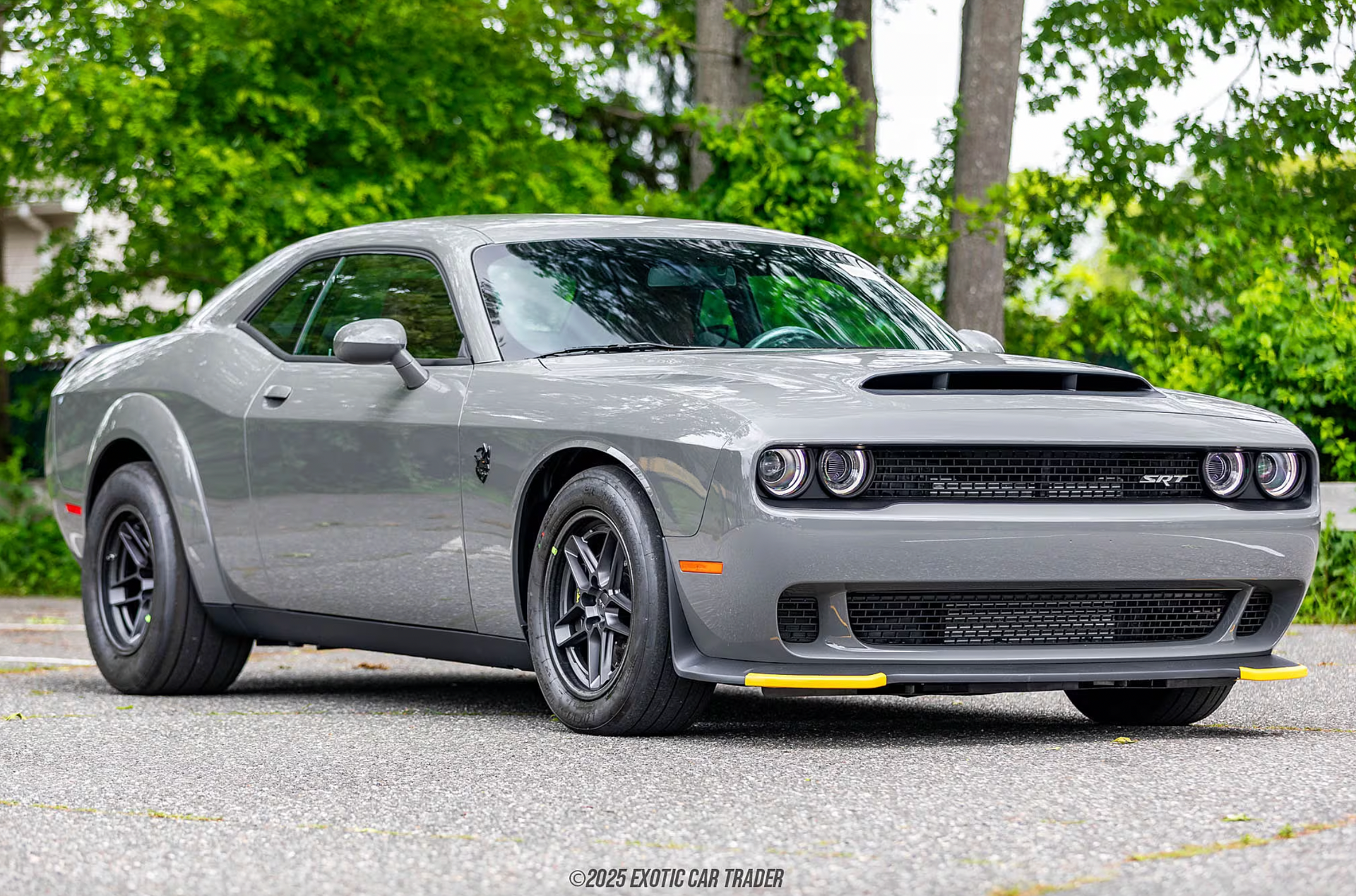
Unlike the new-generation two- and four-door Charger, the previous Challenger and Charger are more distinct from each other. Both cars have muscular designs that don’t hide their performance potential. From flared fenders to hood scoops, these muscle cars mean business, and they got ever more aggressive as you worked your way up the lineup.
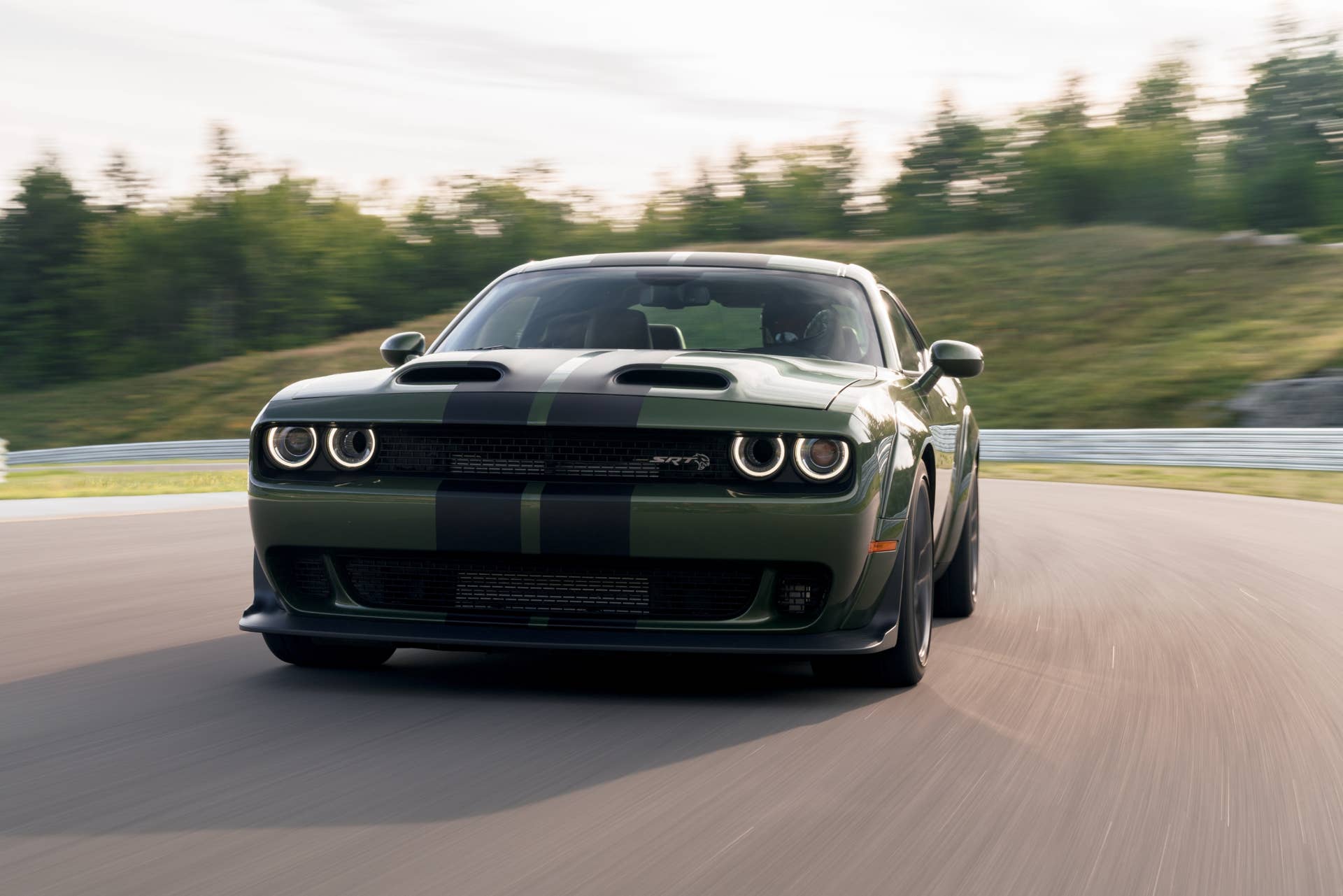
The two-door Challenger has a unique front fascia with distinctive circular headlights and a more rectangular grille, while the Charger has single headlight units beneath clear covers. At the back, the Challenger features separate, rectangular taillight clusters, while the Charger gets a red light bar that runs across the width of the body. Both have big exhausts and prominent spoilers, and both could be specified with bright colors and stripes along the body. Of course, the main difference is the Charger’s four-door sedan body, which makes it the more practical option of the two.
| Dodge Challenger Vs. Dodge Charger: Exterior Dimensions | ||
| 2023 Dodge Challenger | 2023 Dodge Charger | |
| Length | 197.9 inches | Up to 201 inches |
| Wheelbase | 116 inches | 120 inches |
| Width (with mirrors) | 85.4 inches | 82.7 inches |
| Height | Up to 58.4 inches | Up to 58.5 inches |
In terms of size, both are large, full-size cars. It’s especially rare to find a modern coupe of the Challenger’s size. The Charger has a longer body and wheelbase, but the Challenger is a little wider. If you’re coming from a modern Mustang, both cars will seem huge, but their size is part of what makes driving them such an event.
Interior Design: Spacious and Sporty, But Not Premium
Stellantis
Stellantis
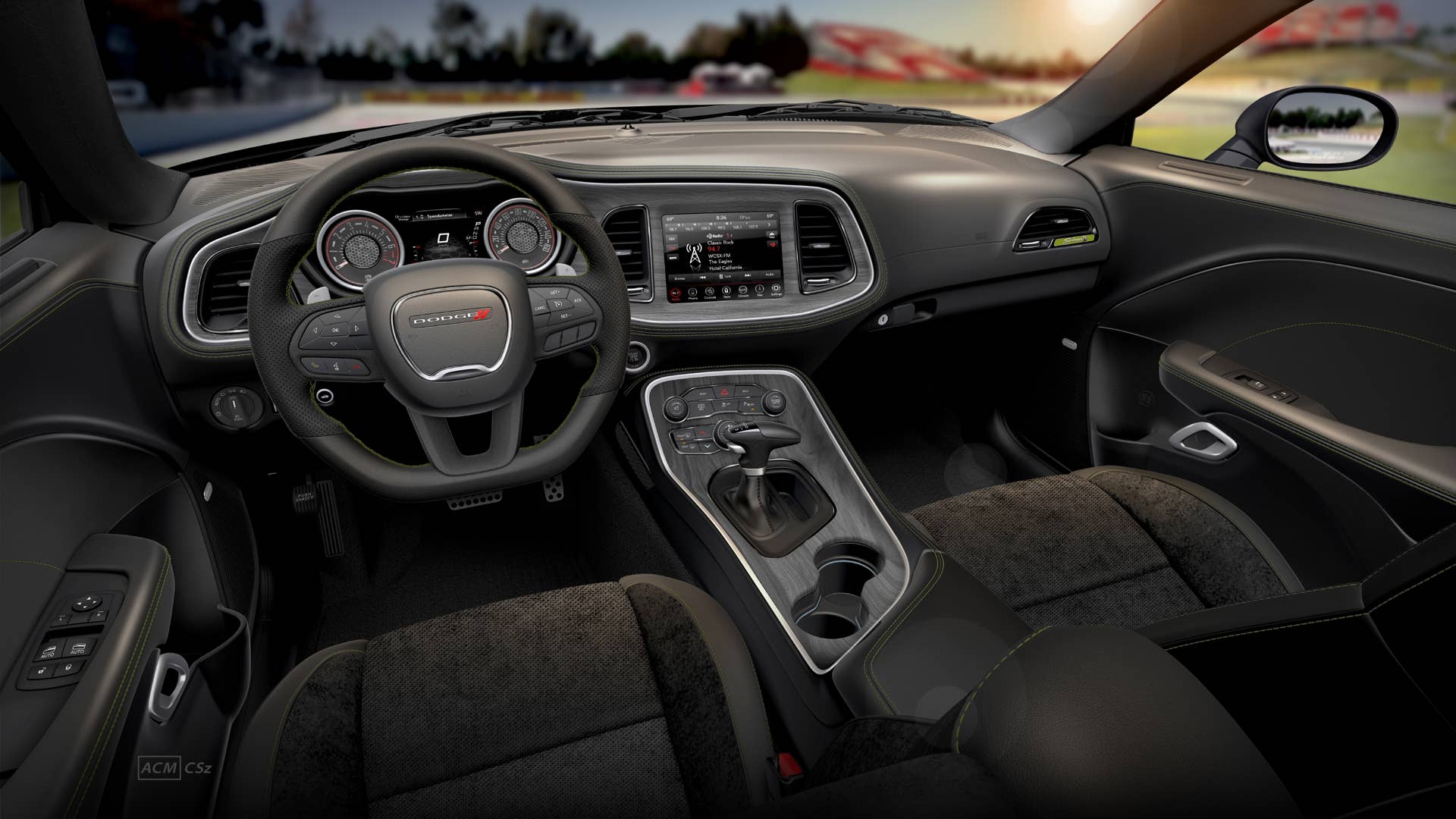
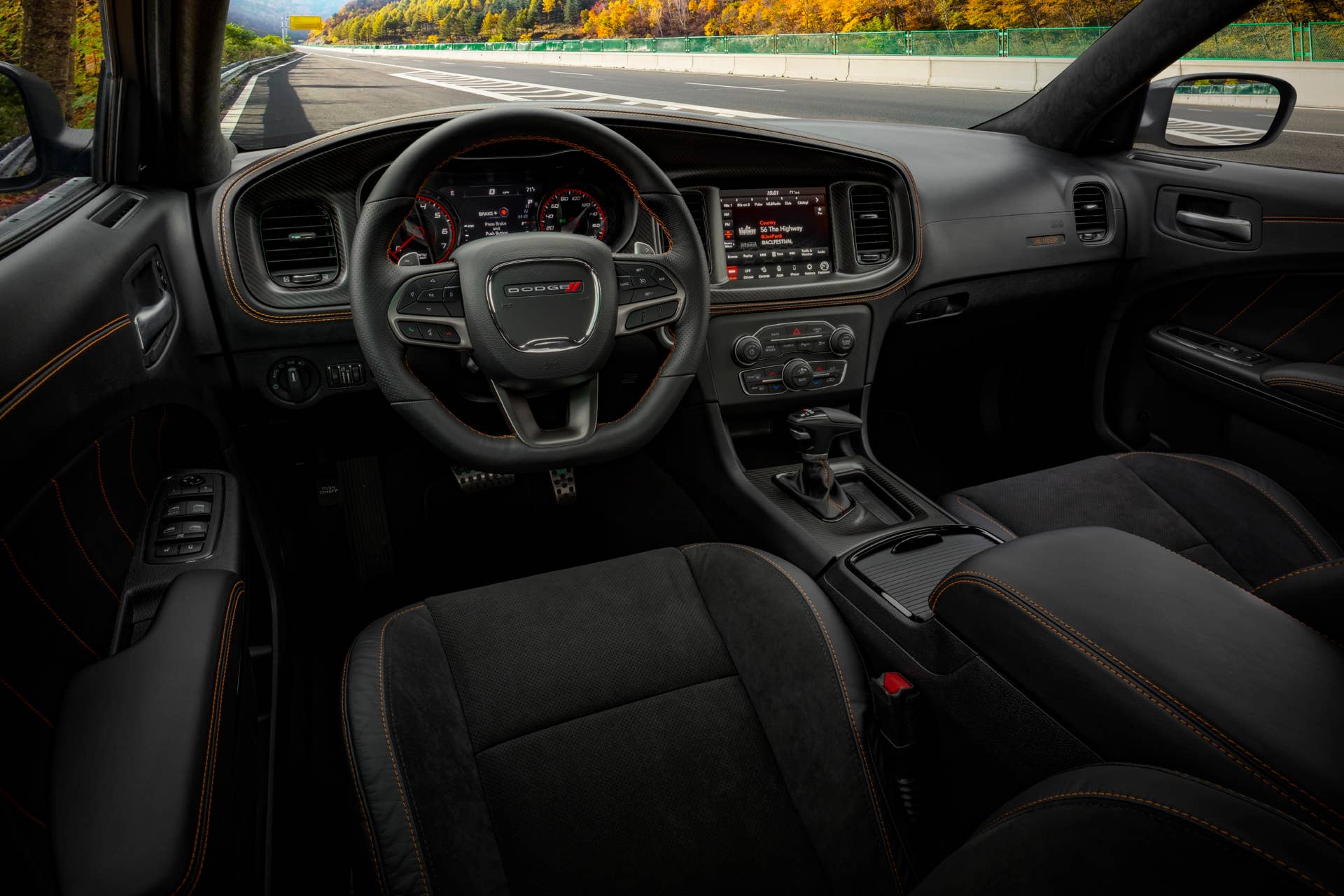
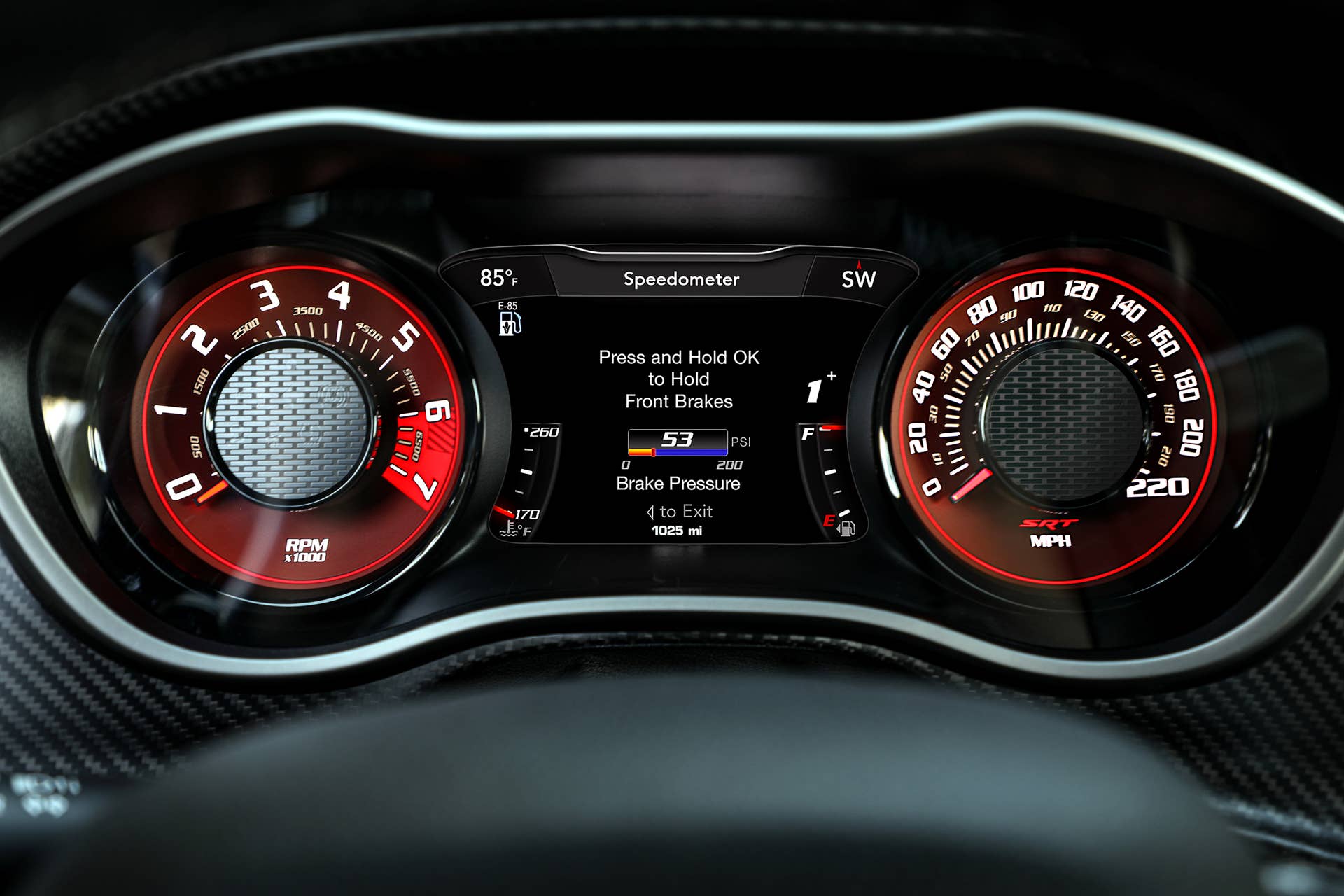
The Challenger and Charger are clearly from the same family when you get behind the wheel. They have similar instrument clusters, shift levers, and steering wheels. Materials are also similar, which is to say that these are sporty but not luxurious cabins, not that many care—Dodge is known to invest much more heavily in performance than premium interiors.
Stellantis
Since they’re so large, both cars have an impressive amount of interior space, particularly rear-seat legroom. The Challenger is a lot better for rear-seat passengers than a Mustang or Camaro, but the Charger’s back seat is easier to access. In the Challenger, you also have to contend with huge blind spots, something that’s less of an issue in the Charger sedan. Both cars have a reasonable amount of standard features and come from an era where physical controls were the norm, so it’s easy to get acquainted with how everything works.
| Dodge Challenger Versus Dodge Charger: Interior Specs | ||
| 2023 Dodge Challenger | 2023 Dodge Charger | |
| Front/rear legroom | 42/33.1 inches | 41.8/40.1 inches |
| Front/rear headroom | 39.3/37.1 inches | 38.6/36.6 inches |
| Front/rear shoulder room | 58.5/53.9 inches | 59.5/57.9 inches |
| Cargo space | 16.2 cubic feet | 16.5 cubic feet |
The Charger is better if you’ll often be transporting passengers in the back, but both cars have spacious trunks. As long as you don’t expect luxury trimmings, it’s easy enough to live with the Challenger and Charger on a daily basis.
Performance: Ordinary V6 and Spectacular V8s
Stellantis
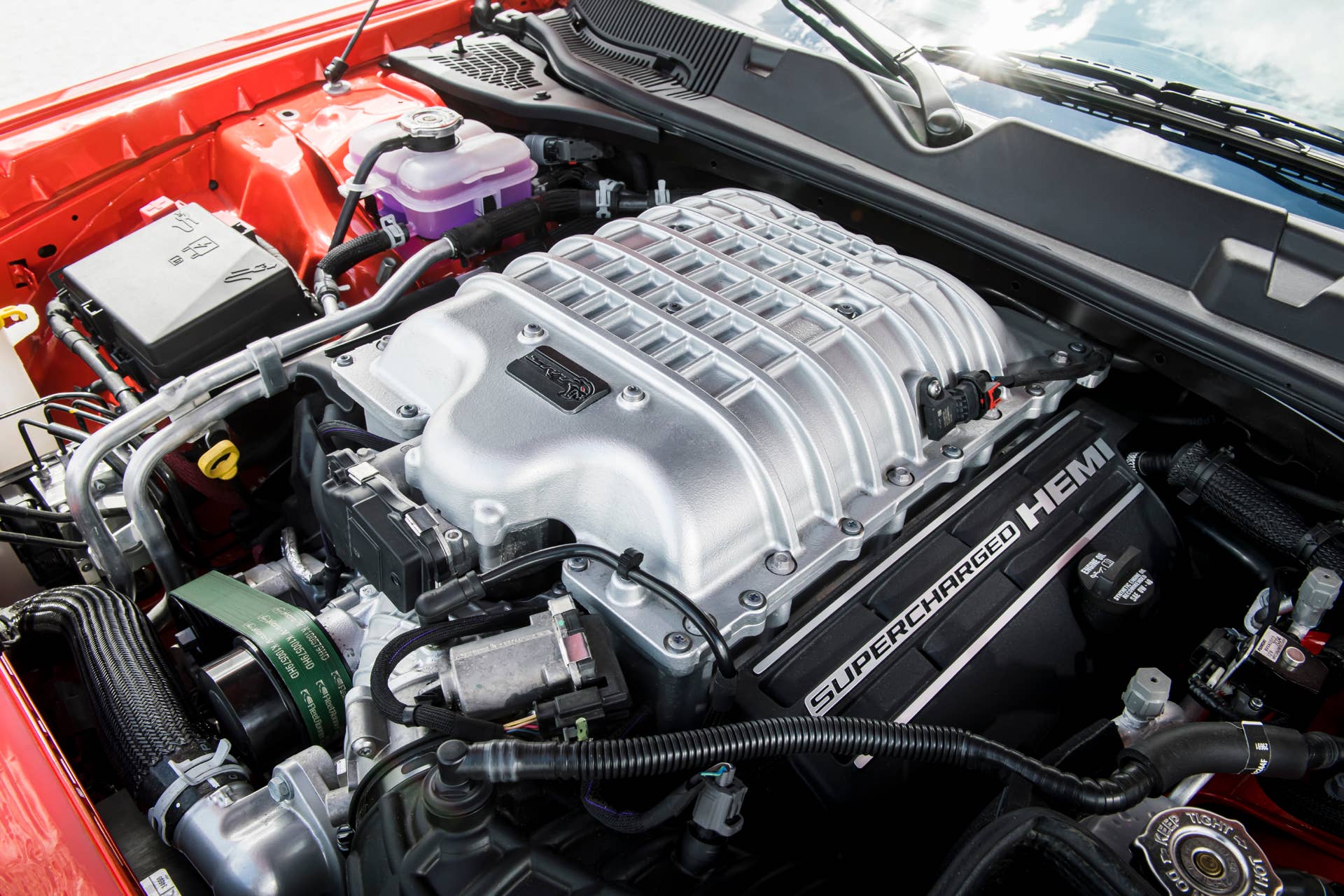
This is what it’s all about when it comes to these muscle cars. The top models will still obliterate almost anything else that isn’t an EV in a straight line, provided you have optimal conditions that allow for maximum traction.
Both cars have a standard 3.6-liter naturally aspirated V6 engine, but the Challenger is a little more powerful. One level above this gets you the 5.7-liter Hemi V8, equipped to R/T models, and the Challenger is again a little more powerful. The 6.4-liter Hemi V8 in Scat Pack models is a monster, producing 485 horsepower in both cars. Things get silly after that, with a 6.2-liter supercharged V8 in SRT Hellcat models producing as much as 807 hp. Here’s a look at the powertrain specs of the Challenger and Charger.
| 2023 Dodge Challenger and Charger: Performance Specs | ||||
| Engine | 3.6L V6 | 5.7L V8 | 6.4L V8 | 6.2L Supercharged V8 |
| Horsepower | 303 hp (Challenger); 292-300 hp (Charger) | 372-375 hp (Challenger); 370 hp (Charger) | 485 hp | 717 hp (SRT Hellcat); 797 hp (SRT Hellcat Redeye); 807 hp (Challenger SRT Super Stock) |
| Torque | 268 lb-ft (Challenger); 260-264 lb-ft (Charger) | 400-410 lb-ft (Challenger); 395 lb-ft (Charger) | 475 lb-ft | 656 lb-ft (SRT Hellcat); 707 lb-ft (Redeye and Super Stock) |
Although the V6 isn’t slow (it could do 0-60 in about 6.5 seconds), it lacks the excitement of the V8 models, with the quickest naturally aspirated Hemi models capable of hitting 60 in under four seconds. The supercharged models deliver outrageous performance and an iconic soundtrack, with the baritone grumble of the V8 complemented by a distinct supercharger whine.

Stellantis
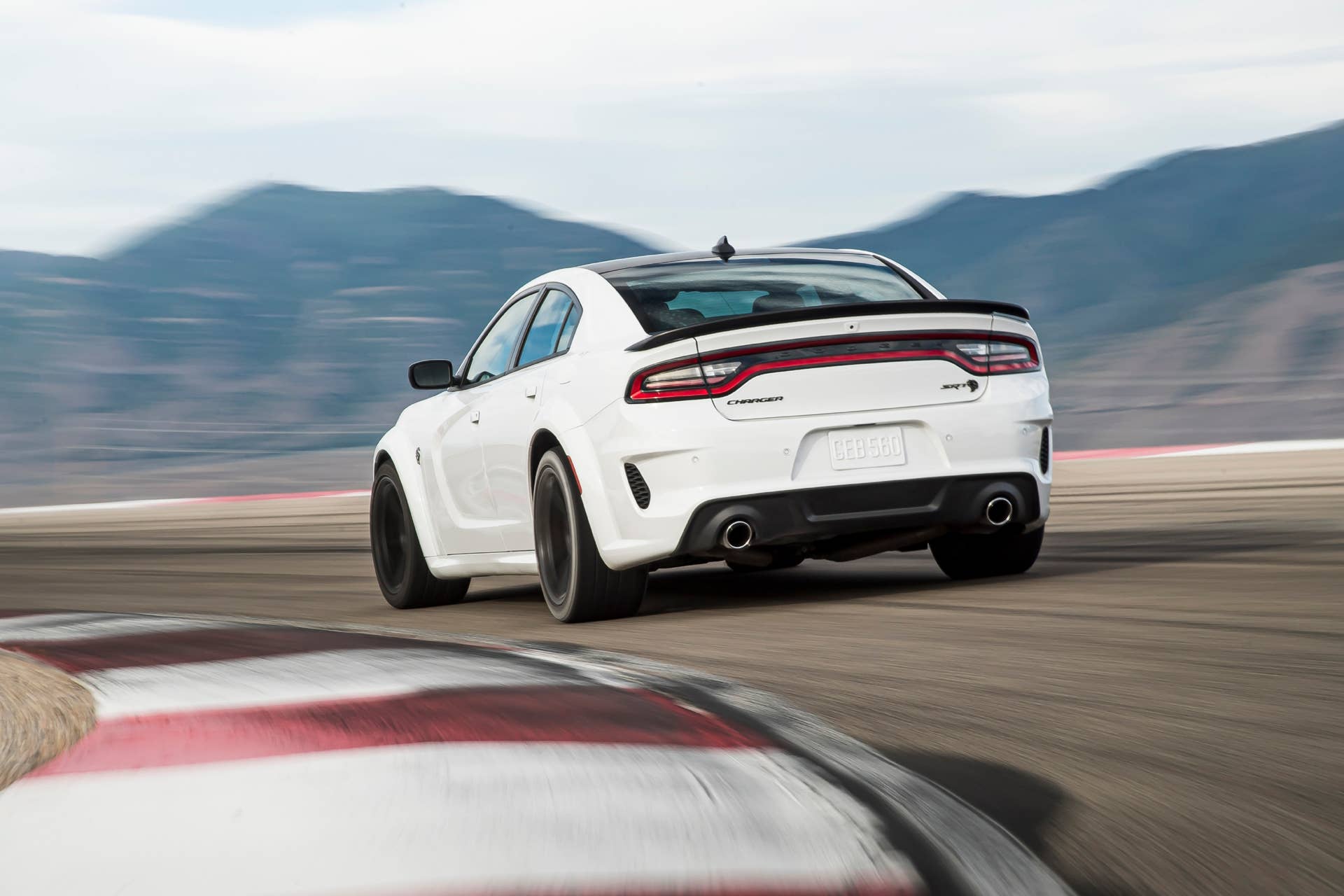
The Charger SRT Hellcat Redeye is one of the fastest sedans ever built. It will reach 60 in 3.6 seconds, complete the quarter-mile in 10.6 seconds, and hit 203 mph. But the 807-hp Challenger SRT Super Stock is the ultimate drag king. It has a 0-60 time of 3.25 seconds and does the quarter-mile in 10.5 seconds, thanks to its Nitto street-legal drag radials. You’ll need a prepped drag strip to achieve these results, though.
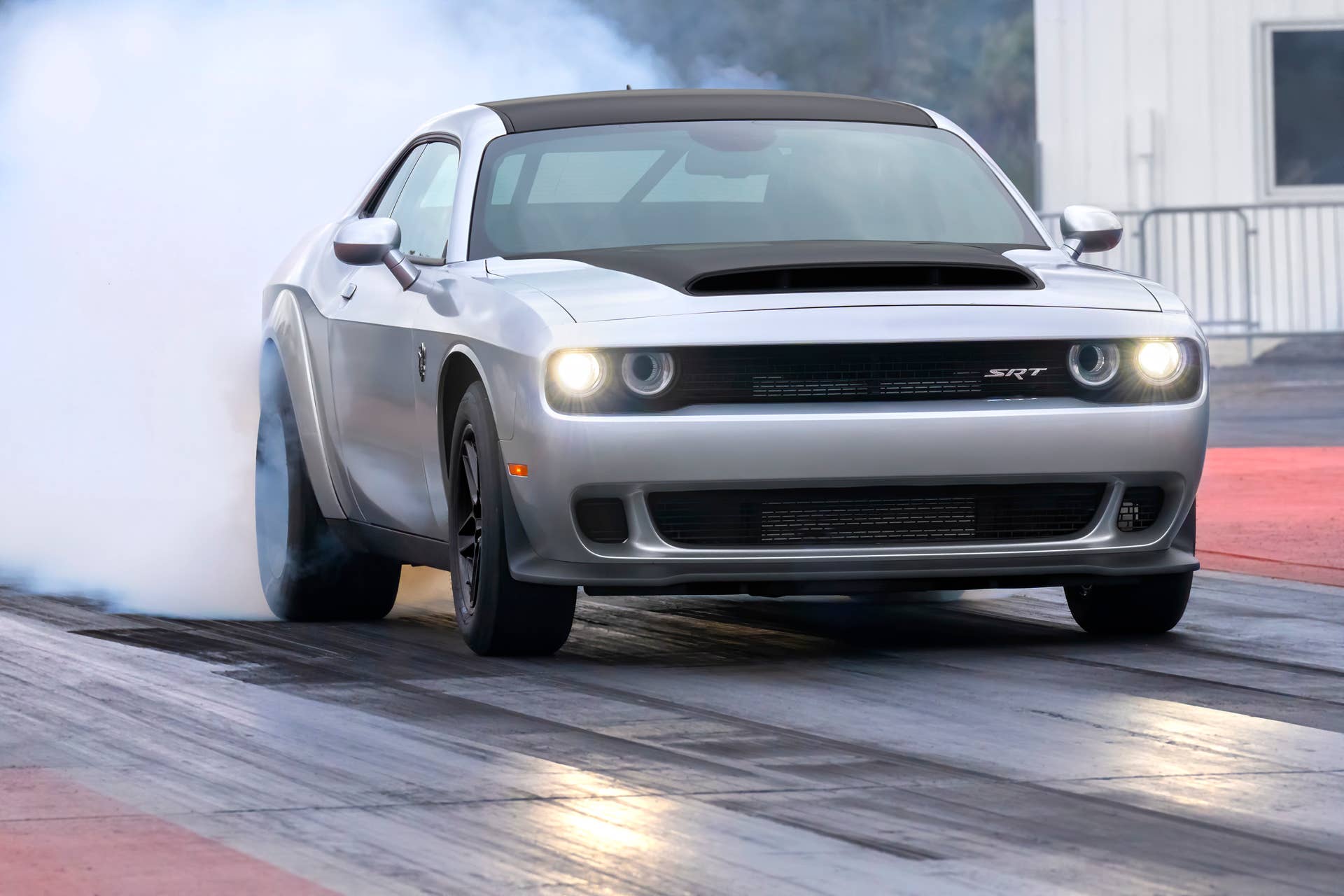
Challenger SRT Demon 170
Before the Challenger went out of production, Dodge also released the SRT Demon 170, which set new benchmarks for gas-powered cars:
- 6.2L supercharged V8 produces 1,025 hp and 945 lb-ft on E85 ethanol blend
- 0-60 mph in 1.66 seconds
- Highest G-force acceleration of any production car at 2.004 gs
- NHRA-certified quarter-mile time of 8.91 seconds
While the Challenger was offered with a six-speed manual, the Charger was limited to an eight-speed automatic. Both cars could be specified with rear- or all-wheel drive, but only for selected trims.
Although they were not known for athletic handling, the 2023 Challenger and Charger were true muscle cars. Their charismatic V8s and breathtaking straight-line performance have cemented their legendary status, and the all-new Charger has struggled to attain the same respect without a V8.
Pricing: Used Values Still High
Stellantis
When new, you could purchase a V6-powered Challenger or Charger for well under $40,000. The cheapest V8 models were available for under $45,000, but the supercharged models were a lot pricier. The 2023 Challenger SRT Super Stock started at $84,205, but that was before the destination charge and the gas-guzzler tax. Another option or two, and it was easily a $90,000 car. The Challenger SRT Demon 170 was even pricier, kicking off at $96,666 before any extras. Today, expect to pay well over $100,000 for a used 170.
But you don’t need a Super Stock or Demon 170 to enjoy one of these muscle cars. You can pick up one of the naturally aspirated Hemi V8 models for under $50k, but be aware that values of these models are expected to rise. The V8 Challenger and Charger may be the last of their kind, and many enthusiasts are aware of this.
Final Thoughts
Stellantis
Exotic Car Trader
Dodge
Reports from earlier in 2026 suggest that Dodge is working on a new V8-powered Charger. Until that happens, the 2023 Challenger and Charger represent the last of Dodge’s classic muscle cars with a V8 roar. These cars are expected to retain high values in the years ahead, particularly the explosive supercharged variants.
Choosing between the Charger or Challenger is a matter of a preference for sedans or coupes, or will be based on how much practicality you need. But the two cars deliver a similarly exciting driving experience, so one isn’t necessarily better than the other. Both are memorable chapters in Dodge’s muscle car history.
About the author

Karl Furlong
Senior Editor, Autoblog