
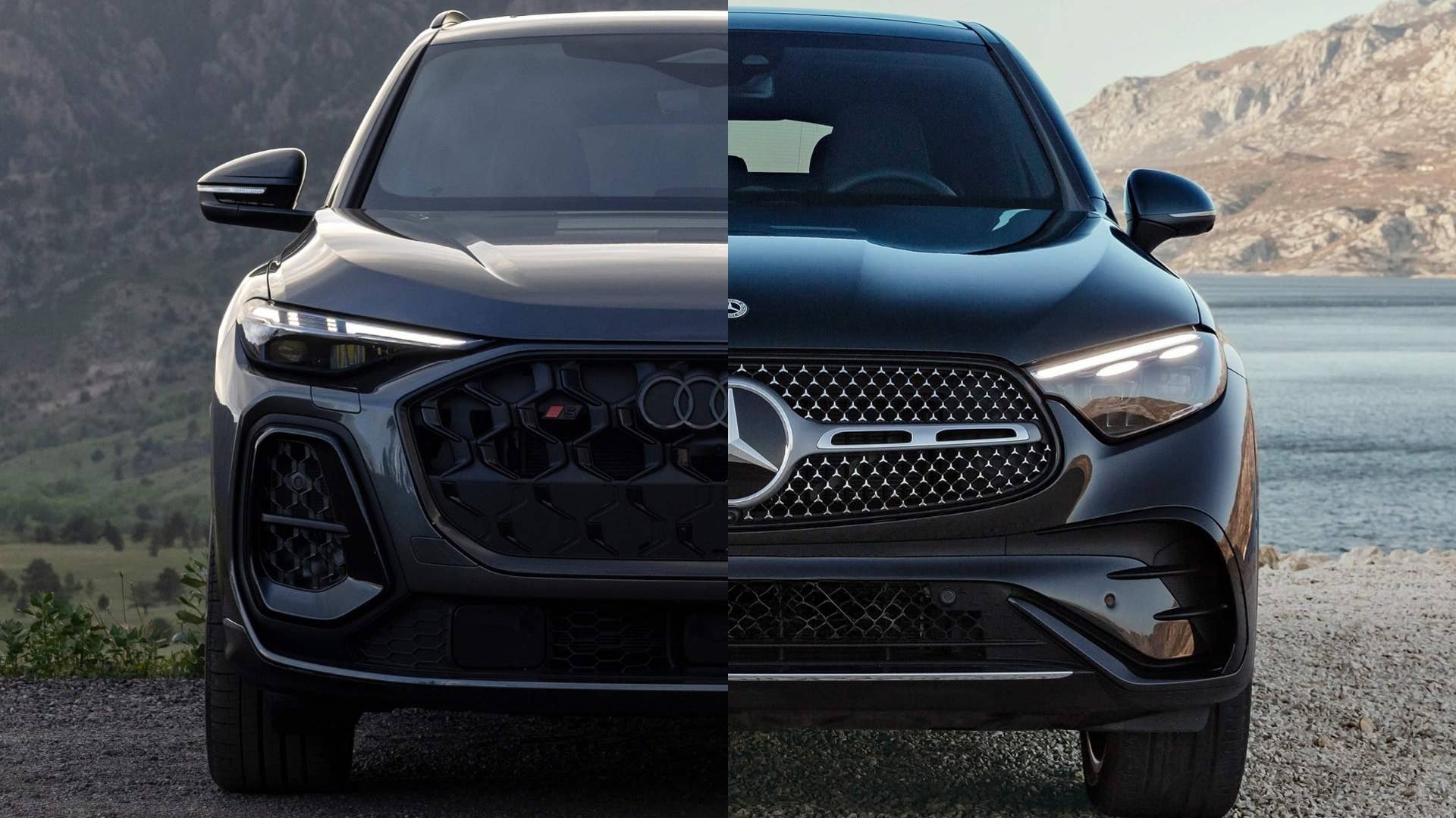
Audi and Mercedes-Benz cover the same price territory and compete directly in most segments, but they optimize for different things. Audi prioritizes driver engagement, cabin technology, and value at comparable trims. Mercedes prioritizes ride refinement, interior materials, and brand heritage. Neither is objectively better: the right choice depends on what matters to you.
Pricing
Audi’s 2026 lineup starts at $40,100 (A3 sedan); Mercedes enters at $41,500 (GLA SUV). Across comparable mid-range trims, Audi typically undercuts Mercedes by $2,000–$4,000, and features such as surround-view cameras and adaptive cruise that appear at Audi’s mid-trim level are sometimes paid options on Mercedes equivalents.
Every 2026 Audi includes Signature Care (scheduled maintenance for 3 years or 30,000 miles) at no extra cost. Mercedes charges separately for maintenance on ICE models, though EQ electric models include a 2-year service package. At the top end, both brands push past $130,000 in performance trim; Mercedes reaches considerably higher through Maybach.
The practical gap, factoring in included maintenance, is meaningful over a three-year ownership cycle, but Mercedes buyers consistently report that the interior feel justifies the premium. Both positions are reasonable.
Reliability
The two major US reliability surveys disagree, and it is worth understanding why before drawing conclusions.
J.D. Power’s 2025 Initial Quality Study measures problems reported in the first 90 days of ownership. Mercedes scored 210 problems per 100 vehicles; Audi scored 269 PP100, the worst result among rank-eligible brands. If you plan to lease or turn over the car within two to three years (when software glitches and early build issues dominate), this survey is the more relevant measure, and Mercedes has the advantage.
Consumer Reports’ 2026 Brand Report Card tracks reliability over a longer ownership window, drawing on member-reported data across model years. Audi ranked 13th overall; Mercedes ranked 19th. If you plan to keep the car four years or more, this longer-horizon data becomes more predictive, and Audi has the advantage.
The disagreement between the two surveys is not a flaw in either methodology. It reflects the different questions each is designed to answer. Match the survey to your ownership horizon. For a full three-brand breakdown, see our Audi vs BMW vs Mercedes reliability comparison.
Four Differences That Actually Matter
1. Infotainment: MMI vs MBUX
These systems are built around different use cases, which makes a direct comparison less useful than understanding what each is for.
Audi’s MMI is built around in-car entertainment. Top trims include a 10.9-inch passenger display that runs independently, in-car Disney+ streaming, and passenger gaming. Audi connect CARE is included free with every new vehicle.

Audi
Mercedes-Benz
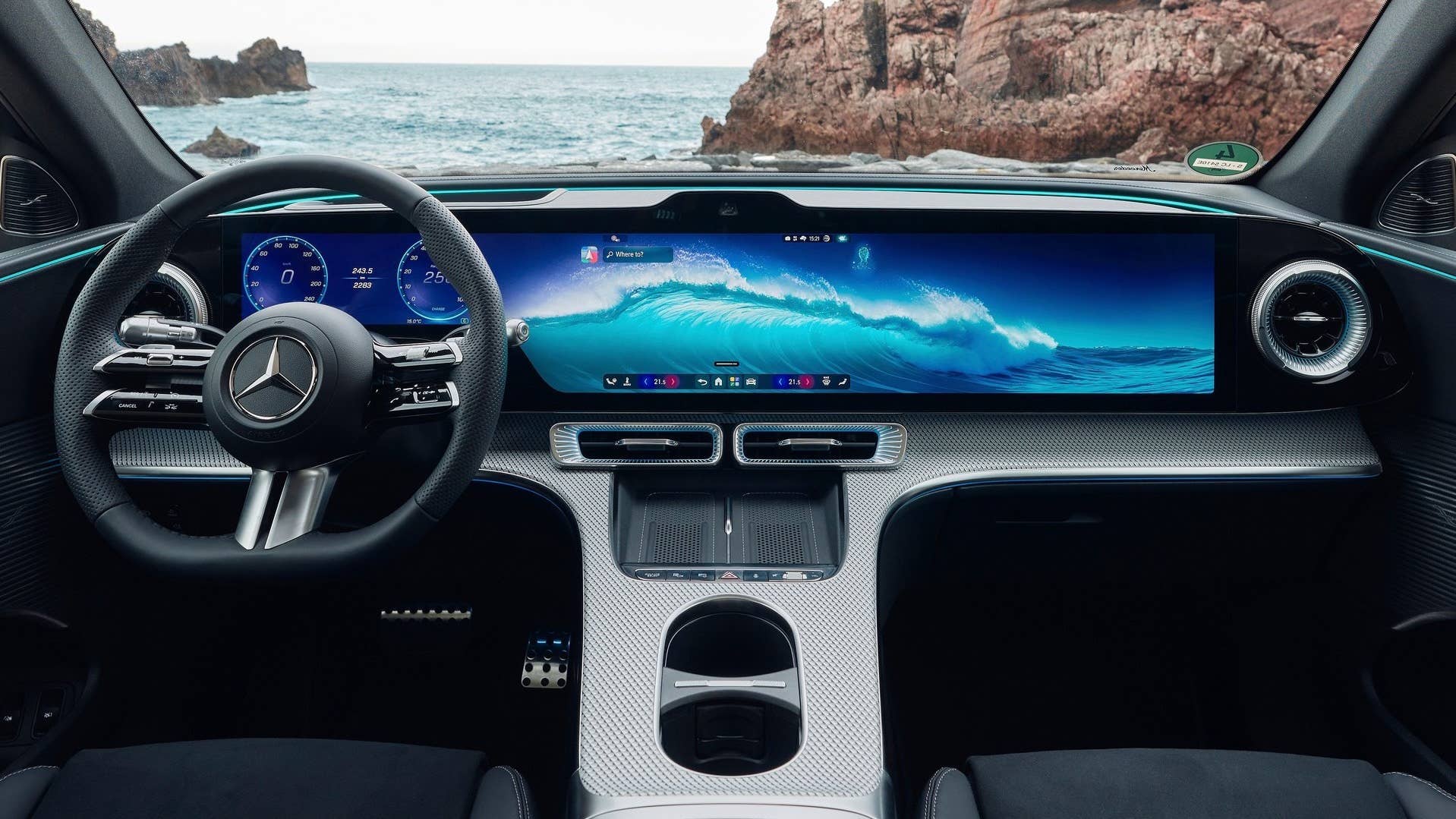
Mercedes’ MBUX is built around productivity and AI assistance. The Virtual Assistant integrates ChatGPT for conversational queries; MBUX Notes records and summarizes voice notes using generative AI; video conferencing via Teams, Zoom, and WebEx is available directly from the cabin.
These are genuinely different priorities, not better and worse versions of the same thing. Buyers who spend long stretches in the car for work will find MBUX more useful day-to-day. Families on road trips or buyers who want a passenger-focused cabin will find Audi’s approach more compelling. Neither is the default right answer.
2. All-Wheel Drive: Quattro vs 4MATIC
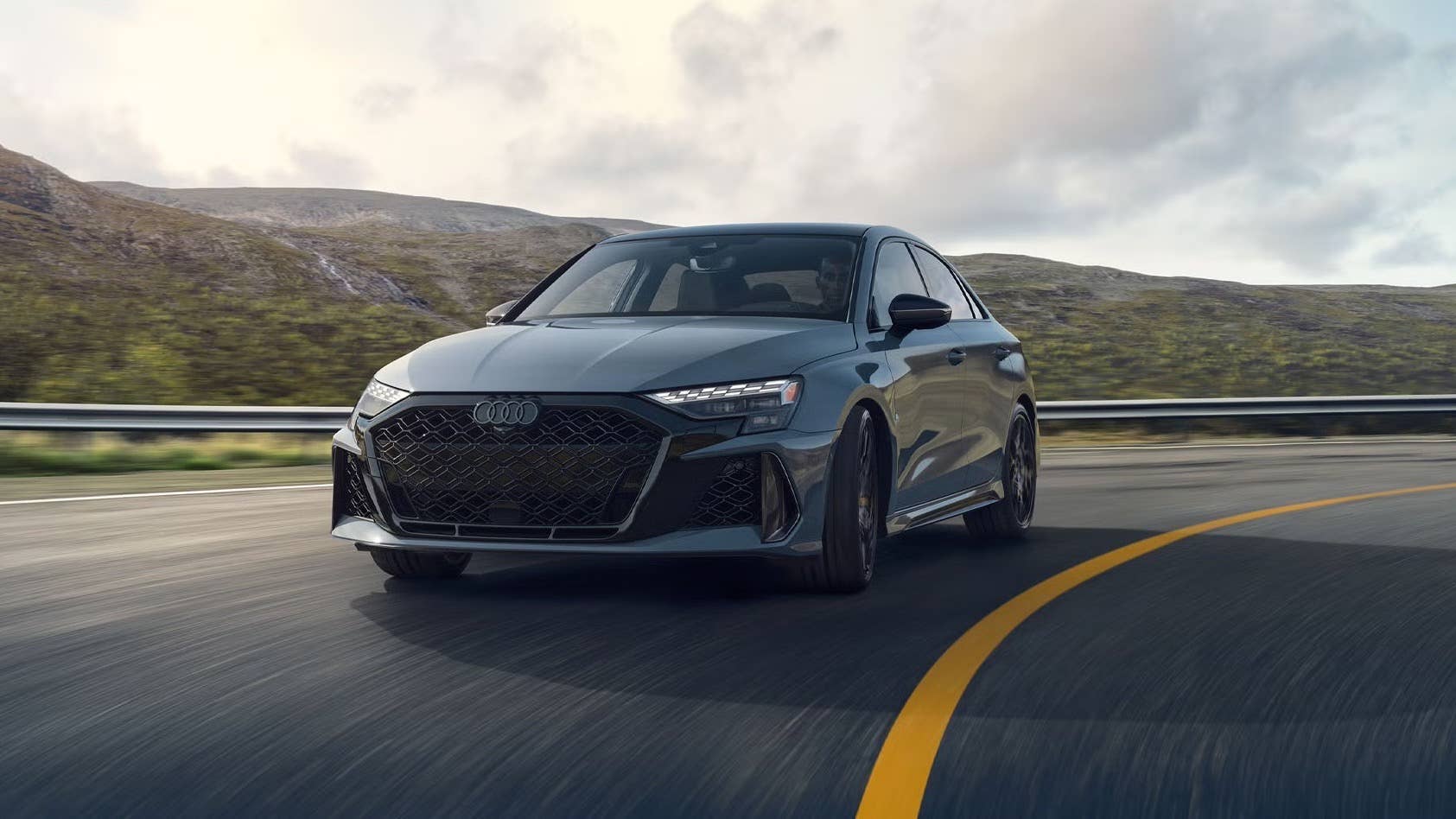
Quattro covers several mechanical configurations tuned to each platform. Longitudinal-engine models (the A4, A5, A6, Q5) default to a rear-biased 40/60 torque split. RS performance models add a rear sport differential; the RS 3 comes standard with a rear torque splitter capable of directing all rear torque to a single wheel.
Mercedes 4MATIC splits power 50/50 on standard SUVs and shifts rearward on AMG variants, but it remains a paid upgrade on some entry models, including the GLA 250. For buyers who want AWD primarily for winter traction, both systems are competent and the practical difference is small. For buyers who want to feel the system work under power on a dry road, quattro’s rear bias and mechanical sophistication are more engaging.
Audi
3. Interior Design: Minimalist Tech vs Plush Luxury
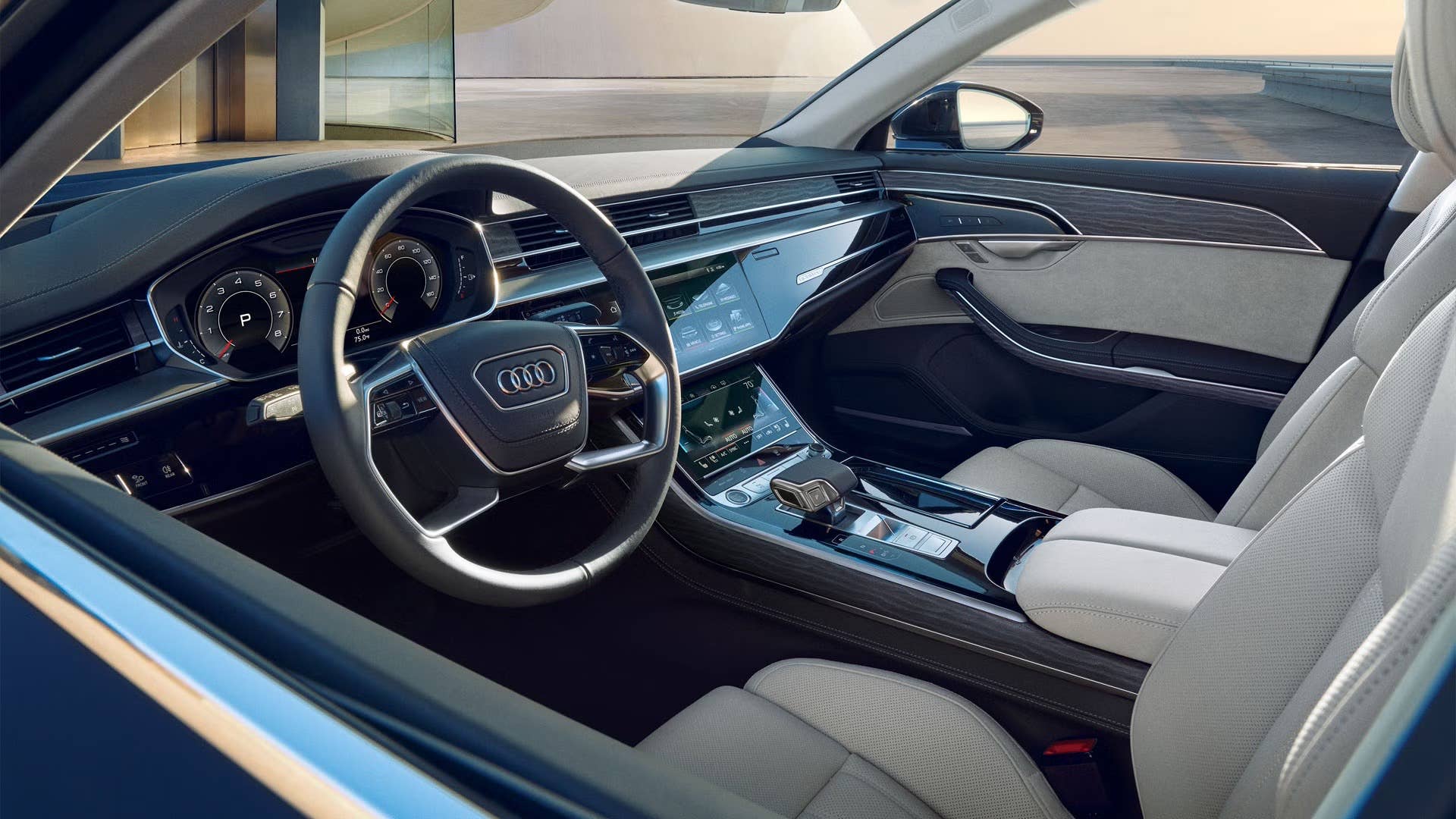
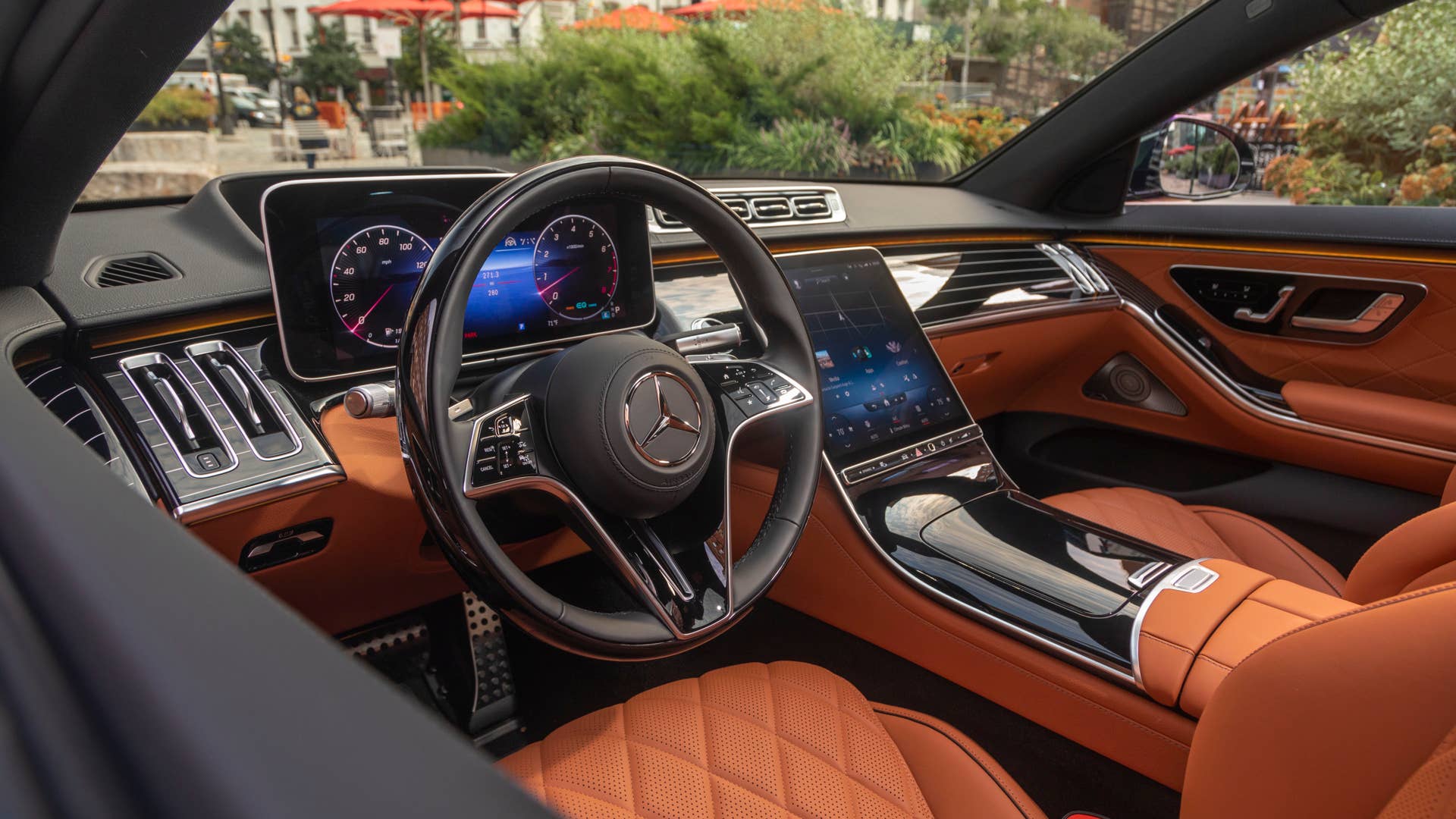
Side by side, the cabins reflect two distinct design philosophies rather than one being simply better than the other, though on materials quality, Mercedes does lead.
| Element | Audi | Mercedes |
| Surfaces | Flat and clean | Curved and contoured |
| Vents | Hidden | Visible and decorative |
| Trim | Brushed aluminum, matte wood | Contrasting metals, visible stitching |
| Lower surfaces | Piano-black panels | Leather and wood wraps |
Mercedes grades higher on tactile materials at equivalent trim levels: the surfaces you touch and the finishes you see are richer. That is a genuine, observable difference, not a subjective one. Audi’s piano-black lower panels are a recurring criticism in press reviews precisely because they contrast with an otherwise well-executed cabin.
Audi
Mercedes-Benz
4. Behind the Wheel
Audi tunes for driver involvement: quicker steering, firmer body control, a ride that stays connected to the road. Mercedes tunes for refinement: softer suspensions, quieter cabins, lighter steering effort. The gap is sharpest at the performance ends: the RS 3’s 394 hp five-cylinder with quattro versus AMG’s hand-built engines with the “one man, one engine” build process at Affalterbach. In the middle of the range, the gap narrows considerably; a Q5 on adaptive dampers rides closer to a GLC 300 than to an RS model.
Depreciation
This is the factor most comparison articles skip, and it matters more than a $3,000 sticker gap for buyers who plan to sell or trade in after three to five years.
Both Audi and Mercedes depreciate faster than Japanese luxury brands, which is typical for German luxury. Mercedes historically holds value slightly better than Audi in the US market, particularly in SUV segments: the GLE and GLC retain resale value that comparable Q-series models do not always match. This can offset some or all of Mercedes’ higher purchase price, depending on trim and segment. Buyers financing over four or five years or planning an eventual trade-in should run the residual value numbers for the specific models they are comparing, not just the sticker prices.
Which to Buy
| If you… | Buy |
| Want better value at comparable trim | Audi |
| Want the most luxurious interior materials | Mercedes |
| Want AWD standard on most models | Audi |
| Want a softer, quieter highway ride | Mercedes |
| Want an entertainment-focused cabin | Audi |
| Want AI productivity tools in the car | Mercedes |
| Plan to keep the car under 3 years | Mercedes (IQS advantage) |
| Plan to keep the car 4+ years | Audi (CR long-term advantage) |
| Want theatrical, hand-built performance | Mercedes-AMG |
| Want driver-focused AWD performance | Audi RS |
| Want included maintenance for 3 years | Audi (Signature Care) |
Mercedes-Benz
Audi
FAQ
Is Audi better than Mercedes?
Neither is objectively better. Audi has the advantage on value, cabin technology, standard AWD availability, and long-term reliability data. Mercedes has the advantage on interior materials, ride refinement, short-term reliability data, and resale value in several segments.
Is Audi cheaper than Mercedes?
At point of sale, yes, typically by $2,000–$4,000 on comparable trims, plus Audi’s included maintenance closes the gap further over three years. Mercedes can recoup some of that through stronger depreciation curves in certain segments, so the total cost of ownership comparison depends on the specific models and how long you keep the car.
Quattro or 4MATIC: which is better?
Both are capable all-weather systems. Quattro is standard on more Audi models and uses a rear-biased split on longitudinal-engine cars, making it more engaging under power. 4MATIC prioritizes traction confidence and remains optional on some Mercedes entry models. For winter-only use, both work equally well.
Sources
- Audi USA (audiusa.com): pricing, Audi Signature Care, Digital Services, Audi connect CARE, quattro system configurations, Q5 and RS 3 specifications
- Mercedes-Benz USA (mbusa.com): pricing, Premier Prepaid Maintenance, EQ integrated service package
- Mercedes-Benz (mercedes-benz.com): MBUX Virtual Assistant, ChatGPT integration, MBUX Notes, video conferencing features
- J.D. Power 2025 U.S. Initial Quality Study: 90-day initial quality scores
- Consumer Reports 2026 Automotive Brand Report Card: long-term reliability rankings
About the author

Adam Lynton
Co-Editor-in-Chief, Autoblog