
Key Points
- The Outback, Forester, and Crosstrek share engines, AWD, and driver-assist, differing mainly in size.
- Pricing ranges from $26,995 (Crosstrek) to $34,995 (Outback), reflecting increased size and features.
- Forester offers most interior space for its size; Outback alone has a turbo engine option.
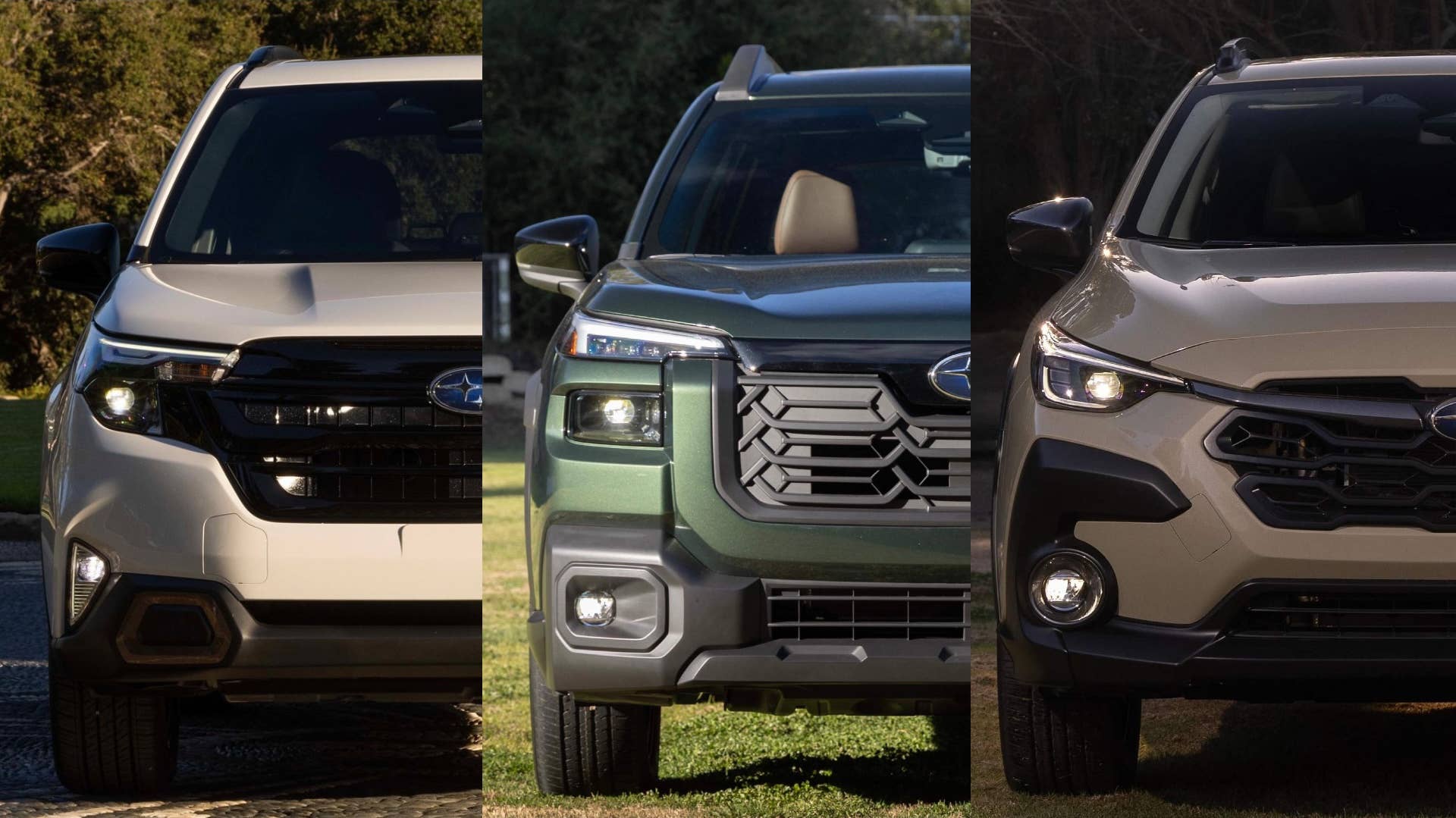
The 2026 Subaru Outback, 2026 Subaru Forester, and 2026 Subaru Crosstrek run the same 2.5-liter boxer four, the same Symmetrical All-Wheel Drive, and the same EyeSight driver-assist suite. Two of them even share a wheelbase. What separates them is size, and the gap between them is bigger than the shared mechanicals make it look.
Pricing runs from $26,995 for the Crosstrek to $29,995 for the Forester to $34,995 for the Outback, an $8,000 spread from the smallest model to the largest. All three use the same base engine, so the price differences come down to size, trim level, and cargo space.
The Size Ladder, Measured
| Crosstrek | Forester | Outback | |
| Length | 176.4 in | 183.3 in | 191.7 in |
| Wheelbase | 105.1 in | 105.1 in | 108.1 in |
| Width (without mirrors) | 70.9 in | 72.0 in | 74.0 in |
| Height | 62.8 in | 68.1 in | 67.5 in |
| Ground clearance | 8.7 in | 8.7 in | 8.7 in |
The Crosstrek and Forester sit on the same 105.1-inch wheelbase, yet the Forester stands more than five inches taller, 68.1 inches against 62.8. The Forester is the tallest of the three, fractionally above even the longer Outback at 67.5 inches, and that upright body is where its cargo advantage over the Crosstrek comes from. The Outback is the outlier on length: its 2026 redesign traded the old wagon profile for a taller, boxier midsize body, which stretched the wheelbase to 108.1 inches and the body to 191.7 inches, fifteen inches longer than the Crosstrek. Only ground clearance stays constant, at 8.7 inches for all three in standard form.
Subaru
Subaru
Cargo And Storage
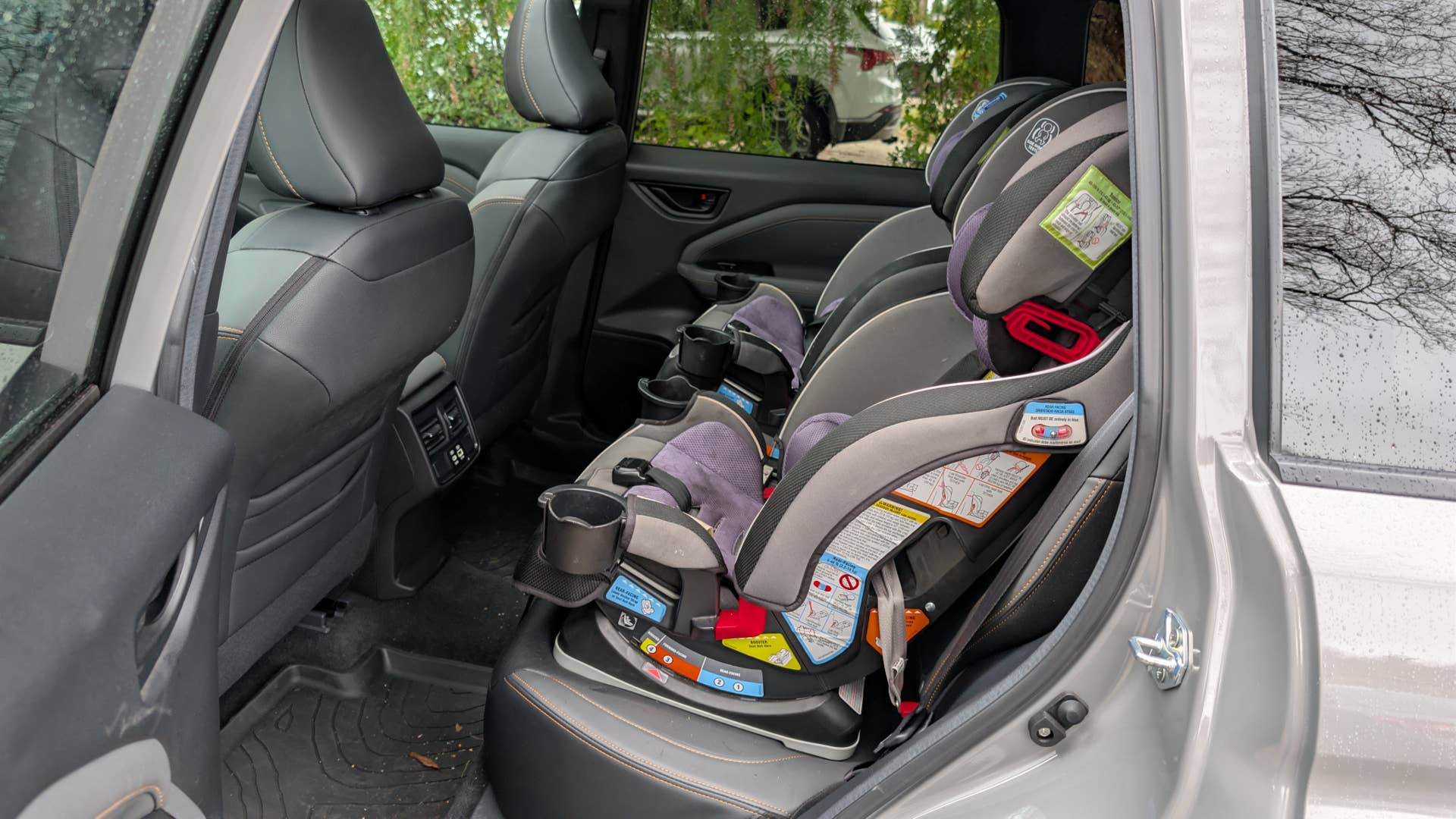
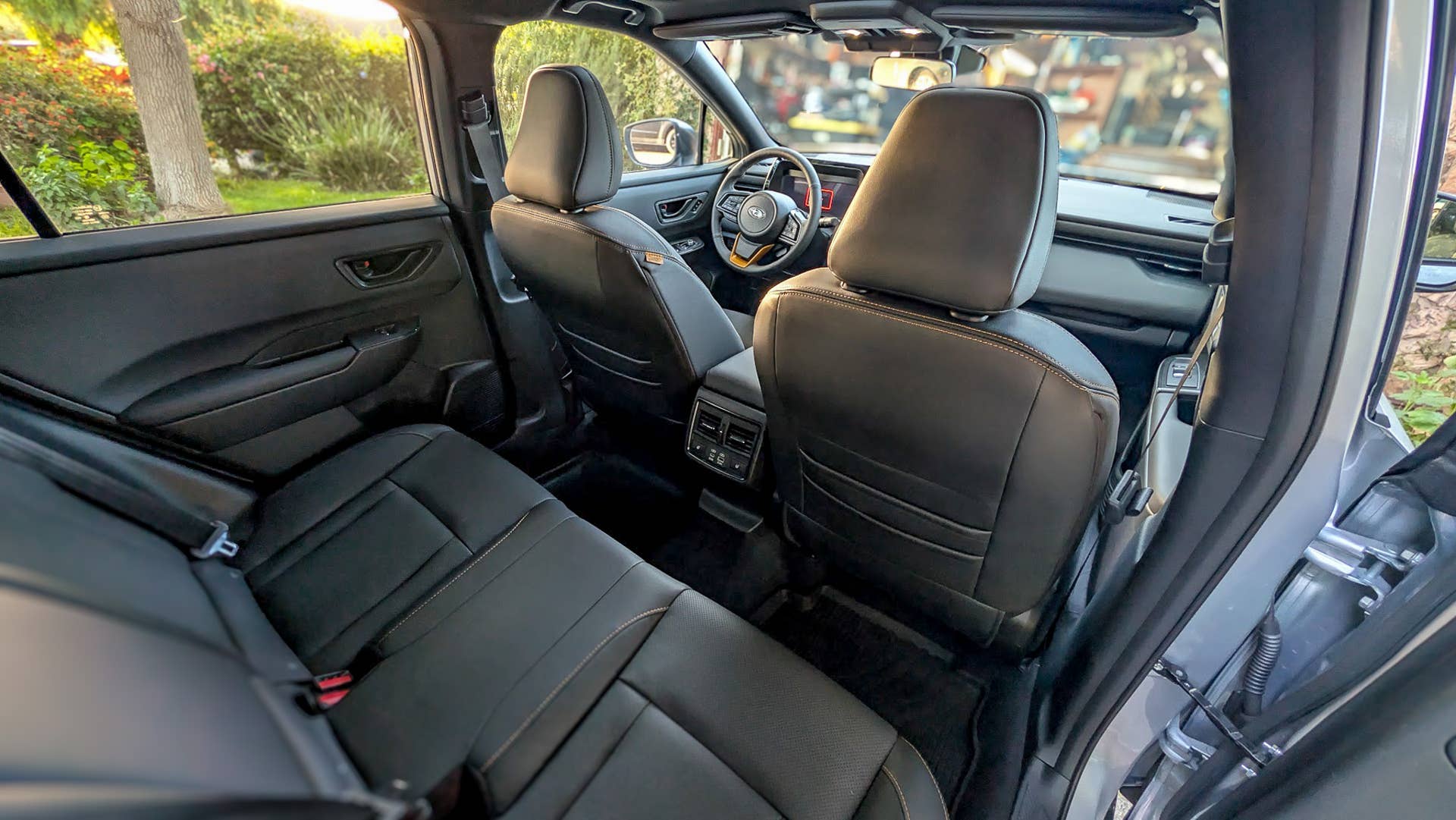
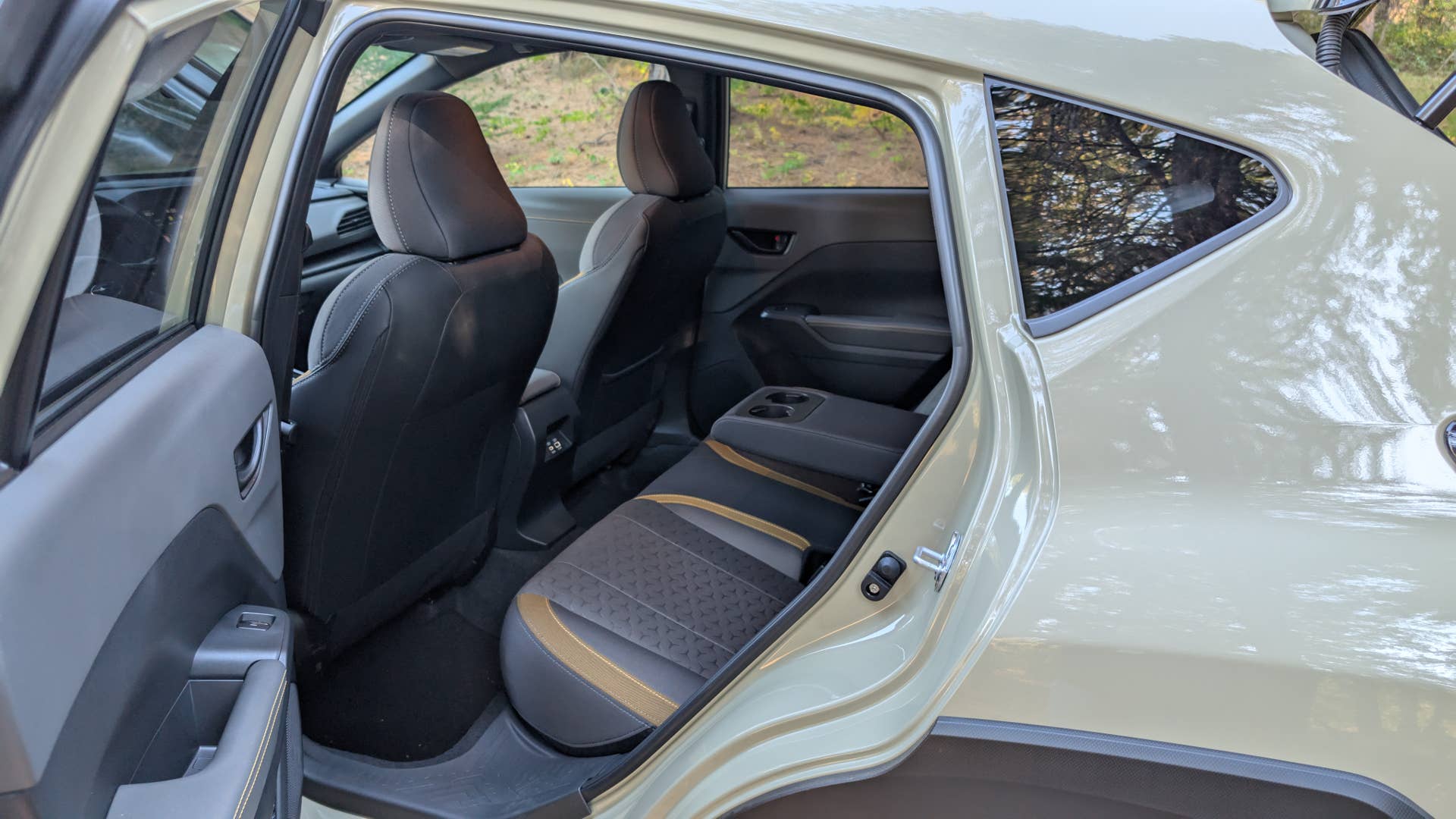
The Crosstrek carries the least behind its second row and the Outback the most, with the Forester between them, and folding the seats roughly doubles all three. One quirk sits outside that order: a Forester Base without the panoramic moonroof out-carries every other Forester, at 29.6 cubic feet behind the seats and 74.4 folded.
Kristen Brown
Kristen Brown
Kristen Brown
| Cargo volume | Crosstrek | Forester | Outback |
| Behind second row | 19.9 cu ft | 27.5 cu ft | 34.6 cu ft |
| Rear seats folded | 54.7 cu ft | 69.1 cu ft | 80.5 cu ft |
The three cabins also organize small-item storage differently.
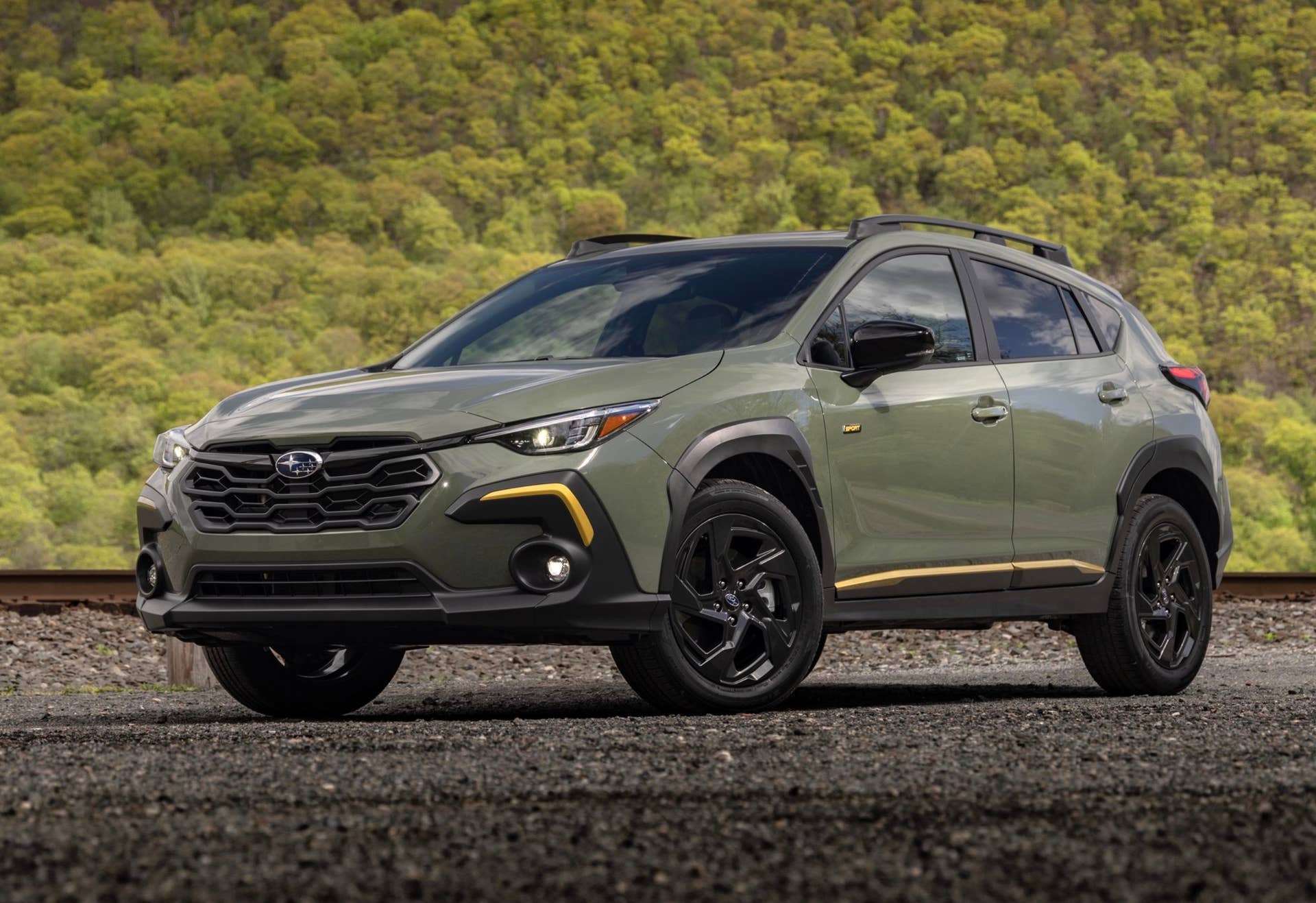
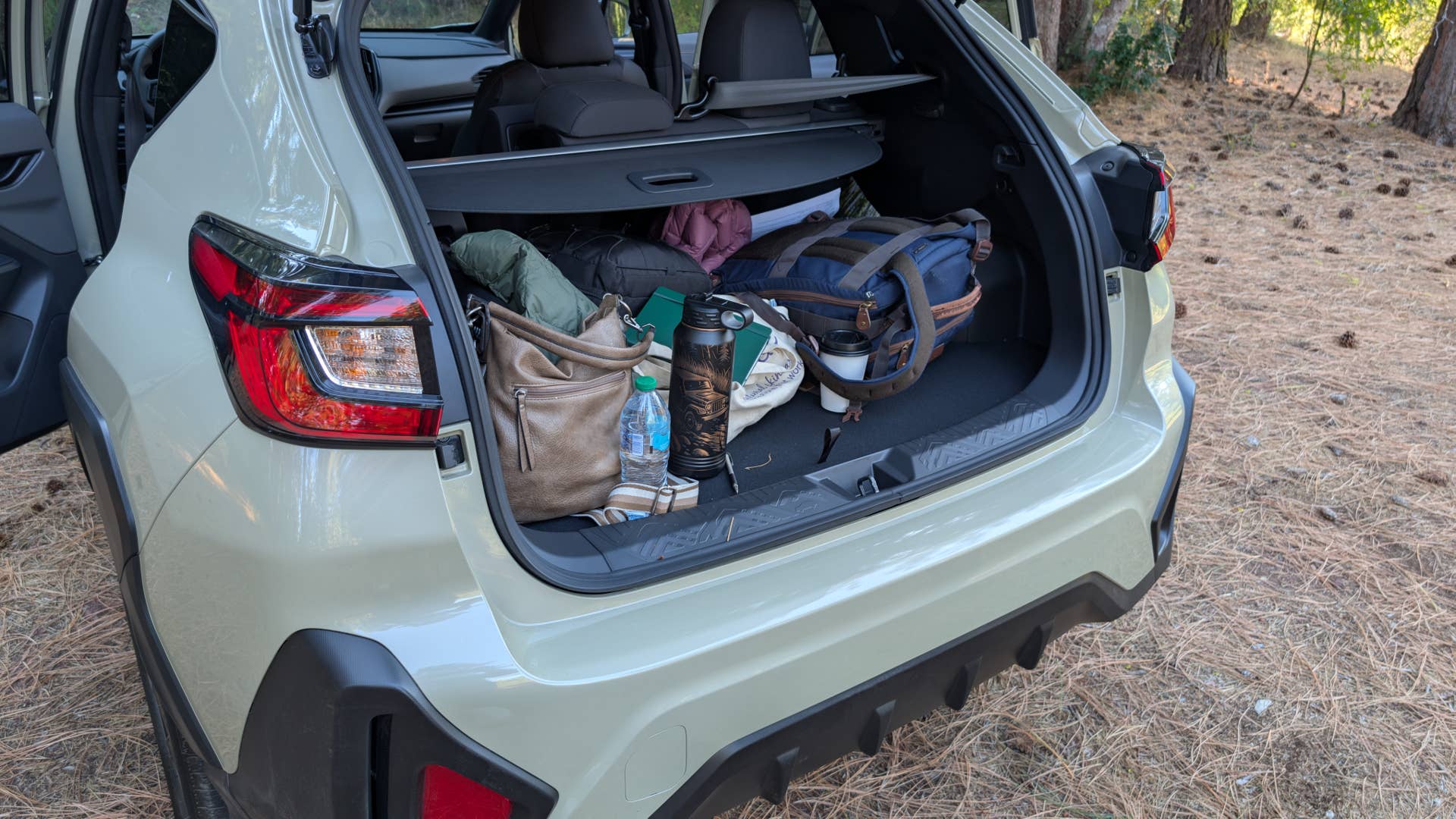
The Crosstrek’s hold is the smallest of the three. Grocery-bag hooks, cargo tie-down points, an available rear cargo tray, and a retractable cargo cover sit in a low, square load bay, and a wide rear gate with an available cargo-area light makes loading easier after dark.
Kristen Brown
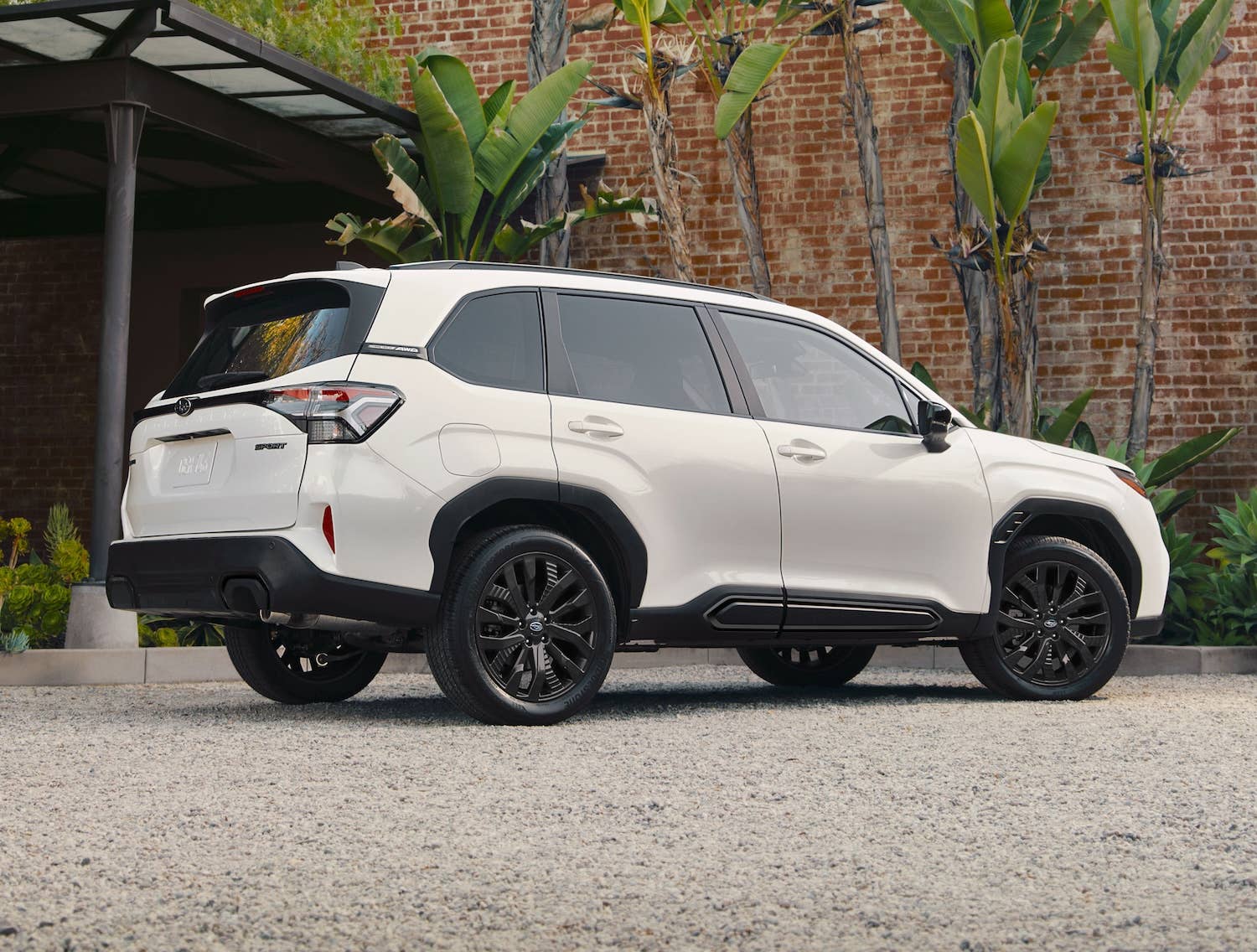
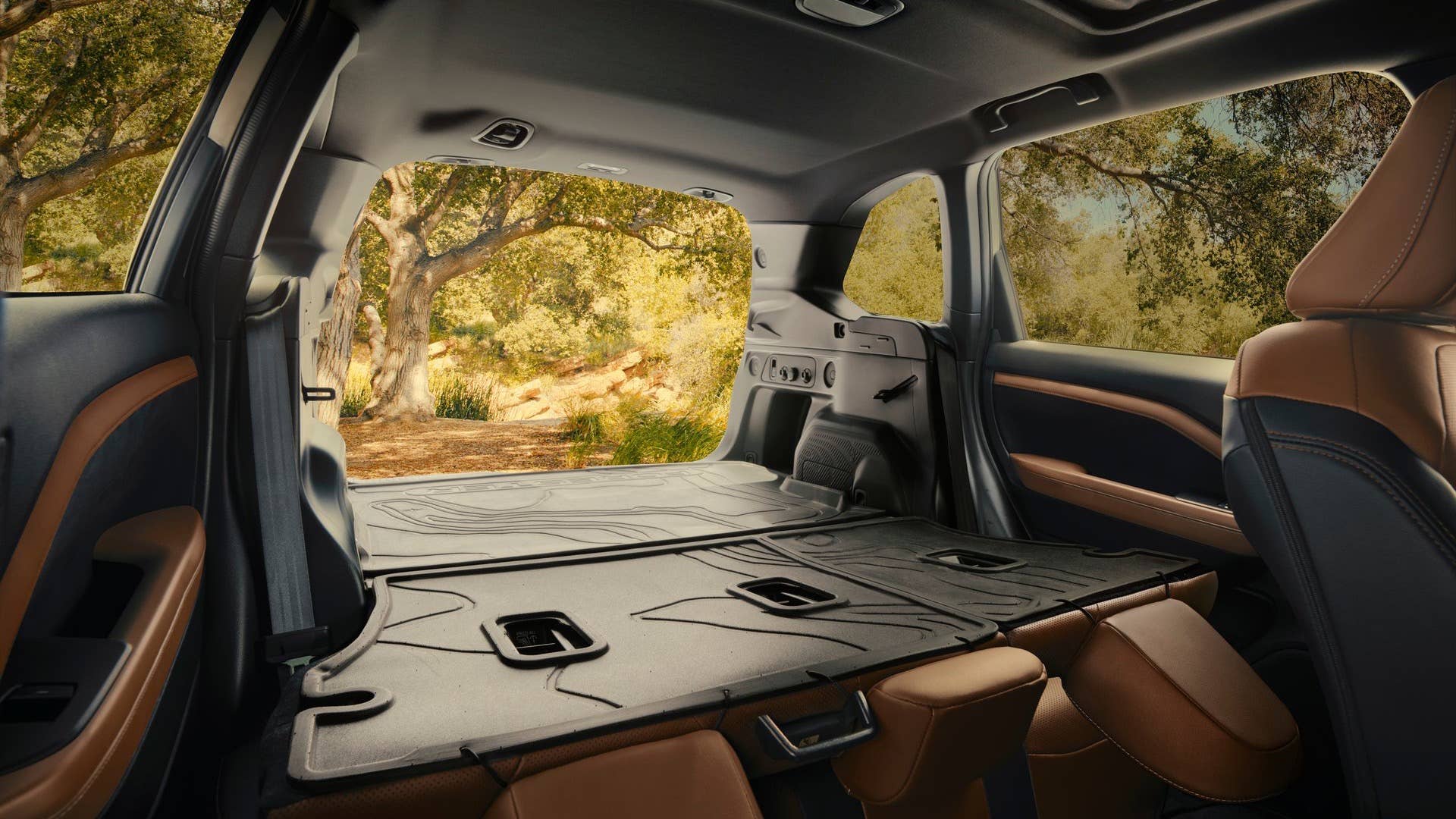
The Forester’s multifunction center console has an illuminated tray for phones or keys, its door pockets are wide enough for water bottles, and tie-down hooks plus under-floor storage on some trims keep gear from sliding around. A power liftgate with height memory is available, which helps in low garages and when more than one driver shares the car.
Subaru
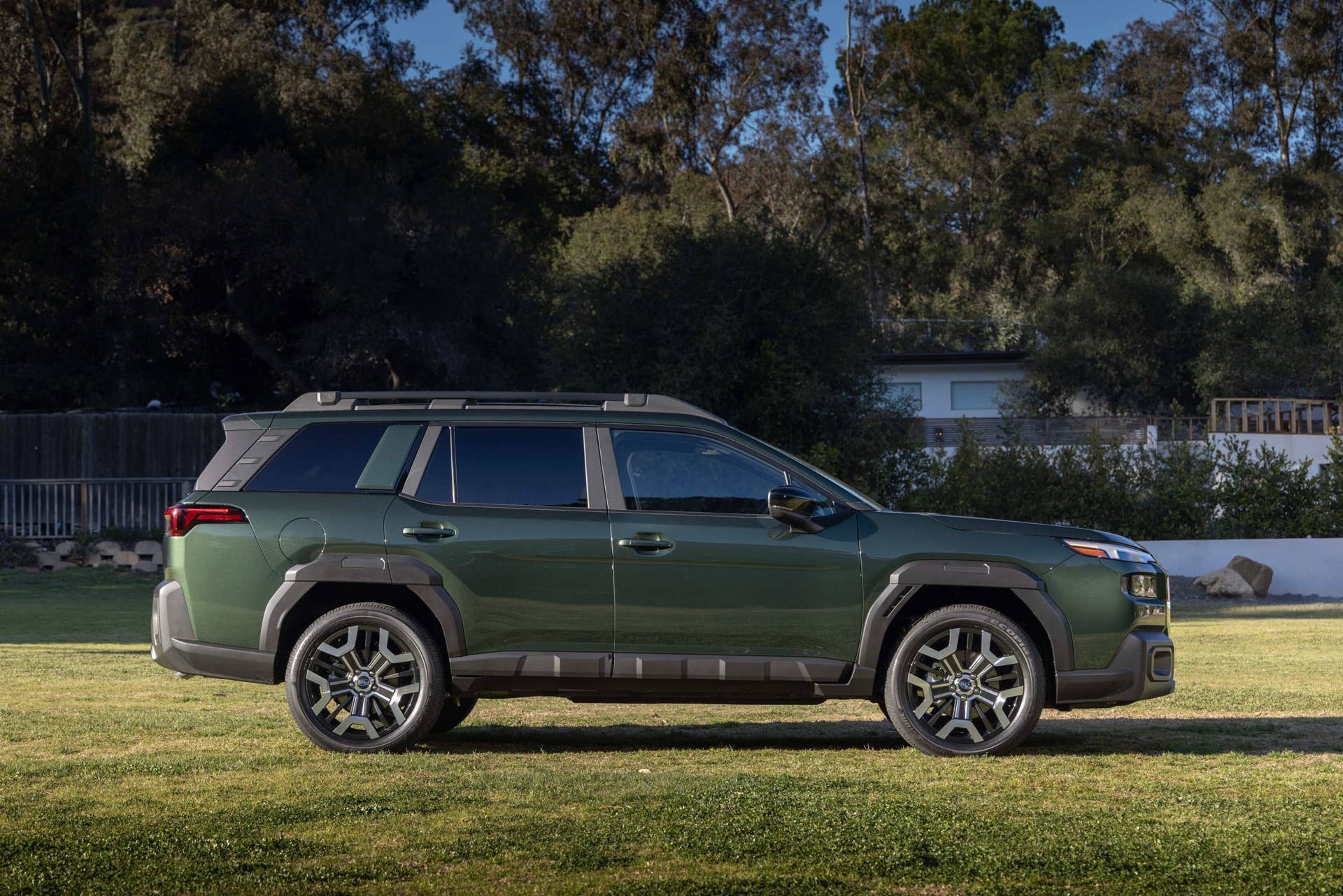
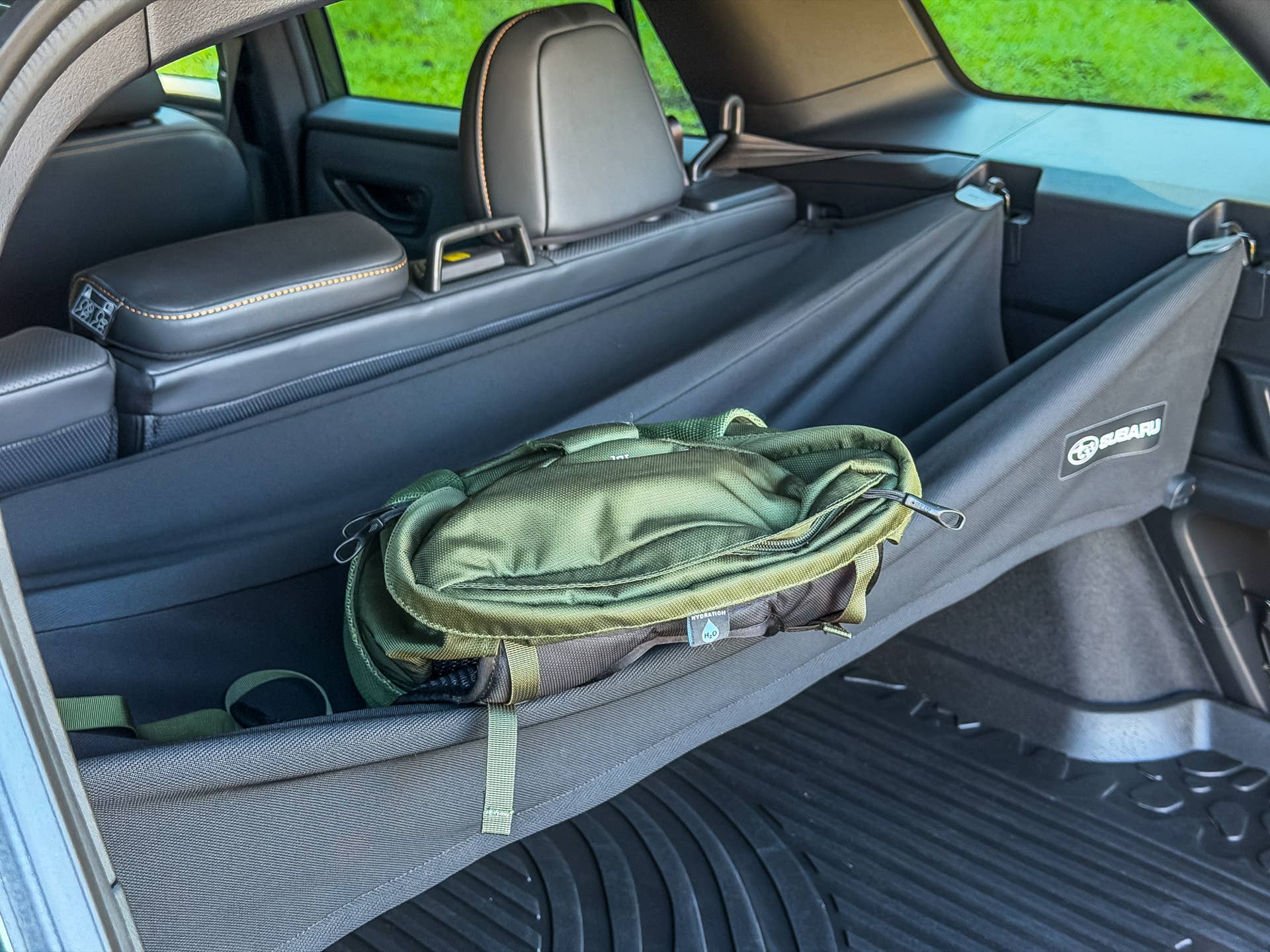
The Outback has cubbies on either side of the cargo area and an under-floor compartment above the spare wheel, carpeted door pockets that swallow 32-ounce bottles, and a center console bin that is narrow but deep. A removable cargo tray and tie-down hooks handle larger loads, the load floor sits low so heavy items do not have to clear a tall bumper, and an available hands-free power rear gate opens when both hands are full.
Chase Bierenkoven
One Engine, Three Bodies
All three share a 2.5-liter boxer four producing 180 horsepower and 178 lb-ft of torque, paired with a CVT and standard Symmetrical All-Wheel Drive. On that engine they behave much alike, because it is the same drivetrain carrying different amounts of body.
The Outback can be ordered with a 2.4-liter turbo boxer, 260 horsepower and 277 lb-ft, which lifts towing to 3,500 pounds. That engine is exclusive to the Outback. The Crosstrek and Forester go the other way, each available as a hybrid that the Outback does not offer.
What Each Step Up Costs
The 2026 Crosstrek starts at $26,995, the 2026 Forester at $29,995, and the 2026 Outback at $34,995, where the Premium trim is now the entry point after Subaru discontinued the base Outback. The most expensive Crosstrek and the cheapest Outback meet at exactly $34,995, so at that figure the question becomes a loaded compact against a base midsize.
On the shared 2.5-liter engine the EPA rates the Crosstrek and the Forester identically, at 26 mpg city and 33 mpg highway, 29 combined, each with an estimated annual fuel cost of $2,150. The larger Outback drops to 25 mpg city and 31 mpg highway, 27 combined, at $2,300 a year. That $150 annual gap comes to roughly $750 over five years on the base engine, and it widens in Wilderness trim: the turbocharged Outback Wilderness costs an EPA-estimated $2,700 a year against $2,400 for both the Crosstrek and the Forester Wilderness.
The Crosstrek Hybrid is EPA-rated at 36 mpg combined and $1,750 a year and the Forester Hybrid at 35 mpg combined and $1,800, well below any gas model in the group and a level the Outback cannot reach because it offers no hybrid.
The Wilderness Question
Each of the three has a Wilderness trim, and they line up the same way the standard models do. The Crosstrek Wilderness and Forester Wilderness both raise ground clearance to 9.3 inches and fit all-terrain tires, while the Outback Wilderness goes to 9.5 inches and adds electronically controlled dampers, new for 2026. On a tight trail the shorter and lighter Crosstrek and Forester are easier to place than the longer, heavier Outback.
Which One Fits Your Life
| Crosstrek | Forester | Outback | |
| Best for | City and budget | Everyday family use | Cargo, towing, long trips |
| Cargo (behind / folded) | 19.9 / 54.7 cu ft | 27.5 / 69.1 cu ft | 34.6 / 80.5 cu ft |
| Footprint | Smallest, easiest to park | Compact, boxy, tall | Largest, midsize |
| Engine ceiling | Hybrid option | Hybrid option | Turbo option |
| Starts at | $26,995 | $29,995 | $34,995 |
The Crosstrek is the pick if your priorities are price and parking, you carry one or two people, and your gear fits behind an upright second row. The Outback is for buyers who fill a midsize cargo hold, want the turbocharged engine, or need to tow.
For most buyers, though, the Forester is the one to get. It rides on the Crosstrek’s 105.1-inch wheelbase but opens up nearly as much room as the Outback inside: rear legroom comes within a tenth of an inch of the bigger car, 39.4 against 39.5, and 27.5 cubic feet of cargo behind the seats against the Outback’s 34.6. Unless you specifically need the turbo, the towing, or that last bit of cargo space, the middle of the range covers it.
About the author

Adam Lynton
Co-Editor-in-Chief, Autoblog