
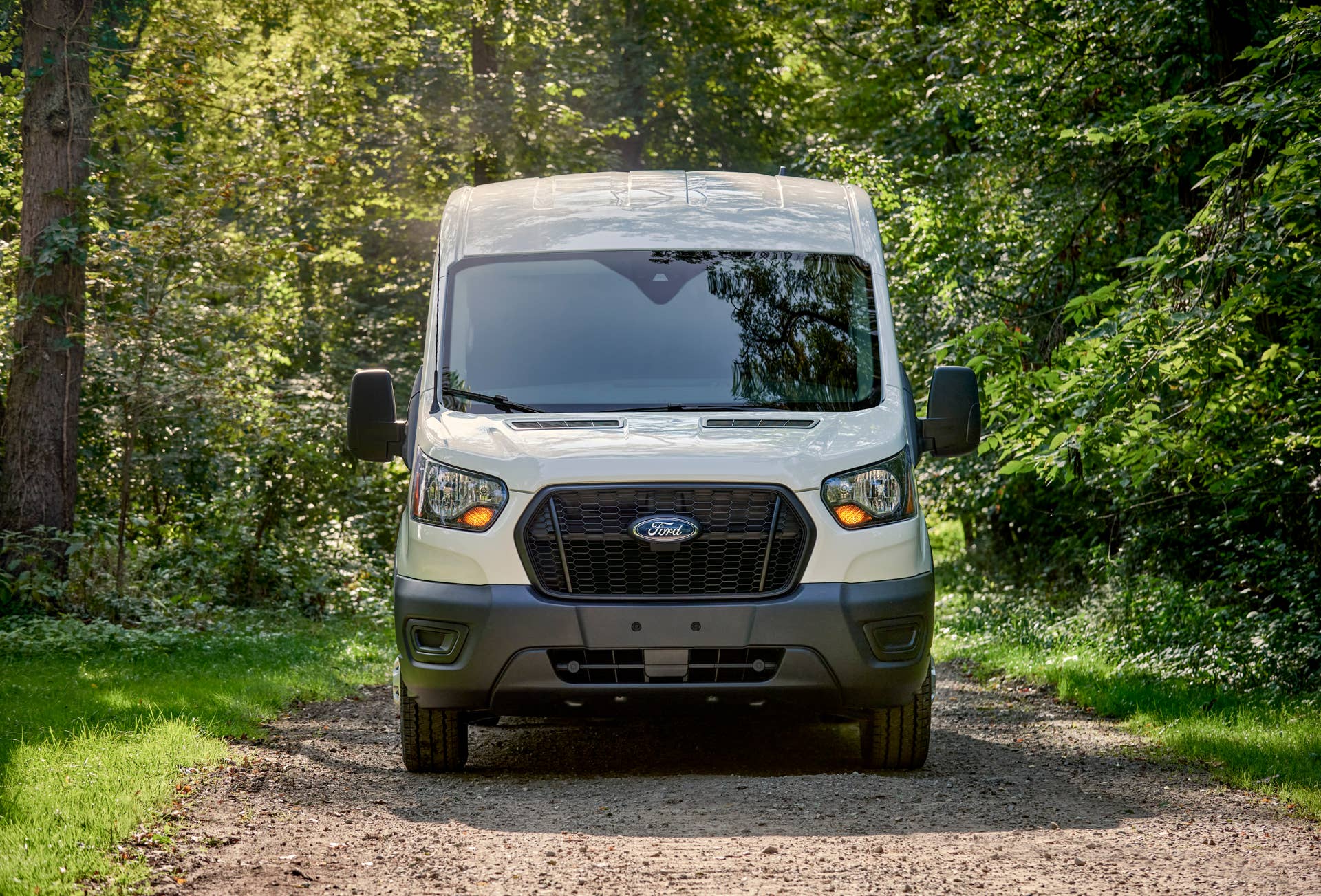
MSRP: $47,400
Use the table of contents to jump to a section
Overview
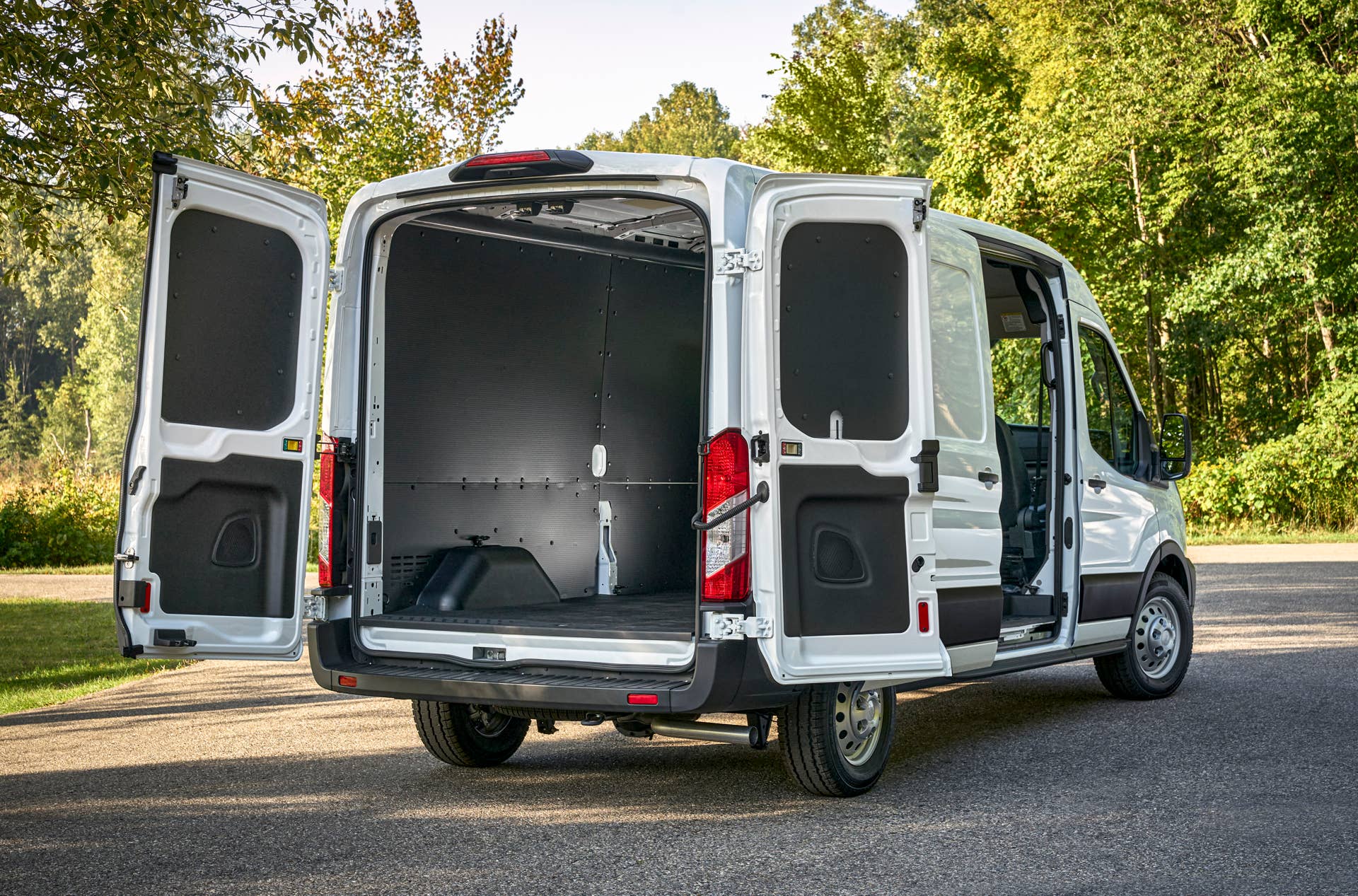
The 2025 Ford Transit full-size van continues its reign as the most popular vehicle in its class in America, largely because few competitors provide the same level of modularity. It functions as either a dedicated Cargo Van or a Passenger Van capable of seating up to 15 people. To meet specific commercial requirements, the Ford Transit offers three distinct roof heights, two wheelbases, and an extended-length body.
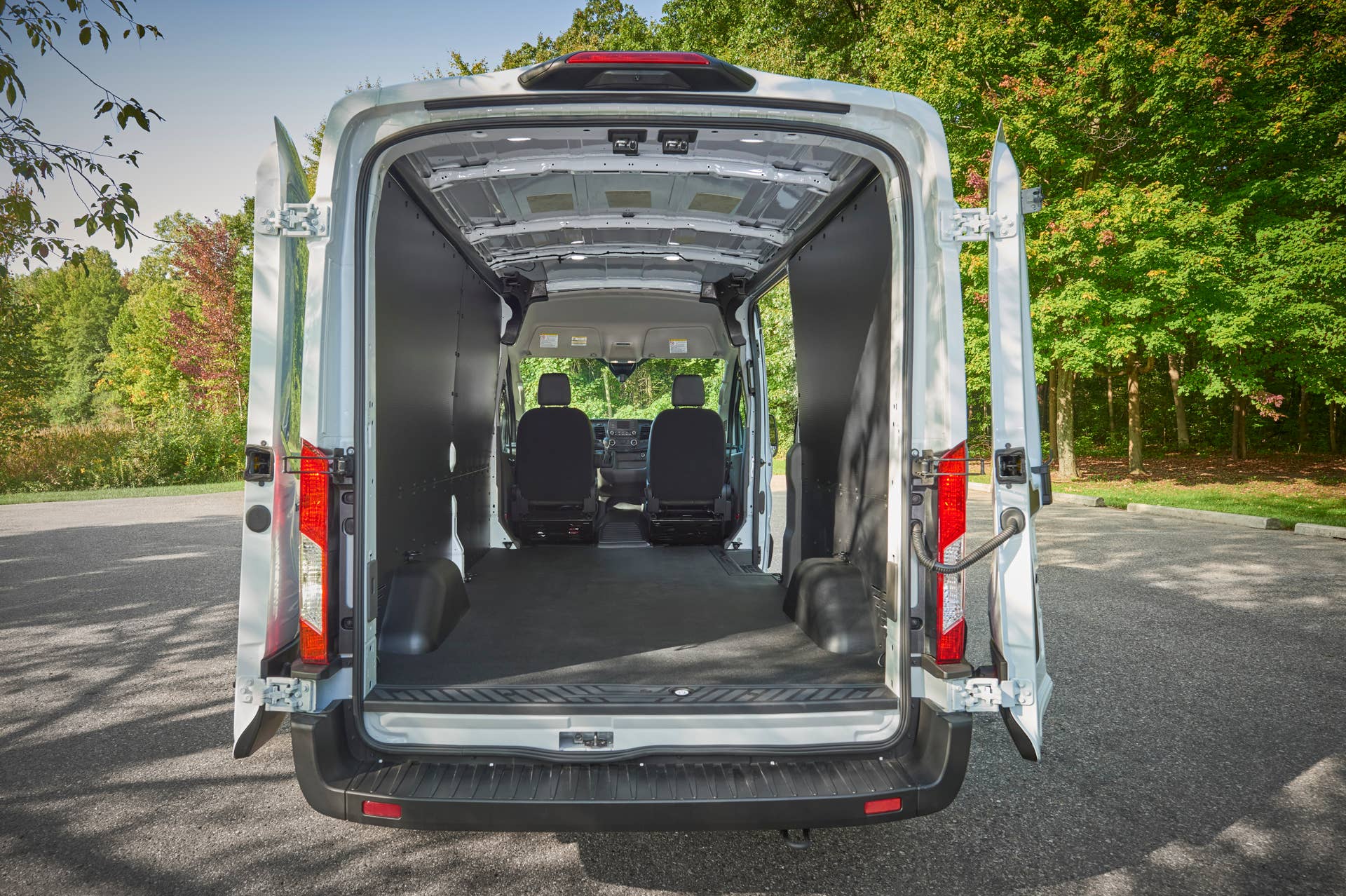
Buyers can choose between RWD or optional intelligent AWD. A pair of V6 engines paired with a 10-speed automatic transmission provides the motivation. With a maximum cargo volume of 487.3 cu-ft behind the front seats and a peak payload capacity of 5,062 lbs, it remains a formidable workhorse. The Transit competes directly against the Ram ProMaster, Mercedes-Benz Sprinter, and Chevrolet Express/GMC Savana.
What’s New for 2025
Updates for the 2025 Transit model year focus on practical improvements. Ford introduces four factory-installed trade packages for electricians, HVAC technicians, general contractors, and delivery services. These packages are installed at the factory, remain covered by the warranty, and can be financed with the Cargo Van.
New options include larger grab handles for easier entry and exit, plus a mobile power cord with a fast-charger adapter for jobsite power needs. High-roof cargo vans now feature a 253-degree rear door opening as standard equipment for improved cargo access.
A wall liner kit simplifies upfit installation while adding interior lighting and wheelwell covers. Smart Acceleration Truncation adjusts acceleration based on payload weight for smoother launches. Last of all, the Transit Trail is discontinued.
Exterior
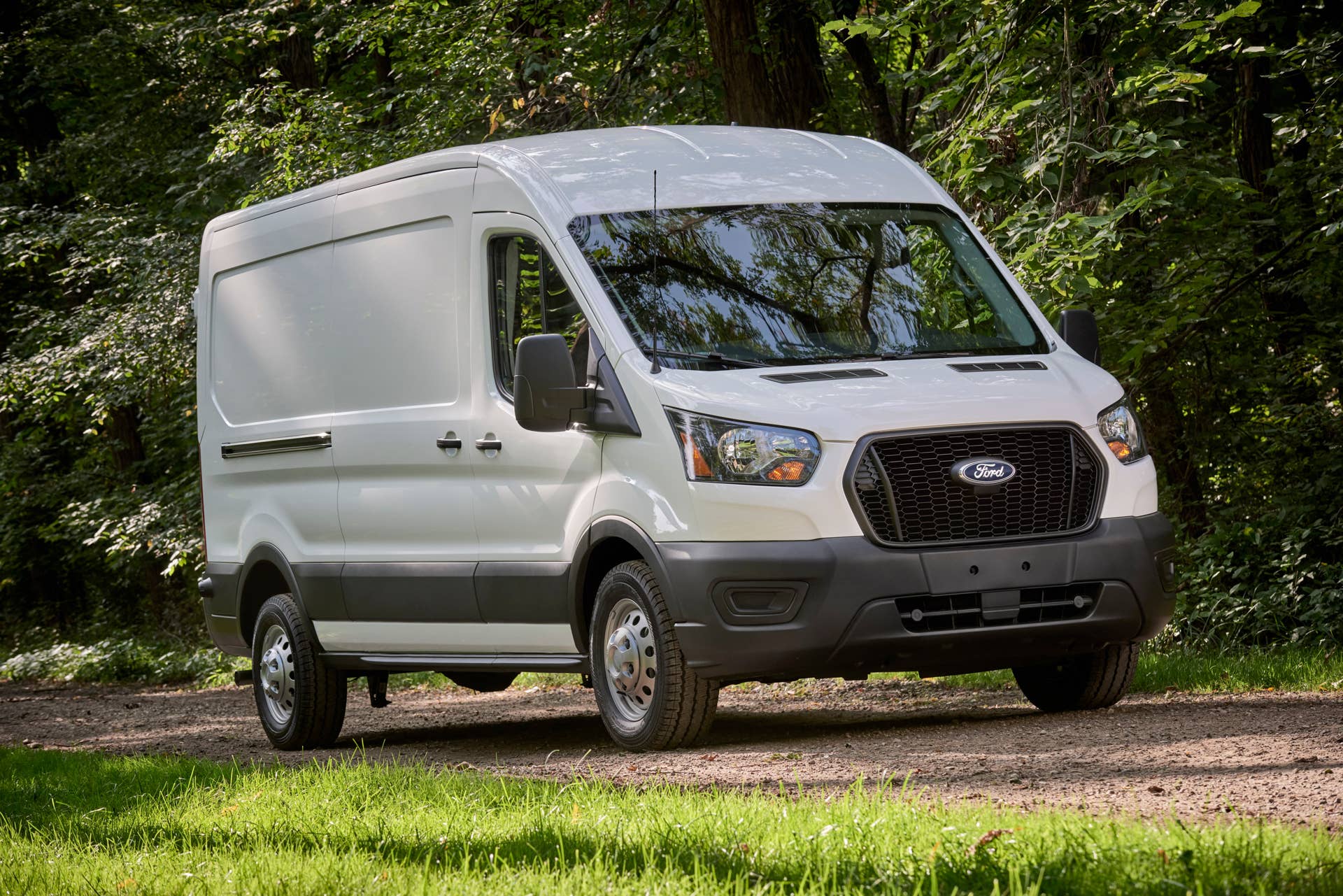
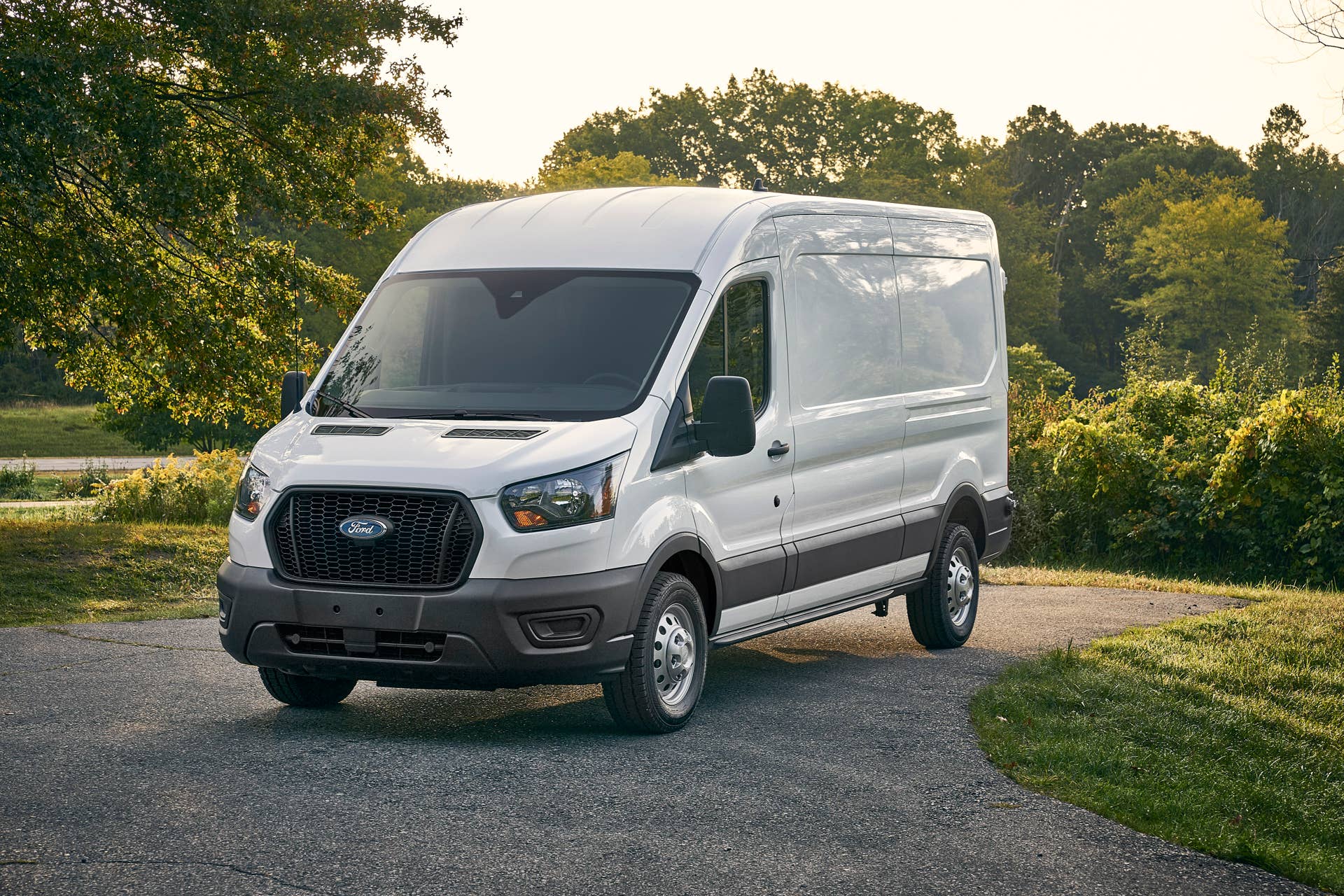
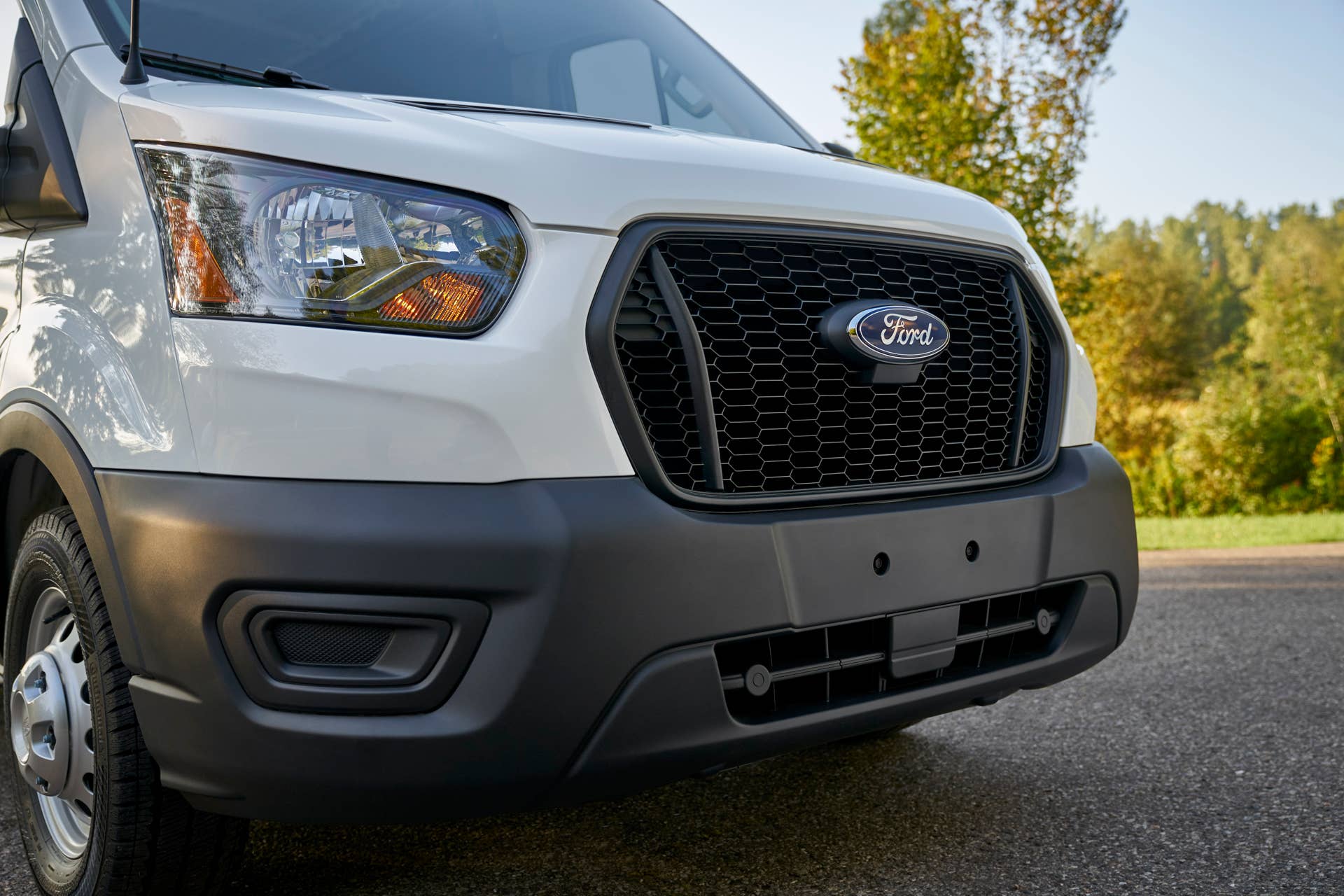
The design of the Ford Transit prioritizes utility over style. Flat body panels ensure that the interior volume is not compromised by styling flourishes. The three available roof heights allow the van to fit specific environments; the low-roof model stands roughly 82 inches tall to clear standard parking garages. Medium-roof versions reach approximately 100 inches, while the high-roof variants can exceed 109 inches to allow most adults to stand upright inside. The front fascia stays professional with an upright grille and a body-colored bumper. If you opt for the Passenger Van, it includes privacy glass and a rear-window defroster as standard kit.
Ford
Ford
Ford
Interior
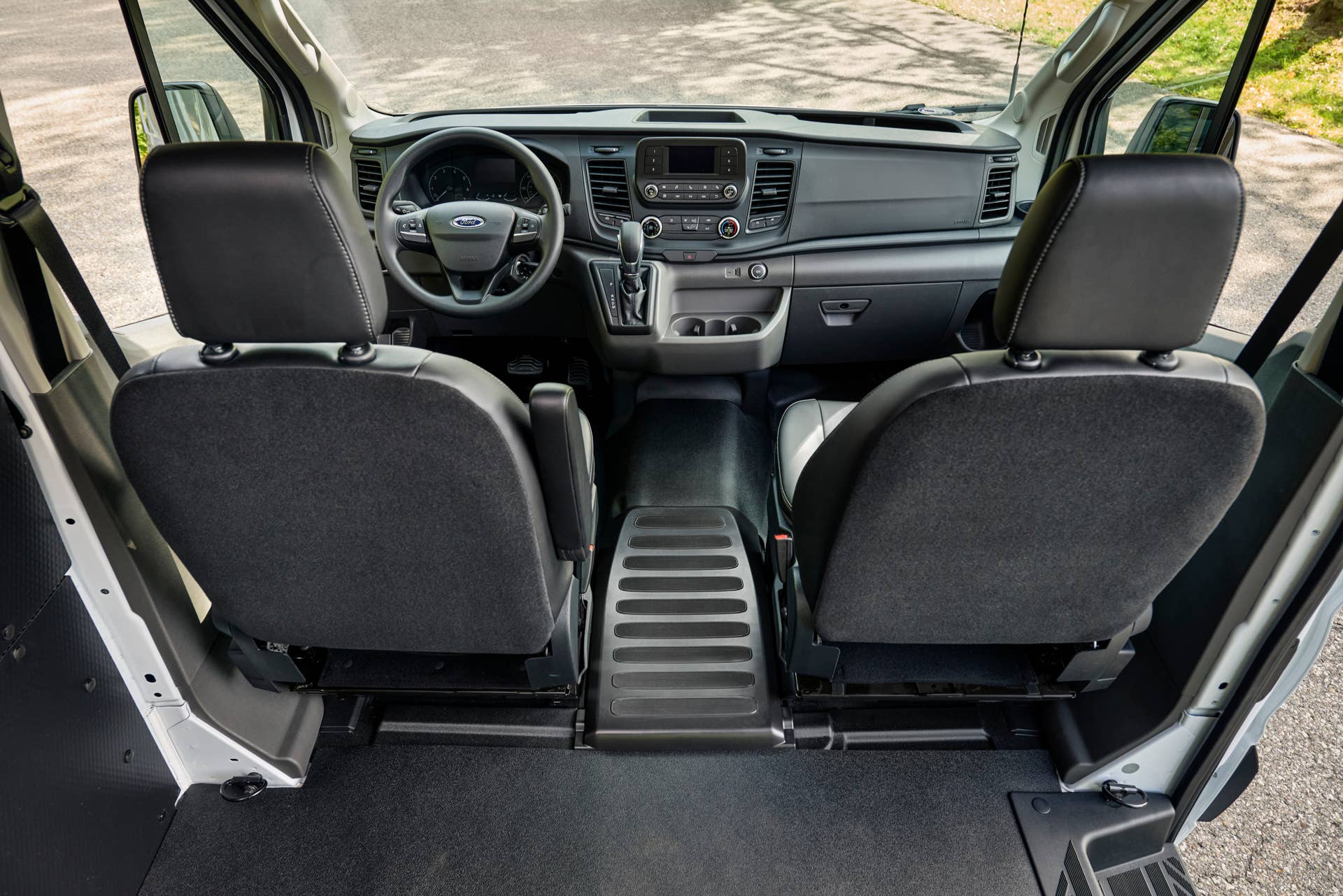
Inside the Cargo Van, the environment is strictly business with two vinyl bucket seats and a standard 4-inch display featuring Bluetooth and dual USB ports. For those needing more tech, a 12-inch Sync 4 touchscreen is offered with wireless Apple CarPlay, Android Auto, and navigation. You can even spec a 10-speaker Bang and Olufsen sound system.
The Passenger Van XL seats 12 in the long-wheelbase version or 15 in the extended body, using cloth upholstery and manual reclining seats. Moving up to the XLT trim provides 10-way power heated front seats and a Blind Spot Information System. Every model includes the Ford Co-Pilot360 suite of safety tech.
Ford
Ford
Ford
Price Range and Best Value
The 2025 Ford Transit’s price starts at a competitive point for the segment, but costs rise as you add length and height. The Cargo Van 250 with a Medium Roof represents the sweet spot, providing ample interior room while remaining easy enough to pilot through city streets.
Cargo Van
| Configuration | Drive | MSRP |
| 150 Low Roof (130″ WB) | RWD | $47,400 |
| 250 Medium Roof (148″ WB) | RWD | $50,800 |
| 350 HD High Roof Ext (148″ WB) DRW | AWD | $61,900 |
Passenger Van
| Configuration | Drive | MSRP |
| 350 XL Low Roof (148″ WB) | RWD | $56,400 |
| 350 XLT High Roof Ext (148″ WB) | RWD | $61,500 |
| 350 HD XLT High Roof Ext DRW | AWD | $67,700 |
Key Specifications
Powertrain and Performance
| Specification | 3.5L PFDi V6 | 3.5L EcoBoost V6 |
| Horsepower | 275 hp | 310 hp |
| Torque | 260 lb-ft | 400 lb-ft |
| Transmission | 10-speed auto | 10-speed auto |
| Fuel Type | Flex-fuel (E85) | Gasoline |
| Max Towing | 5,000 lbs | 5,000 lbs |
EPA Fuel Economy (estimated)
| Configuration | City | Highway |
| RWD (3.5L V6) | 14 mpg | 18 mpg |
Dimensions
| Dimension | Measurement |
| Wheelbases | 130 in / 148 in |
| Height (Low / Med / High Roof) | 82.2-82.9 in / 99.1-101.3 in / 107.7-110.4 in |
| Max Cargo Volume (Cargo Van) | 487.3 cu-ft |
| Max Payload (Cargo Van) | 5,062 lbs |
| Max Payload (Passenger Van) | 3,296 lbs |
| GVWR Range | 8,670 – 11,000 lbs |
| Seating (Cargo / Passenger) | 2 / 12 or 15 |
Warranty
Ford provides a standard commercial warranty package to minimize downtime for operations.
| Coverage | Duration |
| Basic (Bumper-to-Bumper) | 3 years / 36,000 miles |
| Powertrain | 5 years / 60,000 miles |
| Corrosion Perforation | 5 years / unlimited miles |
| Roadside Assistance | 5 years / 60,000 miles |
Pros and Cons
Pros:
- Unmatched configurability with dozens of roof
- Wheelbase and drivetrain combinations
- Strong 5,062-lb max payload
- AWD does not raise load floor
- Factory upfit packages simplify ordering
Cons:
- Base infotainment limited to a 4-inch display
- Towing trails some rivals at 5,000 lbs
- No diesel or V8 option
- Passenger Van pricing climbs quickly.
Verdict
The Ford Transit full-size van remains the industry standard for sheer versatility. It transitions seamlessly from a basic cargo box to a sophisticated mobile office or a high-capacity airport shuttle. The standard 275 hp engine is sufficient for daily chores, though the 310 hp EcoBoost is the smarter choice for those frequently hauling heavy gear. While the interior can feel basic in entry trims, the SYNC 4 system helps the cabin feel more like a modern SUV than a commercial tool. It stays priced right for most fleets, even if luxury-spec passenger models push toward the $70,000 mark.
Ford
Competitors:
- Ram ProMaster
- Mercedes-Benz Sprinter
- Chevrolet Express
- GMC Savana
About the authors

Cobus F. Potgieter
Reviews and Features Editor