

Pre-owned cars, trucks, and SUVs are, by and large, a cash affair
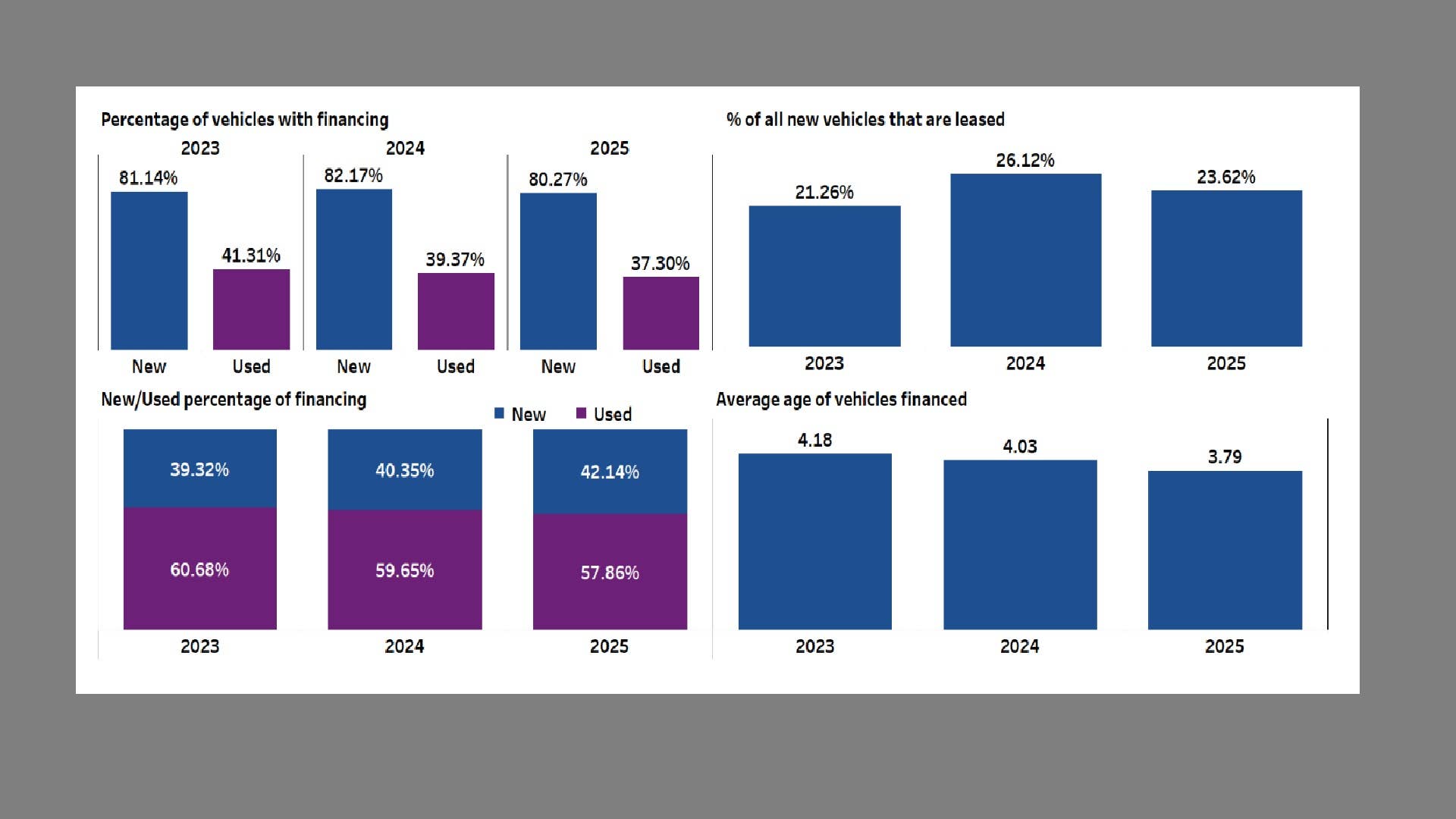
You, like me, may be under the impression that financing a vehicle is simply something that most drivers do without thinking about it too much. After all, it’s how the overwhelming majority of people buy new vehicles. New Experian data, published in the Q2 2025 State of the Automotive Finance Market, reveals that while 80.27% of new vehicles sold in Q2 had some sort of financing attached to them, used vehicles accounted for around half that percentage. With 37% of used vehicles sold in Q2 2025 being financed, it turns out that financing a used vehicle is far from the norm.
Experian
What’s even more interesting is that, according to the data — and despite fewer shoppers percentage-wise opting to finance a used vehicle — the split between new and used financing in Q2 2025 was slightly skewed towards used. With 57% of all vehicle financing coming from the used market, it’s a stark reminder that used vehicle sales often go three-to-one (or more) with new vehicle sales. For example, in 2019, the US Bureau of Transportation reported 40.8 million used vehicle sales compared to 17 million new vehicle sales.

Experian
How do people buy these used cars when they choose to finance them? Well, that depends on where you shop. Around 54% of shoppers visited a franchise dealer (such as a local Chevy or Ford dealership), while 46% opted for their local independent (Fred’s Used Cars and similar establishments). Those who went to franchise dealers chose, by and large, to finance with a bank or credit union. Down at the corner lot, however, things couldn’t be more different. The majority of transactions were handled in a “Buy Here, Pay Here” fashion, with financing secured from a finance company taking the second largest share of shoppers. Less than 15% of buyers who went to an independent dealer financed with a bank.
Paying cash for a used car has become more popular for a few reasons
Looking back at the original graph, we can see that the number of customers choosing to finance a used vehicle has decreased steadily since 2023. That makes sense, since rising rates have made borrowing money more expensive. As rates continued to rise, shoppers continued to save money in the long term and simply pay cash for their used vehicles. Elsewhere in Experian’s data, we also see that the average loan amount financed for used vehicles and the average loan rate have stayed roughly static year-over-year. In Q2 2025, those numbers were $26,795 and 11.54%, respectively. Compare that to the world of new vehicles, where the average new loan amount was $41,983 and the average rate was 6.80%.
Final thoughts
It’s obvious why people choose to buy used vehicles: they’re simply less expensive. With that in mind, it makes sense that those who can afford it tend to pay cash. Stretching out for a 60, or even 72 (or more) month loan cuts into that savings. As rates continue to stay high relative to a few years ago, it’s reasonable to expect consistently low financing take rates on used vehicles. In the end, the data underscores a simple truth: when it comes to used cars, cash is still king. Unless rates shift meaningfully, that trend isn’t likely to change soon.
About the author

Steven Paul
Contributing Writer, Autoblog