
The choice is yours
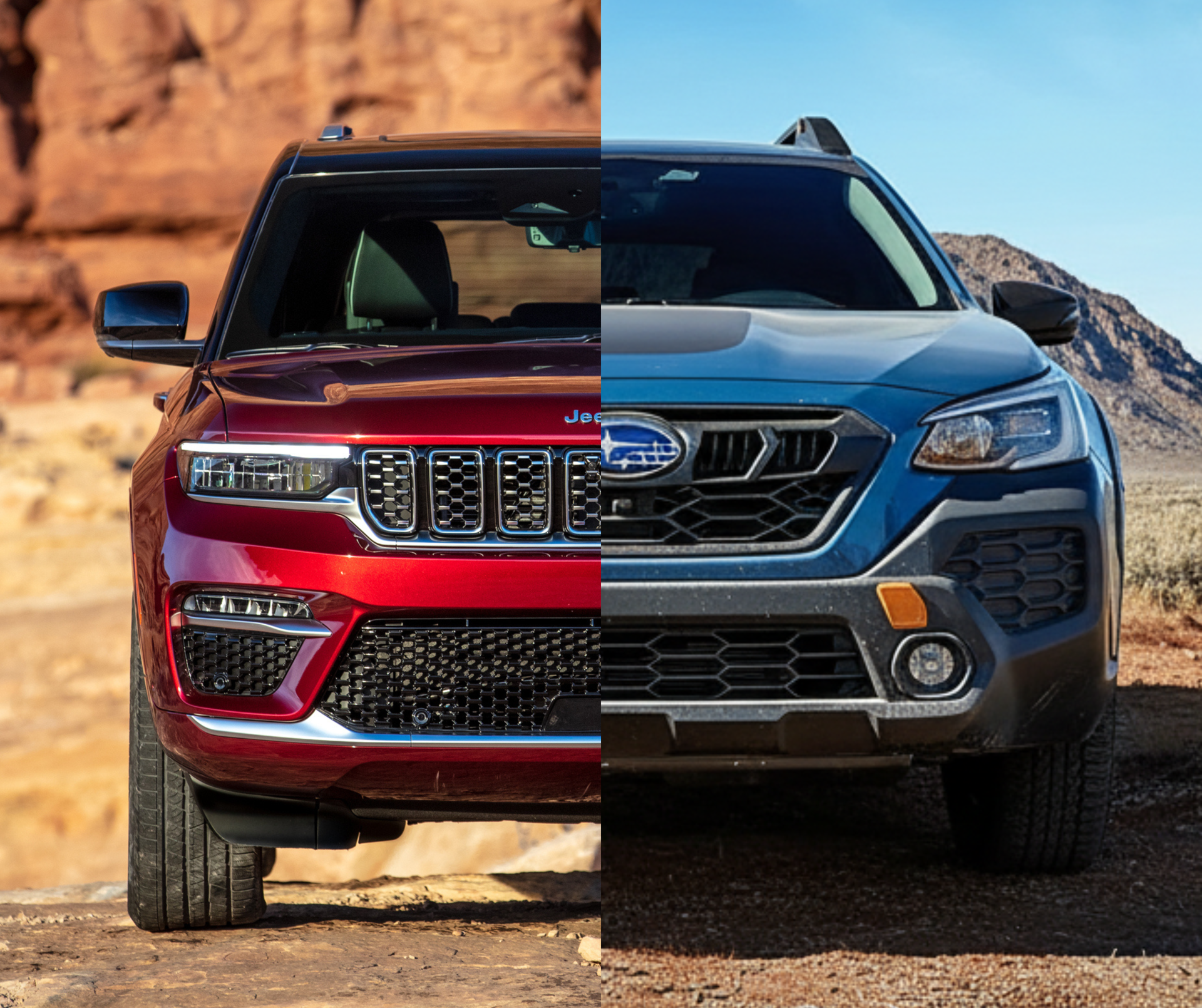
Both the Subaru Outback and Jeep Grand Cherokee remain household names after emerging during the 1990s. For their 2025 production year, the Outback starts at $29,995, and the Grand Cherokee starts at $36,495. These vehicles’ $6,500 price differential can leave mid-size SUV shoppers wondering which is the better buy, and why, so below, you’ll find a comparison exploring each model’s features and in-cabin amenities to help inform your buying decision.
Steven Paul

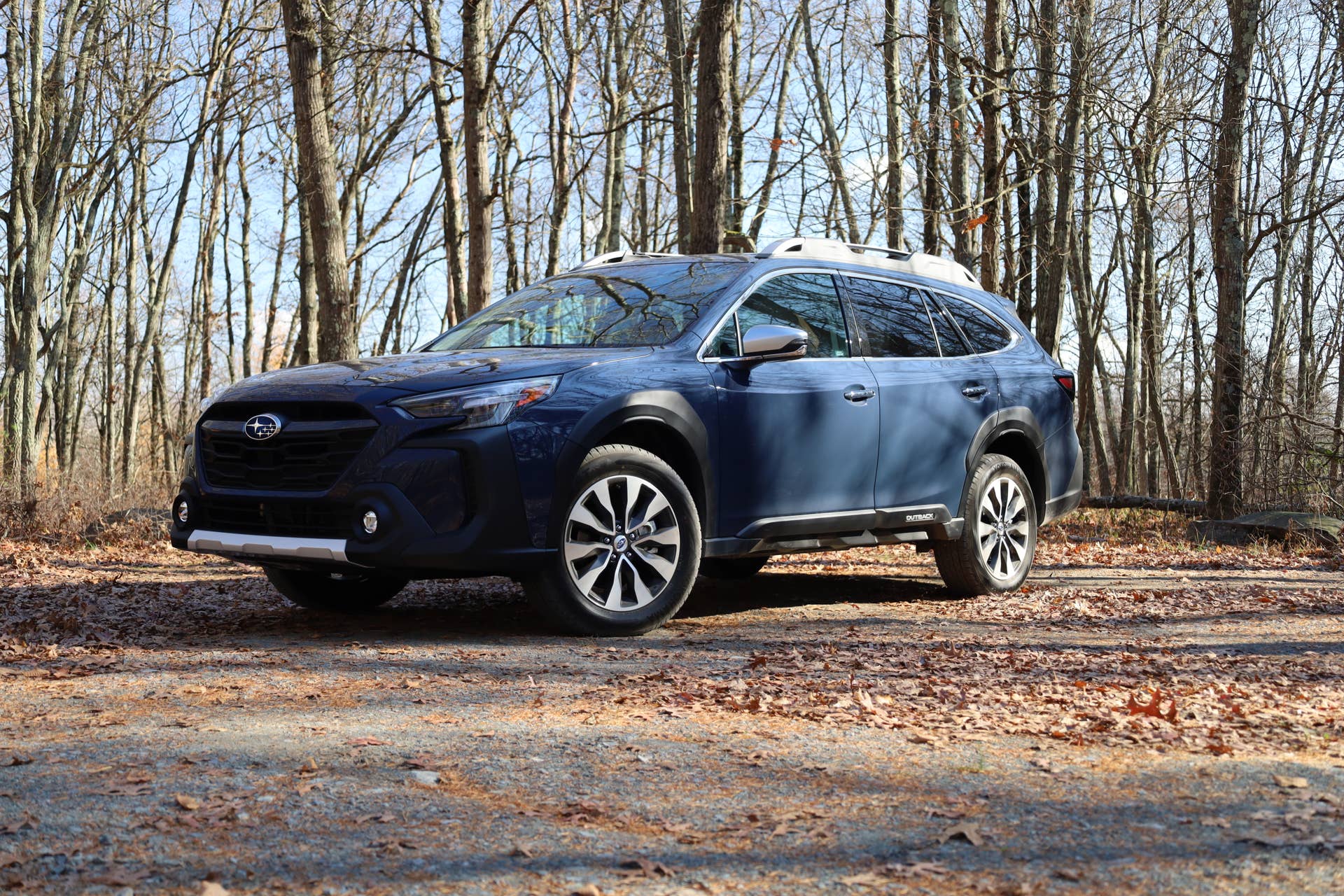
The 2025 Outback is a carryover model, with the Limited trim receiving a power sunroof, an 11.6-inch infotainment touchscreen with navigation, a heated steering wheel, driver monitoring, and an optional turbocharged 260 hp 2.4-liter engine. In comparison, the 2025 Grand Cherokee is also a carryover model, with the only notable change being price reductions in the trim lineup from 2024. Both the Outback and the two-row Grand Cherokee are available in nine trims.
The Grand Cherokee wins in standard power and towing, but the Outback’s standard AWD and mileage are food for thought
Subaru’s Outback Base, Premium, Onyx Edition, Limited, and Touring trims are equipped with a 2.5-liter four-cylinder engine, paired with a continuously variable transmission (CVT), producing 182 horsepower and 176 lb-ft of torque, with a 26/32 city/highway MPG rating. Drivers of these Outback trims can also tow up to 2,700 lbs. The Subaru Outback Onyx Edition XT, Wilderness, Limited XT, and Touring XT trims feature a 2.4-liter turbocharged four-cylinder engine, also paired with a CVT, delivering 260 horsepower, 277 lb-ft of torque, and a 3,500-lb towing capacity. Fuel economy for XT models is rated at 22/29 city/highway mpg, while the Wilderness’ mileage is lower at 21/26 city/highway mpg. All 2025 Outback trims feature standard all-wheel drive (AWD).
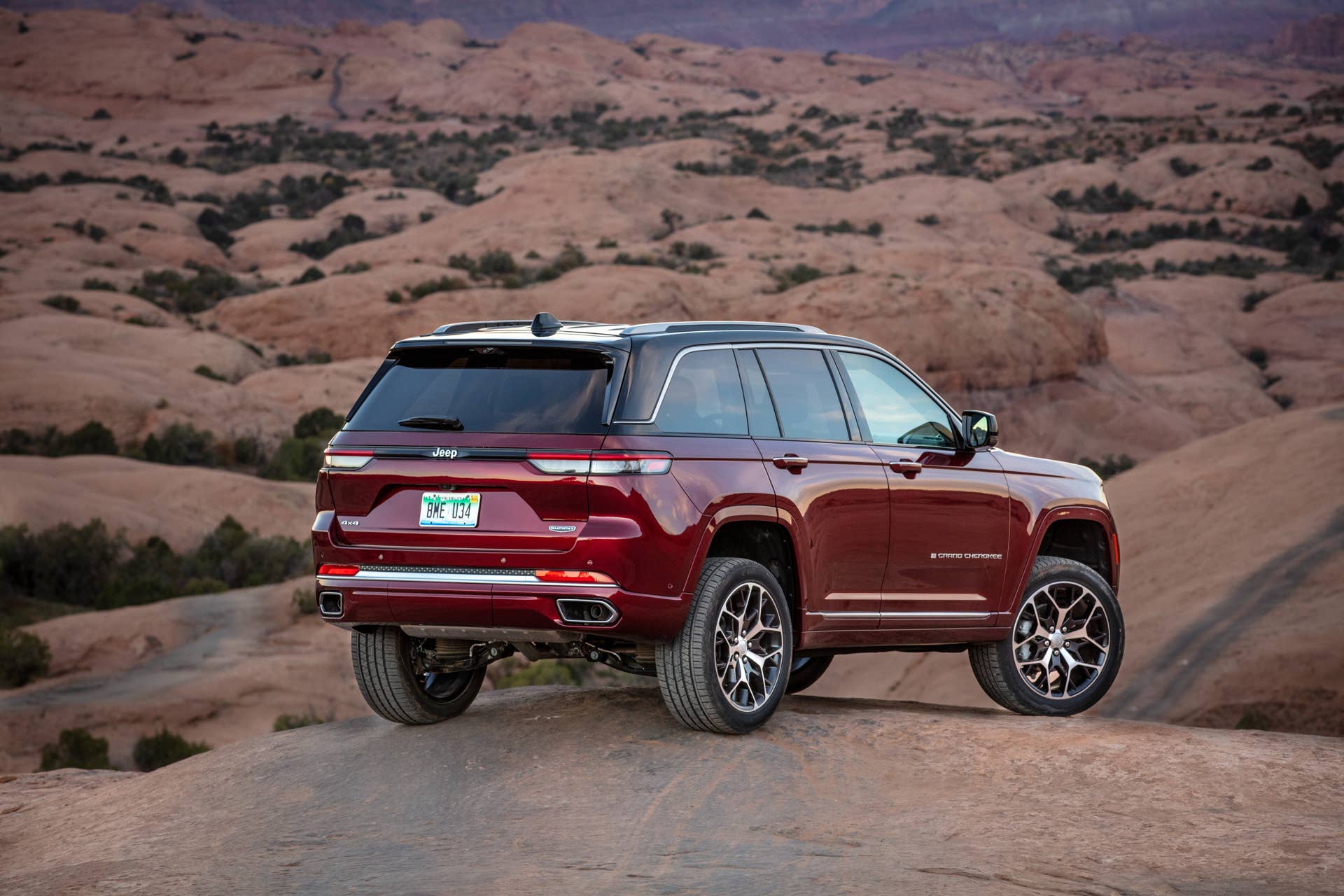
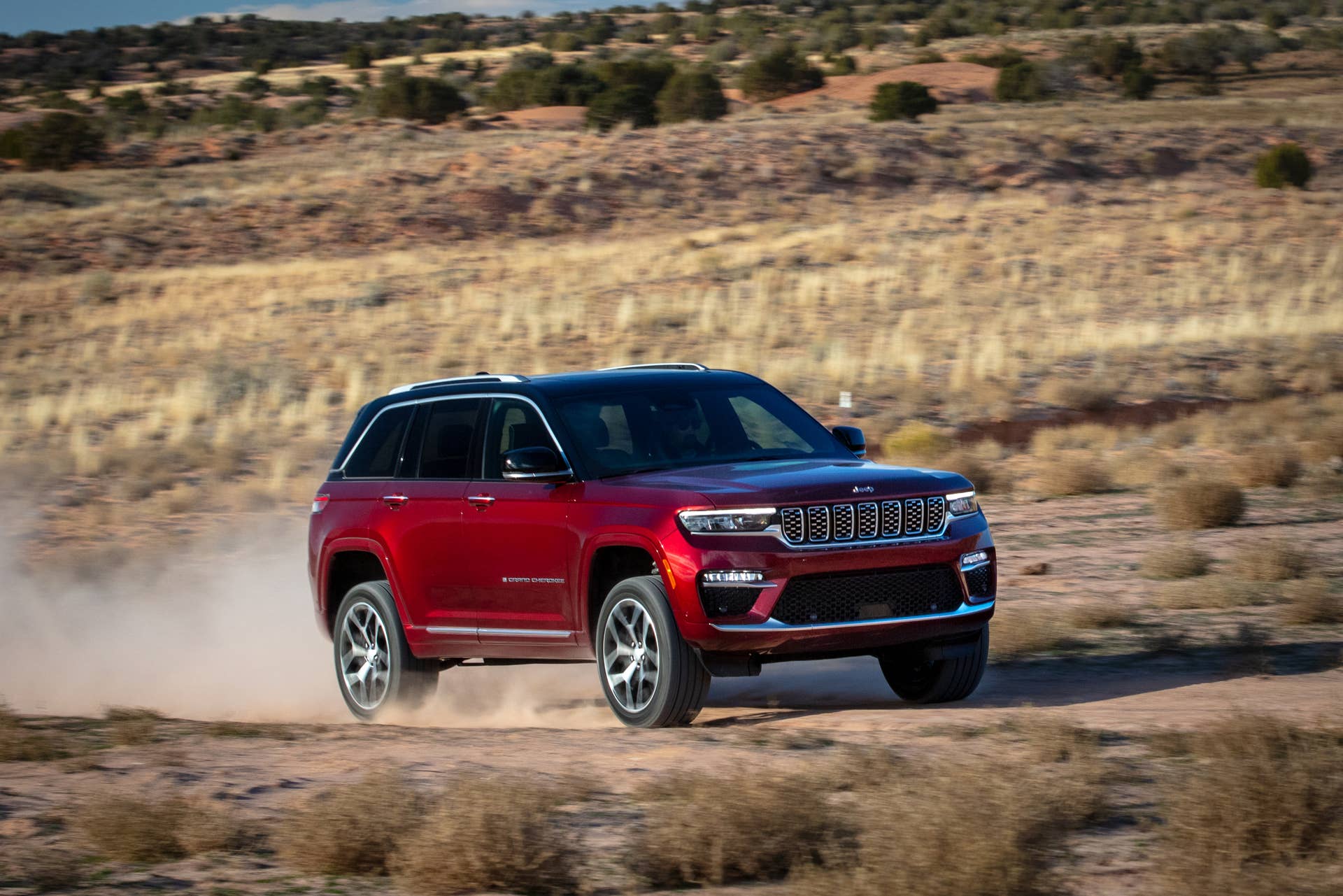
In contrast, all 2025 Jeep Grand Cherokee trims come with a more powerful engine: a 3.6-liter V6, paired with an 8-speed automatic transmission, producing 293 horsepower and 260 lb-ft of torque. You’ll also receive significantly higher maximum towing of 6,200 lbs. However, fuel economy is lower than the Outback at 19/26 city/highway mpg, and the base Laredo A trim is only available in rear-wheel drive (RWD). AWD is optional on the Laredo, Laredo X, Altitude, Altitude X, and limited trims, with the Overland, Summit, and Summit Reserve containing standard AWD.
Both models are neck-and-neck in cabin comfort and practicality
The Outback’s interior upholstery offers a choice of six colors across four materials: cloth, synthetic leather, leather, and Nappa leather. These colors include Warm Ivory (cloth/leather), Titanium Gray (cloth/leather), Slate Black (cloth/leather/Nappa leather), Warm Ivory (cloth/leather), Gray (synthetic leather), and Java Brown (Nappa leather). The Grand Cherokee’s seating materials consist of cloth, synthetic leather, simulated suede/leatherette, leatherette, and Nappa leather. Regarding interior colors, you’ll find fewer options within the Grand Cherokee. The Laredo A, Laredo, Laredo X, Altitude, Altitude X, and Overland interiors are limited to Global Black; the Limited offers a choice between Global Black or Global Black/Wicker Beige, and the Summit/Summit Reserve trims come in Global Black or Tupelo/Black.
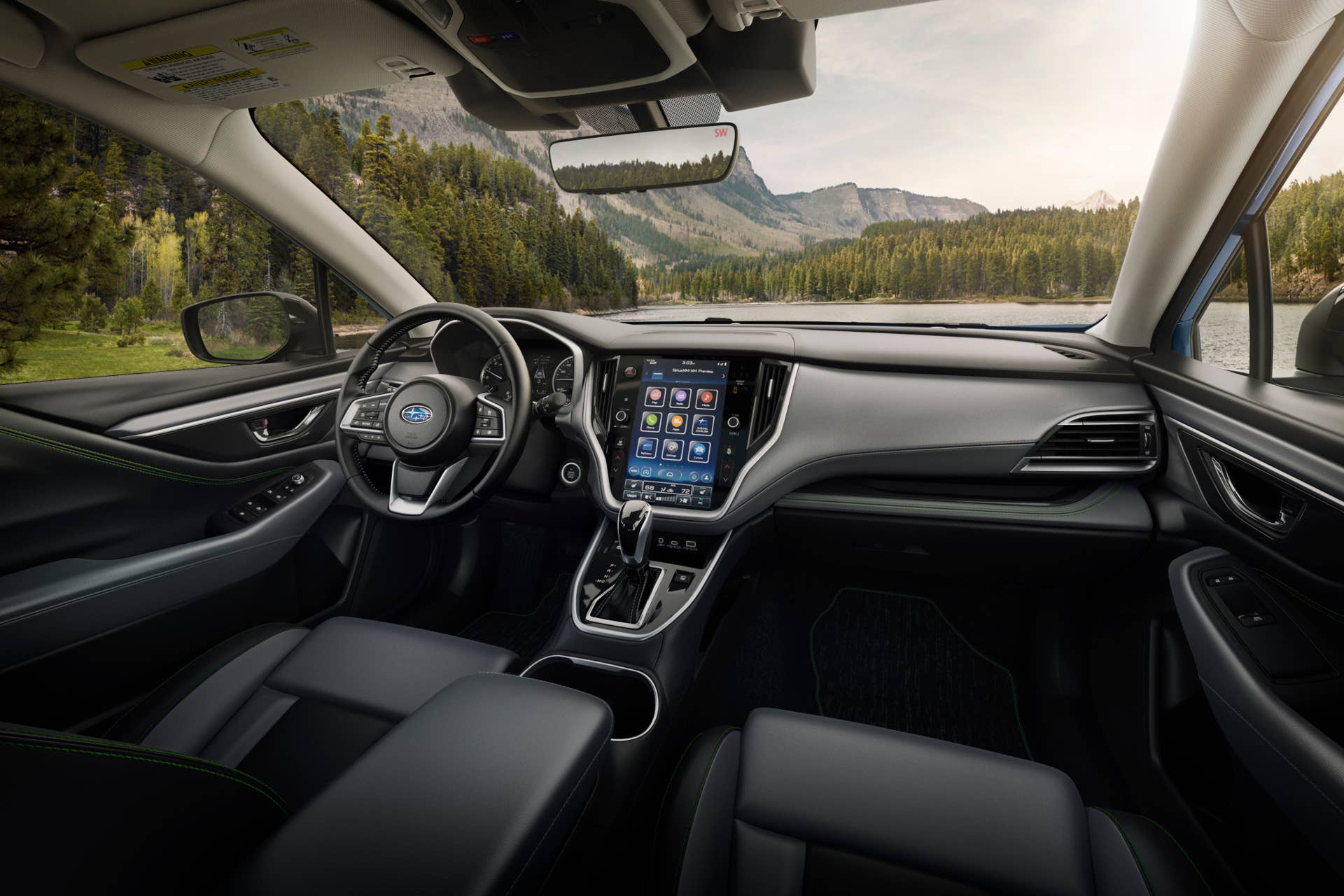

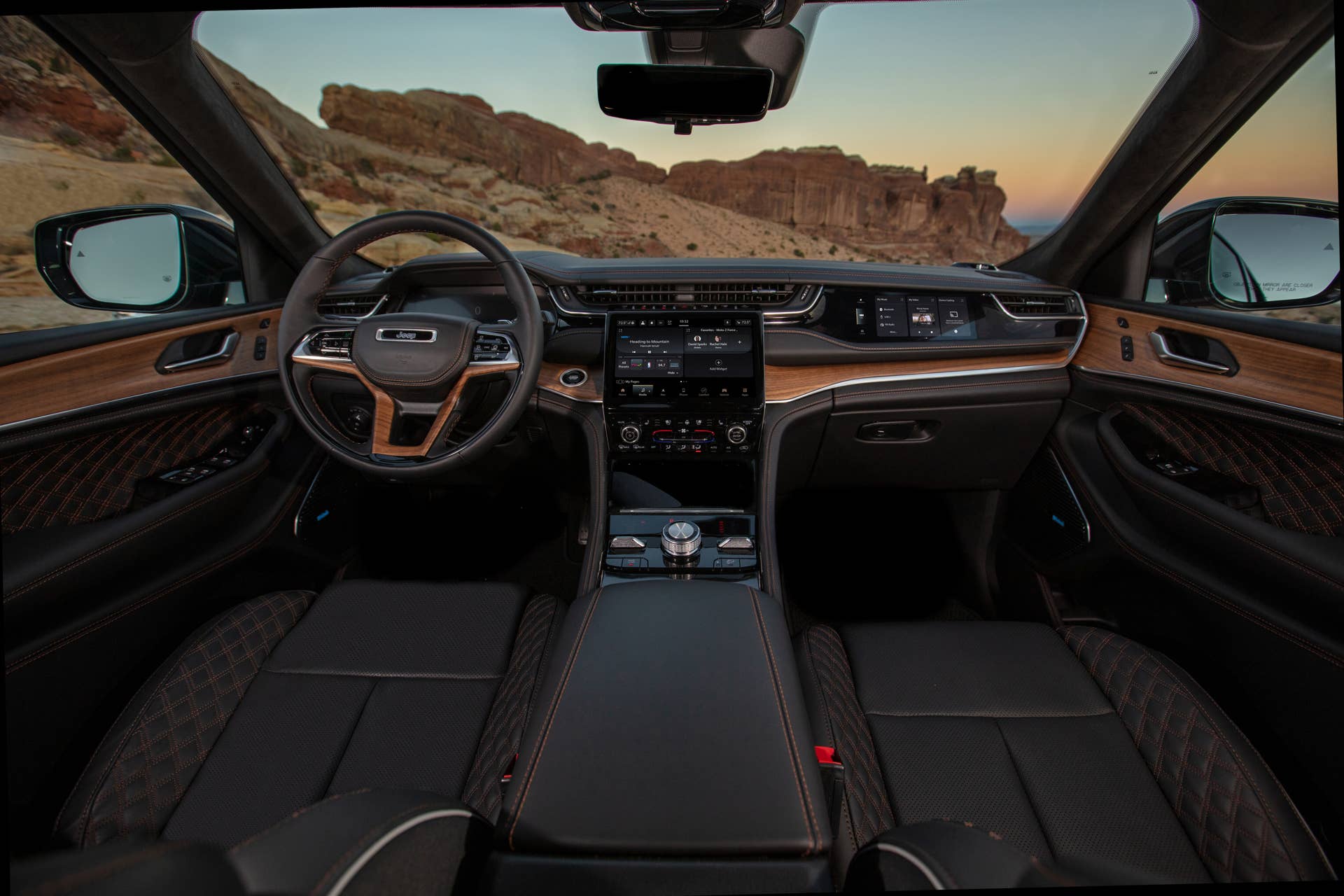
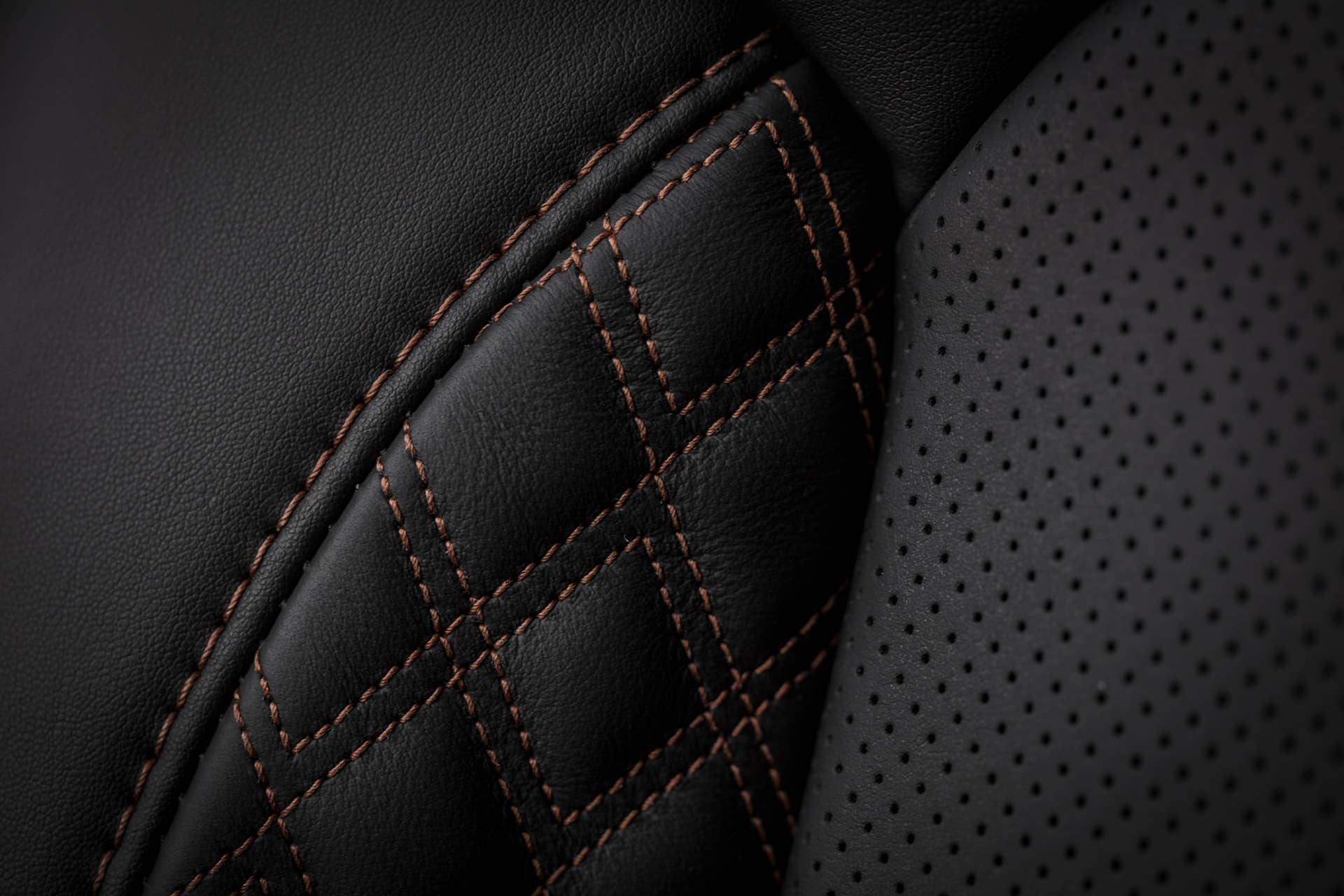
The Subaru Outback also offers slightly more front and rear legroom at 42.8 inches and 39.5 inches, respectively. The Grand Cherokee’s front and rear legroom measure 41.3 inches and 38.2 inches, respectively. Still, you’ll receive 5.1 cu ft of additional rear cargo space in the Jeep Grand Cherokee for a total of 37.7 cu ft, along with a quieter cabin. The Grand Cherokee also justifies its higher base price with a standard 8-way power-adjustable driver’s seat and available 12-way power driver’s seat, whereas the Outback offers manual adjustment in the base trim or optional 8/10-way power adjustability.
The Grand Cherokee boasts more displays and audio capabilities
Each Outback trim except the Base features an 11.6-inch infotainment touchscreen, with the Limited, Touring, Limited XT, and Touring XT adding standard navigation. The entry-level Outback also features a seven-inch touchscreen. In comparison, each Grand Cherokee comes standard with a 10.1-inch infotainment display and navigation on Limited, Overland, Summit, and Summit Reserve trims. While the 2025 Grand Cherokee’s central touchscreen falls short of the Outback in size, Jeep adds an available 10.25-inch digital instrument cluster and 10.25-inch passenger touchscreen — neither of which is offered in the Outback.
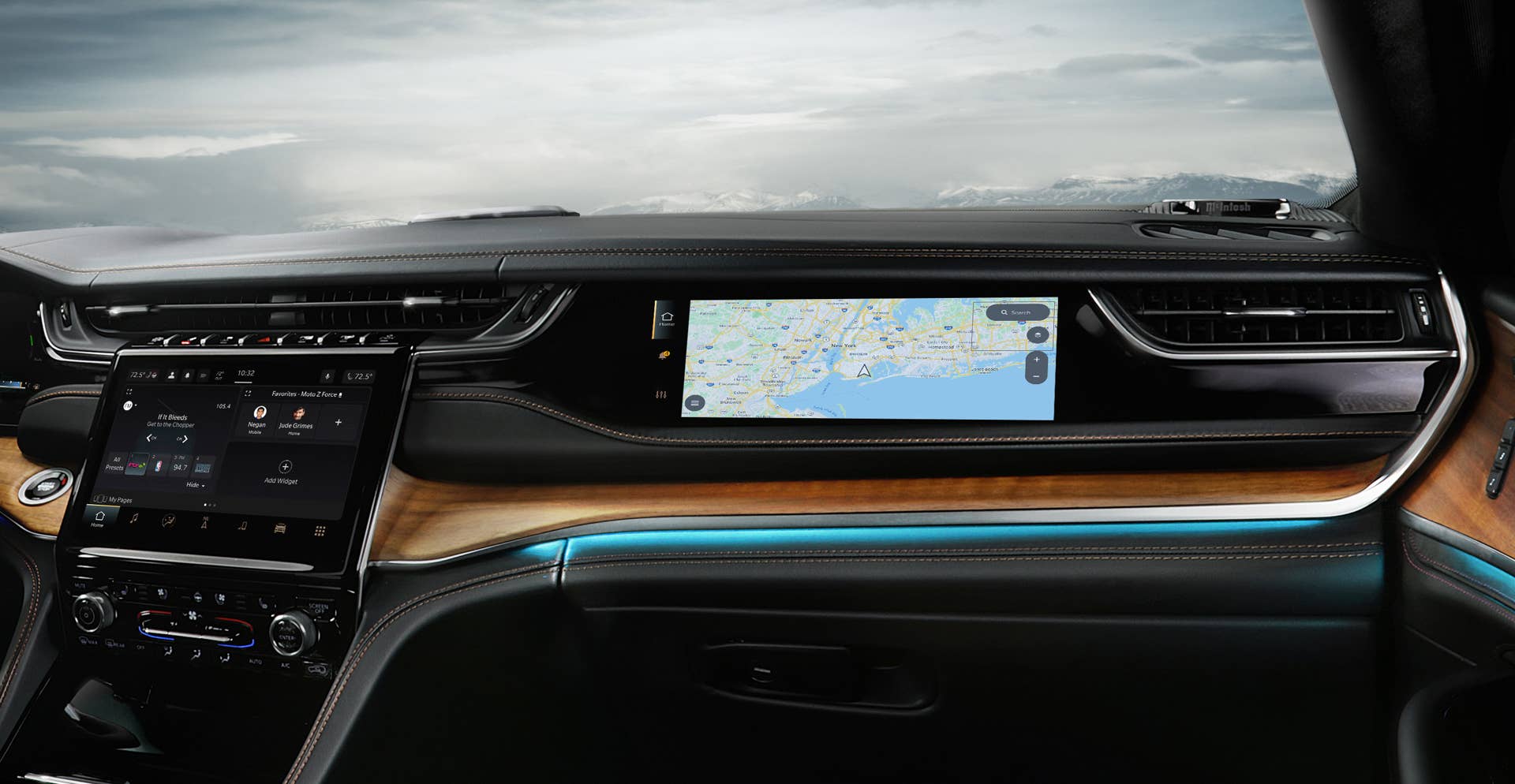
The entry-level Outback comes with four speakers, the Premium trim features six speakers, and the remaining trims are equipped with a 12-speaker Harman Kardon sound system. Jeep gives the first Grand Cherokee trim six speakers, and the Overland, Summit, and Summit Reserve trims offer 10 standard speakers. Summit and Summit Reserve buyers can also choose the optional 19-speaker McIntosh sound system, which provides the most available speakers for the vehicle’s class. Wireless Apple CarPlay and Android Auto are standard in all Grand Cherokee trims, but optional in the Outback.
The Outback offers greater crash protection
Both the 2025 Subaru Outback and the 2025 Jeep Grand Cherokee received IIHS (Insurance Institute for Highway Safety) Top Safety Pick awards in 2024. However, neither vehicle qualifies for an IIHS Top Safety Pick award in 2025, as automakers are now required to score at least an “Acceptable” rating on the updated moderate overlap front crash test. The Outback registered a “Marginal” score — one step below “Acceptable” — in the test’s updated version, while the Grand Cherokee received the lowest rating of “Poor.” In addition to the moderate overlap front test, the Outback can be seen as the more crash-protective option, since it scored “Good” in every other IIHS category, compared to the Grand Cherokee, which received a mix of “Good,” “Acceptable,” and “Marginal” ratings across evaluations.
The Outback features a standard EyeSight safety suite, which includes advanced adaptive cruise control with lane centering, pre-collision braking, lane departure and sway warning, lane keep assist, and automatic emergency steering. While the Grand Cherokee doesn’t have a dedicated standard safety suite name, it matches these EyeSight features in its base trim.
The Grand Cherokee is larger, but many of its trims are missing a convenient feature
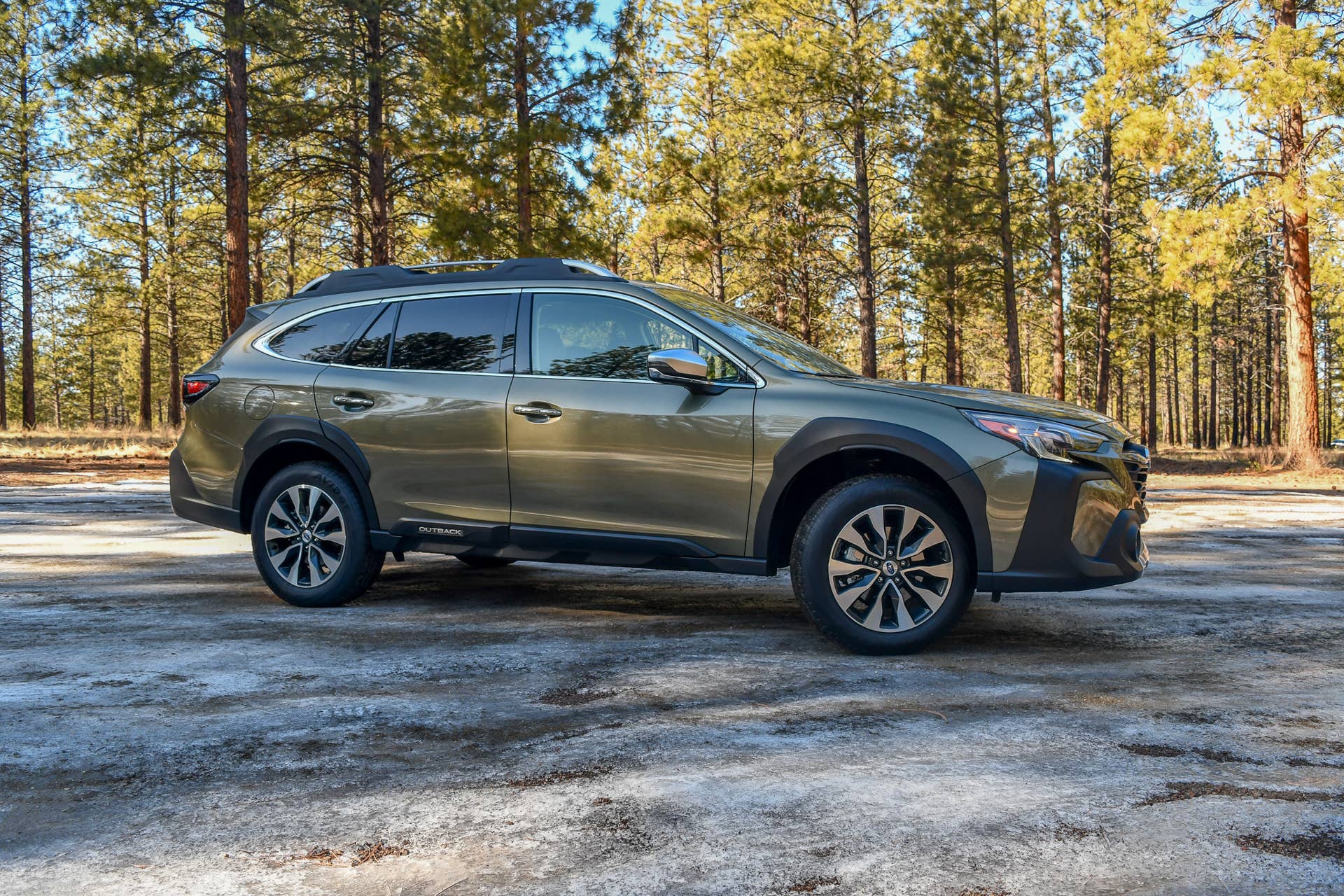
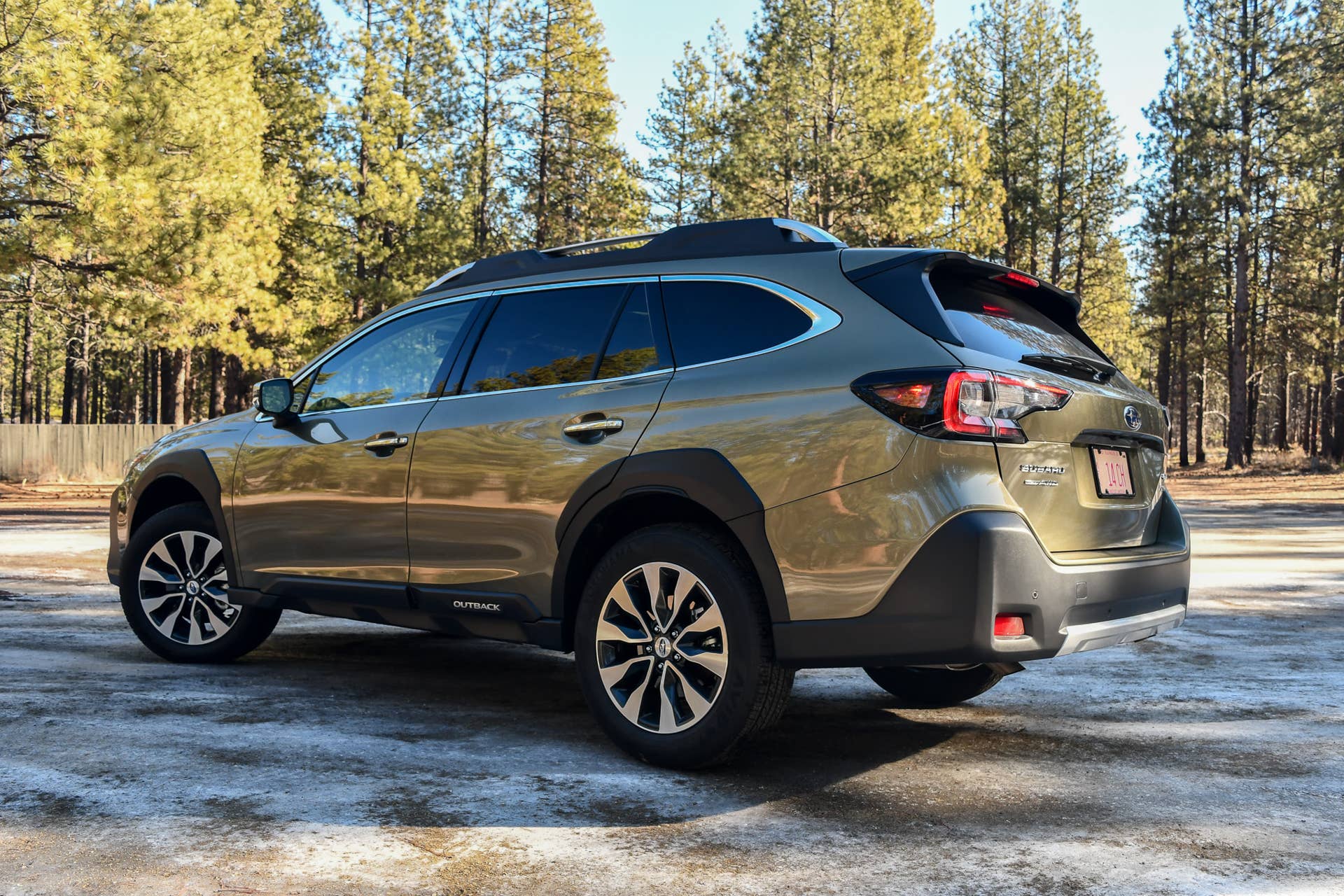
Wheel sizes on the Outback range from 17 to 18 inches, while the Grand Cherokee’s span 18 to 21 inches. The Outback’s wagon-like crossover SUV styling also forms a slimmer and shorter exterior than its Jeep counterpart. Subaru’s color palette for the Outback is more expansive, offering nine shades compared to the Grand Cherokee’s seven, but the Grand Cherokee features an available two-tone configuration with a black roof. Some drivers may be surprised to learn that a hands-free power liftgate comes standard in all Outback trims except the entry-level and Premium variants, but is limited to Overland and Summit Grand Cherokee trims. While a hands-free power liftgate isn’t standard on the Outback Premium, it’s an available option.
Additional considerations
Both the 2025 Outback and the 2025 Grand Cherokee come with a three-year or 36,000-mile basic limited warranty, whichever comes first, and a five-year or 60,000-mile powertrain limited warranty. Prior years have also shown that the Outback generally holds its resale value better, offers greater longevity, and has lower maintenance/repair costs.
Final thoughts
The 2025 Subaru Outback and the 2025 Jeep Grand Cherokee are two of the market’s best mid-size SUVs, but the Outback establishes itself as the better buy with lower starting prices for its first two trim levels, standard AWD, greater mileage, competitive comfort and practicality, and quality crash protection. Those prioritizing the best audio system, more standard power, and additional display options may prefer the Grand Cherokee. Be sure to test drive each option before making a decision.
About the author

Cody Carlson
Contributing Writer, Autoblog