

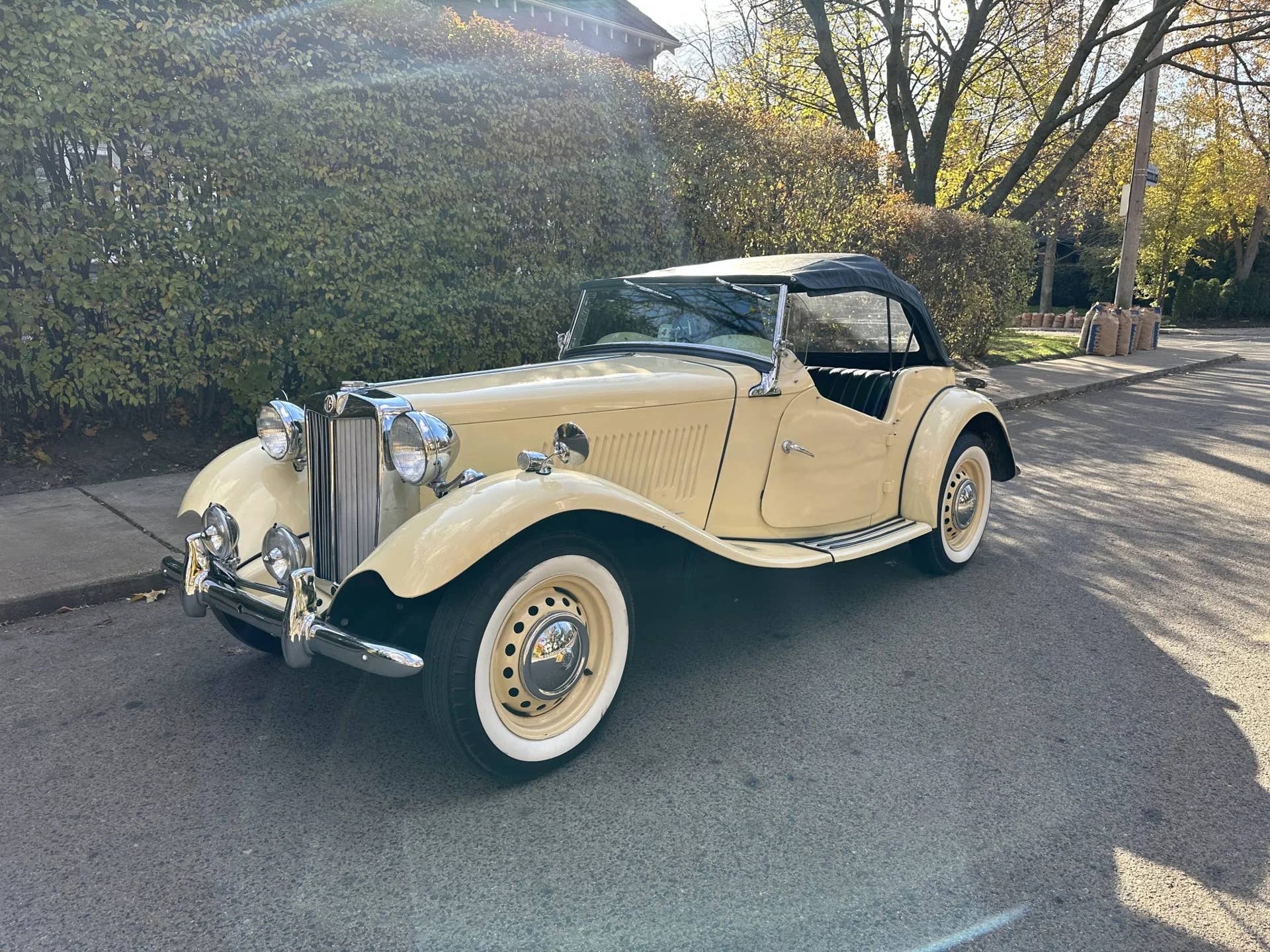
Fourth generation ‘Midget’
The MG T-series was also known as the ‘Midget’, and when introduced in 1936, was top of the line in styling and performance. However, as the industry matured, and with a brief pause for World War II to run its course, the design was starting to look a little retro, a fact which enthusiasts of the era, much as their counterparts today, insisted was a feature, not a flaw.
The TD, MG’s fourth-generation T-Series, was introduced in 1950, and ran for four years before an even shorter-run TF, launched in 1953, and was put to rest in favor of the MGA two years later in 1955. Despite only seeing three years of sales, the TD managed an impressive 30,000 or so units made, with only around 1,600 remaining in the domestic UK market, and the rest going overseas. The United States market was the largest recipient, with just under 23,500 units produced for it. This particular example was refurbished at an unknown time under prior ownership and still holds up beautifully.
Bring A Trailer
Thinking of selling your car?
Get a value estimate and list it online with Exotic Car Trader. Click here to learn more.
We all live in a yellow TD
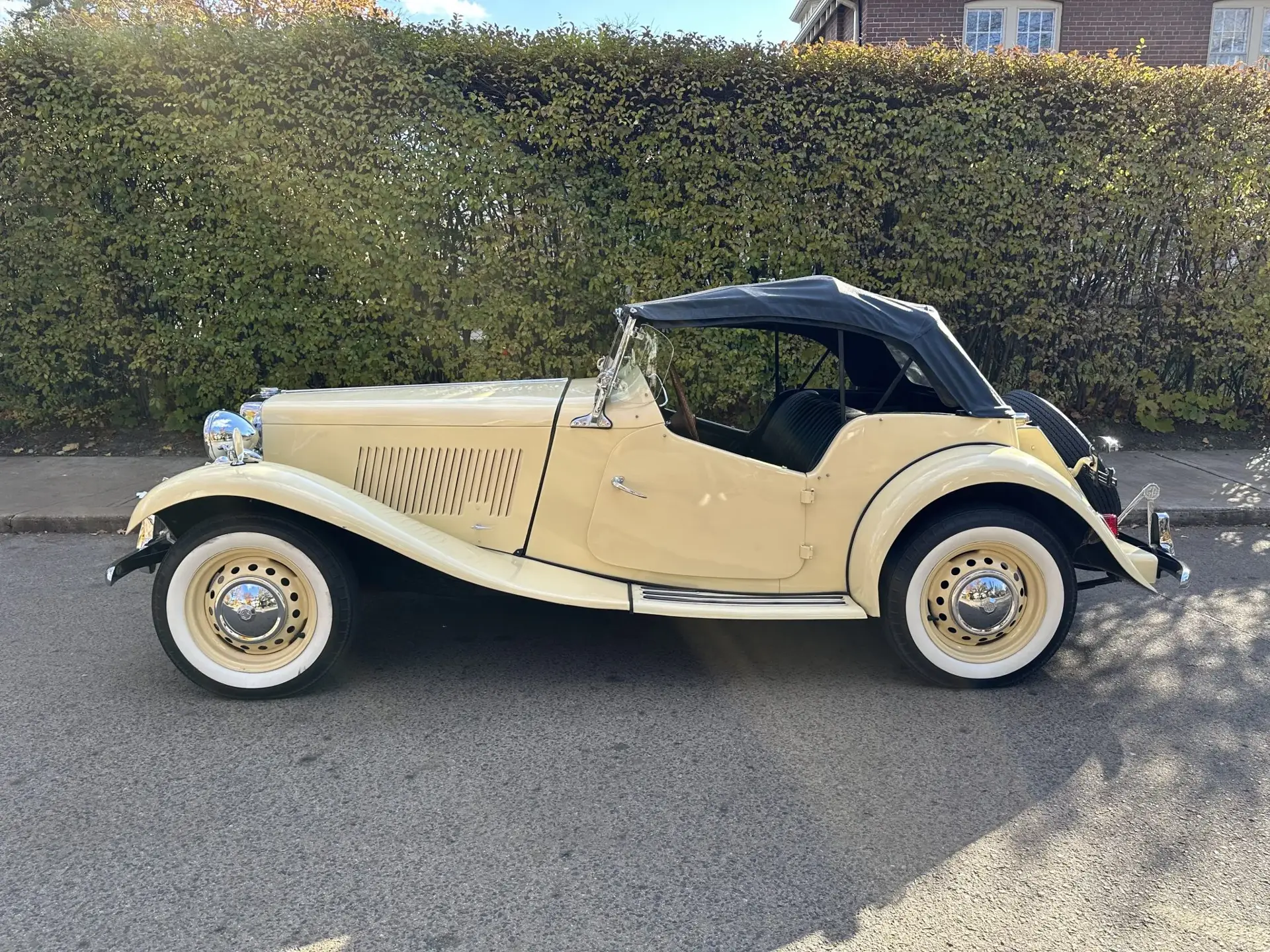
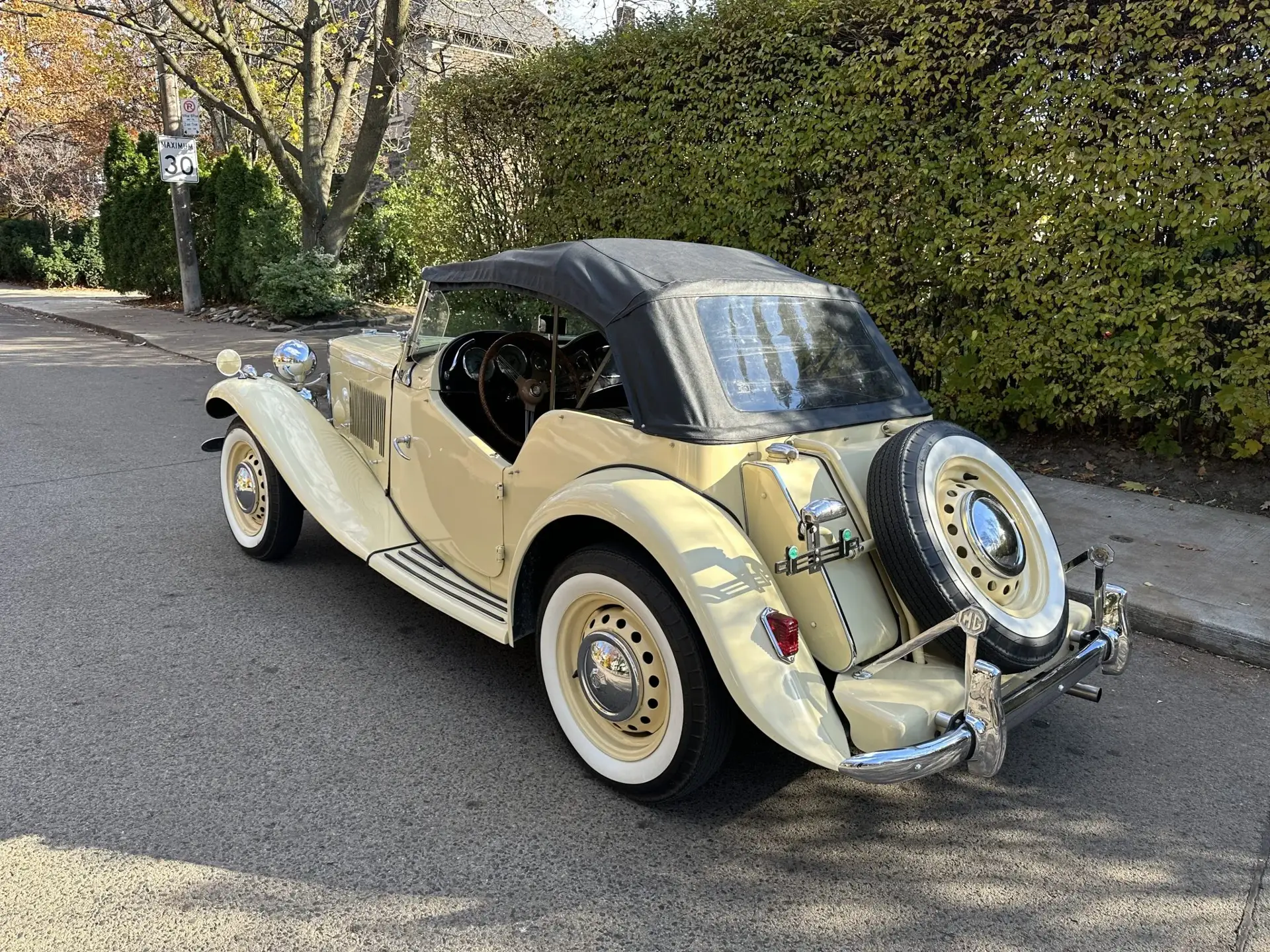
The color brushed over this MG TD is a lovely pale yellow that dances on the edge of being a cream white. The black soft top matches the interior upholstery and has detachable glass side walls for a fully weather-proofed ride, though it can also be kept up with the sides open. In classic British motoring style, the hood is hinged on the top, not the front or back, and features louvered vents for heat management. The windshield folds down, though most of the time it is probably advisable to drive with it up.
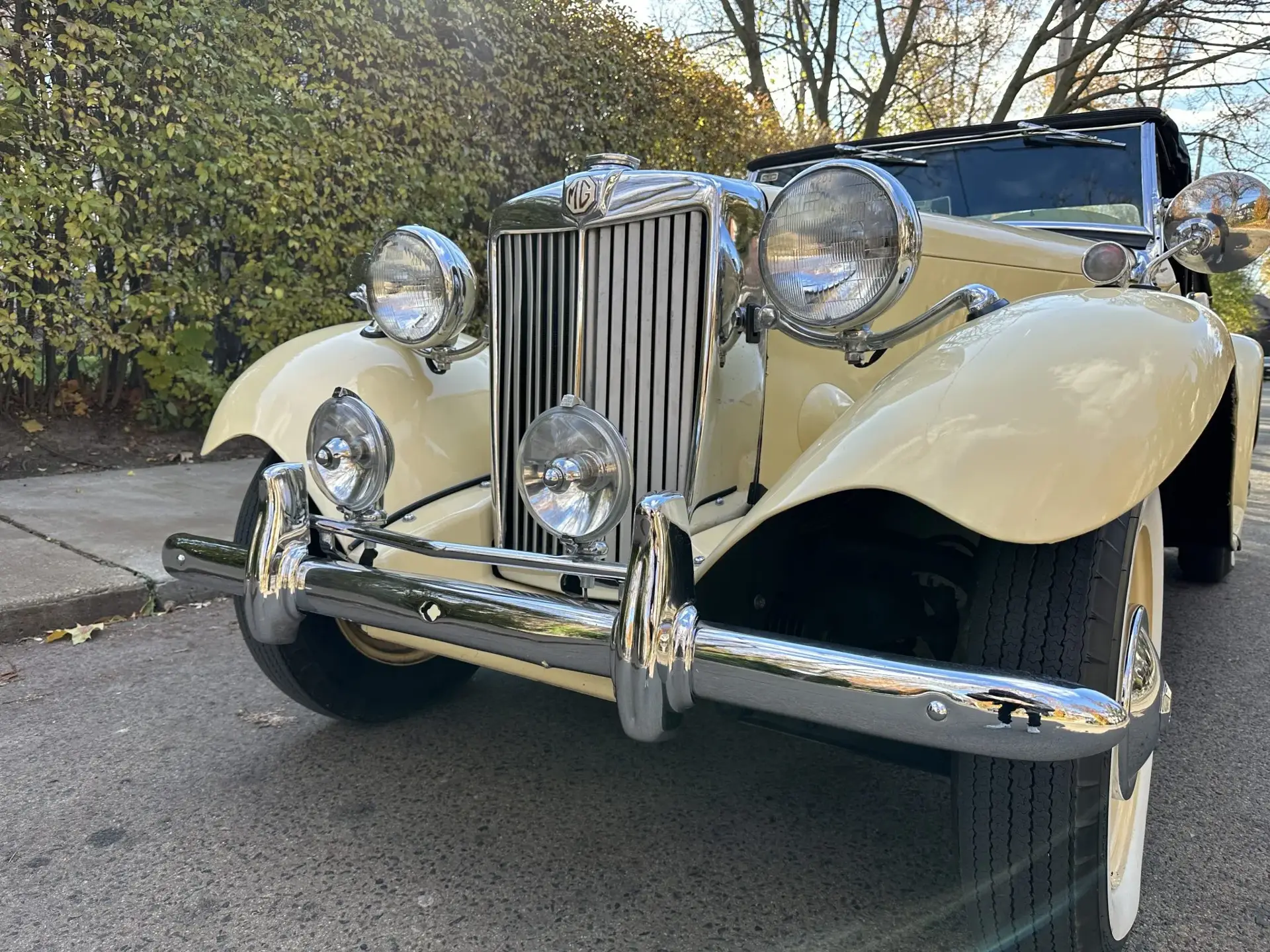
The grille is high and arched, with the headlights affixed to it on one side, and to the swept fenders on the other side, by way of a curving band of chrome. The mirrors are similarly attached to the fenders, further back and quite wide out. Two thin bands of chrome make up the front and rear bumpers, the front of which features a second pair of running lights in addition to the headlights. Long running boards arch over the front wheel and then down to the base of the sides. The 15″ steel wheels have been painted the same pale yellow as the body, with shiny polished hub caps and shod in American Classic whitewall tires, including the full-sized spare affixed to the rear of the vehicle.
Bring A Trailer
The interior
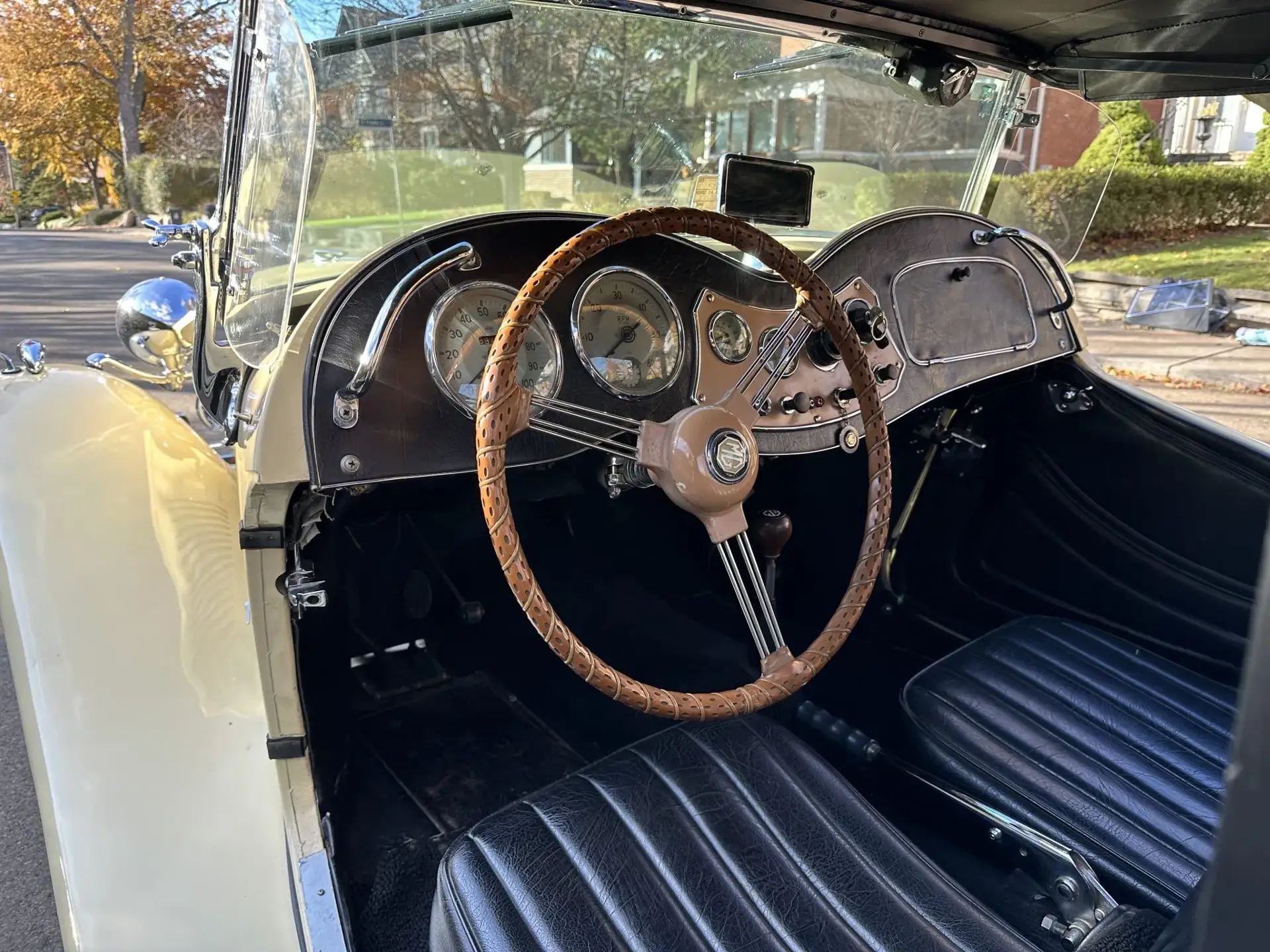
The cabin houses a split bench seat trimmed in black vinyl. Appointments include a black dashboard, driver- and passenger-side grab handles, door-panel map pockets, a wood shift knob, a dash-mounted rearview mirror, a glovebox, and black carpeting.
The banjo-style steering wheel has a leather wrap around its rim and is attached to an adjustable column. Jaeger instrumentation consists of a 100 mph speedometer, a 6k-rpm tachometer with an inset clock, and auxiliary gauges for oil pressure, coolant temperature, and amperage.
Bring A Trailer
Four in-line or four in-queue?
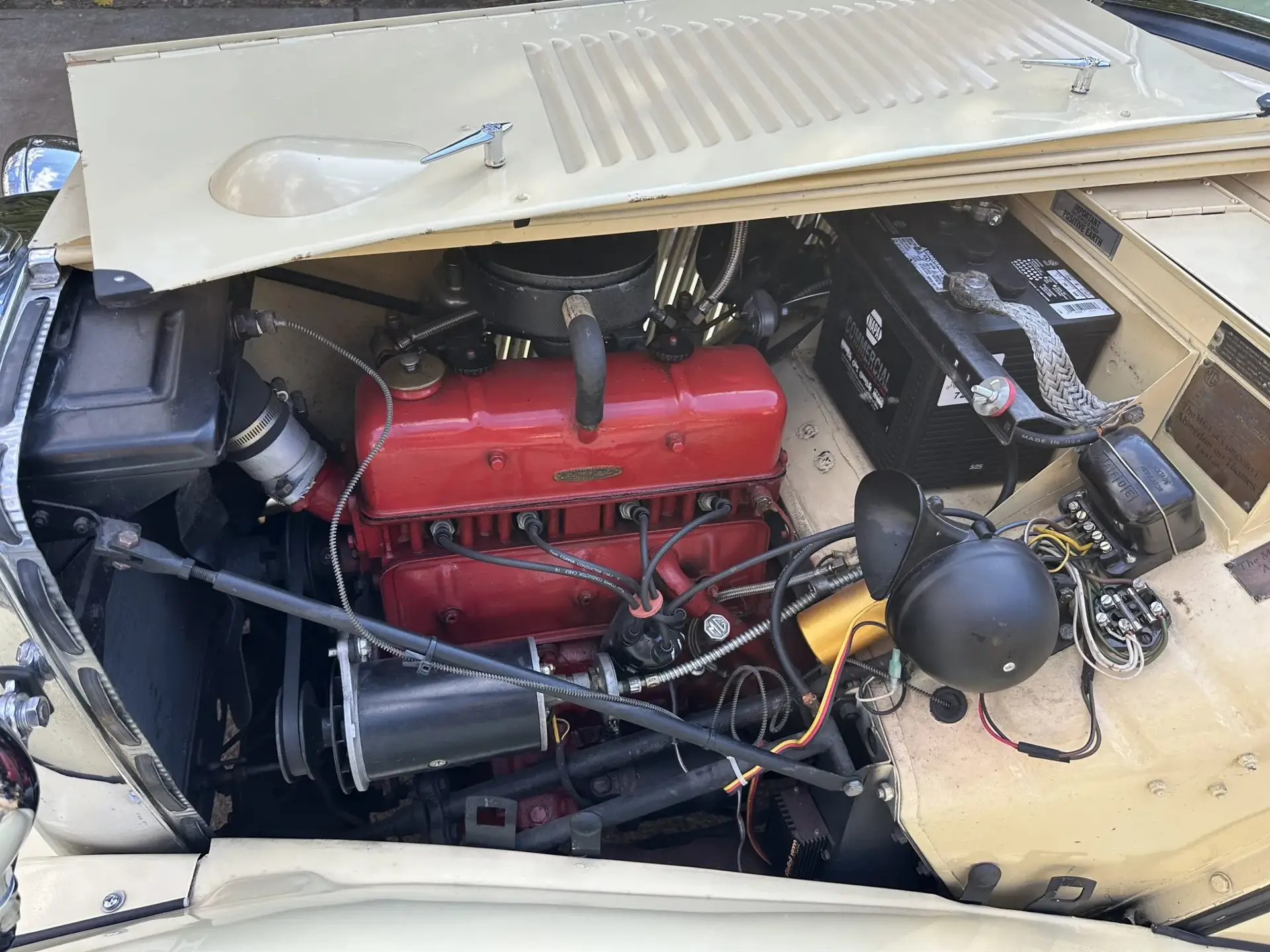
Under the hood of this elegant charmer is a 1,250cc (76ci) XPAG inline-four. The engine features dual SU carburetors for that perfect high-end mix, and in this configuration, it was rated for 54 hp. That might not sound like much, and compared to some of the heavier American Muscle beasts beginning to come onto the market, it isn’t. Still, MG had a very solid engine in the XPAG, and as they built lighter, smaller cars, the power disparity when factoring in weight wasn’t exactly dire. Many enthusiasts actually appreciate the chance to run their engines at higher revs while still having the possibility of obeying posted speed limits.
That distinguished level of power is sent to the rear wheels by way of a four-speed manual transmission, and braking is handled by a drum on each wheel. The odometer shows 96,000 miles, but the true mileage is unknown. The owner claims to have put on fewer than 10 total miles since acquiring the vehicle in the fall of 2025.
Bring A Trailer
Final thoughts: A refined machine for a more civilized age
The divergence between American and British motor culture only grew more profound as the 1950s progressed, and MG retained the 1930s styling and performance, much of it unchanged, to avoid falling so far out of sync as to risk losing the market. However, MG and other British roadsters remained relevant in the American markets without completely losing their distinctive charm, proving that there will always be a segment that values a ‘less is more’ approach to horsepower and cylinders. If you are one of those drivers, perhaps check out the auction before it ends and maybe even place a bid, giving you a chance to make this piece of British history your own!
Bring A Trailer