
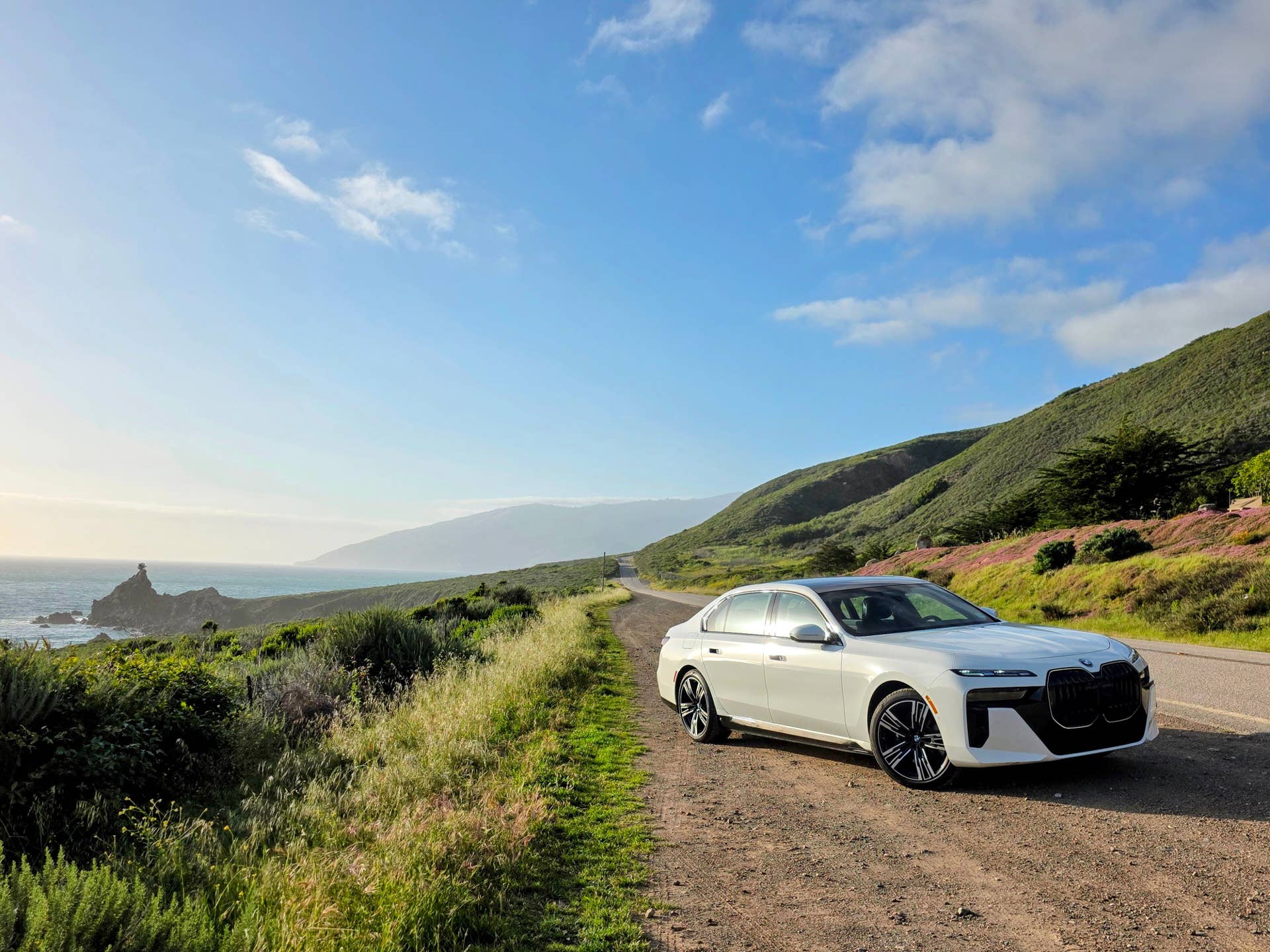
Six lanes of San Francisco gridlock, brake lights stretching into the late-afternoon haze, and the cabin of the 750e was completely silent. No engine, no shudder, no fuel being burned to inch a sedan that weighs more than two and a half tons forward at three miles an hour. Just the hum of the climate control and the soft whir of the electric motor doing its dignified work. A few hours later, climbing toward the foothills of Sequoia, the inline-six clicked on so seamlessly I missed the moment it happened.
Kyle Edward
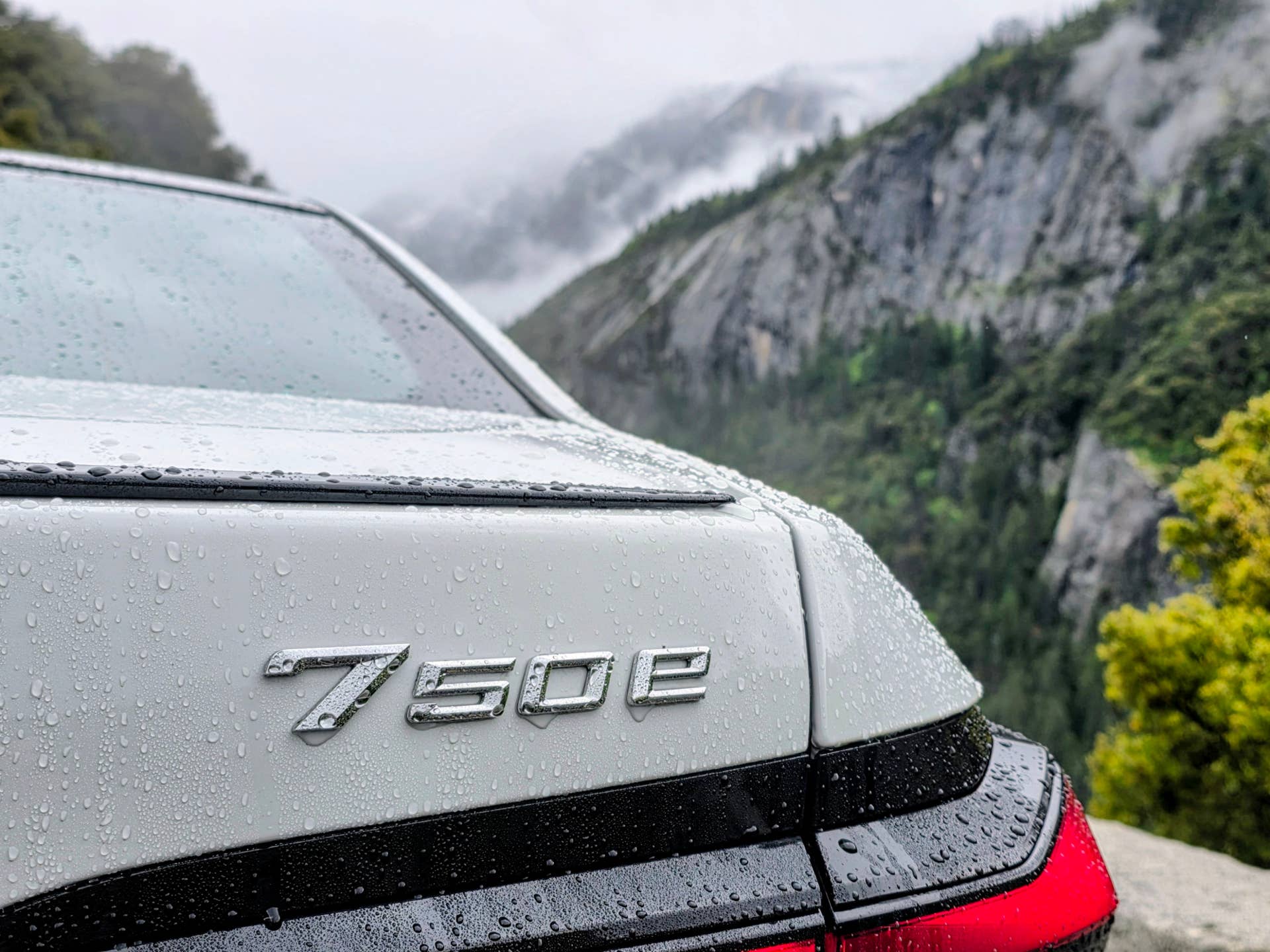
That is the case in two scenes for the 2026 BMW 750e xDrive. After 1,000 miles from LA up through Sequoia, into Yosemite, and back, the question I kept circling was a simple one: is the plug-in hybrid quietly the smartest 7 Series in the lineup? I think it is.
Exterior and Interior Styling – 7/10
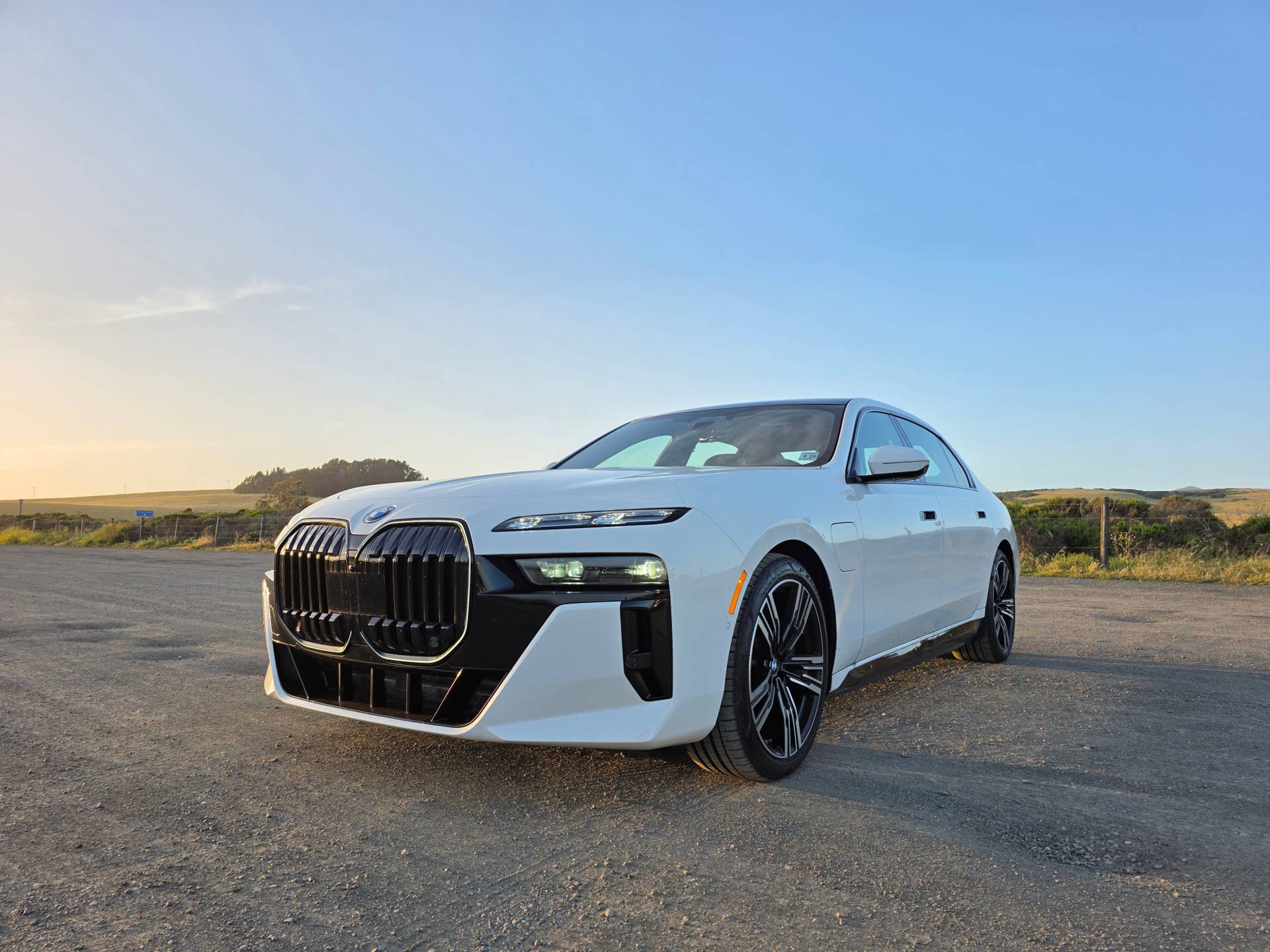
Let’s get the elephant out of the room. The current 7 Series is a polarizing piece of design, and the 750e wears the full set of corporate Bavarian theatrics. The split headlight treatment, the towering vertical kidney grille, the slab sides, the proportions that read more freight train than sedan from certain angles. In photos it borders on cartoonish. In person, parked under a streetlight in Beverly Hills or rolling into a Yosemite Valley pullout, it grows on you. A little.

Kyle Edward
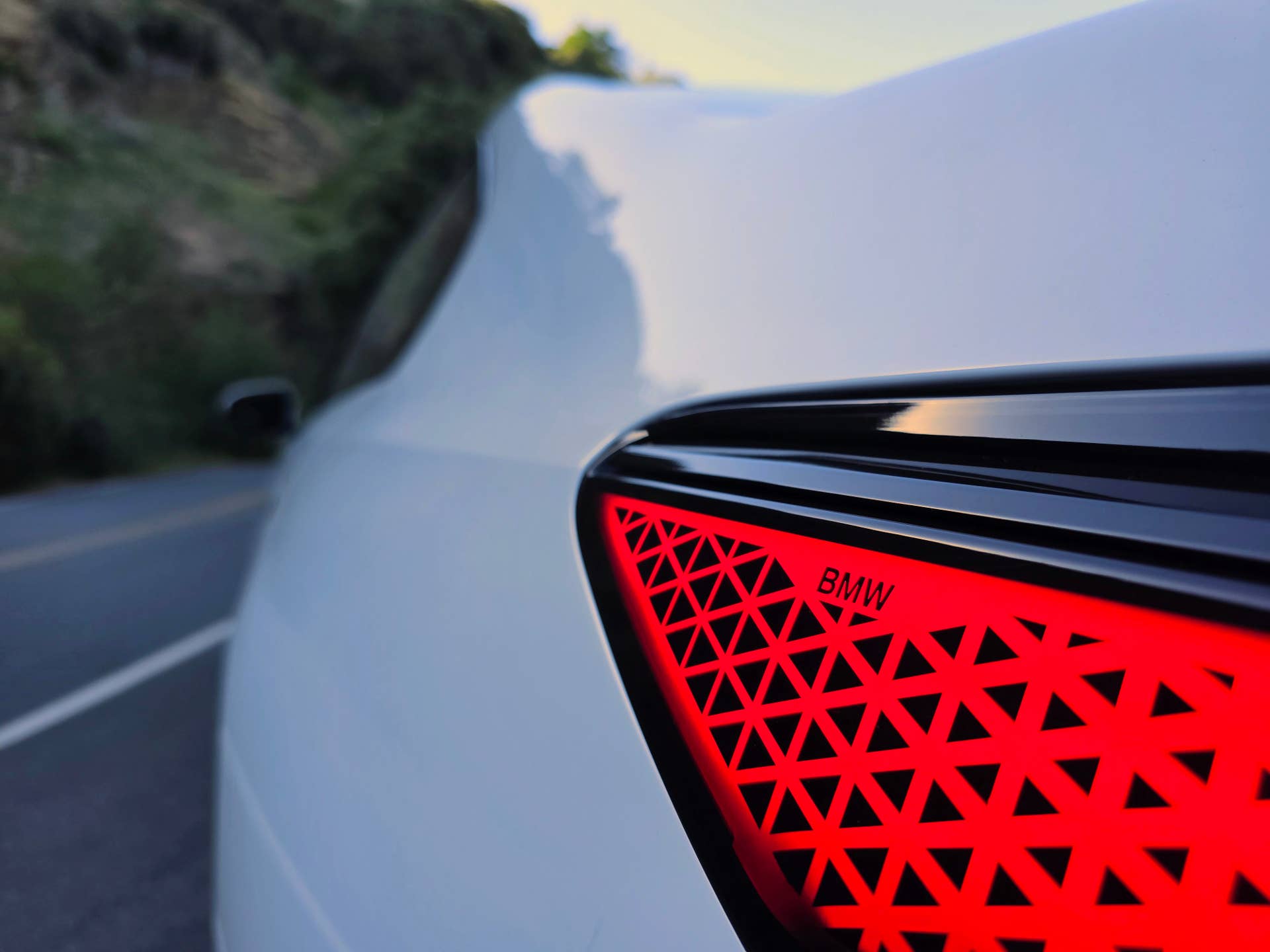
Whether you accept the design, the surface execution is undeniably high. Panel gaps are jewelry-grade. The illuminated kidney grille feels indulgent in the right way. The M Sport Package on our test car added blacked-out trim and 20-inch M Aero bicolor wheels that helped the long sides read more athletic and less monolithic.

Kyle Edward
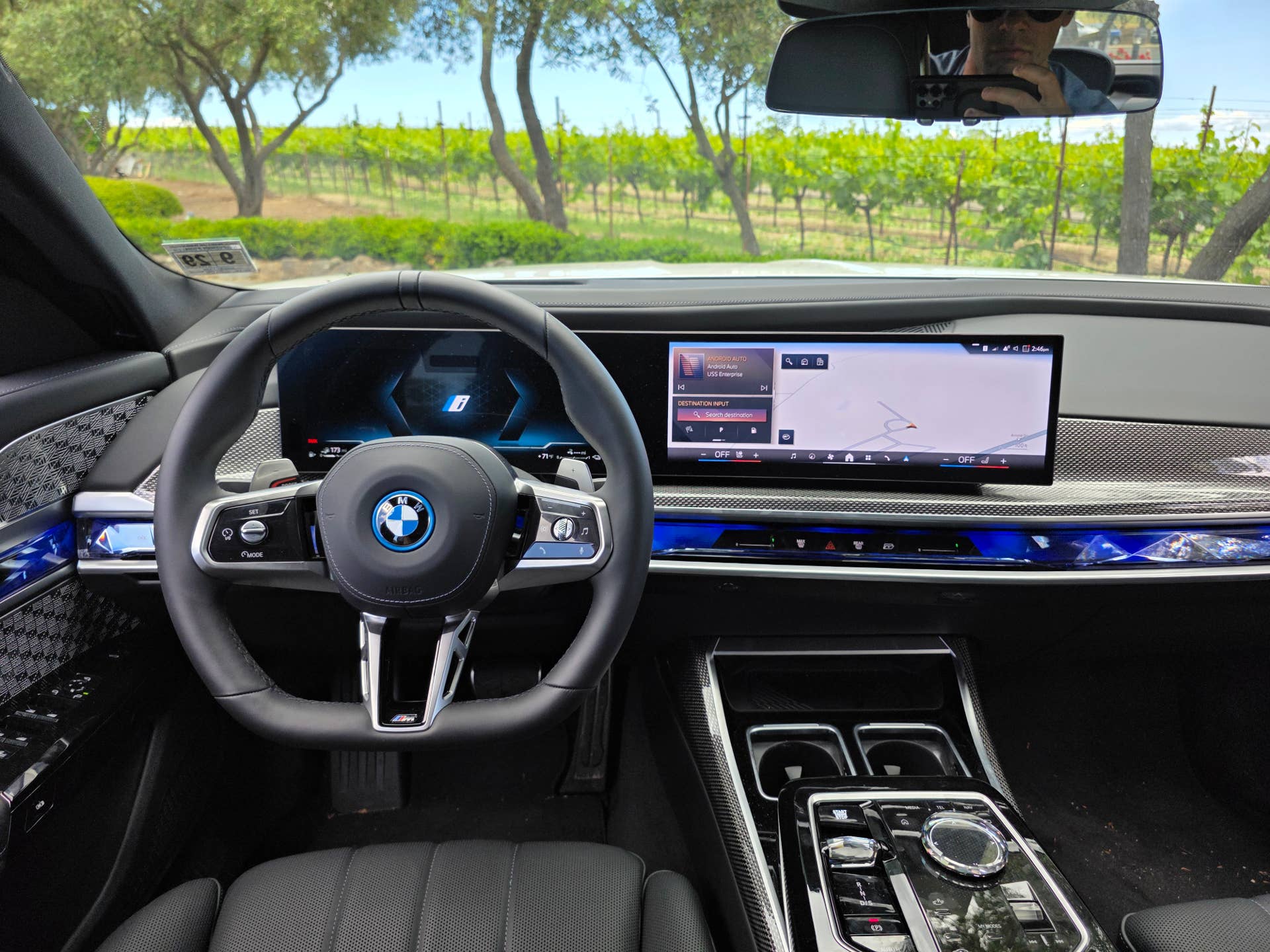
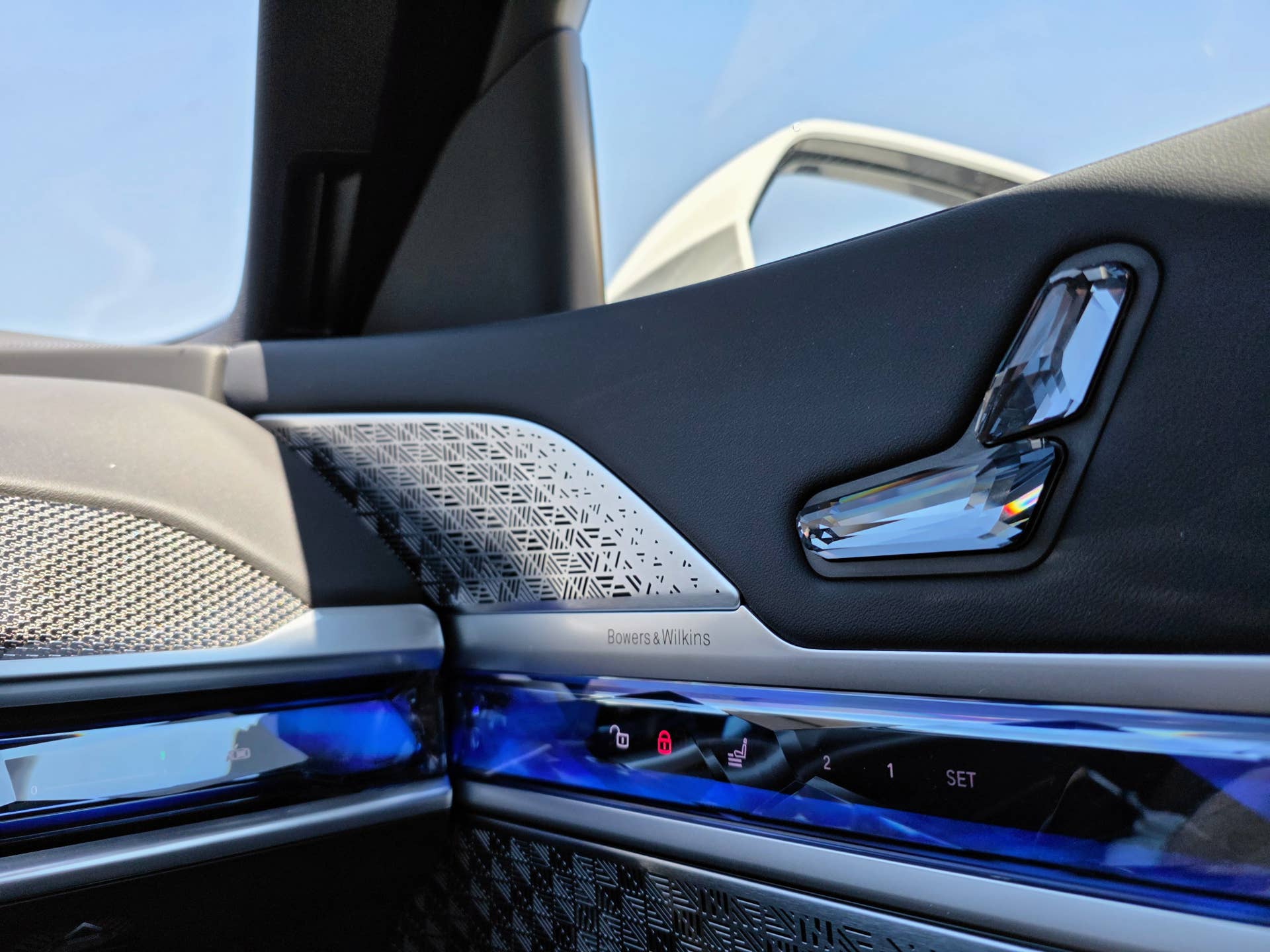
Inside is where the 7 makes its real argument. Slip past the auto-opening doors (a party trick that feels gimmicky in the showroom and genuinely useful when you have your hands full at a hotel valet), and you drop into a cabin that feels closer to a private aviation interior than a sedan. The dashboard runs a single curved glass panel housing the 12.3-inch instrument cluster and 14.9-inch infotainment screen, and beneath it a strip of the Interaction Bar glows in a color of your choosing. Crystal-look controls on the door cards are tactile theater. The Merino leather is soft, the headliner is suede, the rear seat treatment feels chauffeur-grade.
Kyle Edward
The score lands at 7 because the exterior really is going to lose people, full stop. But spend a week with the cabin and the case for the design starts to flip. You stop noticing the outside. You notice the inside.
Kyle Edward
Infotainment and Technology – 9/10
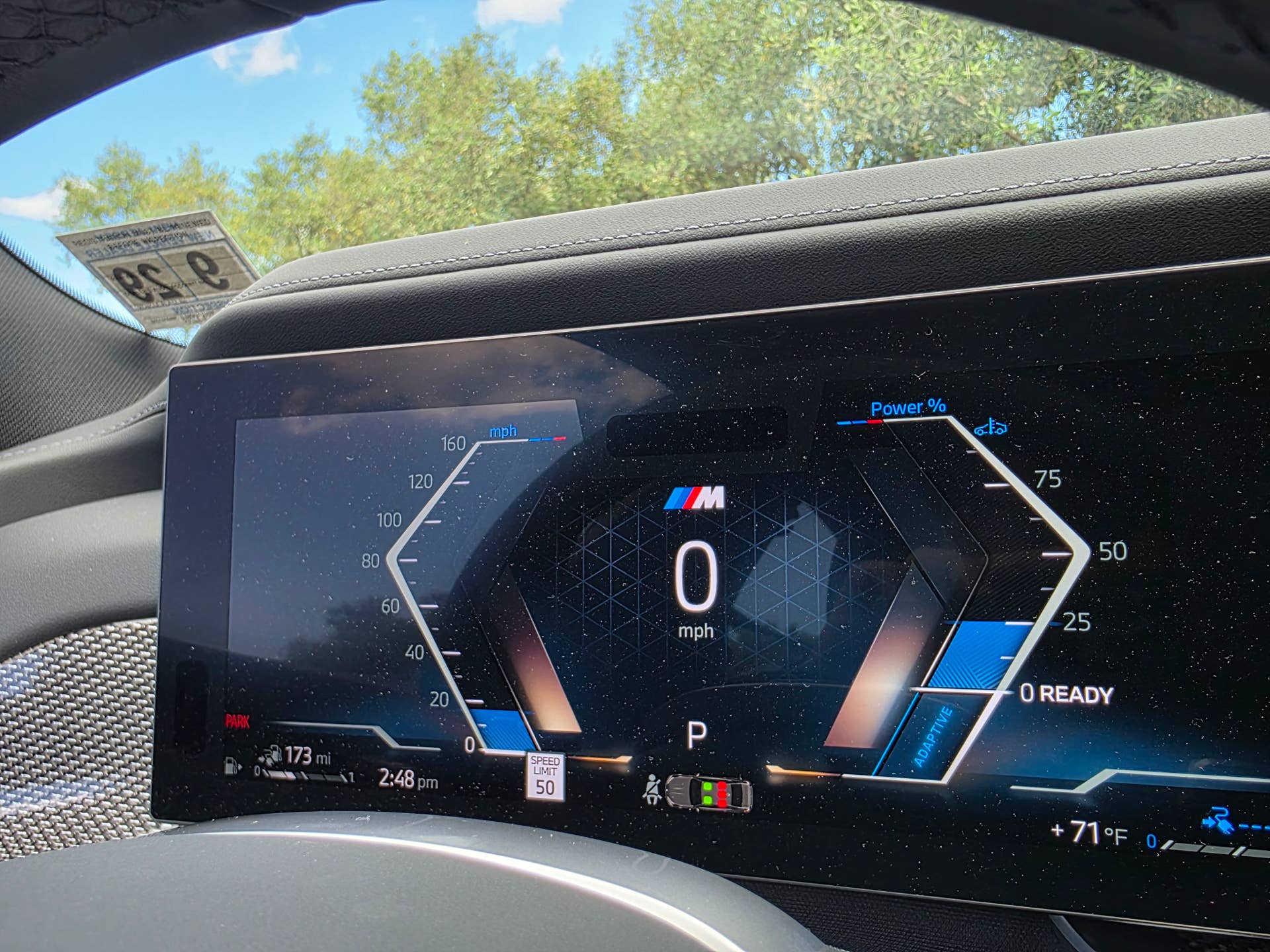
BMW’s iDrive 8.5 setup gets a lot of grief from purists who miss the days of the rotary controller and physical climate buttons, and some of that criticism is fair. The home screen layout buries common functions a layer or two too deep. But once you’ve spent a few hours acclimating, the system rewards you. The voice assistant actually understands natural-language requests. The navigation is genuinely useful for trip planning, including charging stops if you let it. The graphics are sharp, the response is quick, and wireless CarPlay and Android Auto both run without the dropouts that still plague some German cars.
Kyle Edward
The hardware around it is a flex. The optional Bowers & Wilkins Diamond Surround Sound system, which you absolutely should option, made a long stretch of overnight highway between Visalia and the Bay turn into a private concert hall. The illuminated speaker grilles aren’t subtle, but at this price you’ve earned a little theater.
Kyle Edward
The Driving Assistant Plus suite handled long highway stretches with confident lane-centering that lets you stop working without letting you stop paying attention. The hands-on-wheel monitoring is calibrated well, not nagging, and the adaptive cruise modulates speed smoothly even in dense traffic. Add the 360-degree camera with 3D Surround View, and the car becomes navigable in tight LA garages despite its 17-foot length.
The reason this isn’t a 10 is the same reason most flagships lose points lately: too much is in the screen. Climate, seat heat, drive modes, ambient light, all of it. BMW deserves credit for keeping a few physical shortcuts on the center console, but the trend line is what it is.
Kyle Edward
Comfort, Space, and Usability – 10/10
This is where the 750e quietly runs away with the category. The standard adaptive air suspension swallows expansion joints and broken pavement with a poise that the older 7 Series, even the previous generation that had a strong run at this, never quite achieved. Cabin isolation is best-in-segment quiet. At freeway speeds with the windows up, conversation between front and rear passengers happens at indoor-living-room volume. There’s no wind whisper from the doors, no tire roar bleeding through the floor, no hum from the inline-six once it’s warmed.
Kyle Edward
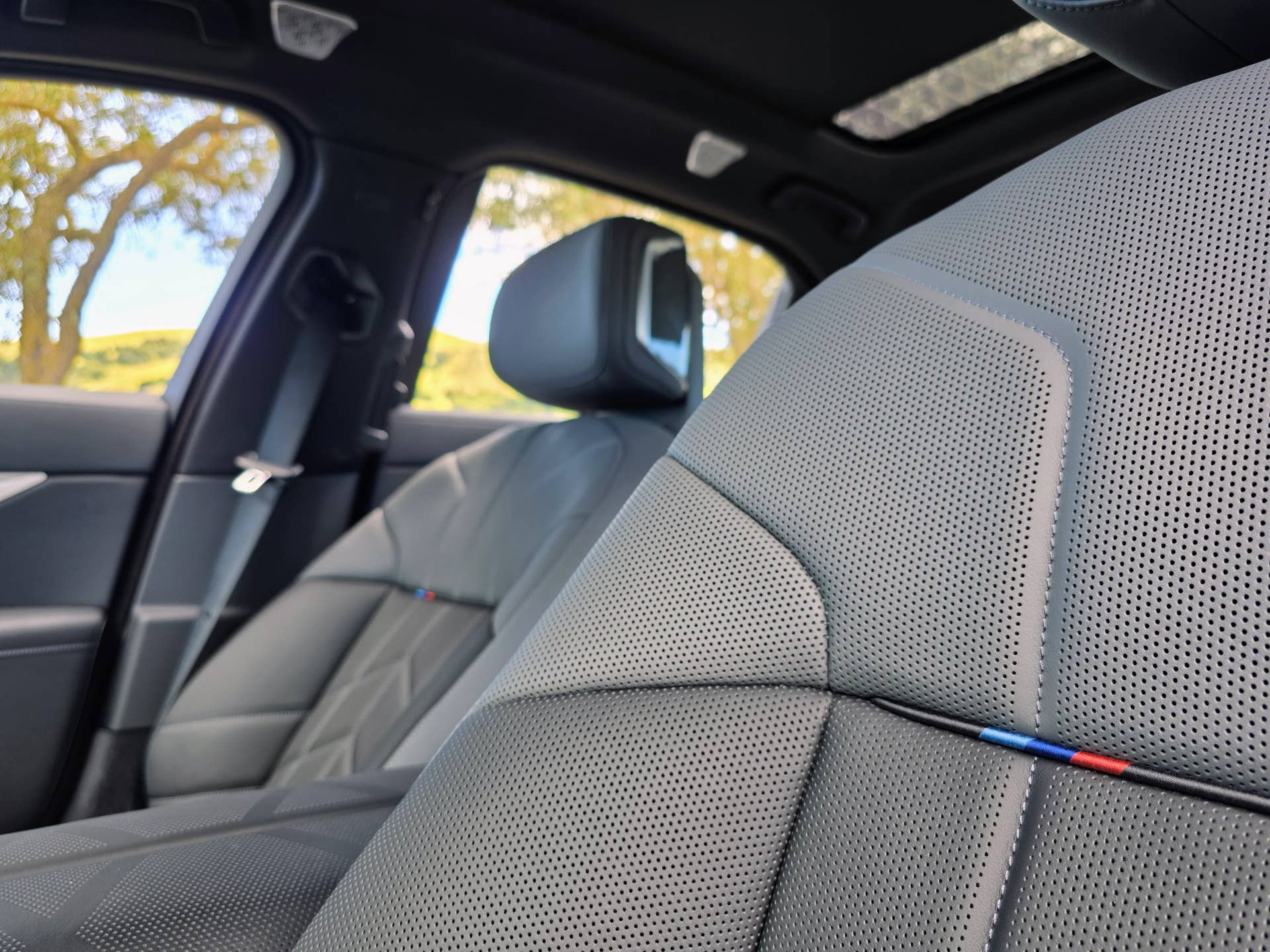
The front seats, particularly with the optional ventilation and massage functions, are calibrated to last all day. After ten-hour driving days split between LA traffic, Sequoia’s switchbacks, and a long detour through Yosemite Valley, I climbed out without the lower-back fatigue that even good German seats can cause. The rear seat is spacious by any reasonable measure, with reclining backrests and abundant legroom, and the auto-open theater works just as well from the rear doors as the front.
Kyle Edward
Trunk space, at 18.5 cubic feet, gives up half a cube to the non-hybrid 7s thanks to the battery pack location, but it’s deep, wide, and easily fit a week’s worth of soft luggage, a camera bag, and groceries without complaint. The Integral Active Steering option, which adds a few degrees of rear-axle steer, is the unsung hero of urban usability. It makes a sedan that’s longer than a Range Rover feel one or two sizes smaller in parking structures and U-turns. Pair that with the automatic doors that simplify valet handoffs and luggage loading, and the car flatters its driver in ways most luxury sedans don’t bother with.
Driving Experience – 9/10
Two things keep the 750e from feeling like a luxury barge in M-badged trim. The first is the powertrain. 483 horsepower and 516 lb-ft of torque, sent through an eight-speed automatic to all four wheels, lands the car at 60 mph in 4.6 seconds. That’s quick, but the more important number is the way the torque is delivered. Off the line in any drive mode, the electric motor fills in instantly, and the inline-six layers in once revs build. The handoff between motor and engine is genuinely seamless. I spent the first few hours of the trip trying to catch the transition. I rarely did.
Kyle Edward
The second is the chassis. The 7 Series has always been the BMW where engineers were forced to balance comfort and dynamics, and historically dynamics lost. The current generation has changed that. With Integral Active Steering, the M Sport Package’s tighter calibration, and the standard adaptive air suspension, the 750e turns into a corner with intent. Sport mode firms the dampers, sharpens the throttle, and weights the steering, and the car responds with a directness that doesn’t make sense for something this big. On a stretch of canyon road heading down from the Sierras, with the inline-six awake and the battery still holding charge for boost, the 750e felt remarkably composed. Body roll managed, brakes confident, the rear axle quietly making the car feel a half-class smaller. This is the BMW driver-engagement DNA, refracted through a 5,300-pound flagship.
Kyle Edward
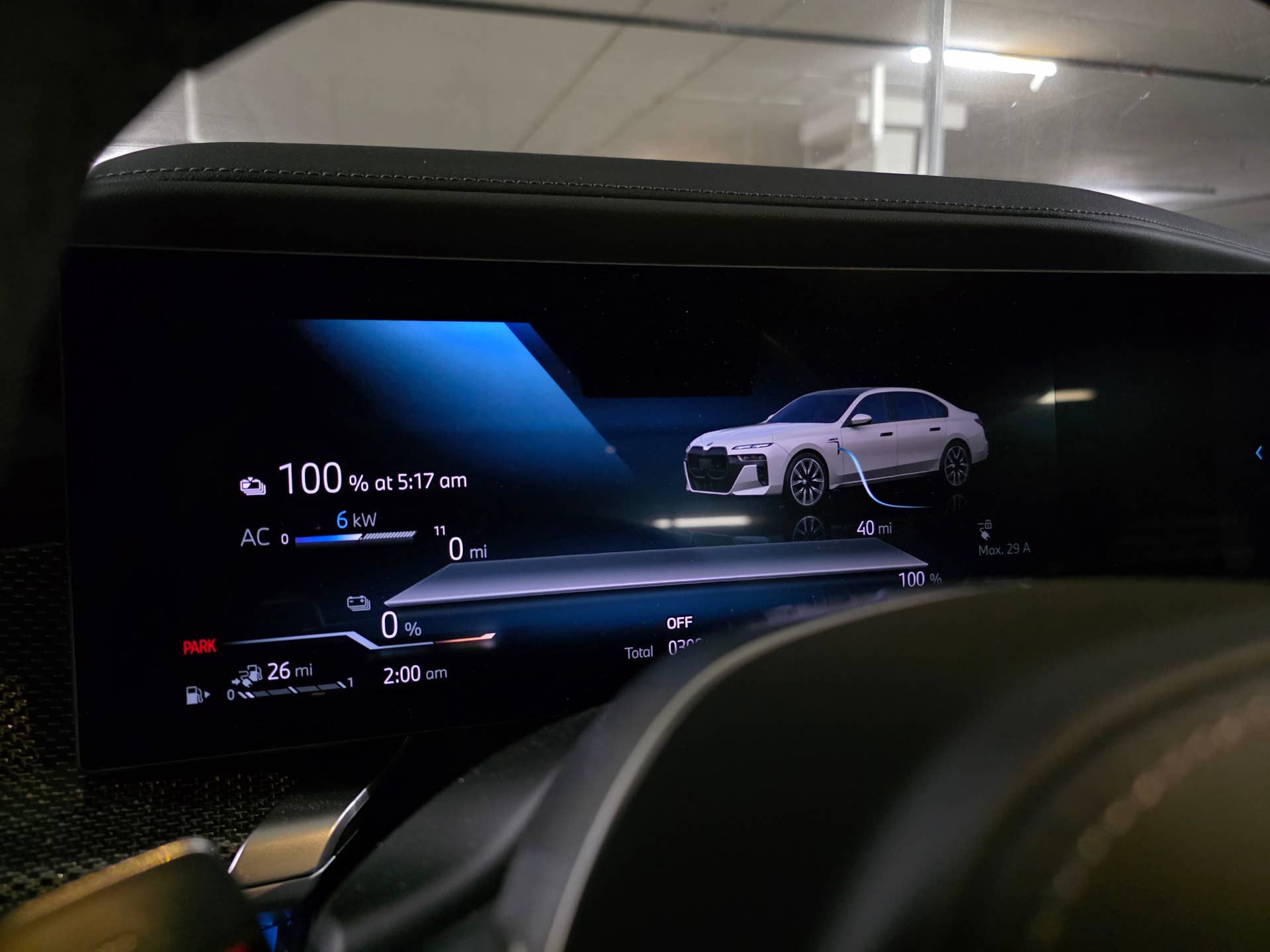
Around town, the EV mode is the killer feature. Up to 36 miles of all-electric range covers nearly any urban day. Sitting in San Francisco gridlock with the engine off and the electric motor doing all the work was the kind of experience that quietly reframes what a luxury sedan should feel like in 2026. No idle, no wasted fuel, no shudder.
Real-world fuel economy across our 1,000-mile loop, with the battery contributing for the first 30-odd miles each charging cycle and the engine carrying the rest, came in at 26 mpg combined. That’s strong for a sedan this big and this quick. Plug it in nightly at home and a daily commuter could realistically run hundreds of miles between gas stops.
Kyle Edward
The reason this scores a 9 instead of a 10: brake feel under hard application is fine, not great, and the regen blending could be a touch more transparent. The steering, while accurate, lacks the last 10% of road texture that a properly sporty sedan delivers.
Final Verdict – 9/10
The 2026 BMW 750e xDrive starts at $113,300 including destination, and the test car as configured, with M Sport Package, Integral Active Steering, and Bowers & Wilkins Diamond audio, lands into the $120,000s.
What you’re buying is the most cohesive 7 Series in years. The plug-in powertrain solves the everyday running-cost question. The 36 miles of EV range covers nearly any commute. The 483 hp combined output and 4.6-second 0-60 cover any need for speed. The road manners cover the long-distance work that flagships are supposed to do. The 760i has the V8 drama, the 740i has the value, the i7 goes full electric. The 750e covers all three jobs at once.
About the author

Kyle Edward
Editor-in-Chief, Autoblog