
A bigger three-row warship
The last QX80 lasted a whopping fourteen years, which is a virtual eternity in the automotive industry. It shares a platform with the current Nissan Armada, but this more premium warship dials up just about everything. The 4th-generation model manages to retain the QX80’s overall shape, but a lot has changed and needed to. While the last QX80 exuded proper levels of luxury, its cabin suffered from a dated look and a tight third row. The redesigned 2025 QX80 changes pretty much everything to compete with the likes of the Cadillac Escalade, Lincoln Navigator, Mercedes-Benz GLS-Class, and the Lexus LX. Infiniti also gives its flagship SUV the ultra-premium treatment with the top-tier Autograph trim for the first time. Think of it as Infiniti’s version of the Lincoln Navigator’s Black Label trim. Opulent, expensive, and loaded to the roof with luxurious accommodations and premium tech.
Amos Kwon
Our 2025 Infiniti QX80 tester came in Autograph 4WD trim with a base price of $109,900. Standard features highlights include 22-inch aluminum alloy wheels, Electronic Air Suspension, 64-color ambient lighting, open pore Ash Wood trim, power panoramic moonroof, dash cam recorder with in-car camera, heated steering wheel, advanced automatic 3-zone climate control, quilted semi-aniline leather seats, heated 1st/2nd/3rd row seats, ventilated and massaging 1st and 2nd row seats, 2nd row Captain’s Chairs with touchscreen controls, power-folding and reclining 3nd row seats, dual 14.3-inch displays, 9-inch lower front touchscreen control panel with haptic feedback, Google Built-In w/ Navigation, wireless Apple CarPlay/Android Auto, wireless phone charging, Wi-Fi hotspot, Klipsch 24-speaker premium audio, and individual headrest speakers.
The options package included illuminated cargo scuff plates, a panoramic illuminated headliner, a premium cargo package, an umbrella holder, and premium paint. The total price came to $114,845, including the $1,995 destination charge. We drove the QX80 Autograph for a week, and here’s our honest take.
Evolutionary styling and bigger than ever
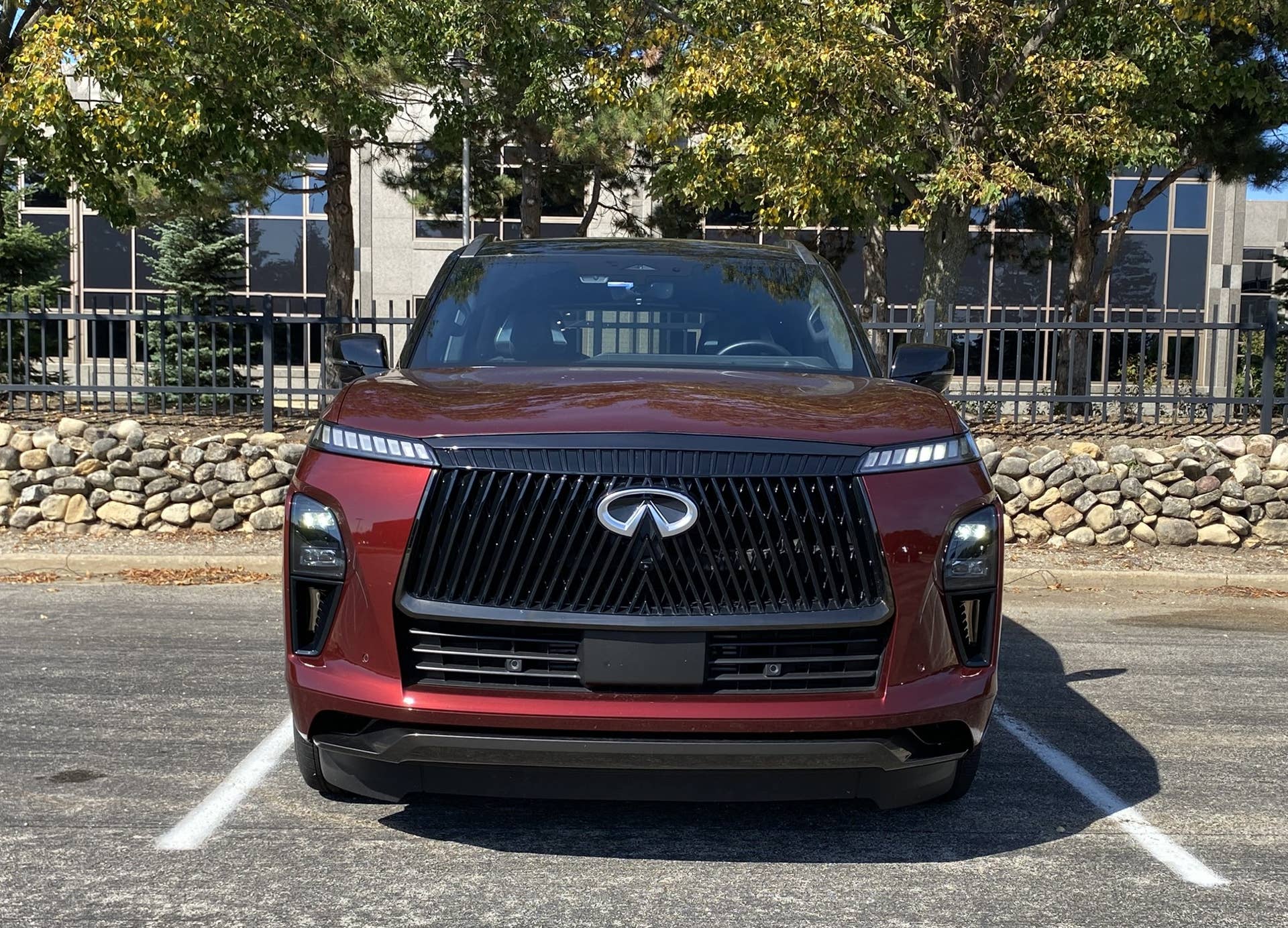
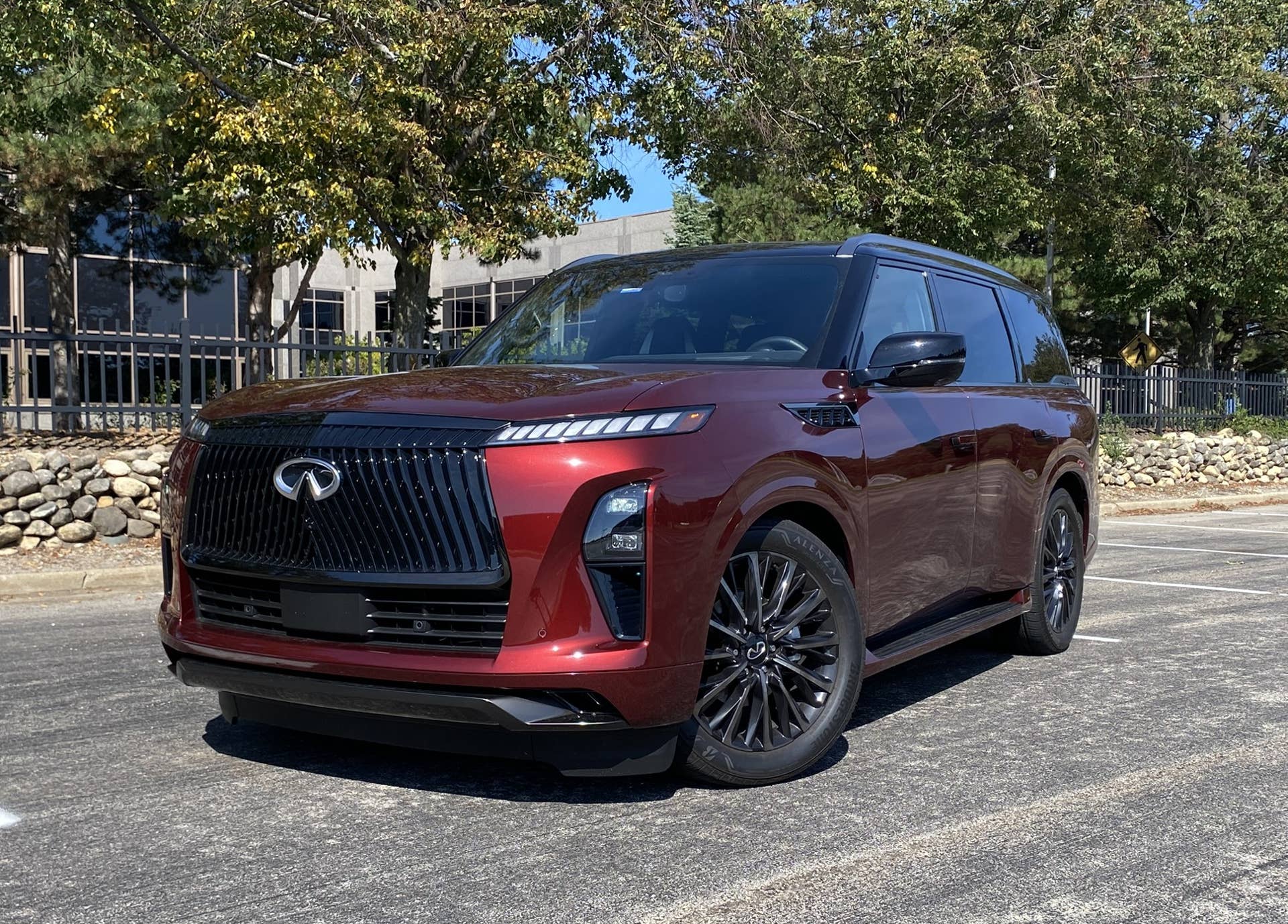
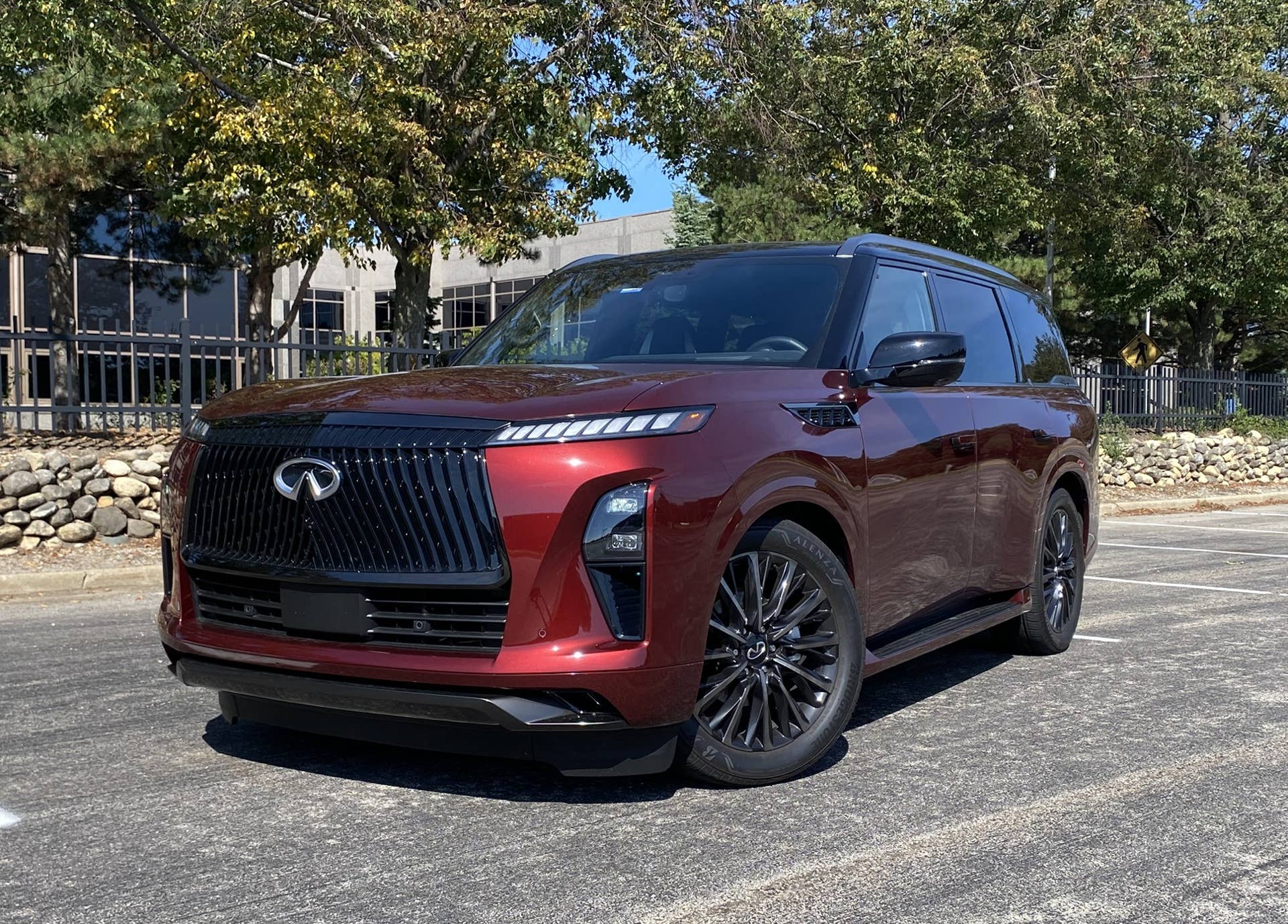
The QX80 has always been big, but the last generation leaned awkwardly toward bulbous. Granted, some of the awkwardness was sifted out when the previous QX80 got a refresh in 2018. The all-new 2025 model represents a clean-sheet redesign without losing the ethos of Nissan’s premium big boy. The redesign is sharper with modern proportions that no longer look dated. The consequence is more presence but an even taller upright stance with chiselled character lines and a maw that looks like it’s imitating Darth Vader’s wood chipper.

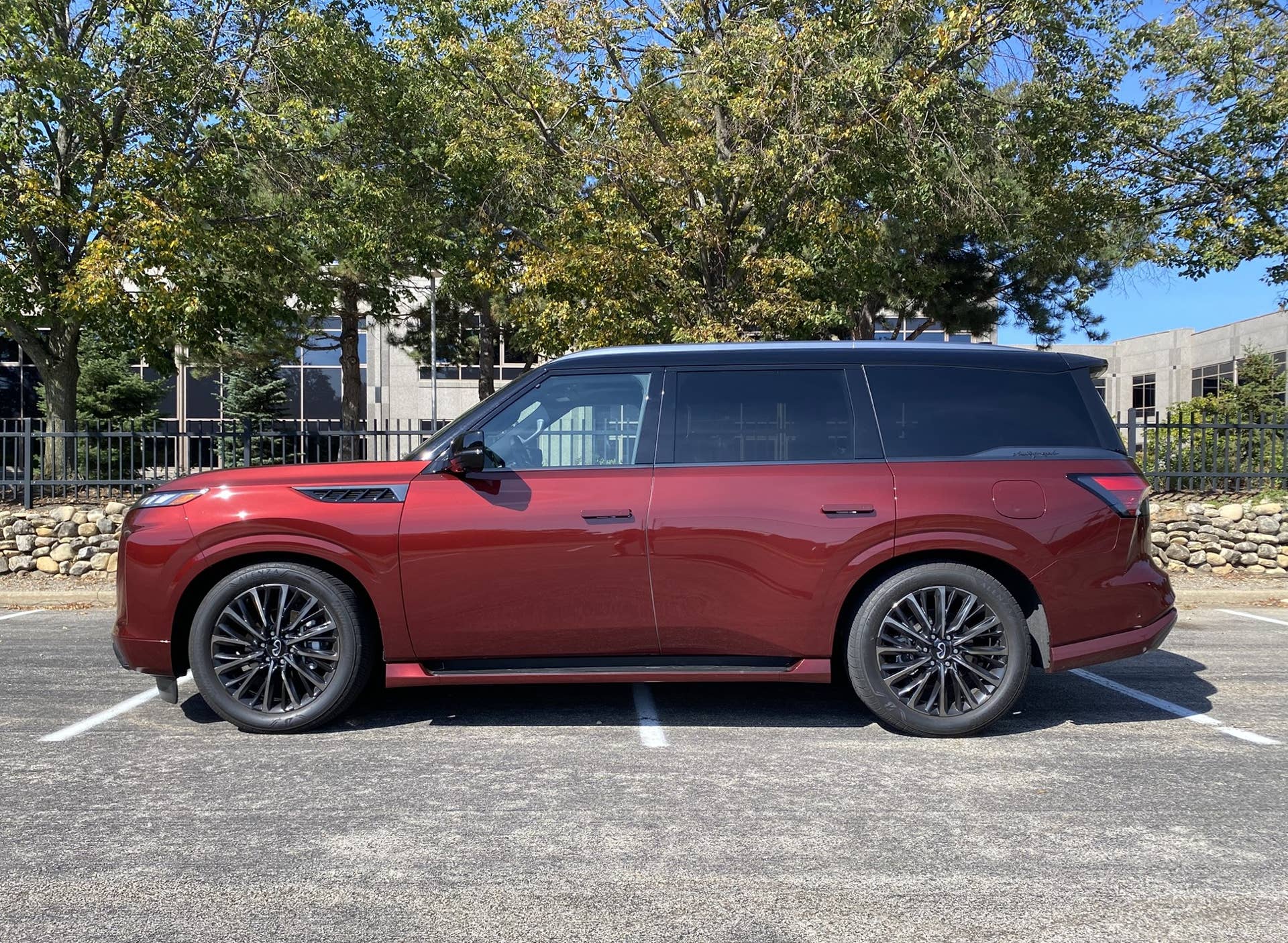
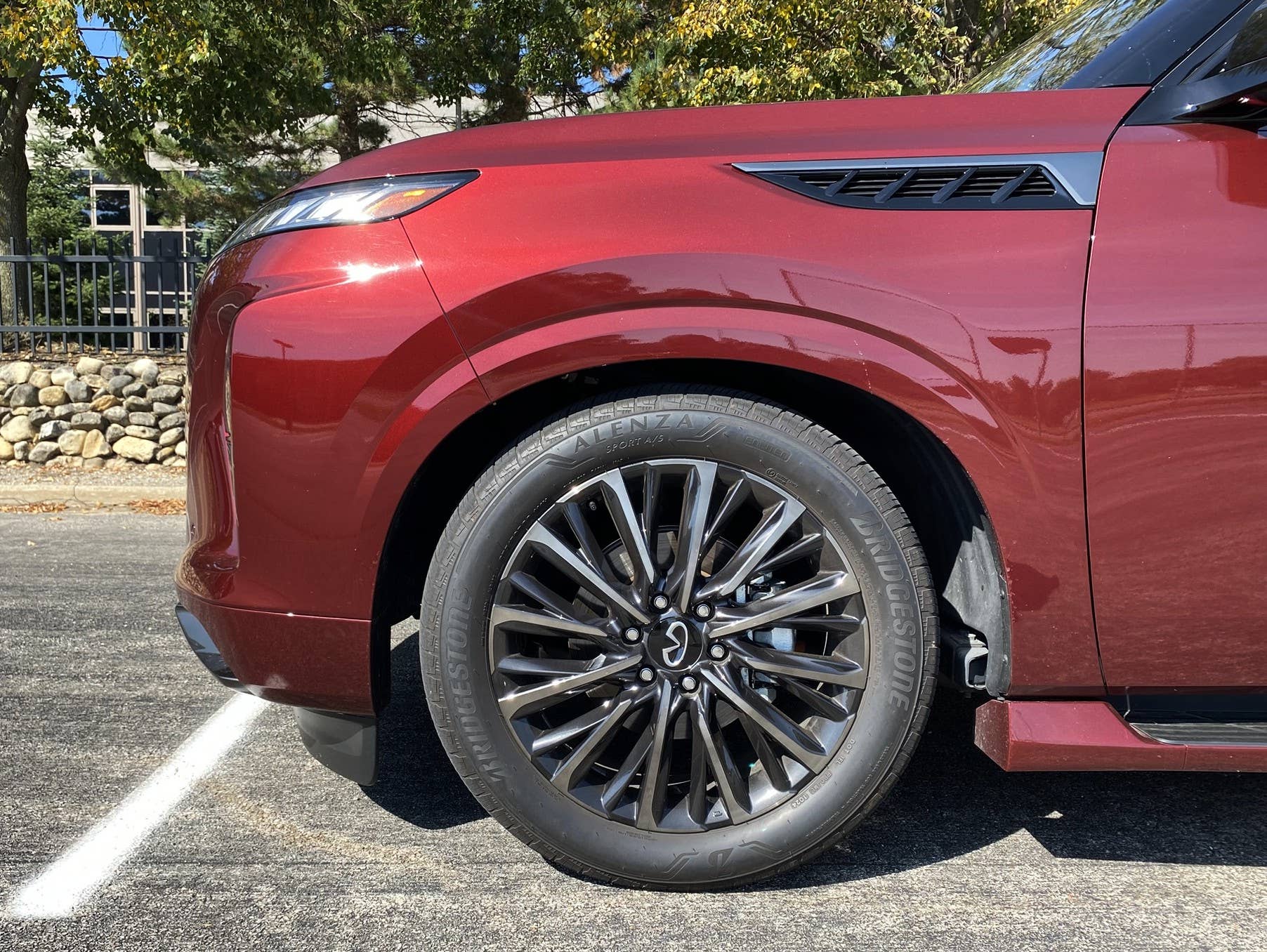
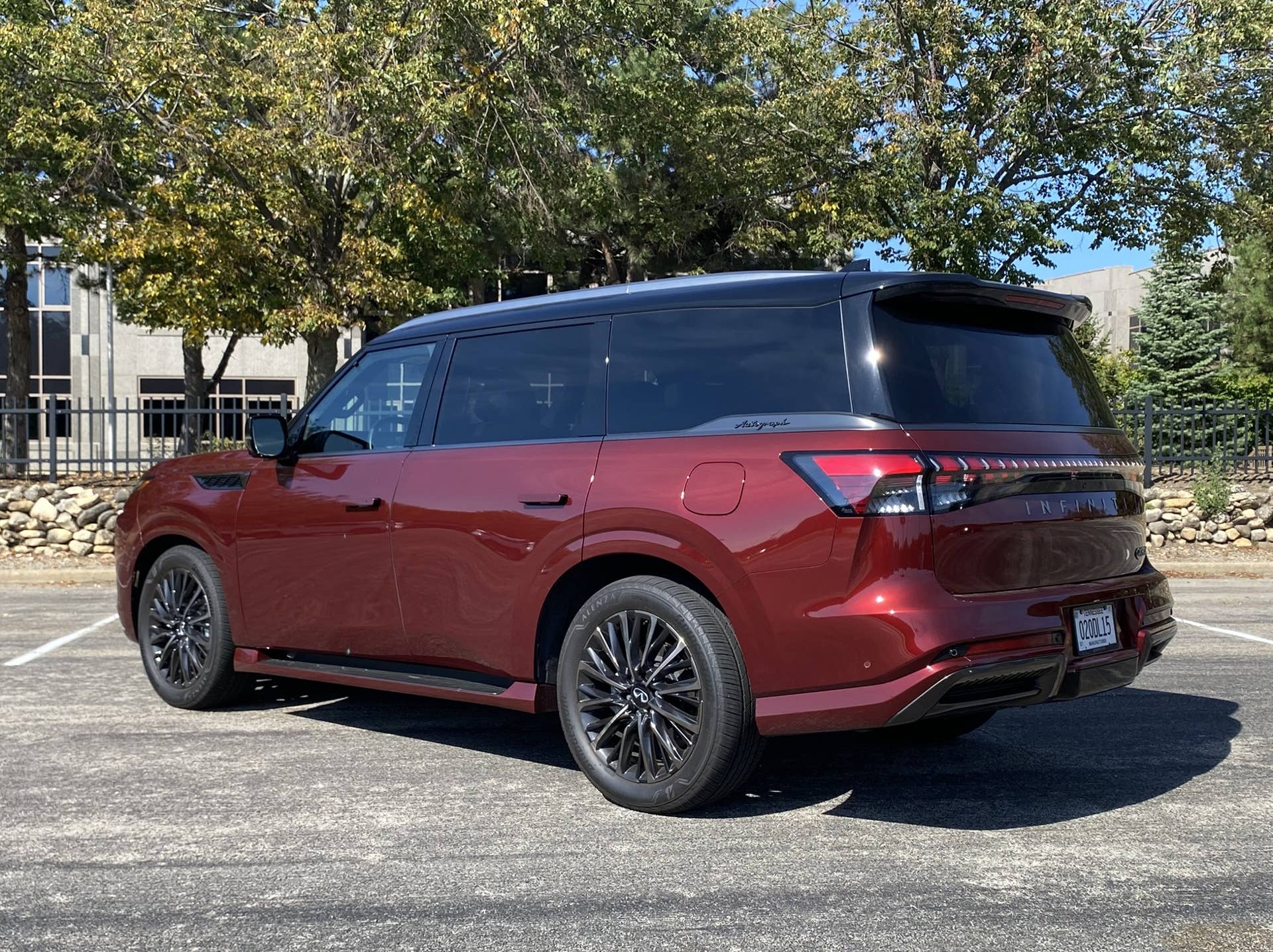
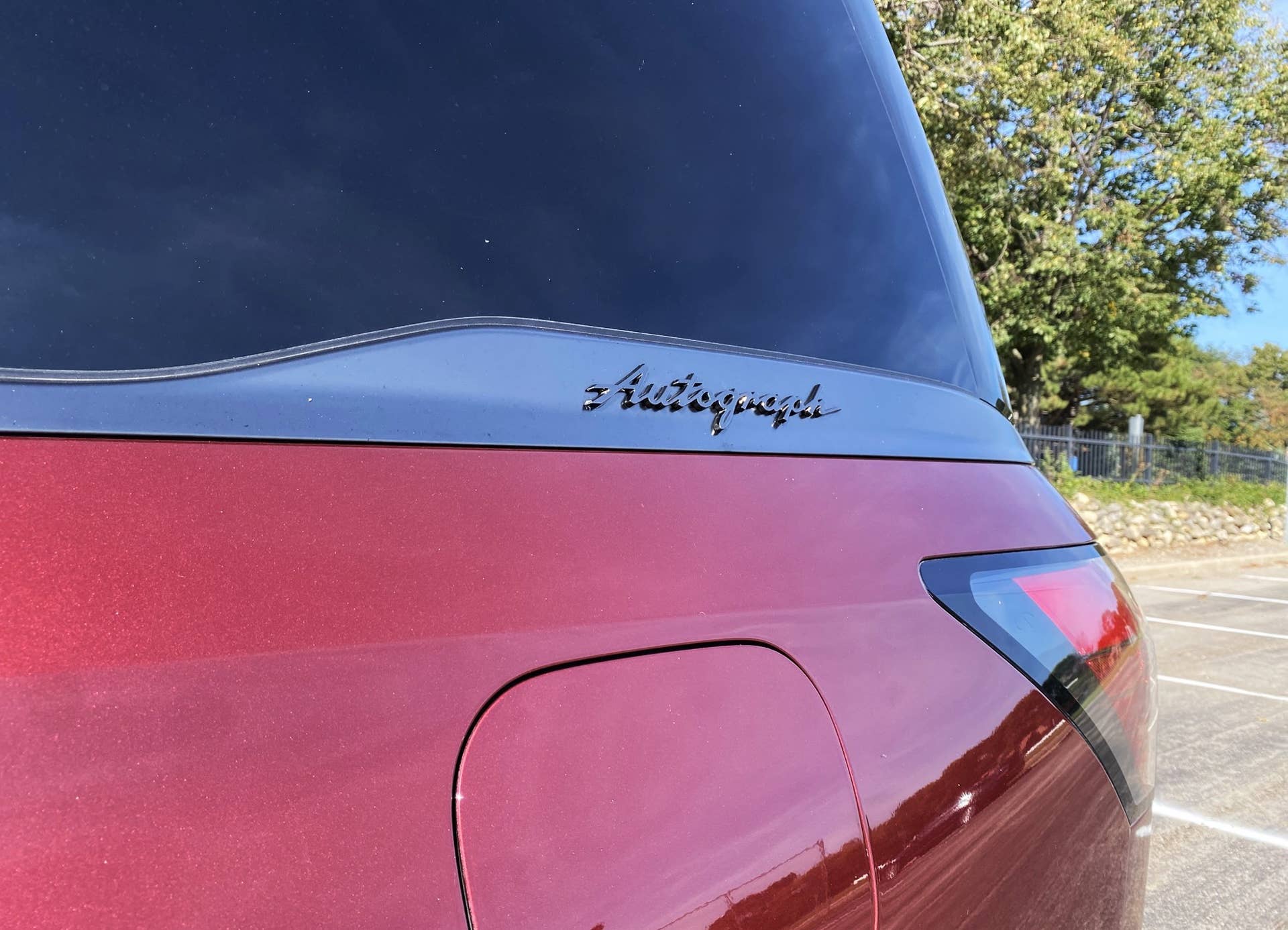
The Autograph trim gets exclusive touches: dark chrome exterior accents, unique badging, and massive 22-inch wheels that adequately fill the wheel arches. Flush door handles and dark pillars that match the window tint add stealth, while the ornate front fender vent pops nicely. Our tester looks low slung here because the air suspension lowers automatically when parked, to make ingress, egress, and cargo loading/unloading easier.

The split LED headlights and taillights are crisp and modern, while the two-tone paint and black and red scheme adds flair while reducing some of the QX80’s visual height. There’s no more Infiniti logo on the liftgate, replaced by simple lettering beneath the new full-width LED taillight strip. Park the QX80 next to an Escalade or Navigator, and the QX80 finally looks like it belongs in the same league. It may not outshine Cadillac’s swagger or Lincoln’s elegance, but it finds a sweet spot in between.
A cabin designed to impress
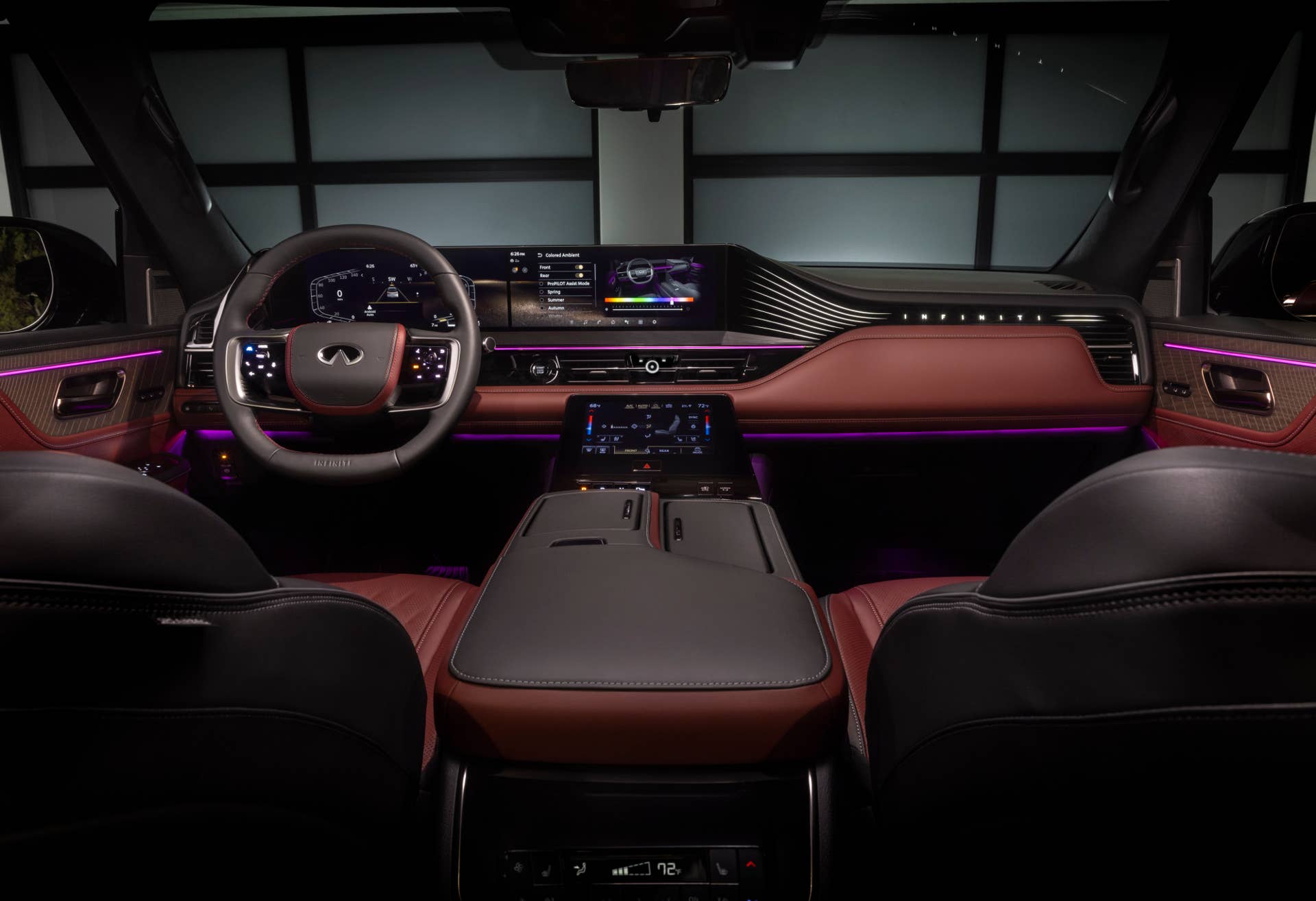
The QX80’s cabin needed an upgrade as much as the exterior did, and Infiniti delivered, albeit too much in certain respects. Step inside, and the Autograph trim delivers a serious step up from the outgoing model. The leather is soft, the quilting intricate, and the open-pore ash wood trim with metal inlay strips looks appropriately rich. Tons of leather on the dash and door cards ratchet up the premium look and feel, but there’s too much piano black on the center console, steering wheel, and dash. After just a day of use, they’re covered in fingerprints like a toddler had been mashing them. How about throwing a branded microfiber dust cloth in the center armrest, Infiniti?
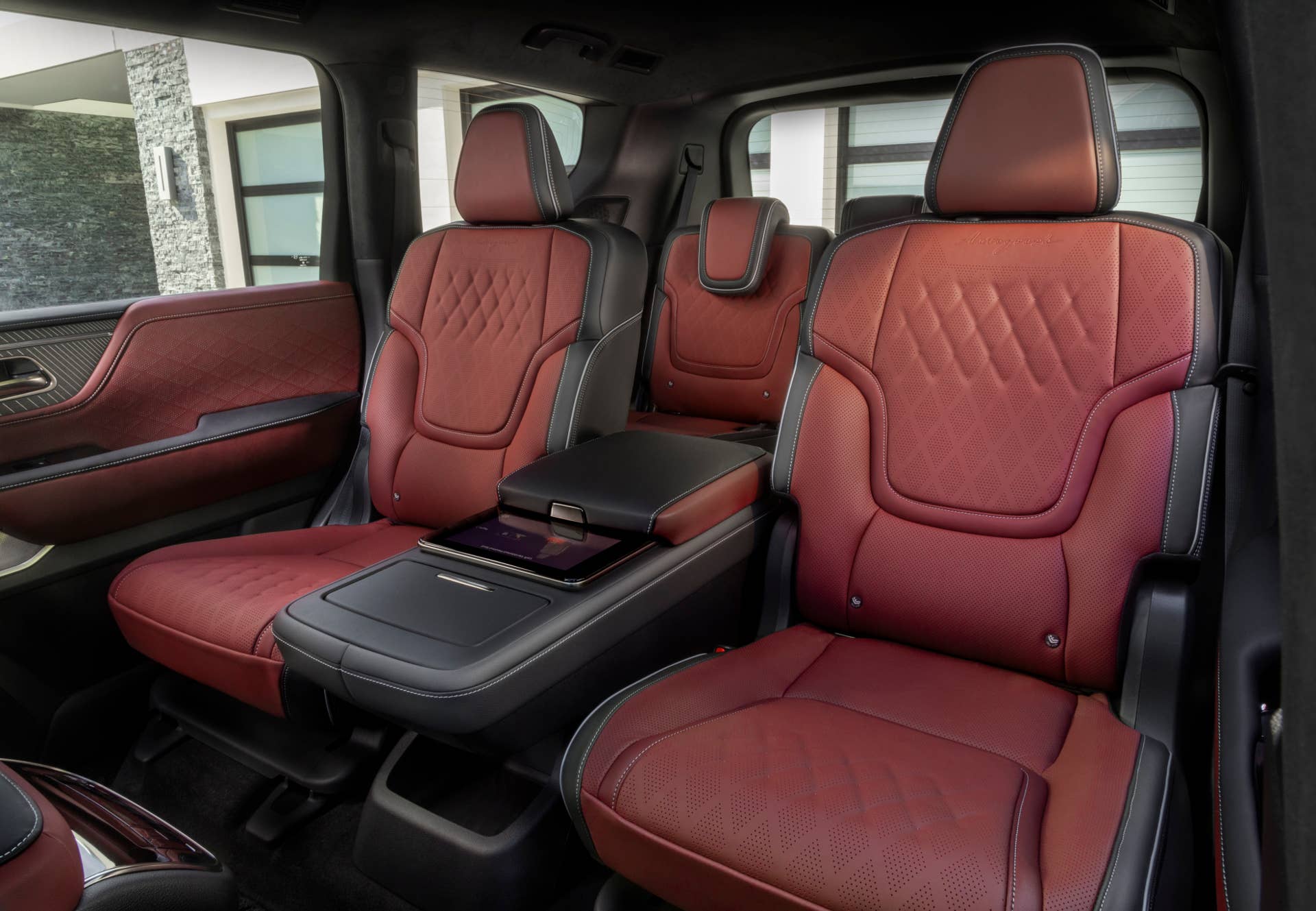
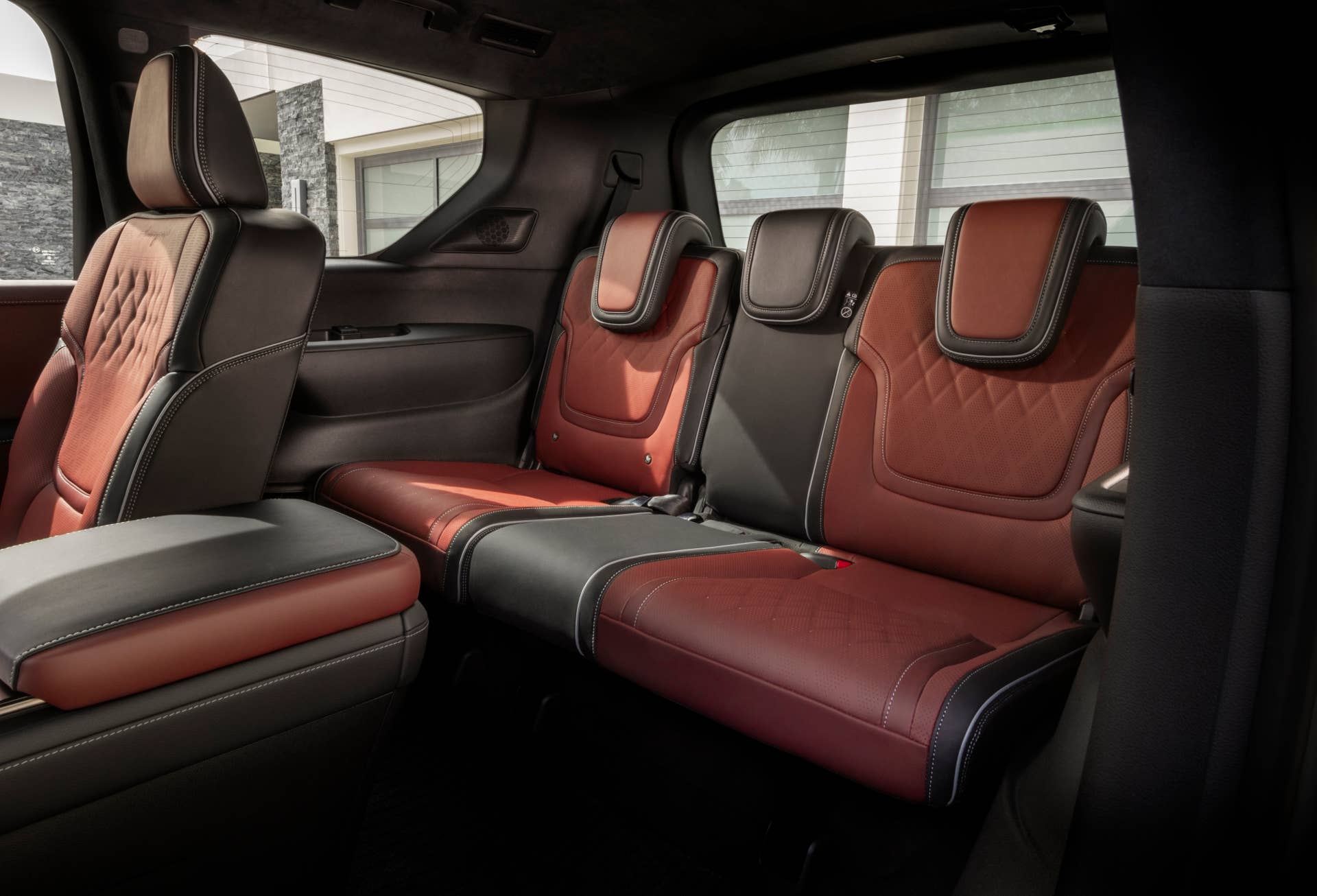
The front seats are some of the most comfortable in the industry, thanks to proper width, great cushioning, and excellent support. They’re not mushy like the ones in the last-gen SUV, and the seat cushion is quite a bit longer for improved long-range comfort. The Captain’s Chairs in row two are also quite excellent. Legroom is down a smidge from 41.0 to 39.2 inches, but it’s a small sacrifice for the increase in the way back seats. Row three now has 39 inches of legroom, a significant bump from last year’s 28.8. Adults will no longer feel relegated to the back row, and they get heat, too.
The presence of dual 14.3-inch displays for the driver’s cluster and infotainment is a significant improvement, both visually and functionally. You can configure the gauge cluster, and the menus are easy to navigate. What didn’t work in practice very well was the separate 9.0-inch touchscreen for climate controls. It’s not a great setup because it requires heavy presses on the haptic feedback screen and is set too low to operate while driving. There are also no alternate physical controls for climate. Every operation, including temperature, fan speed, defrost/defog, and heated/ventilated seats, must be controlled through the screen.
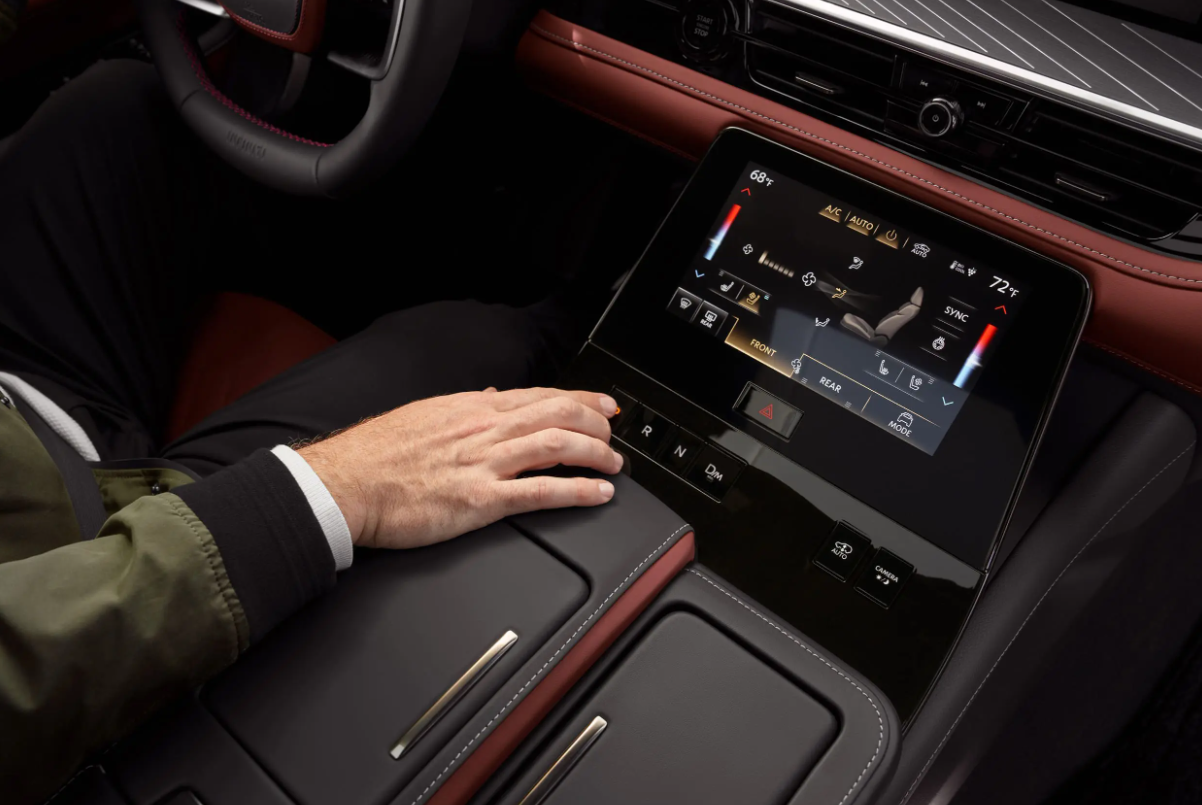
The drive modes are also located on the same screen, and you have to go two layers in to get to them. The single audio knob just above the screen is a bit too far to reach for our liking. Last but not least, the gear shift buttons save center console space but are frustrating to use. Not only are they situated too low on the center stack, but you also have to look to operate them; they require a heavy press, otherwise the buttons don’t always respond accordingly. There were numerous occurrences when we thought we’d engaged drive or reverse, only to discover we hadn’t. Combined with the sheer size of the QX80, a three-point turn feels laborious.
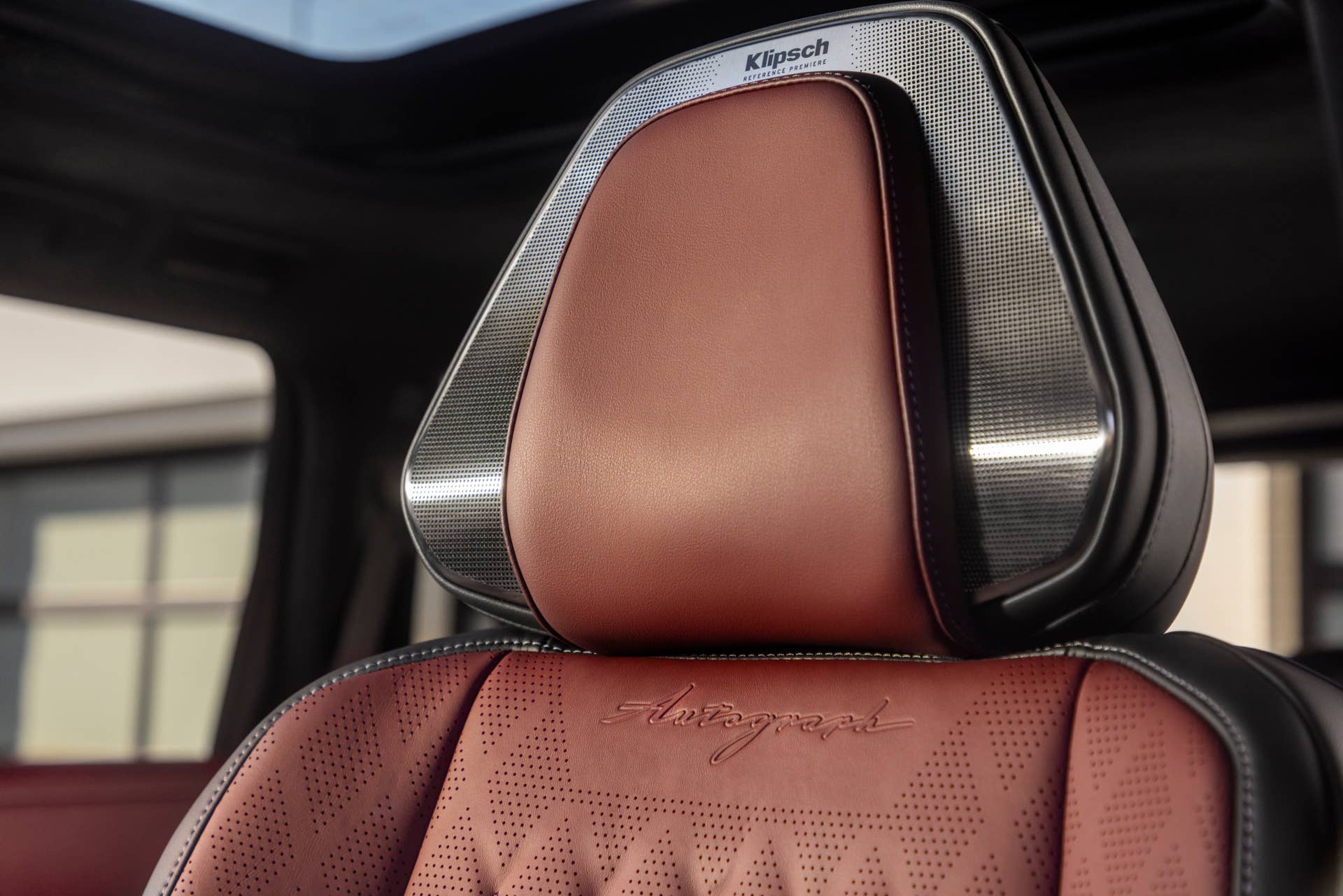
The Autograph’s standard 24-speaker Klipsch audio system is a highlight. It’s one of the best-sounding setups in the segment, rivalling Cadillac’s AKG system. Booming bass, excellent clarity, and near-peerless phone calls come through every time. The headrest speakers are brilliant for nav voice guidance, and their metal mesh covers made the already handsome front seats look even more upscale and futuristic.
Two cylinders down, but more than sufficient
Amos Kwon
Another substantial change for 2025 is under the hood. Gone is the thirsty but burly 5.6-liter V8, replaced by a twin-turbo 3.5-liter V6 that makes 450 horsepower and 516 lb-ft of torque. That’s a 50-hp and 103-lb-ft jump over the old engine. Power was palpable on tap, and the engine became significantly more responsive in Sport mode. Getting the QX80’s size and mass up to speed was surprisingly easy, but it can be alarming when you look at the speedo and find you’re doing 90 mph without much effort. The brakes lack feel, and that’s concerning when you need to stop quickly. Pedal travel isn’t progressive, either, making the tall front end’s distance from the car in front difficult to gauge.
Amos Kwon
On the road, the QX80 Autograph feels surprisingly quick for its size, with effortless acceleration and a 0–60 mph time of around six seconds. That’s right quick for an SUV that weighs more than three tons. The nine-speed transmission shifts smoothly, and the surge of torque makes highway passing drama-free. Our fuel efficiency averaged 16.5 mpg, given the fact that we engaged Sport mode quite often. Expect around 18 mpg when driving in normal mode, which is a noticeable improvement over the old V8’s mid-teens average.
Amos Kwon
Steering is light but decently accurate, but there’s pretty much no feedback coming through. Body roll is kept in check thanks to adaptive dampers and available hydraulic body motion control. No one will mistake it for a sporty SUV, but it feels planted and stable. It’s not as agile as a BMW X7, which drives smaller than it is. The QX80 always feels huge, but it never felt out of sorts or imbalanced, as long as our entry speeds into the turns were reasonable. It takes some work navigating tight parking lots and spaces, but that’s where you have to rely on the transparent hood feature that uses cameras to reveal what you can’t see. It’s weird and takes some getting used to, but it’s preferable to causing harm or damage.
Final thoughts
The 2025 Infiniti QX80 Autograph is easily the most complete and impressive version of this SUV ever built. It finally looks modern, drives with smoothness and power, and pampers passengers with the kind of luxury you’d expect from the segment. The interior is now adequately spacious in every row, and the cabin’s appearance is commensurate with its refined and imposing body. Infiniti overshot its climate touch controls and gear shift buttons to the point of annoyance, but we hope they rectify those in a mid-cycle refresh. If you’re looking for a full-size luxury SUV with bold new styling, a supremely comfortable interior, and a refined powertrain, the QX80 Autograph is worth a serious test drive.
About the author
Amos Kwon
Contributing Writer, Autoblog