
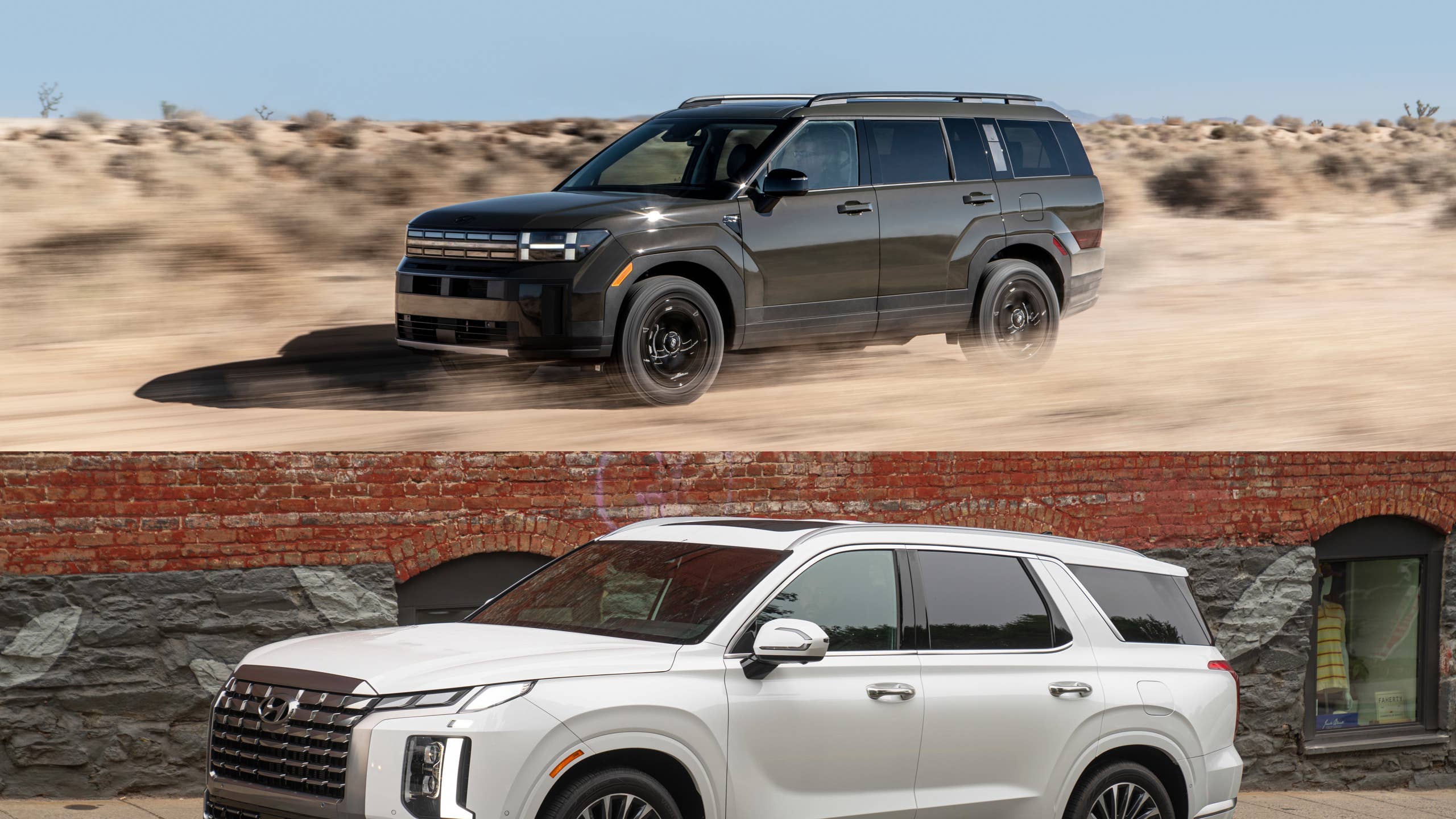
Competition is the mother of invention, regardless of whether it’s between different companies or within the same one. That’s the case with the Hyundai Santa Fe and Palisade, two distinct vehicles that often get cross-shopped.
Despite being part of the same bloodline, they cater to two very different audiences. The question is, then, which one is right for you?
Hyundai
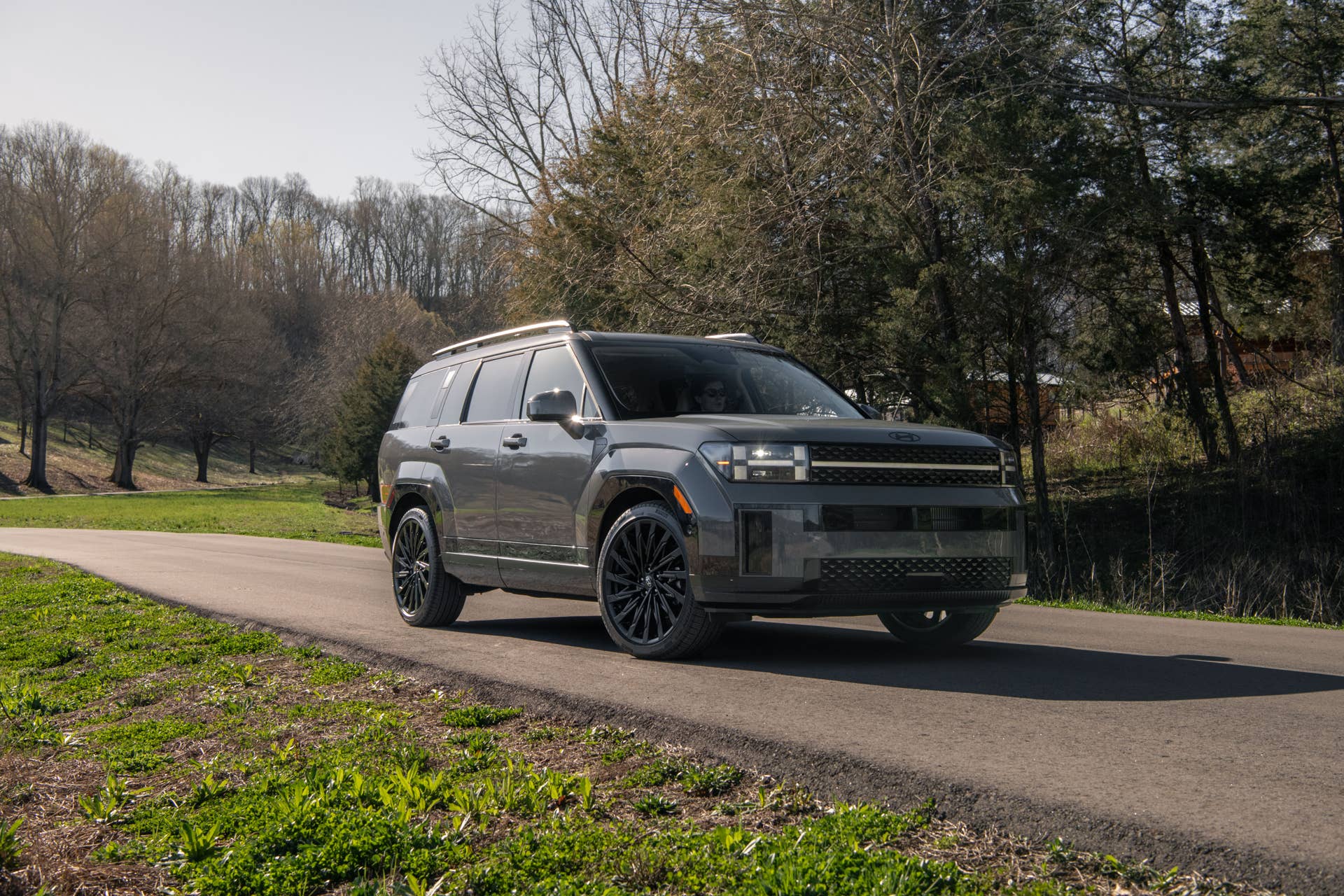
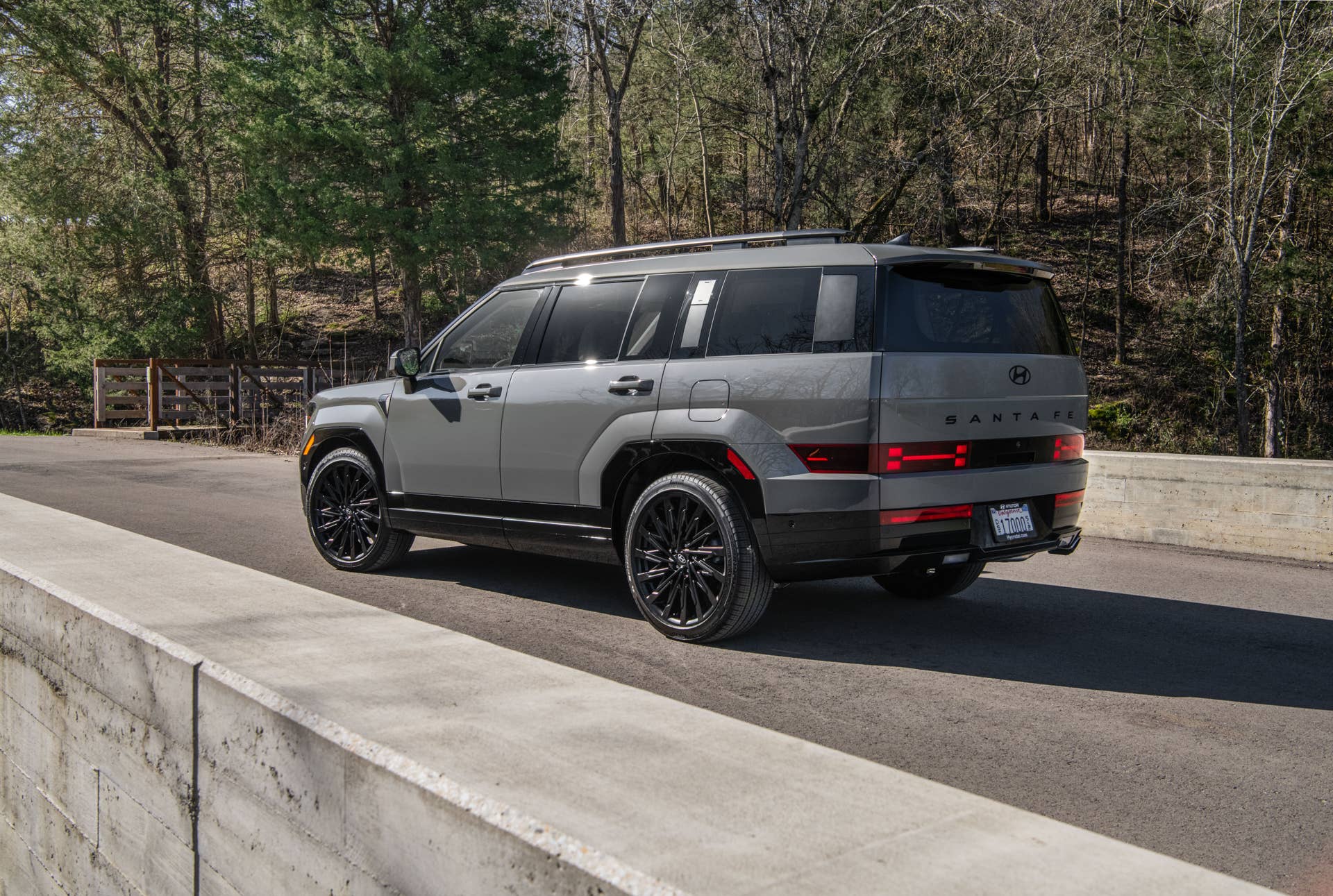
2025 Hyundai Santa Fe – the look of an adventurer
While recently restyled with the looks of a square-jawed adventurer, the underpinnings of the Santa Fe are basically the same as the previous model. It may look like something that can tackle the Serengeti, but it’s happier tackling the shopping mall.
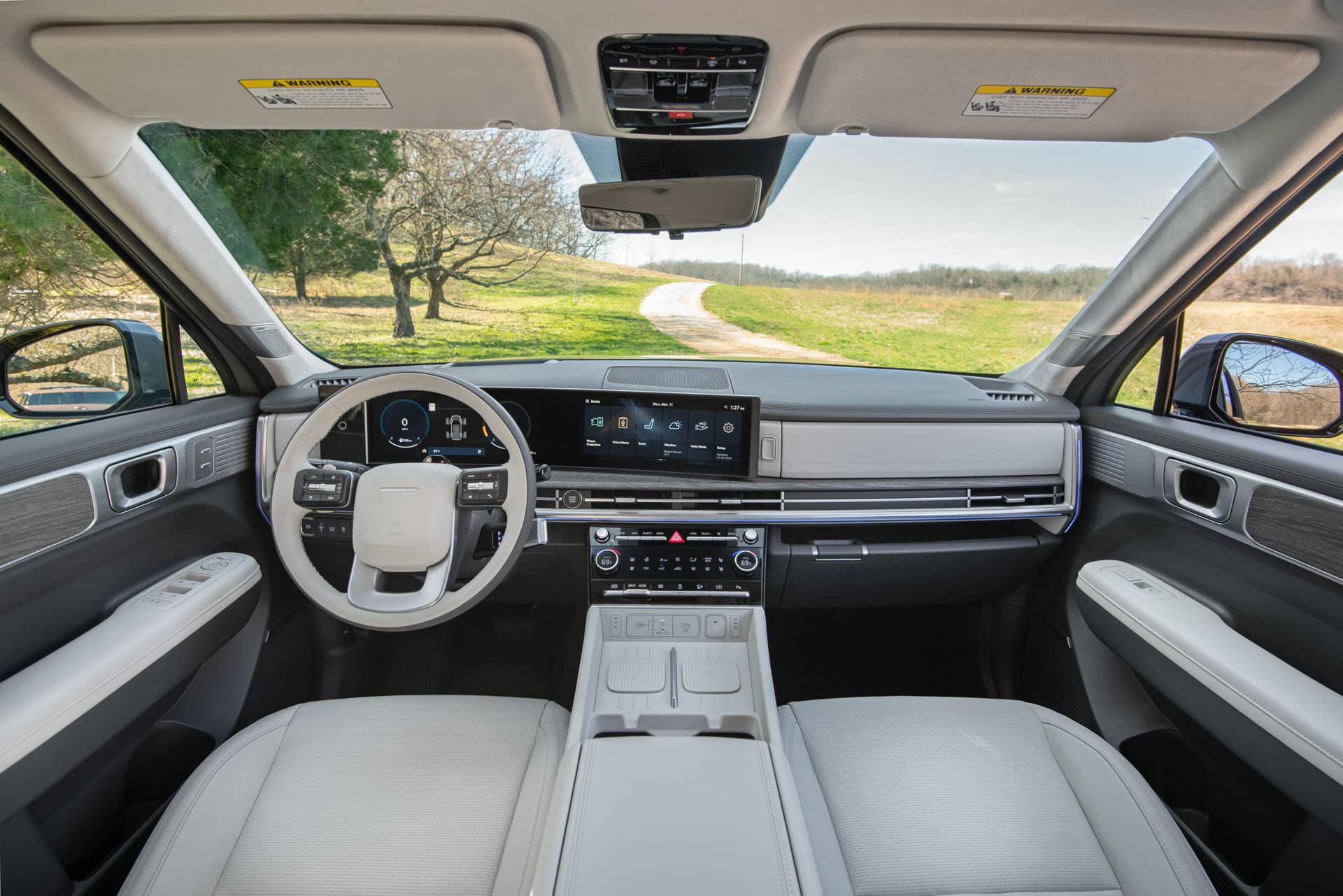
The 2025 Hyundai Santa Fe has five trims and is available with front or all-wheel drive (AWD). All trims have the same engine and transmission: a turbocharged 2.5-liter four-cylinder engine mated to an 8-speed dual-clutch transmission that produces 277 hp and 311 lb-ft of torque. Even the interior layout is similar between the different trims, with two 12.3-inch screens and an overall good infotainment system.
Hyundai
They also share much of the same tech, with the main difference being the theme and interior materials. All Santa Fe SUVs are tow-rated at a maximum of 3,500 lbs, but the XRT, with its special cooling and upgrades, can tow up to 4,500 lbs.
The base Santa Fe model starts at $34,200, while the SEL trim starts at $36,700. The popular XRT is next at $40,850, followed by the Limited at $43,600. The fully equipped luxury version, the Calligraphy, starts at $46,750. All-wheel drive (AWD) costs an additional $1,800, except for the XRT, which includes it as standard equipment.
Does size matter?
All Hyundai Santa Fe SUVs are similar in size, with a length of 190.2 inches and a wheelbase of 110.8 inches. However, the XRT has an extra 8.3 inches of ground clearance compared to the other models.
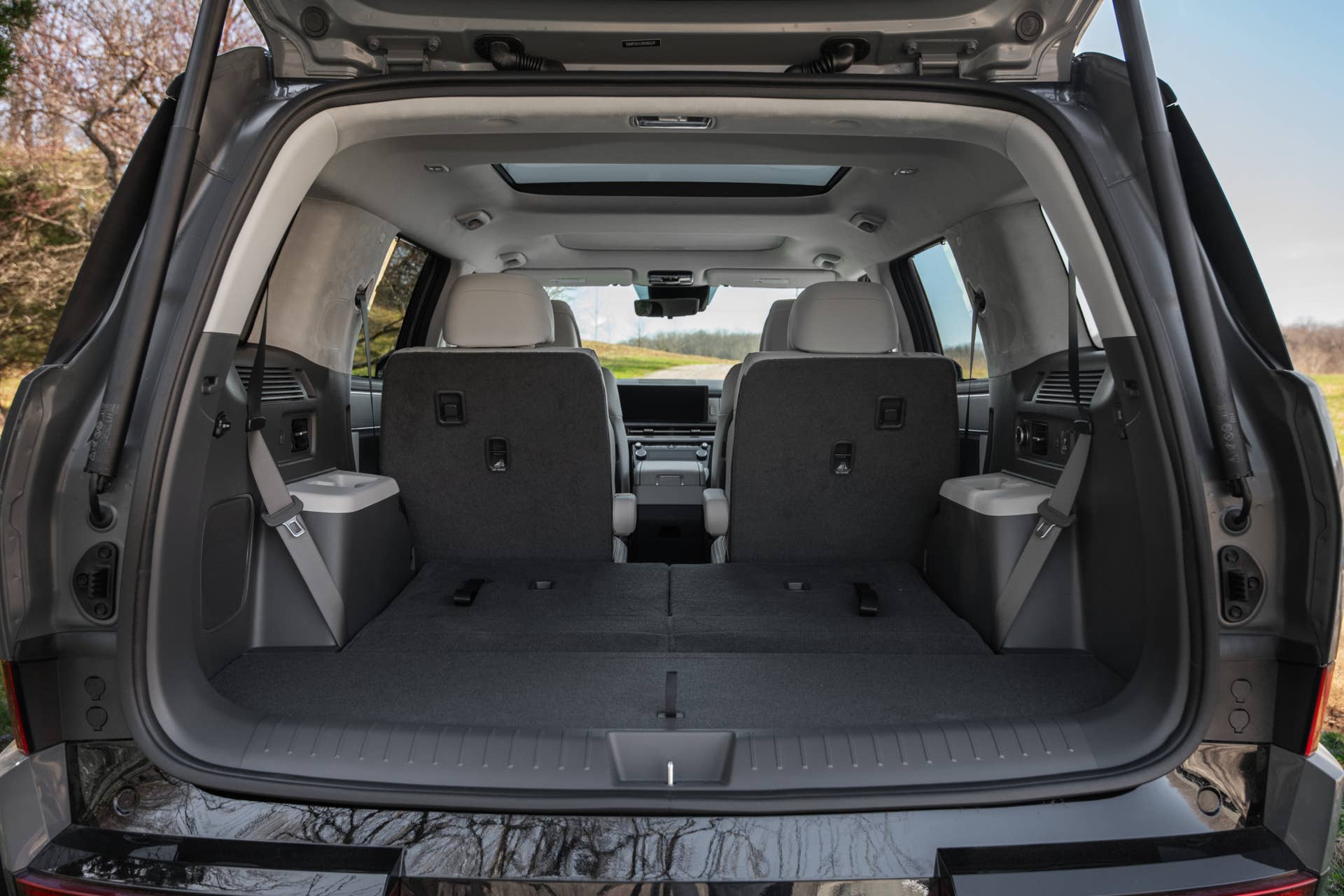
As for cargo space, there is a total of 14.6 cubic feet behind the third row, making it a tight fit for adults in the back. Folding those seats provides a respectable 40.5 cubic feet with an impressive maximum cargo space of 79.6 cubic feet.
Space and comfort are adequate in all trims; however, a fully loaded Santa Fe can feel a bit cramped if you’re carrying anything more than a few bags.
Hyundai
Driving the 2025 Hyundai Santa Fe
The Santa Fe weighs around 4,400 lbs, depending on the trim, but it feels more than sprightly when pushed. It has good power on tap, and the dual-clutch 8-speed transmission snaps off gears rapidly. However, in traffic around town, the transmission can feel sluggish to some.
Handling is decent, and the Santa Fe is fairly maneuverable for a three-row SUV. The steering feel is nil, but it’s fairly easy to park, and there’s a decent weight when it comes to steering effort. The ride quality is good, though not exceptional, and some might prefer a softer suspension setup. Make no mistake, this is no performance vehicle, and it can be a handful when at its peak.
Hyundai
According to EPA estimates, the front-wheel-drive Santa Fe achieves 20 mpg in the city and 29 mpg on the highway. Opting for all-wheel drive reduces highway mileage by 1 mpg, while the XRT variant delivers 19 mpg in the city and 26 mpg on the highway.
There is also a Santa Fe hybrid, but that is a completely different subject and should be reviewed separately.
Hyundai
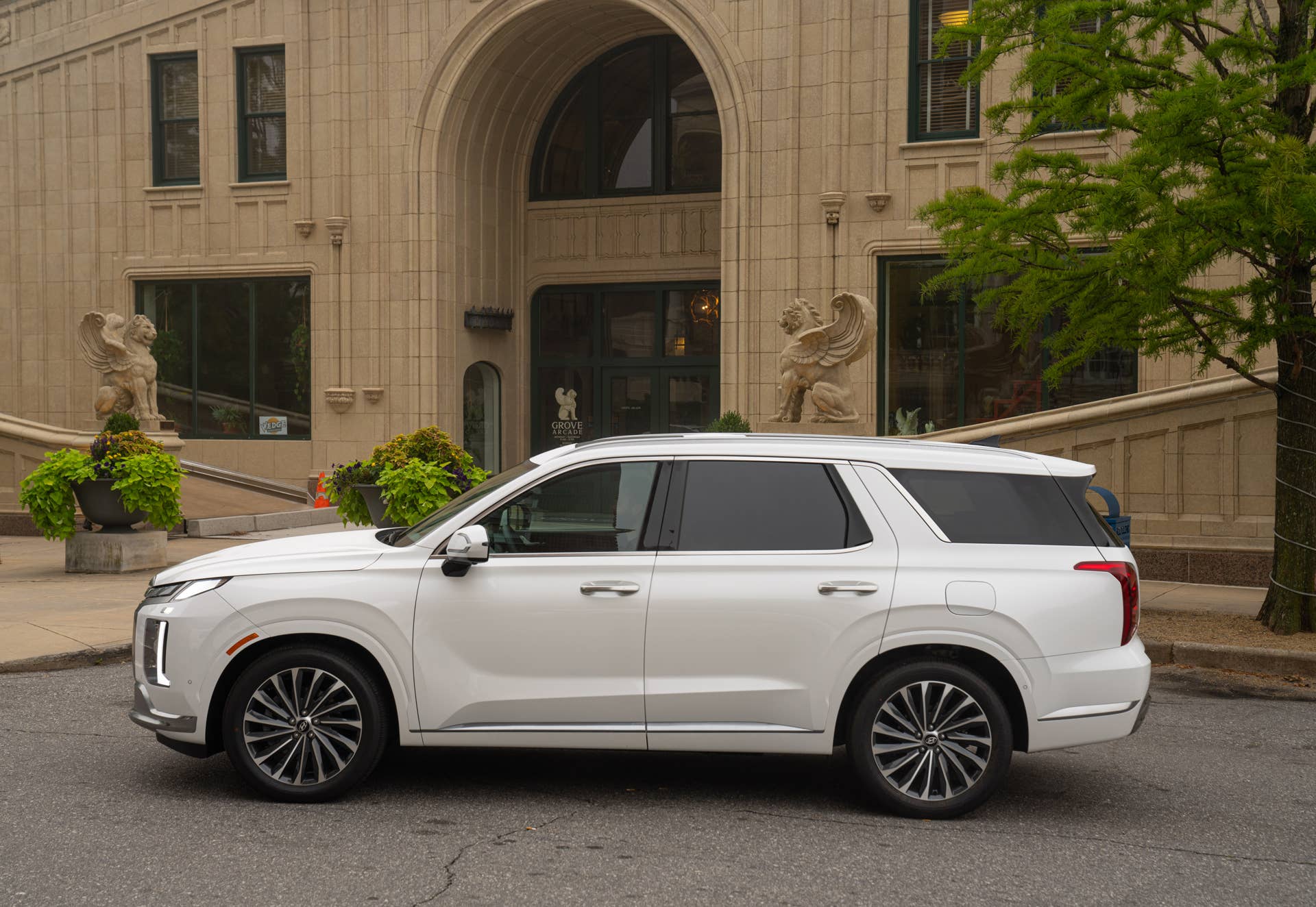
2025 Hyundai Palisade – shades of Genesis
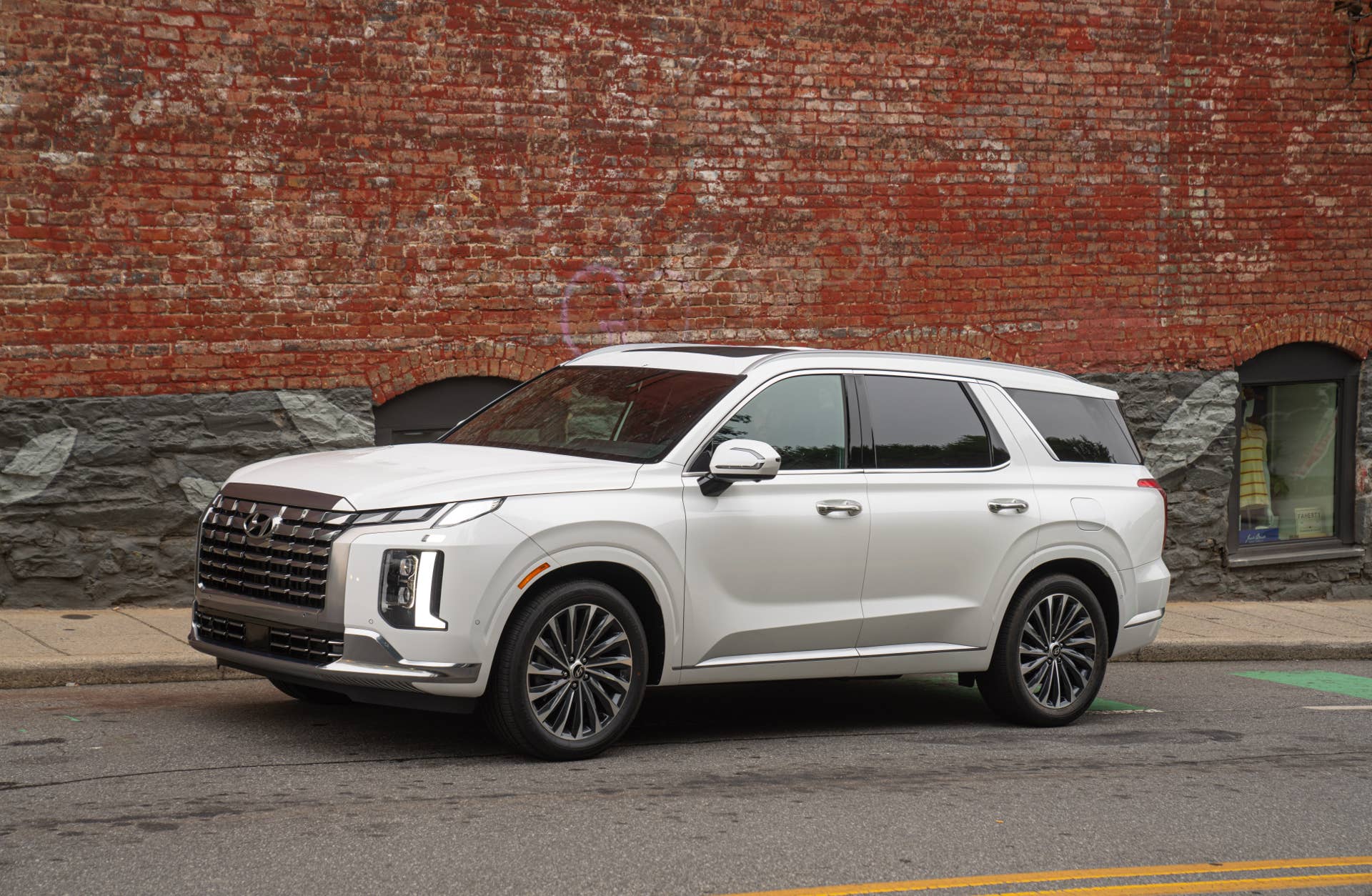
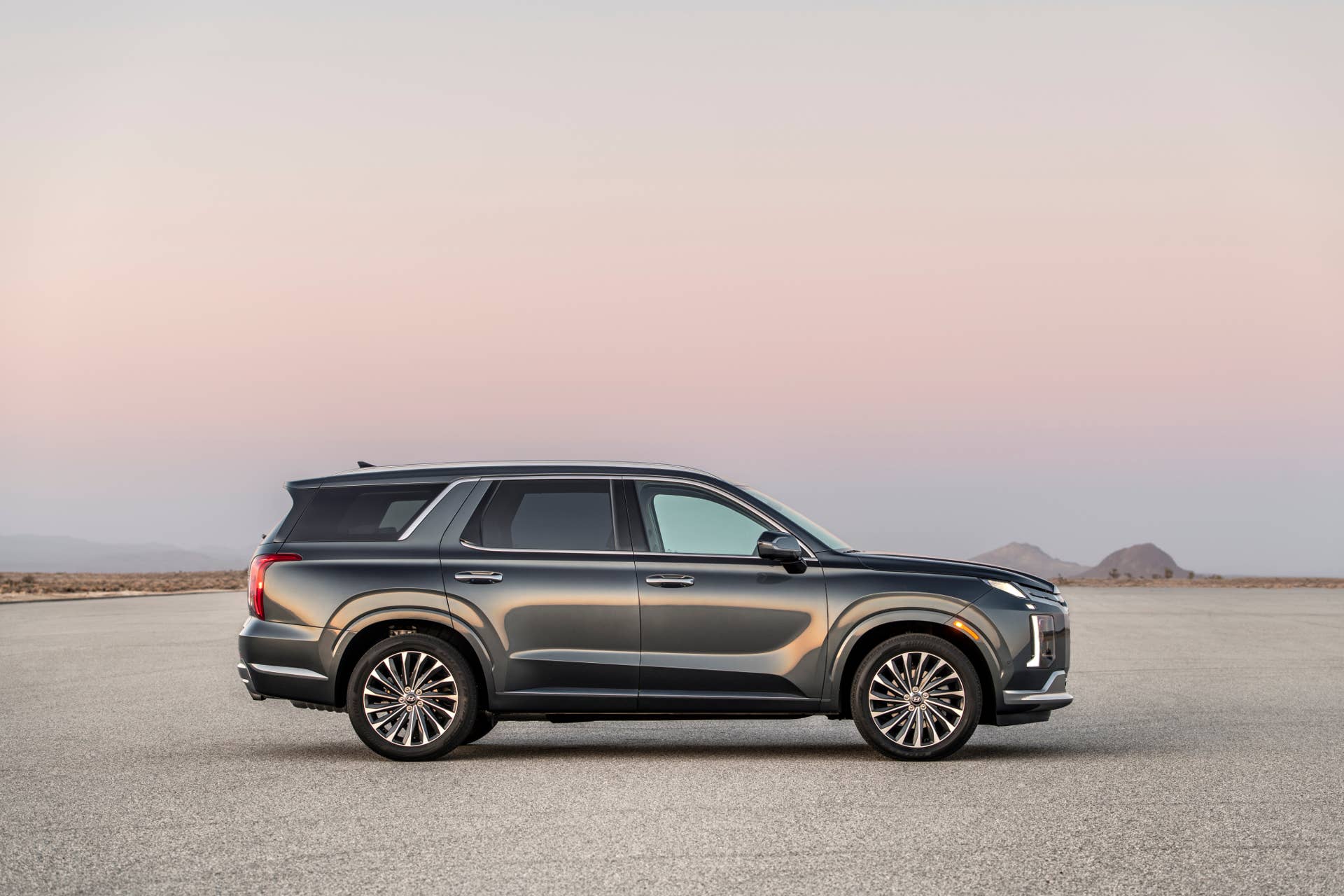
In almost every measurable way, the Palisade is a larger, more substantial-feeling SUV over the Santa Fe. Although it has undergone many updates, a major restyling is on the way, and if it’s as dramatic as the Santa Fe’s, that would be a positive development. I say that because, despite being a sweet ride, it’s a bit bland.
The 2025 Hyundai Palisade has seven trim levels, which is a bit much, in my opinion. Front-wheel drive is standard, and AWD is optional except on the Calligraphy Night Edition, which gets standard AWD.
Hyundai
The only engine choice is a 3.8-liter V6 that produces 291 hp and 262 lb-ft of torque paired with an 8-speed automatic transmission. Yes, it has more power but less torque than the Santa Fe. Nevertheless, the V6 feels smoother, and the power is quite decent.
All Palisades come with a tow package and can tow a maximum of 5,000 lbs. Unlike the Santa Fe, there is no hybrid variant, which might have something to do with the upcoming Ioniq 9.
Pricing begins at an accessible $37,100 for the SL trim and rises to $39,850 for the SEL. The XRT starts at $42,950, while the SEL Premium is priced at $44,450. Moving higher, the Limited starts at $48,500. Near the top, the Calligraphy trim begins at $50,900, with the range-topping Calligraphy Night priced at $54,400.
Hyundai
Yes, size matters
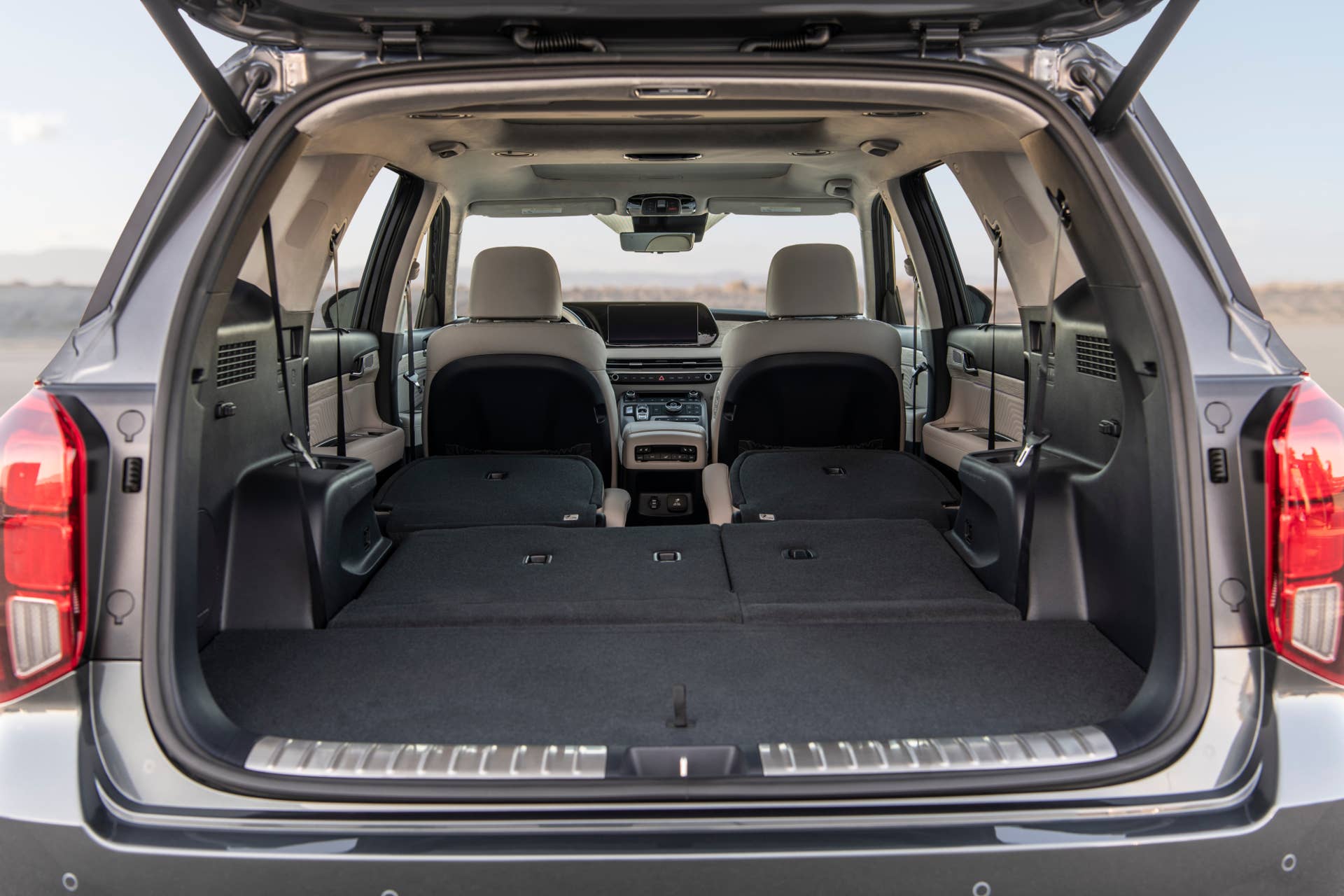
The Palisade is a much longer vehicle, with an overall length of 196.1 inches and a wheelbase of 114.2 inches. Behind the third row, it has 18 cubic feet of cargo space, which jumps to 45.8 cubic feet behind the second row and an impressive 86.4 cubic feet when maxed out.
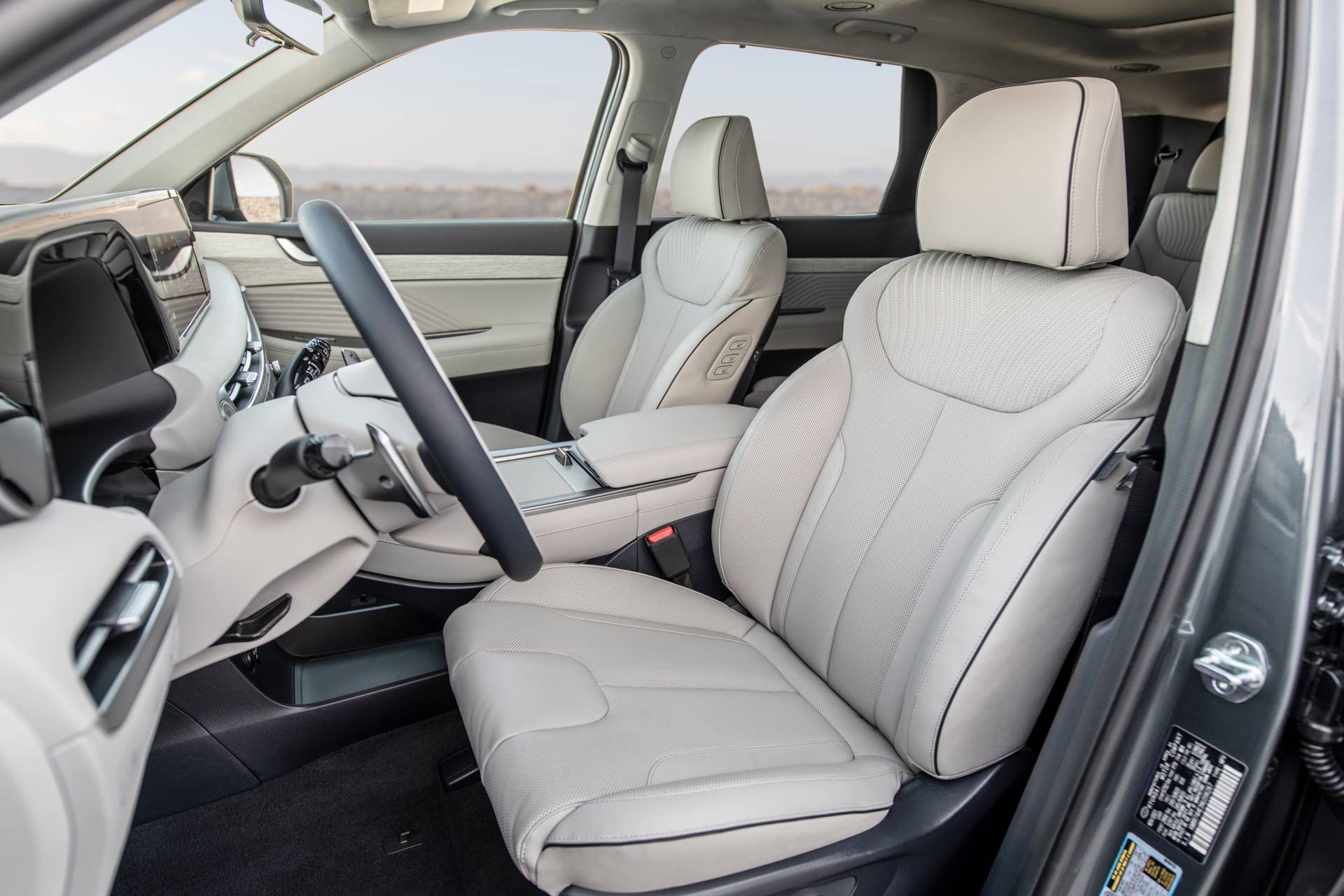
Although the various Palisade trims share many of the same electronics as the Santa Fe, including the 12.3-inch screens, they feel roomier and more luxurious. Seat comfort is excellent, by comparison, and the optionally heated third-row seating is more adult-friendly.
Hyundai
Driving the Hyundai Palisade
The Palisade is only a hundred pounds heavier than the Santa Fe on average, yet it feels a lot heavier. It’s not tippy, nor is it that nose-heavy, despite the larger engine. It feels as if you’re driving something that is well-sorted, muted, and easier going altogether.
As I mentioned before, power is good but not thrilling, and the turbocharged Santa Fe feels faster. Steering is on the slower side, but the grip is good. It’s about as easy to park as the smaller Santa Fe, too.
The front-wheel-drive Hyundai Palisade is rated at 19 mpg city and 26 mpg highway, while the AWD Palisade is rated at 19 mpg city and 24 mpg highway. Those figures make the V6 Palisade slightly less efficient than the four-cylinder Santa Fe.
Hyundai
Final thoughts
Over the past year, I have driven several versions of the Santa Fe and Palisade. Both are great values and competent vehicles, but they are worlds apart in terms of pricing, packaging, and design.
The Santa Fe, especially with the XRT package, feels youthful and kind of fun and gives the image of a rugged weekend warrior. On the other hand, the Palisade feels urban, classier, and more relaxed. Both are fine companions and give you a lot of tech for the buck; you just have to pick the combination that suits you best.
About the author

Nathan Adlen
Contributing Writer, Autoblog