
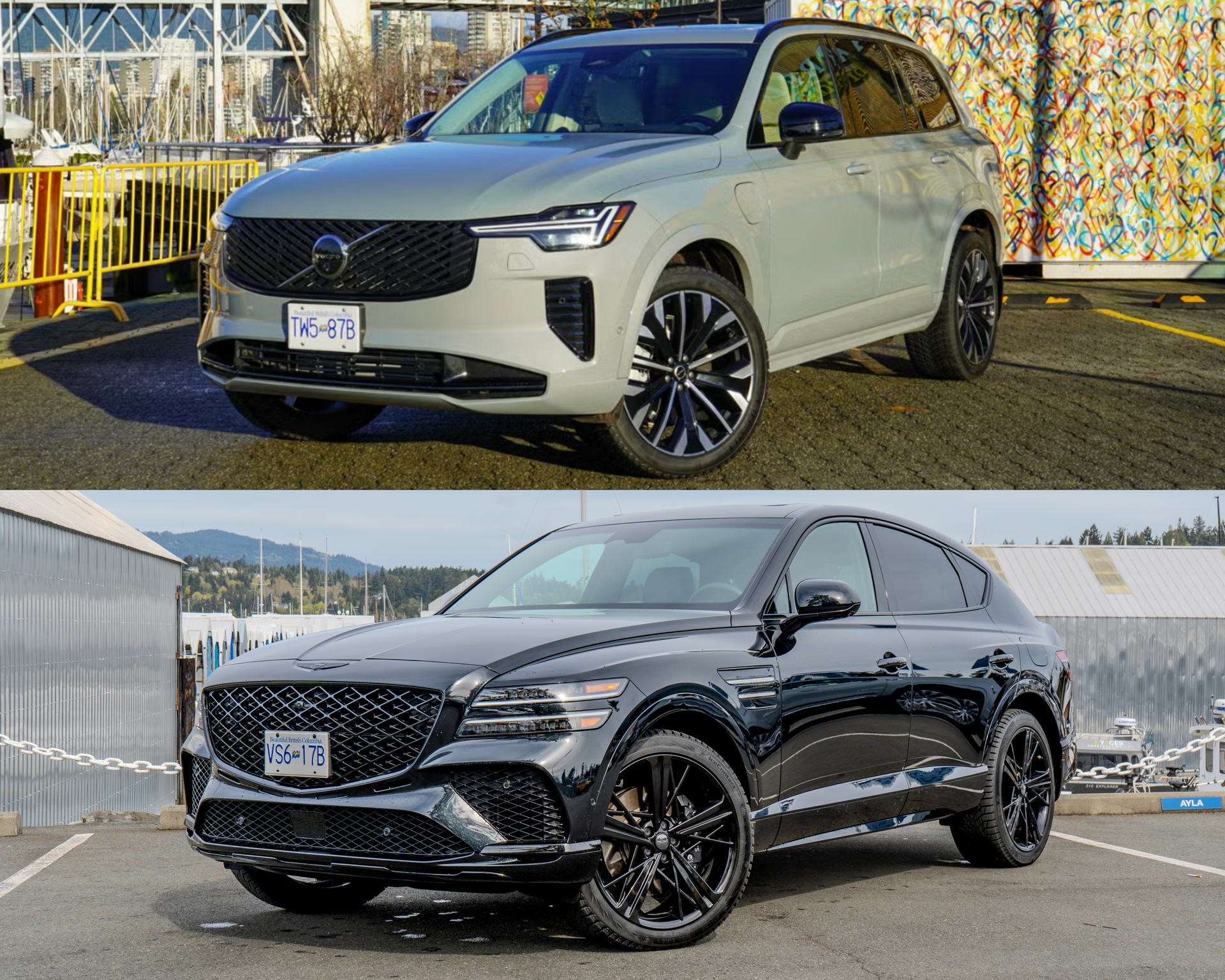
Luxury SUVs are rarely one-dimensional anymore. They are not just family cars, blinged-out status symbols, cushy road-trip machines, or rolling technology showcases. They are expected to be all of those things at once, preferably while using less fuel than a powerboat and, in this case, making their owners feel clever for choosing something more interesting than the obvious German answer. That’s where the 2026 Genesis GV80 Coupe 3.5T E-SC MHEV and 2026 Volvo XC90 T8 position themselves within the luxury midsize SUV segment. Both are large, expensive, all-wheel-drive luxury SUVs with electrified powertrains. Both sit near the top of their respective lineups. Both can make a strong argument for themselves against the BMWs, Mercedes-Benzes, Audis, Lexuses, and Acuras of the world. But they fight for buyers’ attention through far less conventional methods.
The Genesis is by far the emotionally charged option. In 3.5T E-SC MHEV form, the GV80 Coupe uses a twin-turbocharged 3.5-litre V6 with a 48-volt electric supercharger to produce 409 horsepower and 405 lb-ft of torque, routed through an eight-speed automatic transmission and all-wheel drive. It is technically electrified, but only mildly so; there is no charging plug, no electric-only range, and no claim that this is a fuel-sipping green machine. Electrification is there to sharpen the response and add theatre, not to dilute indulgence with logic and reason. The Volvo, meanwhile, is the pragmatic Swede. The XC90 T8 combines a turbocharged 2.0-litre four-cylinder engine with plug-in hybrid hardware for 455 horsepower and 523 lb-ft of torque, with up to 32 miles of EPA-estimated electric range and 58 MPGe combined. In other words, the Genesis uses electricity like a waiter topping off your steak with truffle butter, whereas the Volvo uses it like a nutritionist who somehow manages to make plant-based food palatable to a wider audience than vegans alone.
Cole Attisha
Performance: The Volvo Is Quicker, But The Genesis Feels More Expensive
On paper, the Volvo wins the performance fight by a hefty gap. Its 455 horsepower and 523 lb-ft of torque give it a meaningful advantage over the Genesis’ 409 horsepower and 405 lb-ft, and Volvo lists a 0-60 mph time of 5.0 seconds for the XC90 T8. The Genesis is hardly slow, but independent testing by Motor Trend has put the GV80 Coupe E-Supercharged at around 5.2 seconds to 60 mph, which means it’s still properly quick when compared to the Volvo. The real difference, however, is not just numerical.
The Volvo’s plug-in hybrid system gives it immediate electric torque, making the XC90 T8 feel remarkably easy to launch, merge, and pass. However, it does not feel theatrical, angry, or especially interested in impressing the driver with mechanical drama. It simply goes, and it listens to drivers well. My original XC90 review described the power delivery as smooth and effortless rather than explosive. It is not trying to be a performance SUV; it is trying to make 455 horsepower feel like a useful tool rather than a joyful toy.
Need New Tires? Save Up To 30% at Tire Rack
Find the perfect tires for your exact vehicle and driving style. Click here to shop all top-tier brands, including Michelin, Bridgestone, and more, directly at Tire Rack.
Cole Attisha
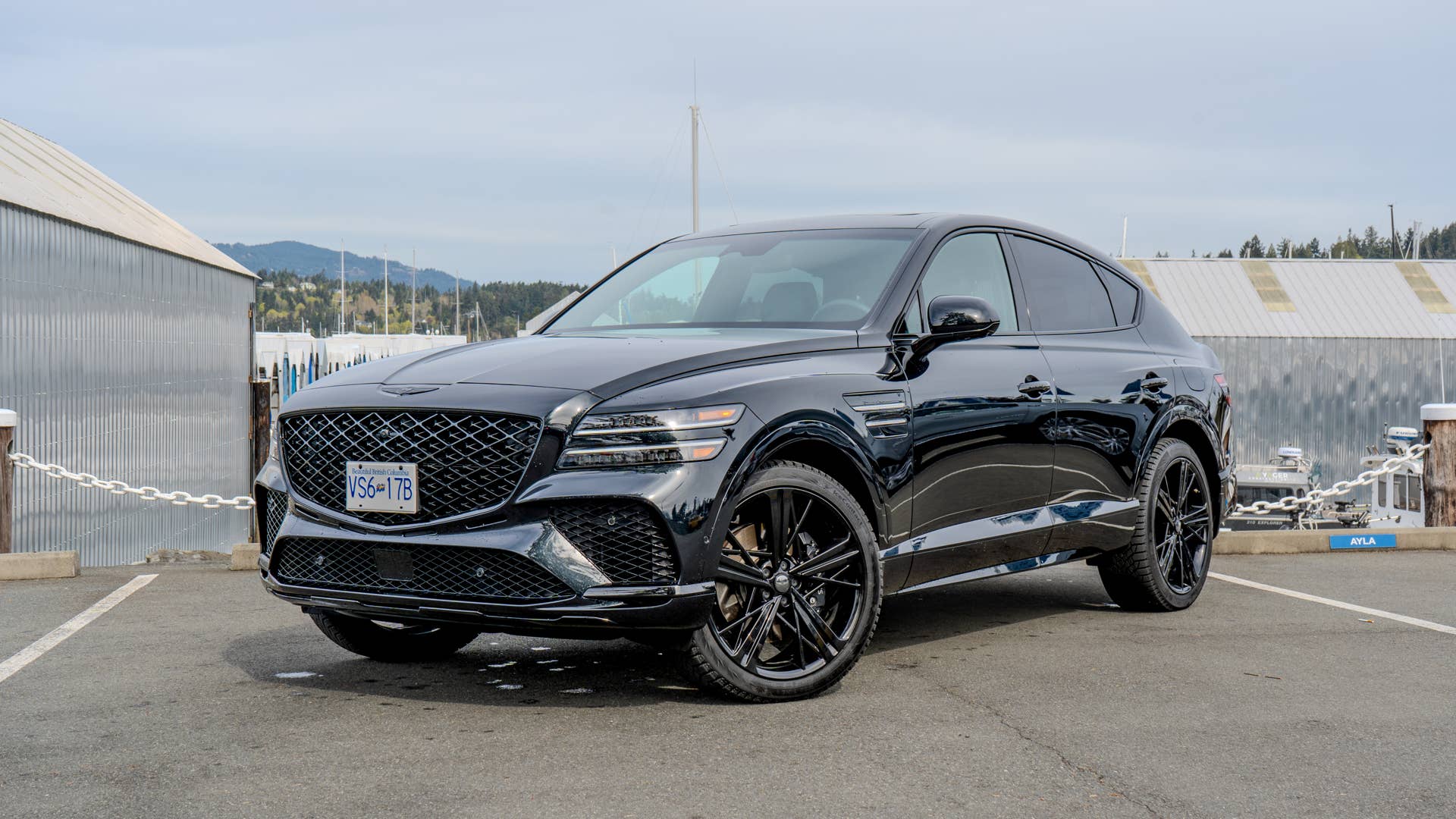
The Genesis is built differently. Its 3.5-litre twin-turbo V6 has more character, more sound, and more old-school luxury-SUV bravado. The 48-volt electric supercharger helps fill in response, but the GV80 Coupe still behaves more like a traditional gas-powered grand tourer than a true hybrid. In my original GV80 Coupe review, the powertrain came across as strong and refined at speed, but less polished at low speeds, where the throttle could feel awkwardly surge-prone.
Around town, the Volvo feels smoother and easier to drive. In highway overtaking, both are powerful, but the XC90’s electric torque makes its acceleration feel more immediate. The Genesis, however, feels richer when you lean into it. The V6 has a sense of substance that the Volvo’s electrified four-cylinder can’t quite replicate, even though the XC90 is objectively stronger in terms of muscle. The Volvo is faster, but the Genesis makes getting to speed feel more enjoyable.
Cole Attisha
Driving Dynamics: Volvo For Ease, Genesis For Occasion
Neither of these SUVs is a sports car, and neither should be judged as one. The Genesis GV80 Coupe looks like it wants to chase BMW X6s through mountain roads, but its best talent is still long-distance luxury. It rides beautifully, remains quiet at speed, and has an expensive-feeling heaviness that suits its personality. The downside is that its mass is always present. With a curb weight of roughly 5,200 pounds, despite its electronically controlled suspension, Sport+ mode, electronically limited-slip differential, and 22-inch wheels, the GV80 Coupe still feels more like a powerful grand tourer than a genuinely athletic SUV.
The Volvo is not especially playful either, but it is deeply intuitive. The XC90 T8 moves, turns, and stops with the kind of low-drama competence that makes it excellent for daily family use. It does not invite you to drive like you are late for a private jet. It invites you to arrive safely, calmly, and without ruining anyone’s mood. In my XC90 review, I described its driving character as almost minimalist, which perfectly suits the car’s overall characteristics.
The Genesis still has the more interesting steering and the more charismatic powertrain, but the Volvo has the easier manners and the more seamless day-to-day rhythm. If you want something that feels substantial, dramatic, and genuinely special on a long highway drive, the GV80 Coupe has the edge. If you want something that disappears around your life while still being extremely quick, the XC90 T8 is the better everyday driving partner.

Cole Attisha
Efficiency: The Genesis Doesn’t Come Close
The Genesis GV80 Coupe 3.5T E-SC MHEV is electrified, but not in the way most buyers now understand the term. Its 48-volt mild-hybrid/e-supercharger system supports the gasoline engine but does not enable electric-only driving. EPA estimates for the GV80 Coupe 3.5T E-SC are 17 mpg city and 22 mpg highway, and I noted a real-world fuel economy of roughly 15.9 mpg during my own testing. The Volvo XC90 T8, by contrast, is a genuine plug-in hybrid. Volvo offers up to 32 miles of electric range, 58 MPGe, an 18.8-kWh battery, and a 5-hour Level 2 charge time. That means the XC90 can theoretically handle many commutes, school runs, grocery trips, and short urban errands without using any gasoline at all, provided owners actually plug it in.
But that last bit is crucial. A plug-in hybrid is only as efficient as its owner’s discipline. If you never charge the Volvo, you are essentially carrying around a complex, heavy hybrid system without using its biggest advantage. But if you do charge it regularly, the XC90 T8 operates dramatically more efficiently than the Genesis in real-world daily use. The Genesis drinks fuel like a traditional high-powered luxury SUV—as if it were fine wine. The Volvo, however, sips fuel slowly like the expensive aged whisky it has become these days.

Cole Attisha
Interior And Features: Genesis Feels Richer, Volvo Feels Calmer
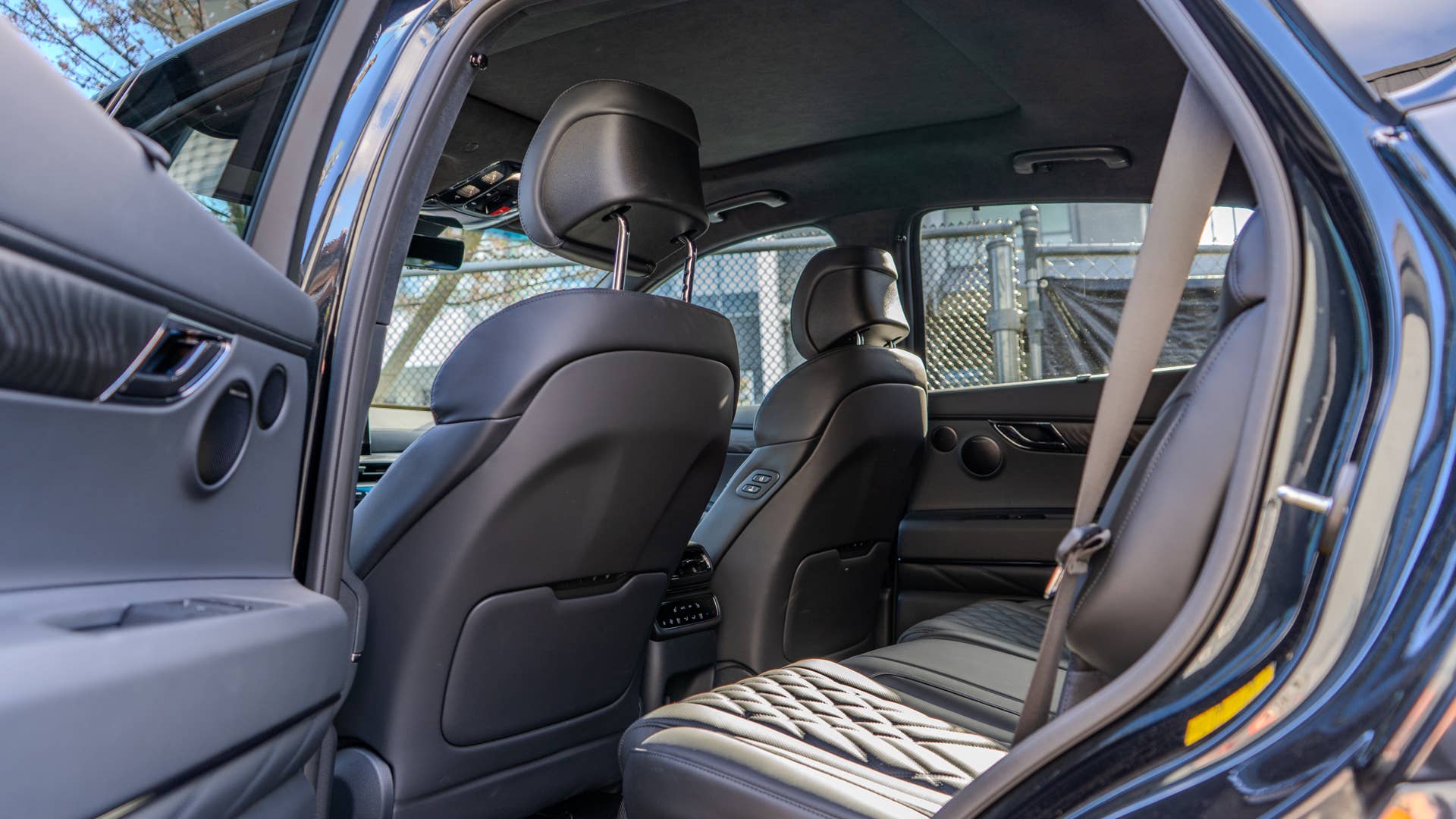
The GV80 Coupe and XC90 both justify their luxury pricing in terms of cabin atmosphere, but their approaches differ markedly. The Genesis cabin is the more dramatic of the two. Its 27-inch OLED display, Nappa leather, open-pore wood, glass-like switchgear, available Bang & Olufsen audio system, heated and ventilated front and rear seats, soft-close doors, panoramic sunroof, and elaborate Prestige Black detailing make it feel like a vehicle designed to impress passengers immediately. There is visual richness everywhere, and the GV80 Coupe’s interior feels less restrained than the Volvo’s. It feels more like a nightclub or a high-end modern steakhouse.

Volvo
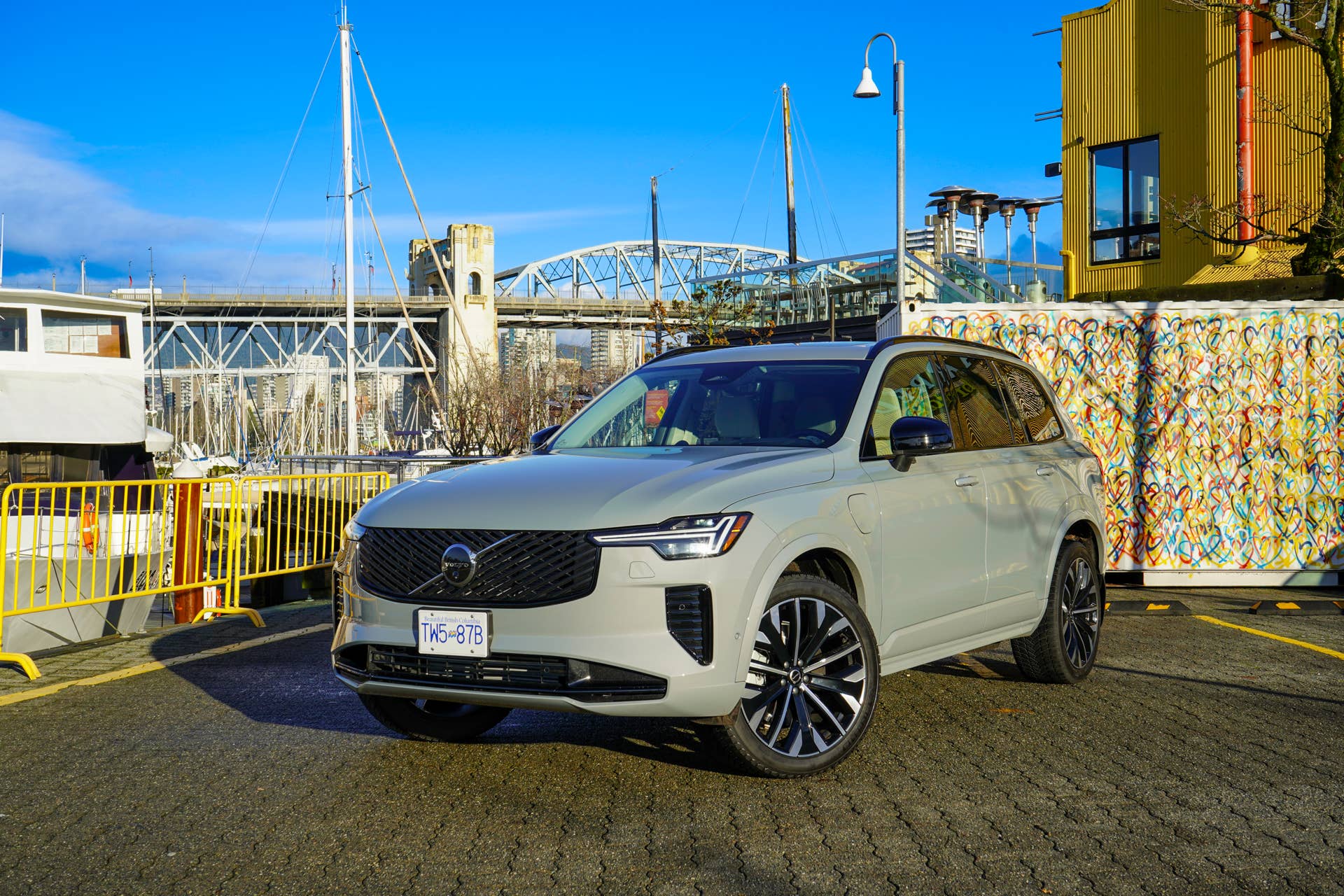
The Volvo feels more restrained, but certainly not cheap. The XC90 T8 Ultra tested in the original review had fine leather, raw wood trim, metal accents, and Volvo’s signature Orrefors crystal gear selector. Its cabin feels mature, calming, and expensive in a Scandinavian way, rather than opulent. Where the Genesis tries to seduce you, the Volvo tries to lower your blood pressure.
The biggest problem for Volvo is software. The XC90’s Google-based infotainment system looks cleaner than many rival systems, but in my original review, it proved frustratingly glitchy, especially with audio and Apple CarPlay behaviour. Genesis’ technology, by comparison, felt better integrated. The GV80 Coupe’s 27-inch OLED display is large and modern, but the cabin does not feel as if it was designed by someone who hates buttons. Its surround-view camera, remote parking function, wireless smartphone integration, and physical controls make it easier to live with than its screen count might suggest. For features and ambience, the Genesis wins, but for calmness and family-friendly restraint, the Volvo still has a worthwhile argument.
Cole Attisha
Space, Dimensions, And Cargo: The XC90 Is The More Useful SUV
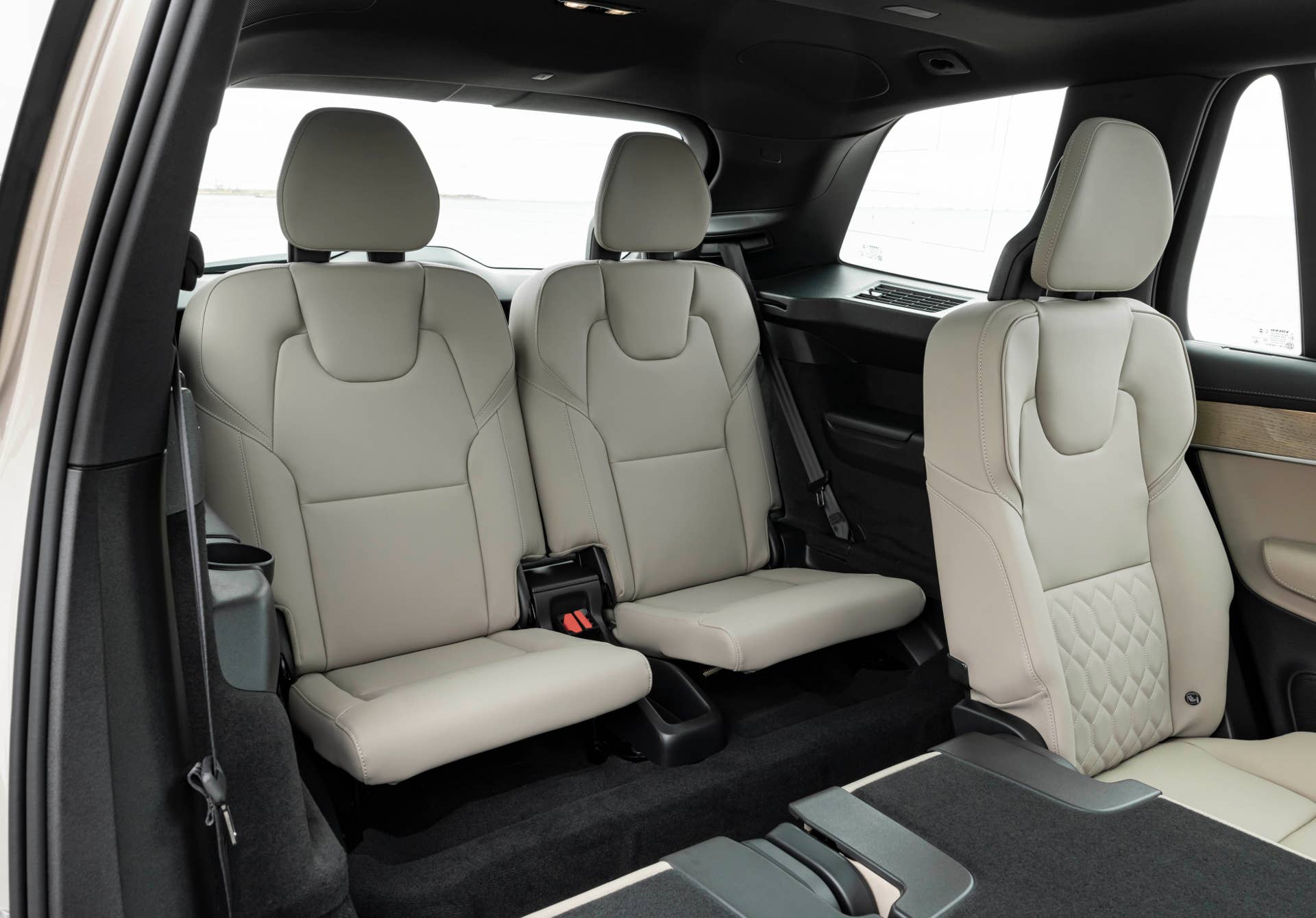
Body style is an important clarification here. The Genesis GV80 Coupe is a two-row, five-passenger luxury SUV with a rakish roofline, whereas the Volvo XC90 T8 is a three-row, six- or seven-passenger luxury SUV with a boxier body. The GV80, however, can also be purchased in three-row, six- or seven-passenger guise.
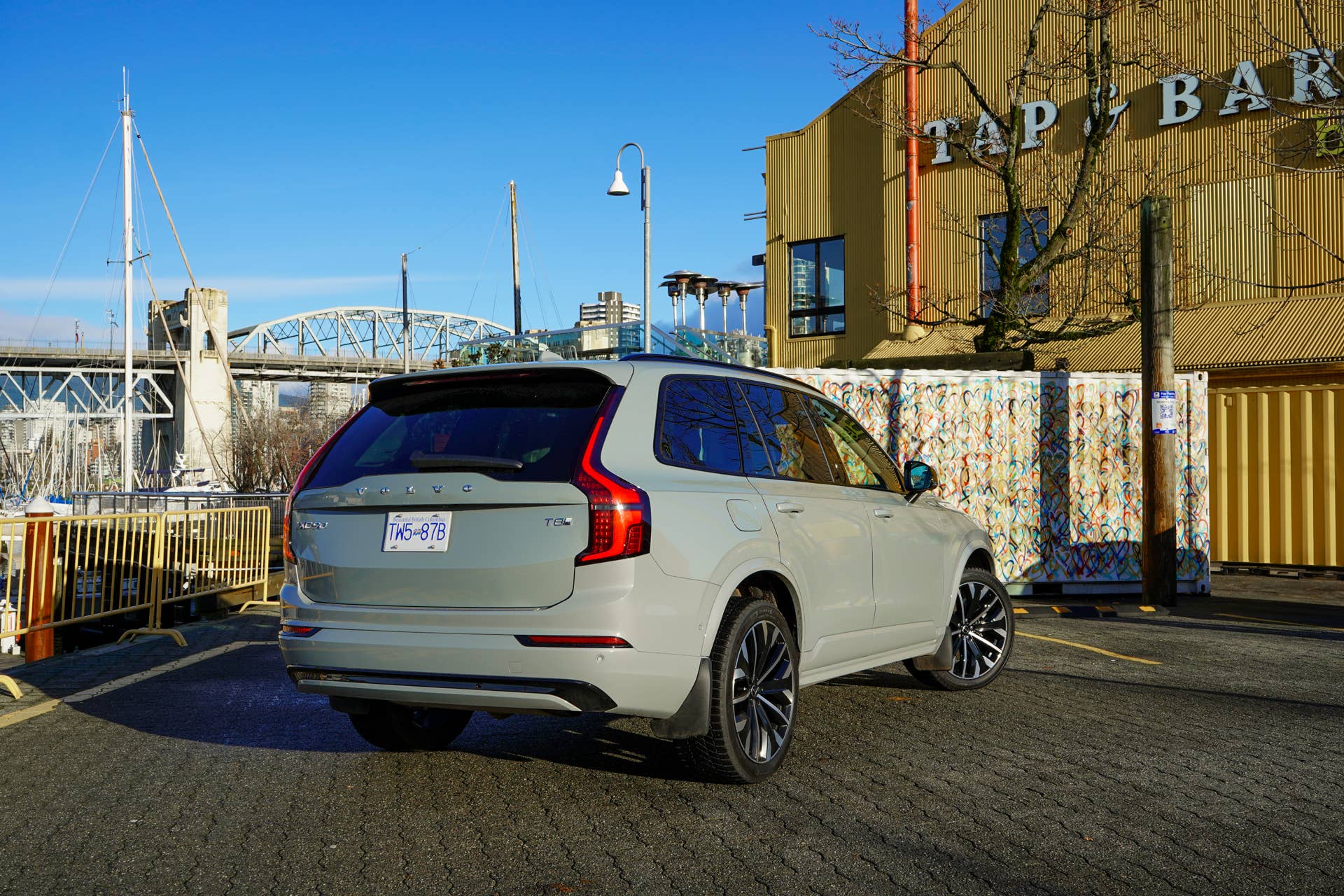
The GV80 Coupe measures 195.5 inches long, rides on a 116.3-inch wheelbase, is 67.3 inches tall, and offers 29.3 cubic feet of cargo space behind the second row and 61.1 cubic feet with the rear seats folded. Rear-seat space is better than its coupe-like silhouette suggests, with 38.7 inches of rear legroom and 37.6 inches of rear headroom. The Volvo XC90 T8 is almost the same length at 195.0 inches, but its 117.5-inch wheelbase, taller 69.9-inch height, and traditional SUV shape make it far more useful. Volvo lists up to 9 cubic feet of storage capacity behind the third row and 23-24 cubic feet behind the second row, depending on seating configuration, and up to 85.7 cubic feet with the rows folded.
Volvo
The regular Genesis GV80 SUV, by comparison, is slightly shorter at 194.5 inches long, with the same 77.8-inch width and 116.3-inch wheelbase, but it stands a bit taller at 67.5 inches. More importantly, it offers up to 71.1 cubic feet of maximum cargo capacity, with 11.6 cubic feet behind the third row on three-row versions. So, although the GV80 Coupe can’t compete with the XC90 in terms of utility, the GV80 SUV can—but the added option of giving up some cargo space for added fashionability will certainly be appreciated by buyers and aligns with the GV80’s overall philosophy.
For couples, empty nesters, or buyers who rarely carry more than 4 people, the GV80 Coupe still offers plenty of room. During my original review period, it handled a family trip home for the Easter long weekend, hauling luggage for 4, my camera gear, and a tray of baked goods without needing the rear seats folded. Still, though, the Volvo is objectively more versatile. It has the third row, the largest maximum cargo hold, and the most family-oriented packaging. The GV80 SUV closes the gap significantly, but the XC90 still wins out as the utilitarian favourite.

Cole Attisha
Towing And Capability: Genesis Has The Advantage
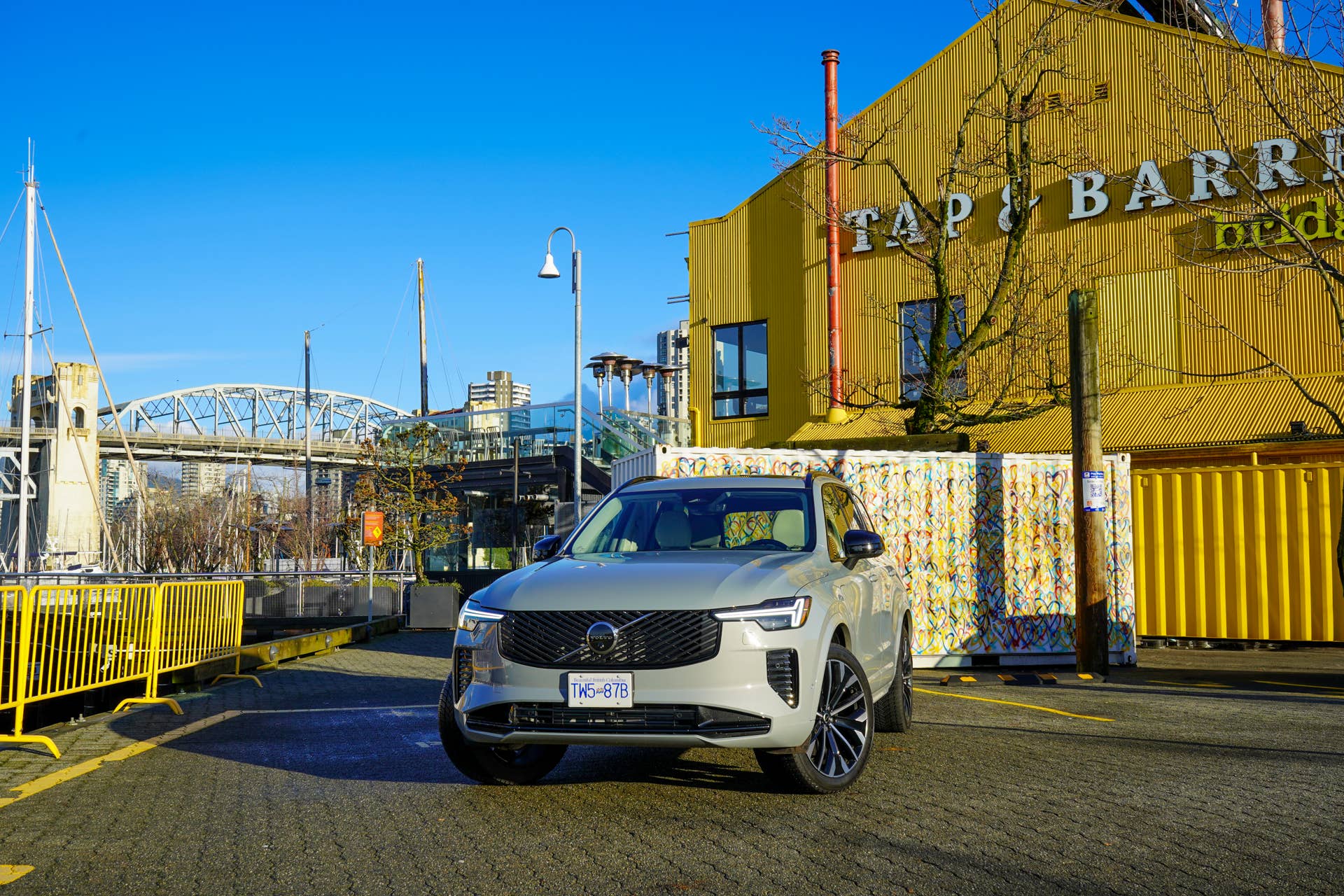
The Genesis GV80 Coupe is rated to tow up to 6,000 pounds, while Volvo lists the XC90 T8 at 5,000 pounds. That gives the Genesis a meaningful advantage for buyers towing a small trailer, boat, or weekend toy. The Volvo’s 5,000-pound rating is still strong enough for many families, but the Genesis has a higher ceiling. Both use all-wheel drive, both have enough power for confident highway driving, and both are better understood as all-weather luxury SUVs than true off-road machines. Still, the Genesis’ towing edge and more traditional powertrain character may make it more appealing to buyers who want a luxury SUV that still feels mechanically robust. The Volvo counters with efficiency and three-row practicality, but not outright utility muscle.
Cole Attisha
Pricing And Value: Genesis Brings Equipment, Volvo Brings Usefulness
The GV80 Coupe 3.5T E-SC MHEV AWD starts at $87,650 in the U.S., while the Prestige Black AWD version starts at $89,400. The regular 3.5T AWD Coupe starts at a lower $81,850, but the E-SC model is the more direct electrified comparison here. The Volvo XC90 plug-in hybrid starts at $77,595 in the U.S. for the Core model, though higher trims and options can push it considerably higher. As tested, my Canadian-market 2026 Volvo XC90 T8 Ultra loaner came in at C$95,900. In the U.S., the T8 Ultra starts at $84,795—more expensive, but still considerably less costly than the MHEV GV80.
At first glance, the Volvo looks like the better value because it costs less to begin with, offers more horsepower and torque, delivers legitimate EV range, and includes three rows. From a rational standpoint, that is difficult to argue against. But luxury purchases are not always rational. The Genesis feels more special, more lavish, and more visually distinctive—it simply looks and feels more luxurious. It also includes many desirable features without requiring the kind of option-sheet gymnastics that make some European rivals exhausting. The Volvo is the more sensible purchase, but the Genesis feels more emotionally persuasive.

Cole Attisha
Verdict: Which Electrified Luxury SUV Would I Choose?
Plainly, the 2026 Volvo XC90 T8 is the better all-around luxury family SUV. It is quicker, more efficient, more spacious, and more practical. Its plug-in hybrid system gives it a decisive advantage over the Genesis for buyers who can charge at home, and its three-row layout makes it a far more flexible vehicle for families. If this comparison were judged purely on usefulness, the Volvo would win without so much as a fight.
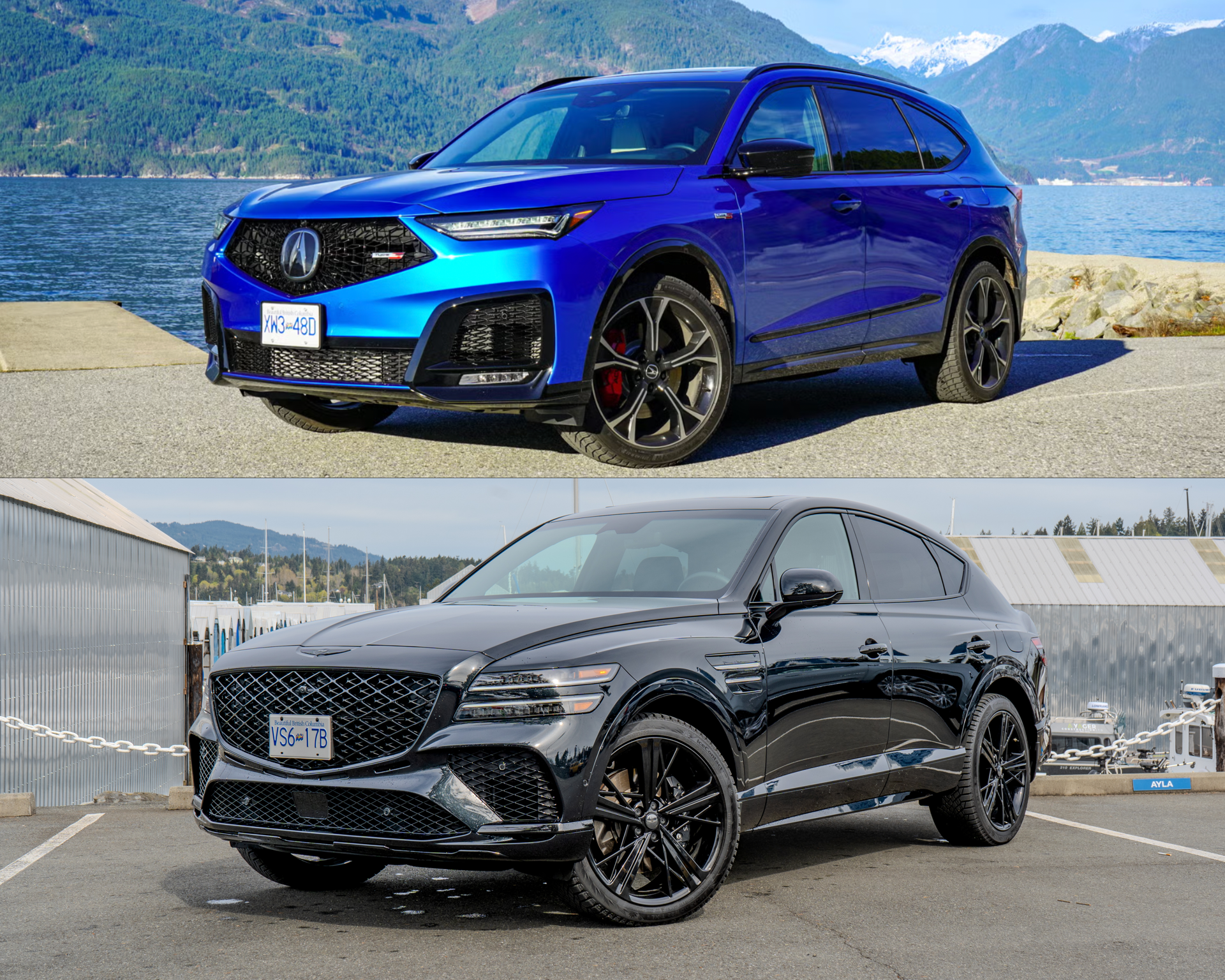
But the Genesis GV80 Coupe 3.5T E-SC MHEV has so much more presence. It looks more dramatic, feels richer inside, and delivers a more charismatic driving experience once the road opens up. Its mild-hybrid system does not deliver anything close to Volvo-level efficiency, and the Coupe’s roofline limits its practicality, but it compensates with design, material richness, the option for a traditional SUV body style with three rows of seating, and a sense of occasion that the XC90 does not quite match.
So the answer depends on what kind of luxury SUV buyer you are. If you want the smarter, electrified family hauler and the friendlier daily companion, go for the Volvo XC90 T8. It is the more responsible choice and, in many ways, the objectively superior vehicle. But if you want the SUV that feels more like an event every time you walk up to it, the Genesis GV80 Coupe still has an undeniable pull. The Volvo might be the better tool, but the Genesis is the richer indulgence.
About the author

Cole Attisha
Staff Writer, Autoblog