Navy P-8 Poseidon aids in rescue of three Pacific castaways

A Navy P-8 Poseidon crew was key in locating three stranded mariners on an uninhabited Pacific Island. The three men survived for three days before rescue.

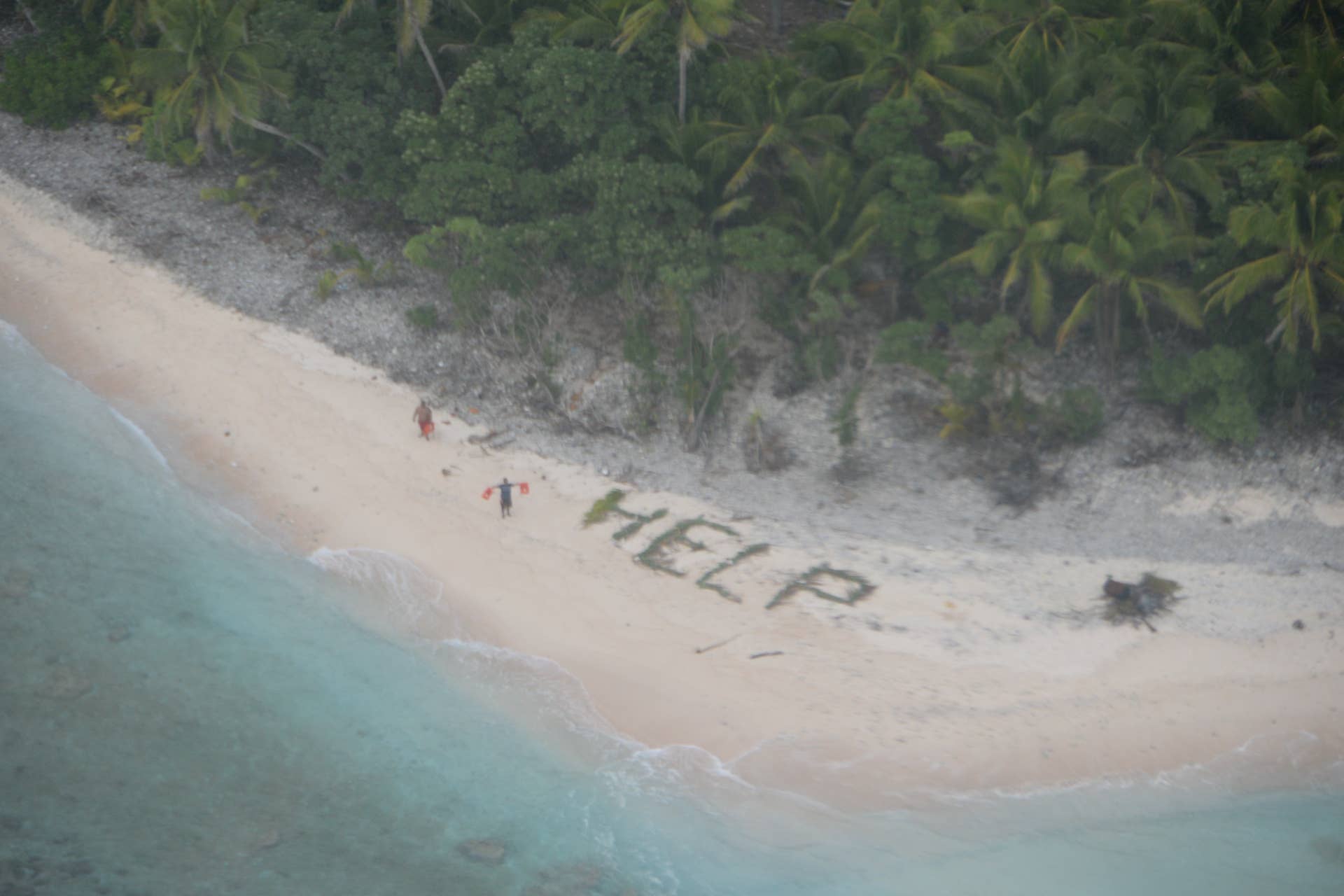
160407-N-ZZ999-004 FANADIK, Micronesia (April 7, 2016) Two men wave life jackets and look on as a U.S. Navy P-8A maritime surveillance aircraft discovers them on the uninhabited island of Fanadik. Three days earlier, the three's 19-foot skiff capsized after setting out to sea from Pulap, FSM. The P-8A, attached to Patrol Squadron (VP) 5, and operating from Misawa, Japan, responded to a call for assistance from the U.S. Coast Guard and located the men as they waved life jackets and stood next to a large "help" sign made of palm leaves. The men reported their vessel was capsized by a large wave a few hours after their departure on April 4, and spent the night swimming until they arrived at Fandadik Island, approximately four nautical miles from Pulap. A small boat from Pulap recovered the men from the island with no reported injuries. VP-5 is in the midst of a routine deployment to the U.S. 7th Fleet area of operations. (U.S. Navy photo by Ensign John Knight/Released)
Get Autoblog in your Google feed

This post is appearing on Autoblog Military, Autoblog’s sub-site dedicated to the vehicles, aircraft and ships of the world’s armed forces.

In terms of unflashy military aircraft, the US Navy’s new P-8 Poseidon might be the most low-key in service today. It’s based off the backbone of the world’s major passenger carriers, the Boeing 737, so it’s never going to end up on a kid’s bedroom wall, like an F-22 Raptor or star in a major motion like the F/A-18 Hornet in Independence Day. But for three mariners, none of this matters – the P-8 is the best damn plane on the planet.

The maritime patroller was a key part of a rescue operation that save three stranded mariners on a desolate island in the sprawling Pacific Ocean. Their 19-foot vessel was capsized by a large wave, forcing the men to abandon ship and swim two miles through the night to Fanadik Island, one part of the Pulap Atoll. The small ring of uninhabited islands lies about 2,600 miles southwest of Honolulu and belongs to the Federated States of Micronesia.

The men were stranded for three days before the P-8 flew over. They put together a large “HELP” sign, made from palm leaves, to catch the eye of the jet’s crew, who snapped the photo shown above and relayed the information to the Coast Guard. Alongside coordinating the Poseidon crew, the Coast Guard used its Automated Mutual-Assistance Vessel Rescue program to enlist the help of two bulk freighters, the Brilliant Jupiter and Ten Yu Maru, who conducted a 17-hour search of the skiff’s last known area.

The three men were originally reported missing after they were overdue for their arrival at the island of Weno.