Schumacher family continues to ask fans and media for privacy

With reporters continuing to ask about Michael Schumacher’s health, his agent is once again asking that the family’s privacy be respected.

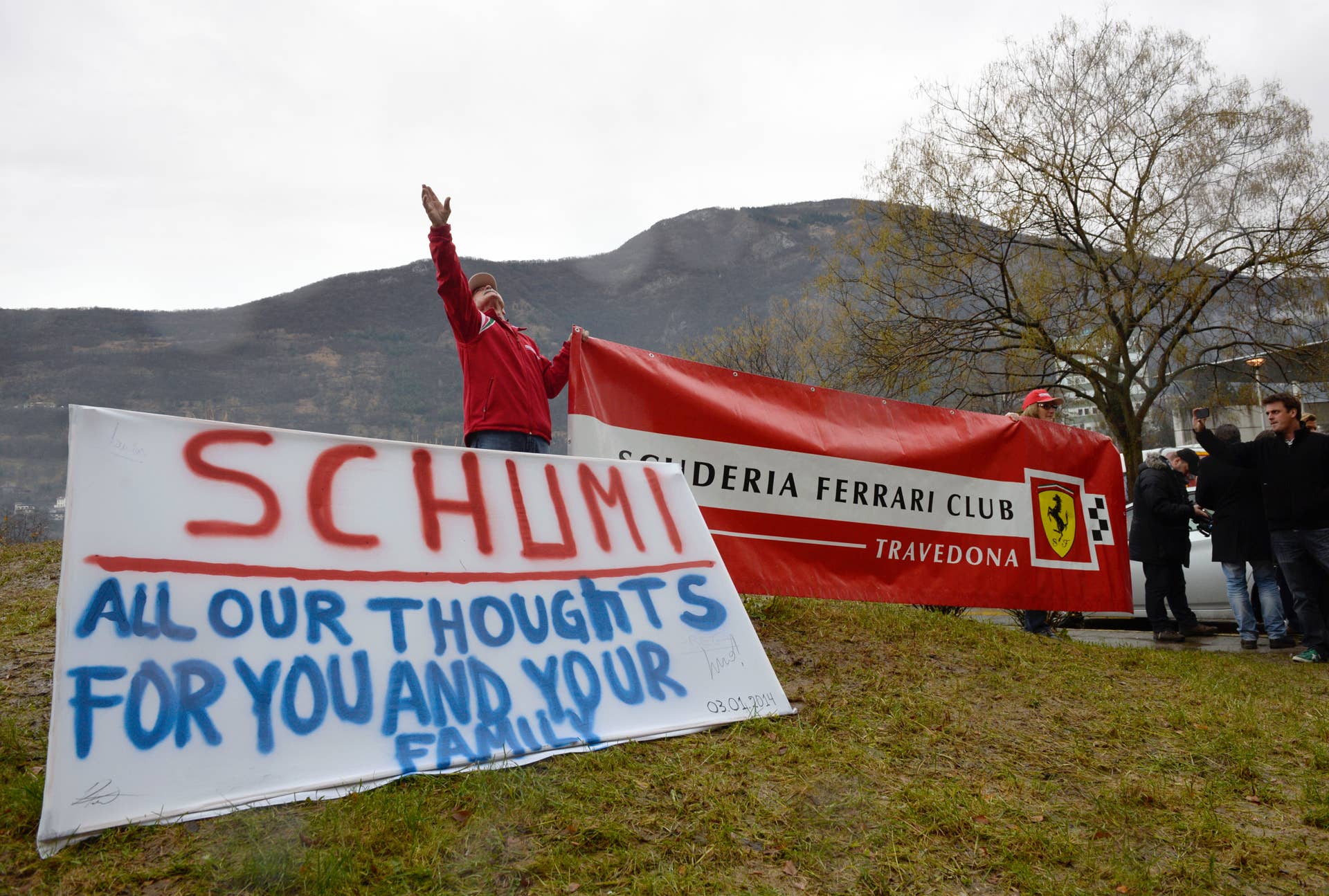
Fans of German Formula One world champion Michael Schumacher put a sign with messages of support and a banner of F1 Ferrari team, on January 3, 2014, in front of the Grenoble University Hospital Centre, to mark the 45th birthday of the former pilot. Formula One legend is to turn 45 today while lying comatose in a French hospital after suffering critical head injuries in a ski accident. AFP PHOTO/PHILIPPE DESMAZES (Photo credit should read PHILIPPE DESMAZES/AFP/Getty Images)
Get Autoblog in your Google feed

It’s been two-and-a-half years since a tragic skiing accident left Formula 1 legend Michael Schumacher with severe brain injuries, and in that time, updates on the German’s status have slowed to a trickle. Schumacher’s agent, Sabine Kehm, broke that trend, but not in the way that fans hoped.

“Michael will not disappear but at the moment the private situation is so difficult that unfortunately no insight can be given. There must be understanding for this,” Kehm said during an event promoting the F1 drivers’ charity soccer match, Fox Sports reports. “We just have to accept that the family wants to continue to protect their privacy.”

The last significant report on Schumacher’s health came in October of 2014, less than a year after his accident. At that time, a doctor said there had been “some progress” in the recovery and that Schumacher could be rehabilitated in one to three years. We’re hopeful the progress continues.