
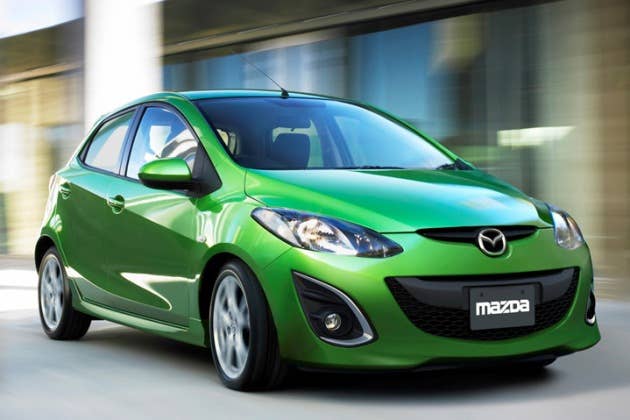
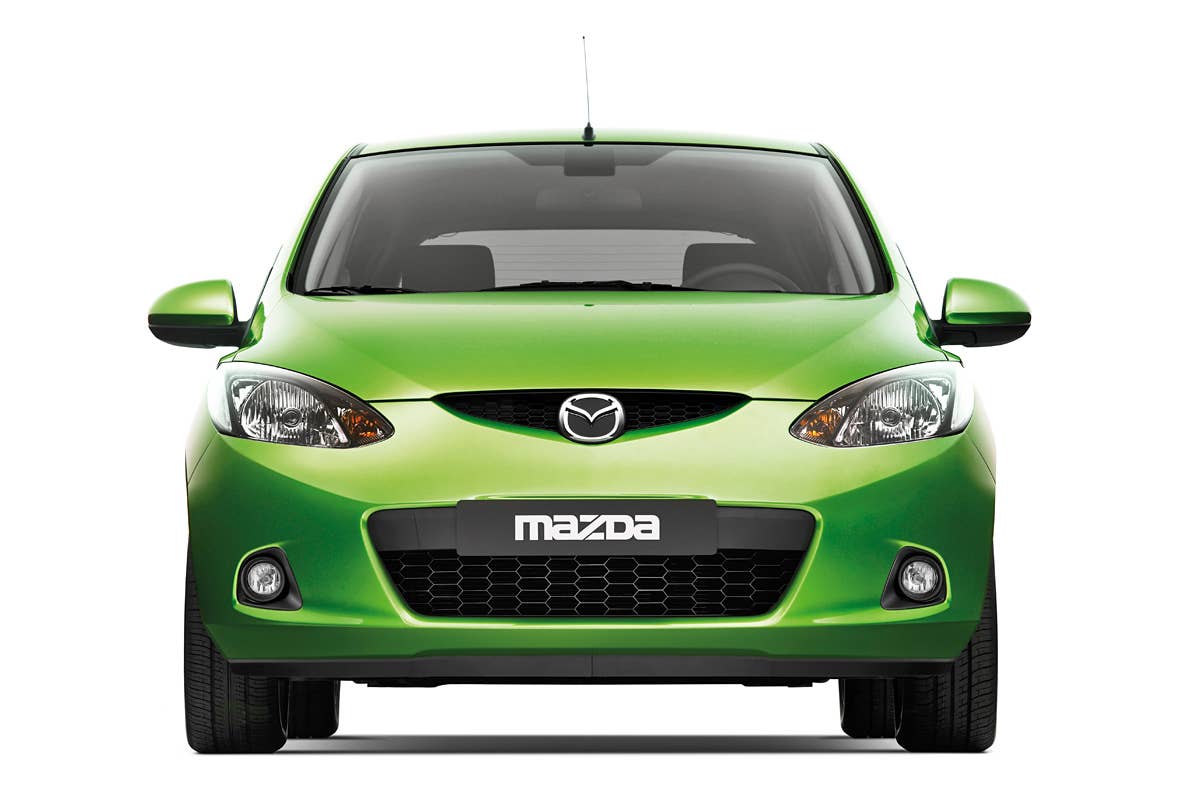
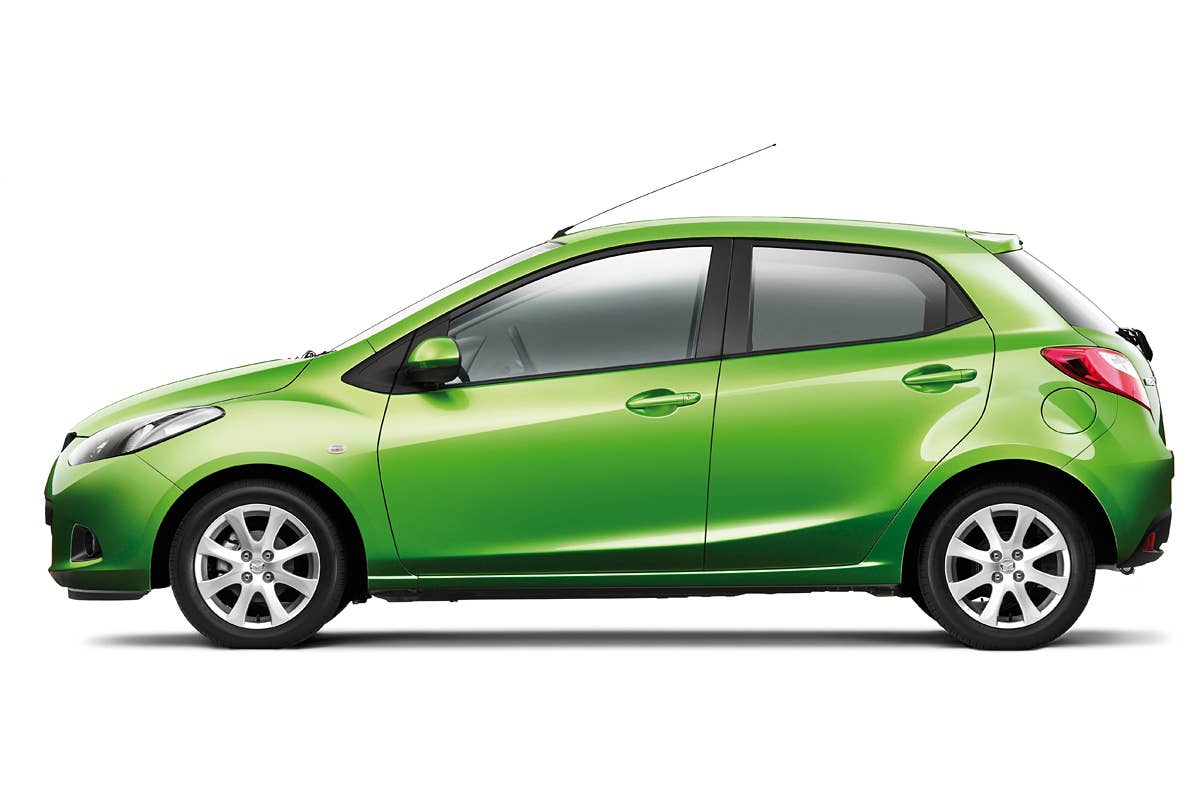
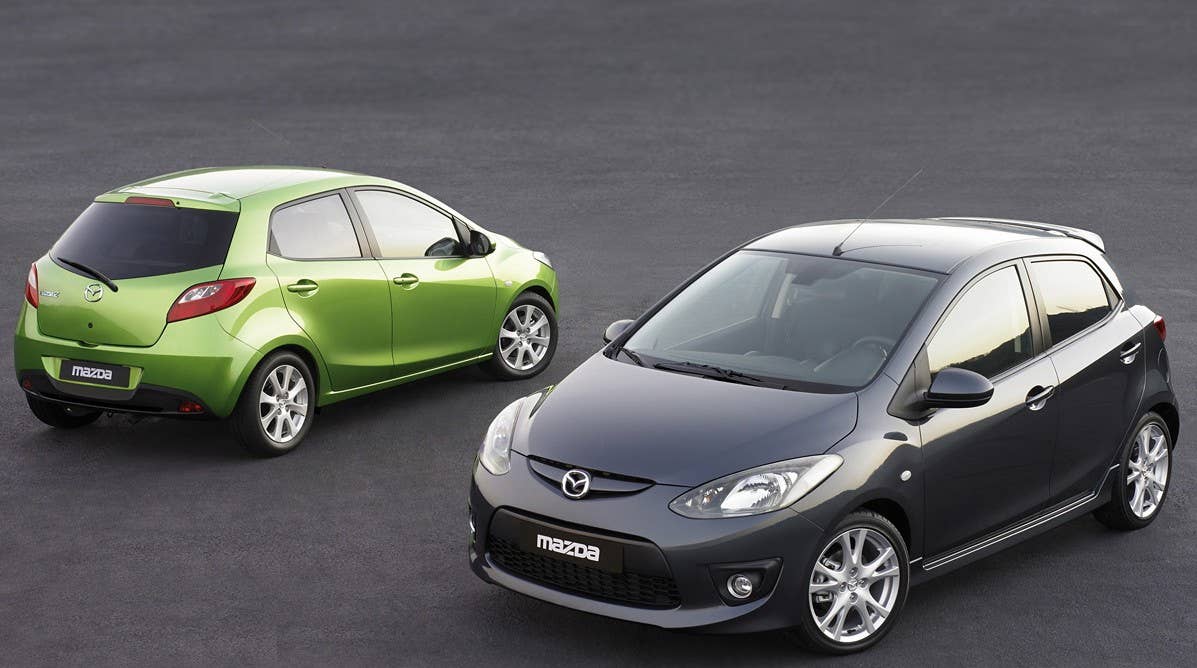
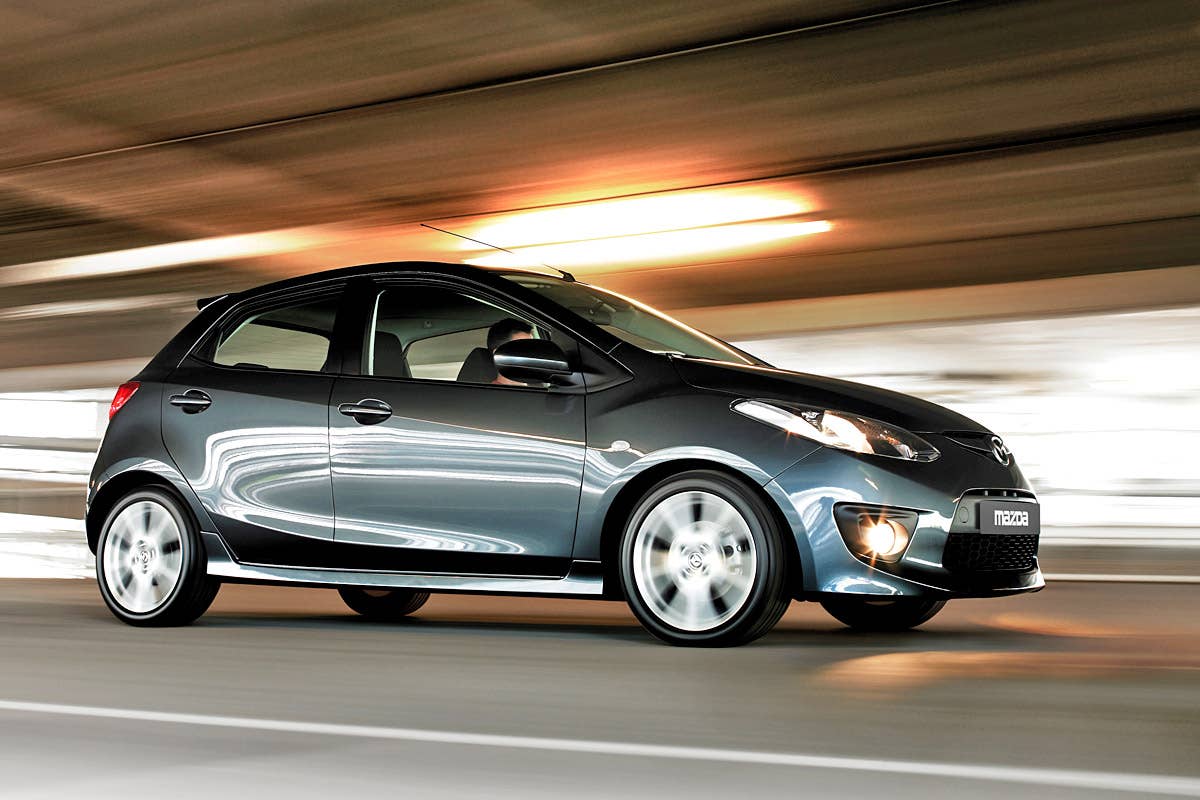
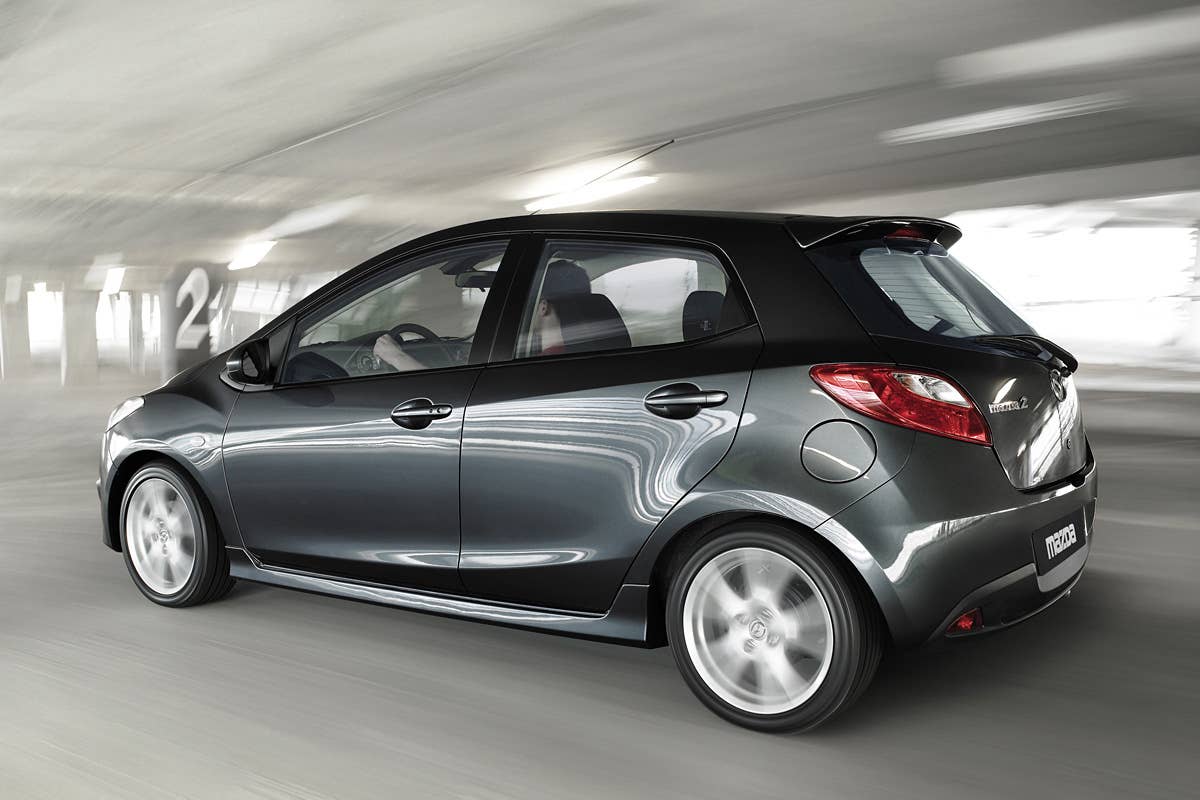
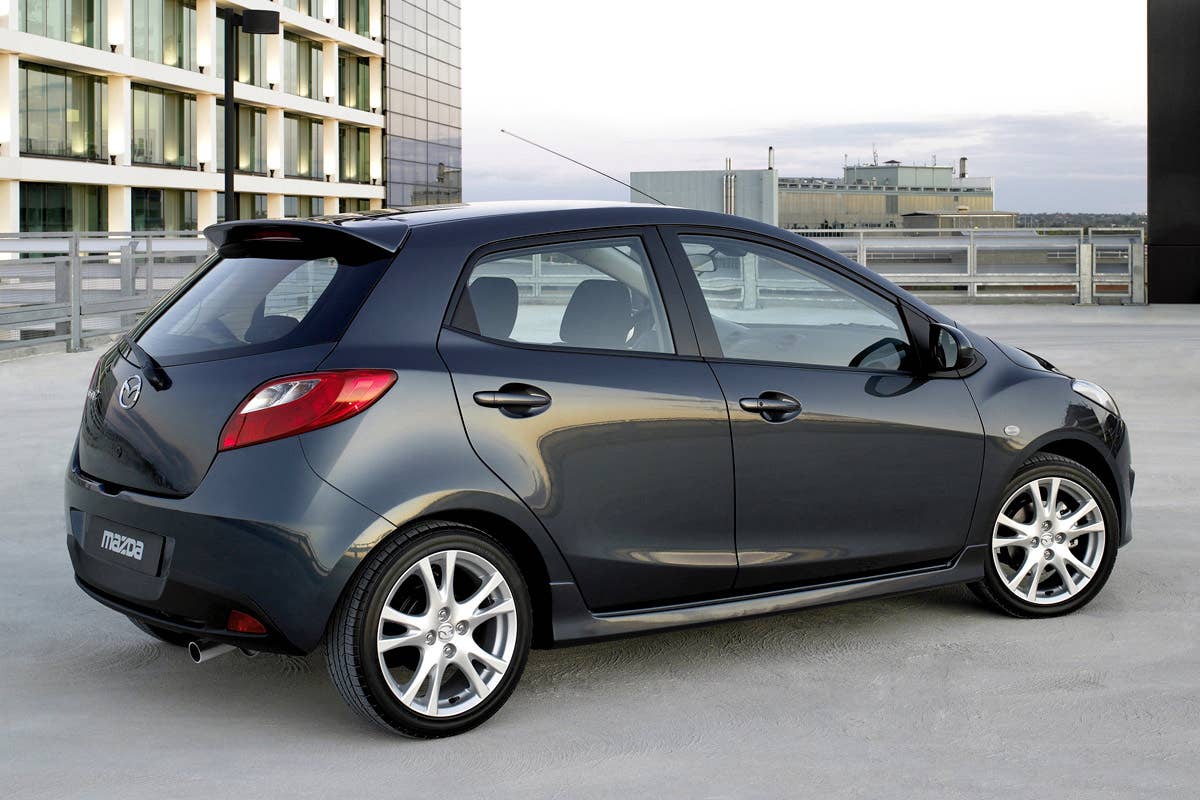
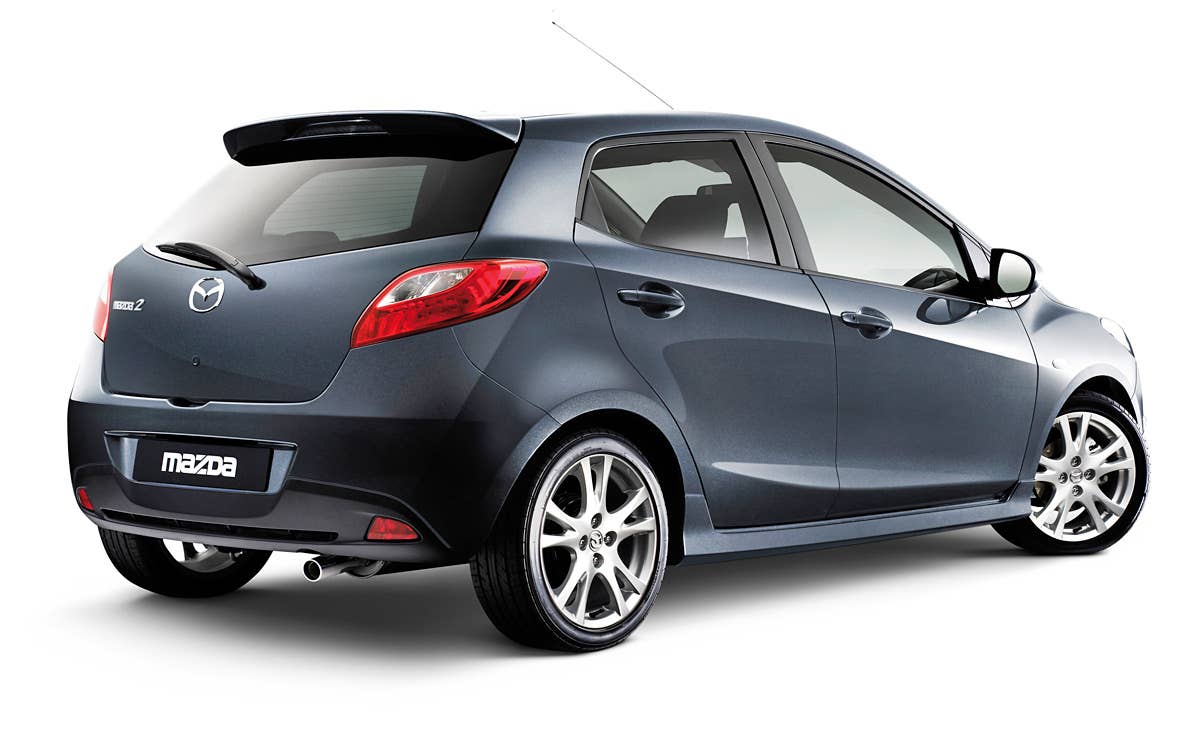
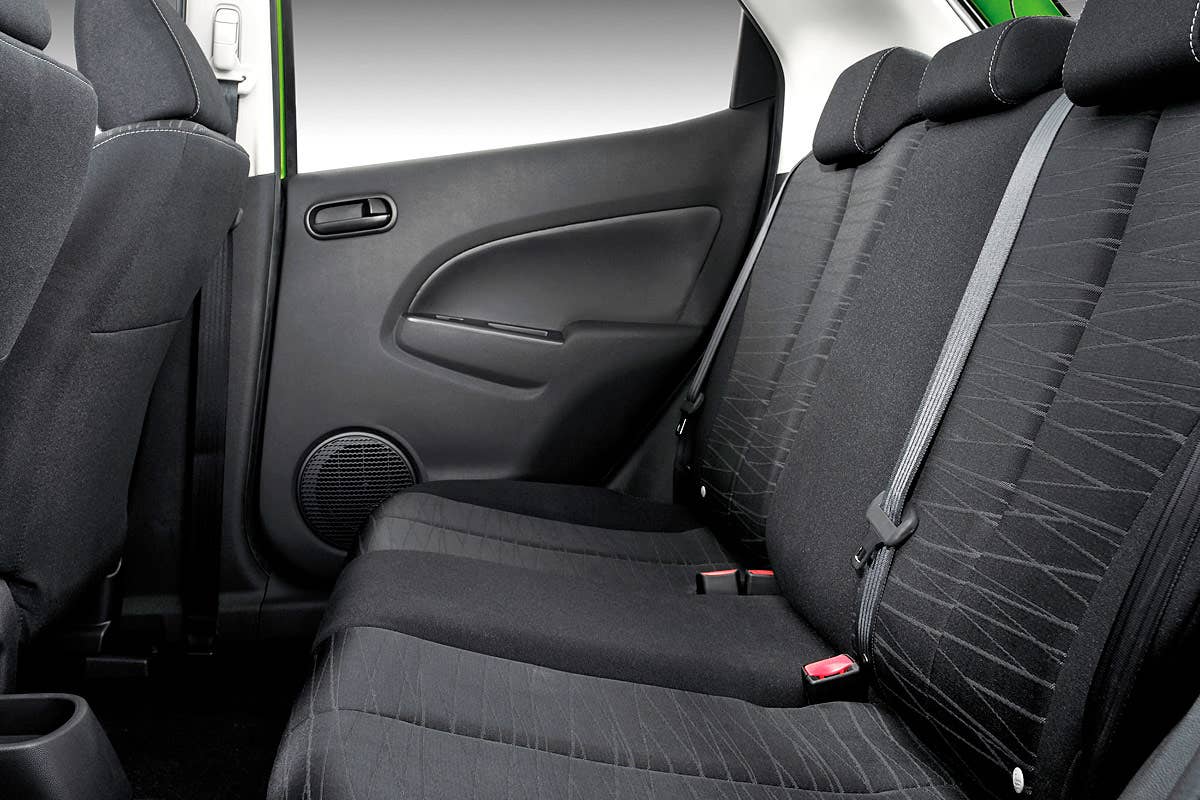
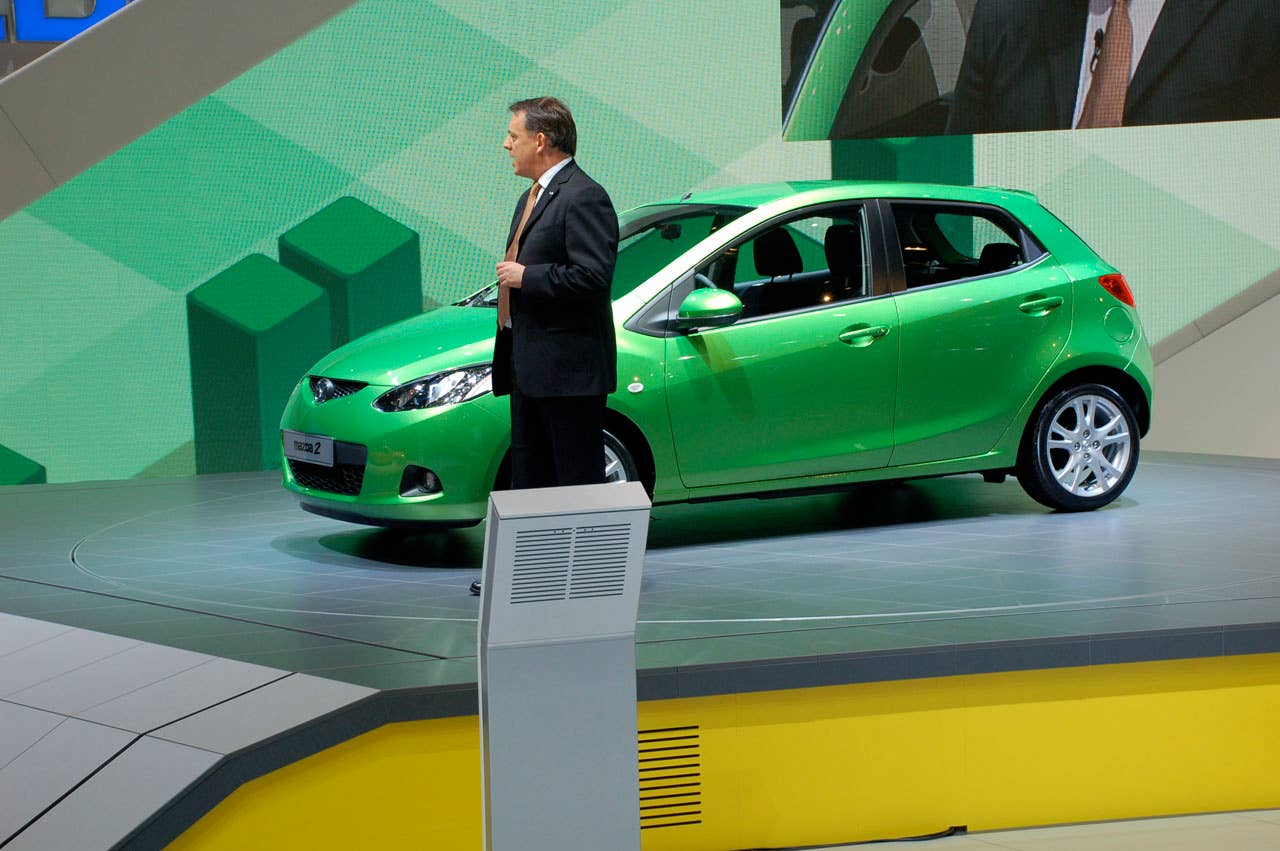
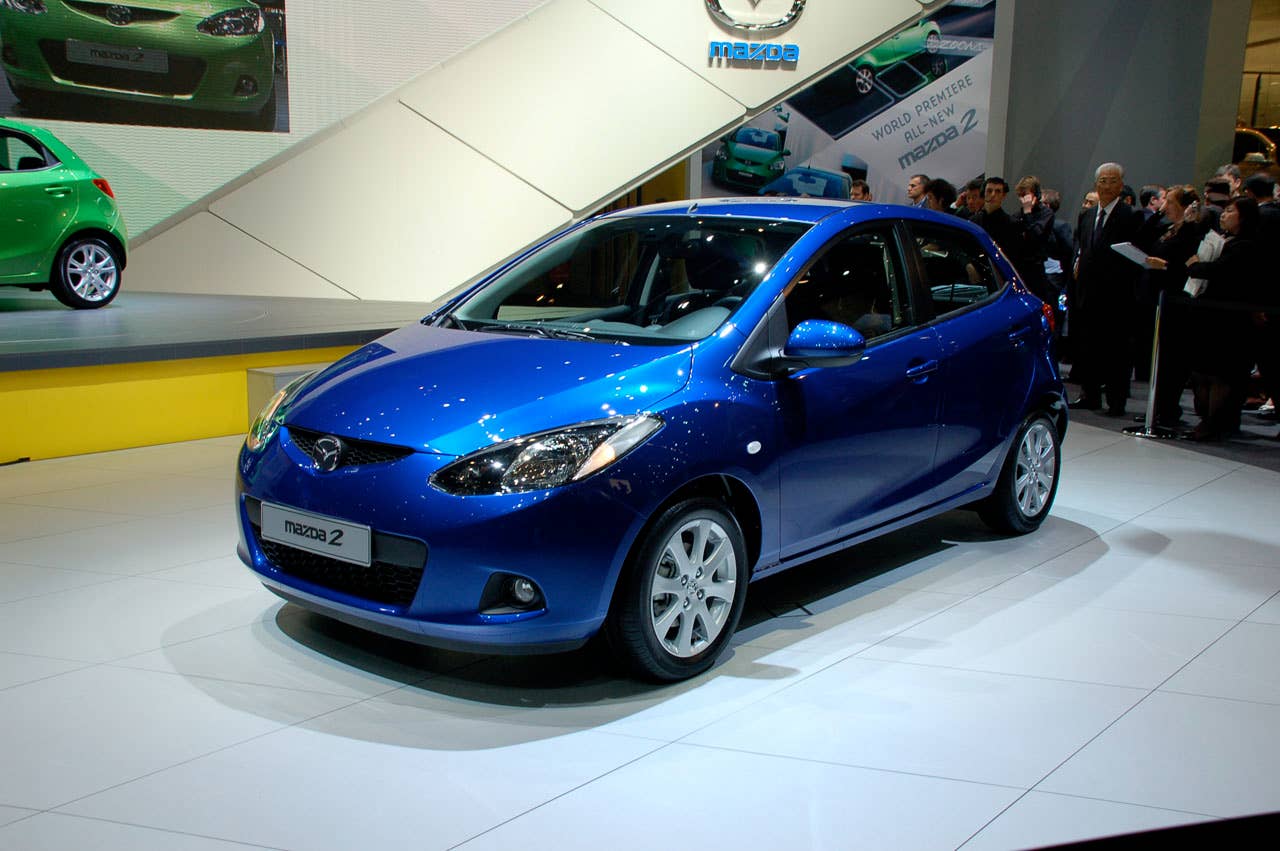
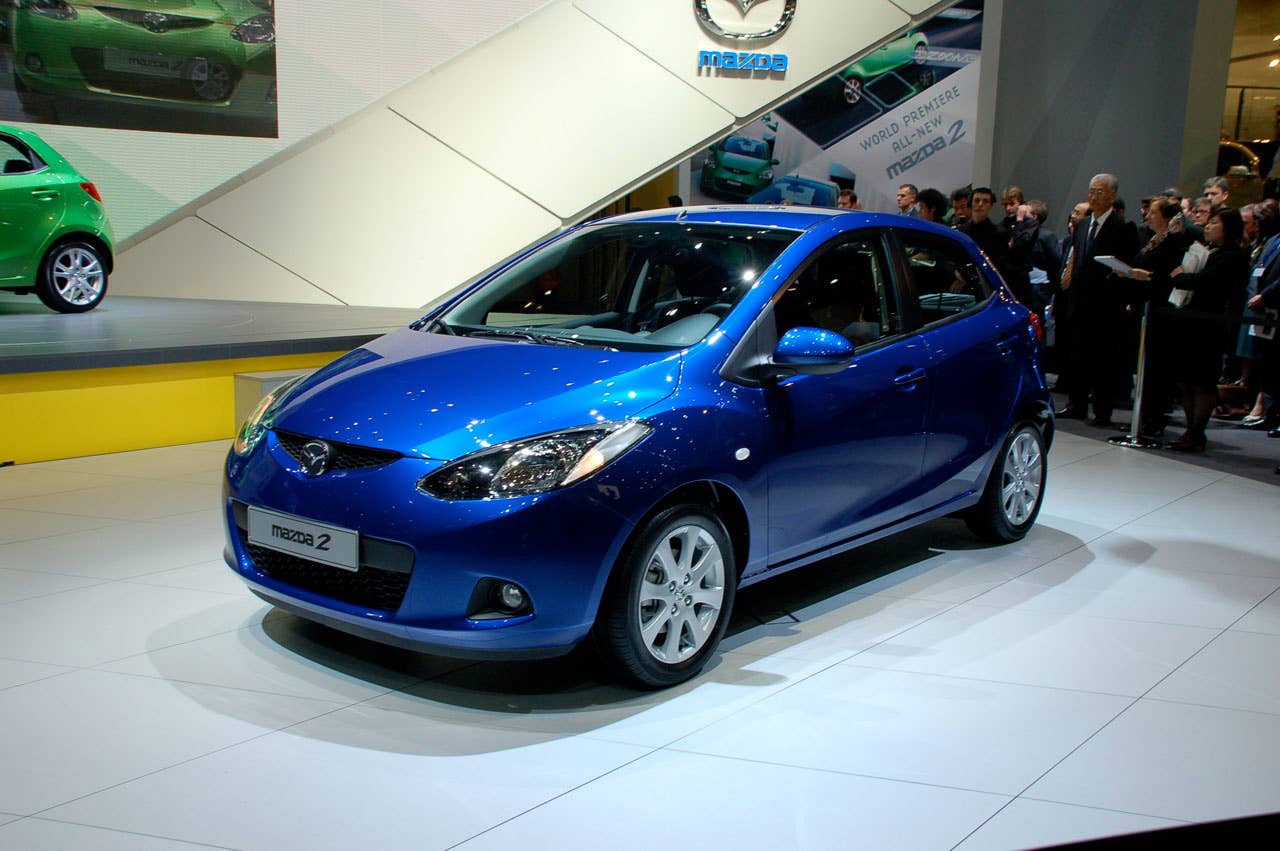
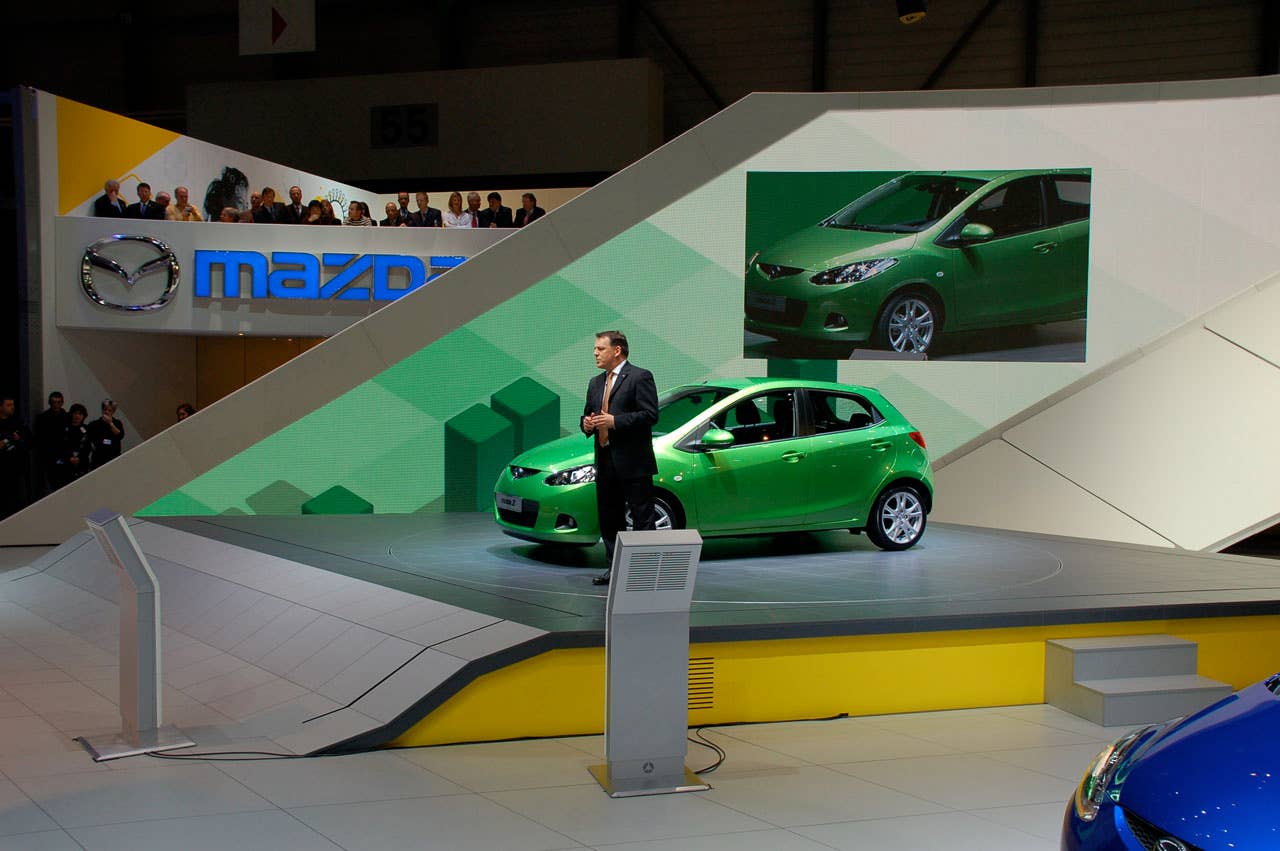
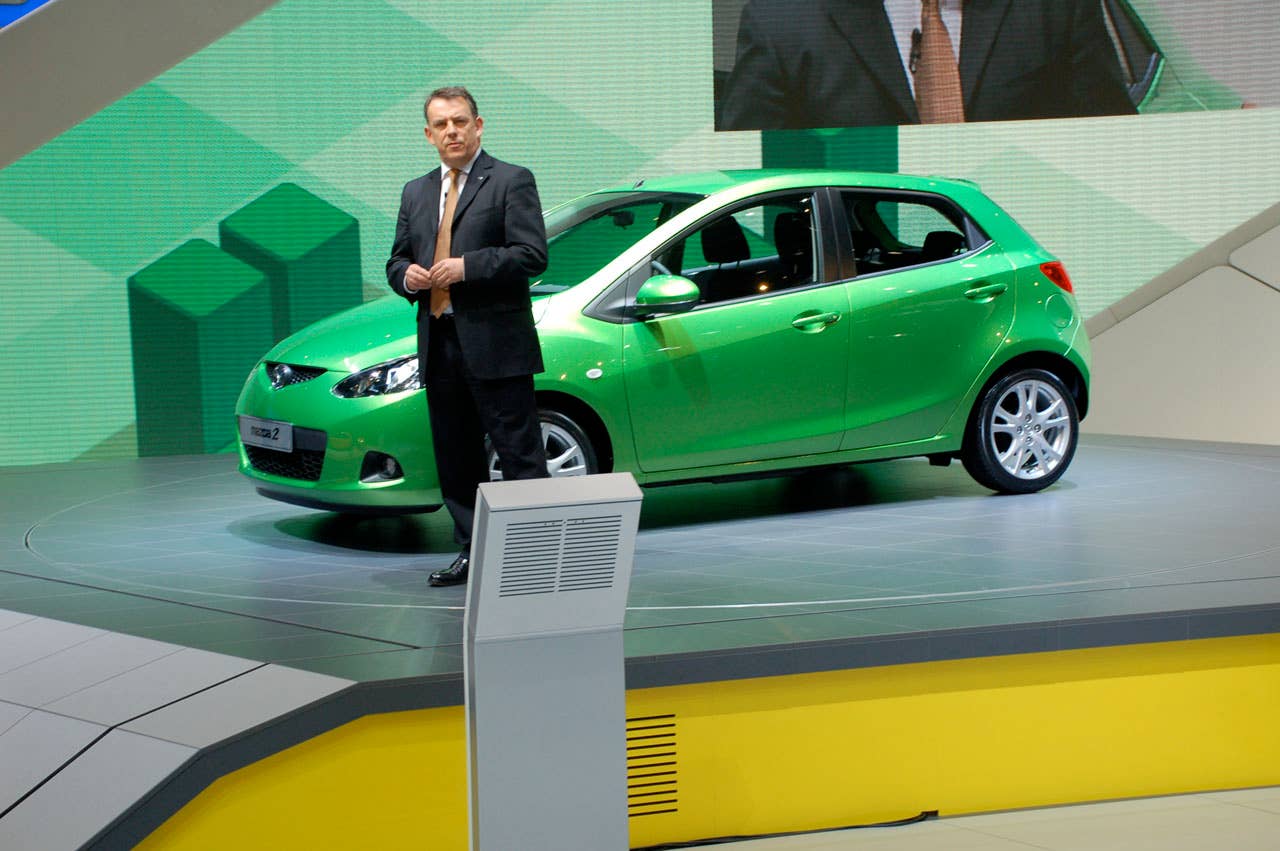
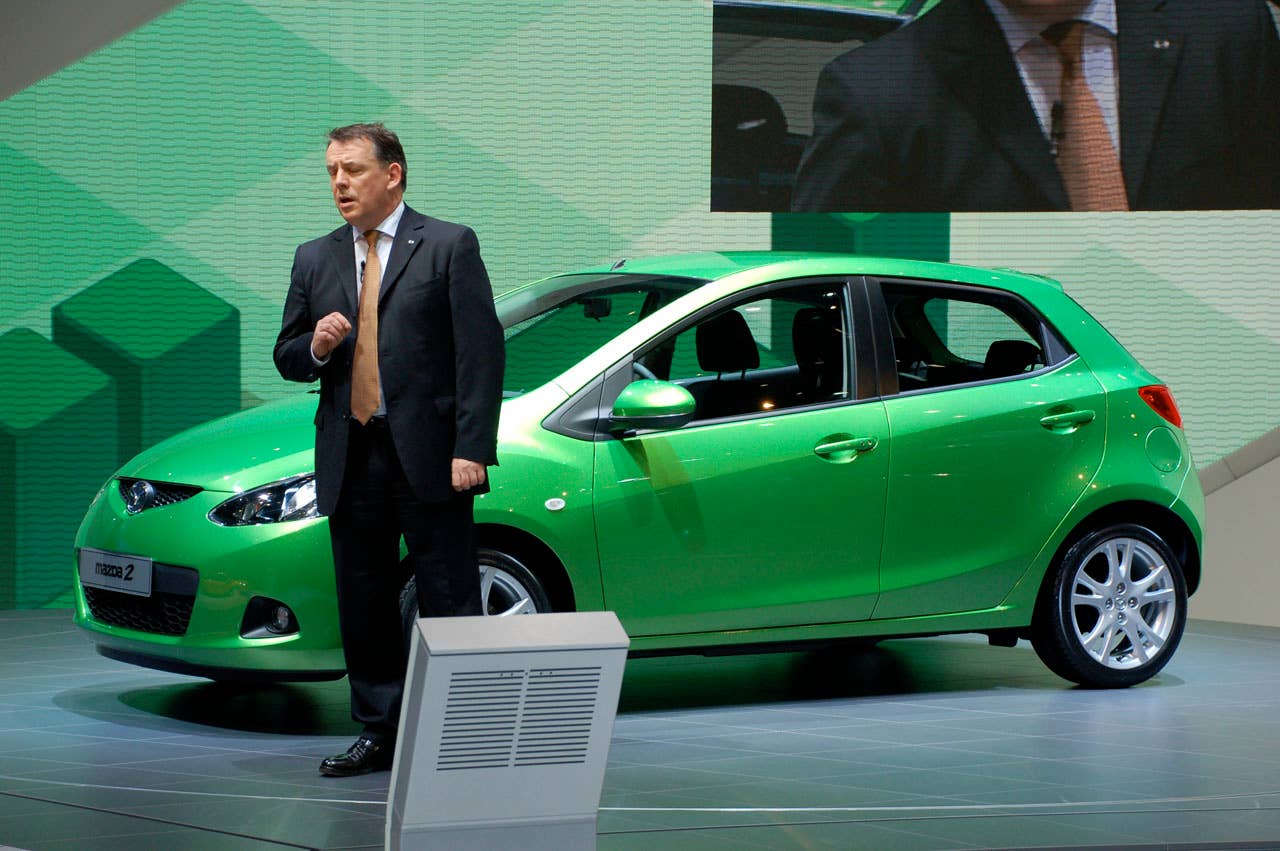
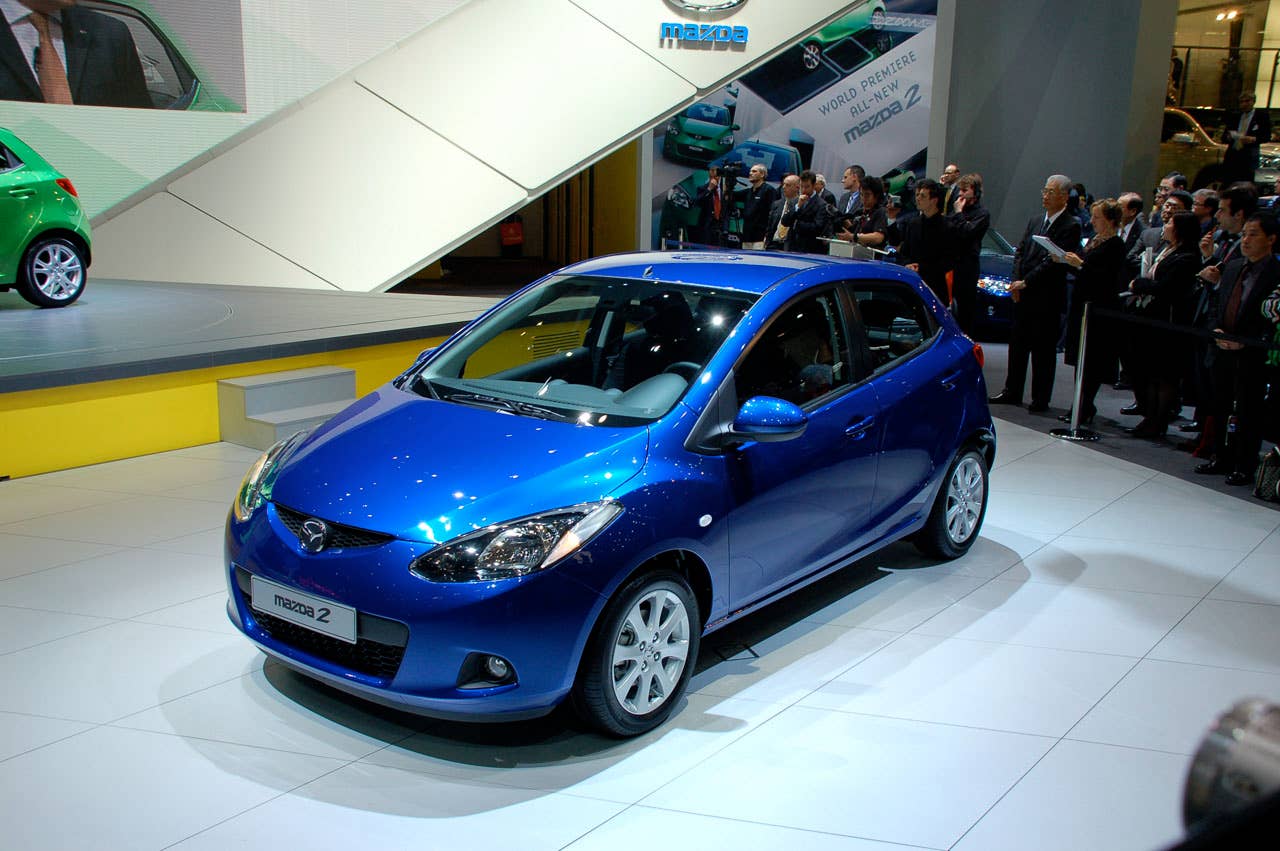
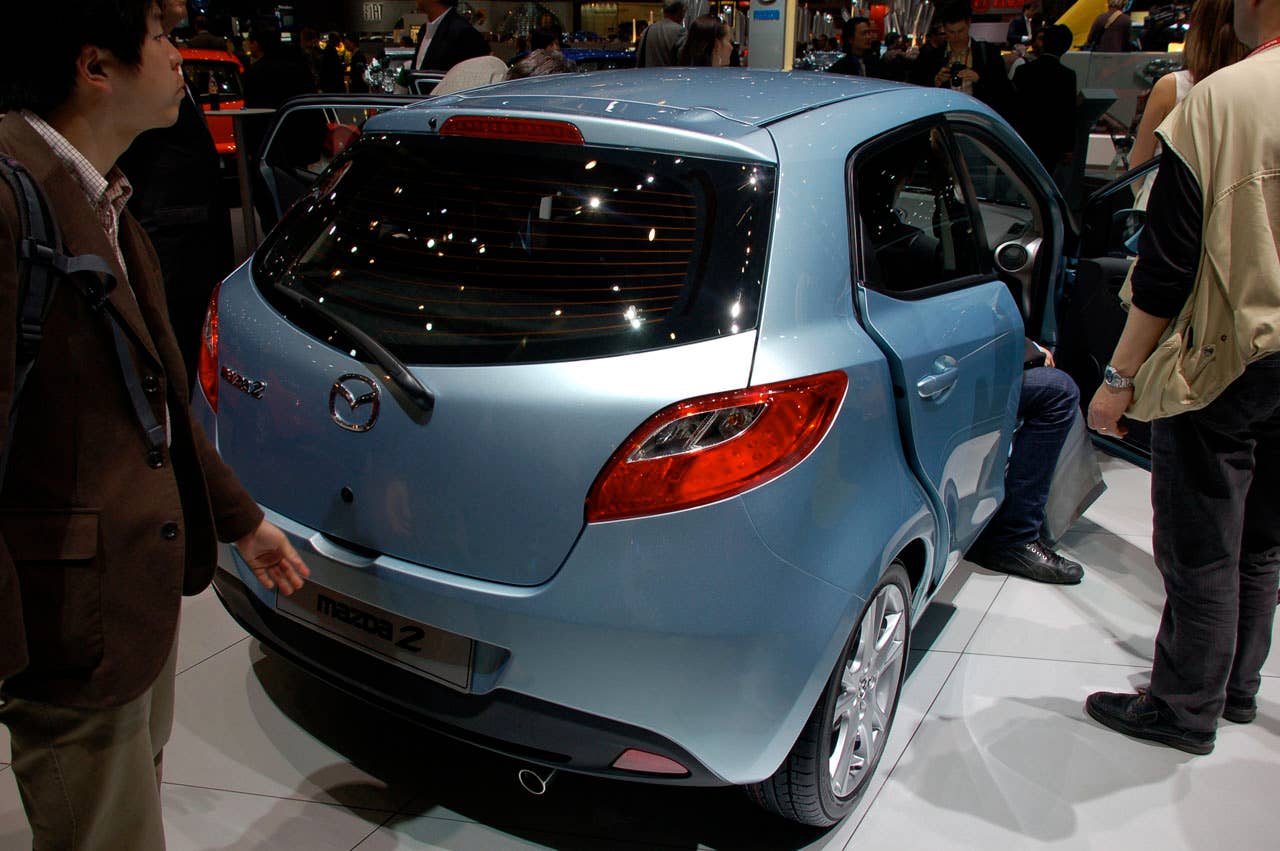
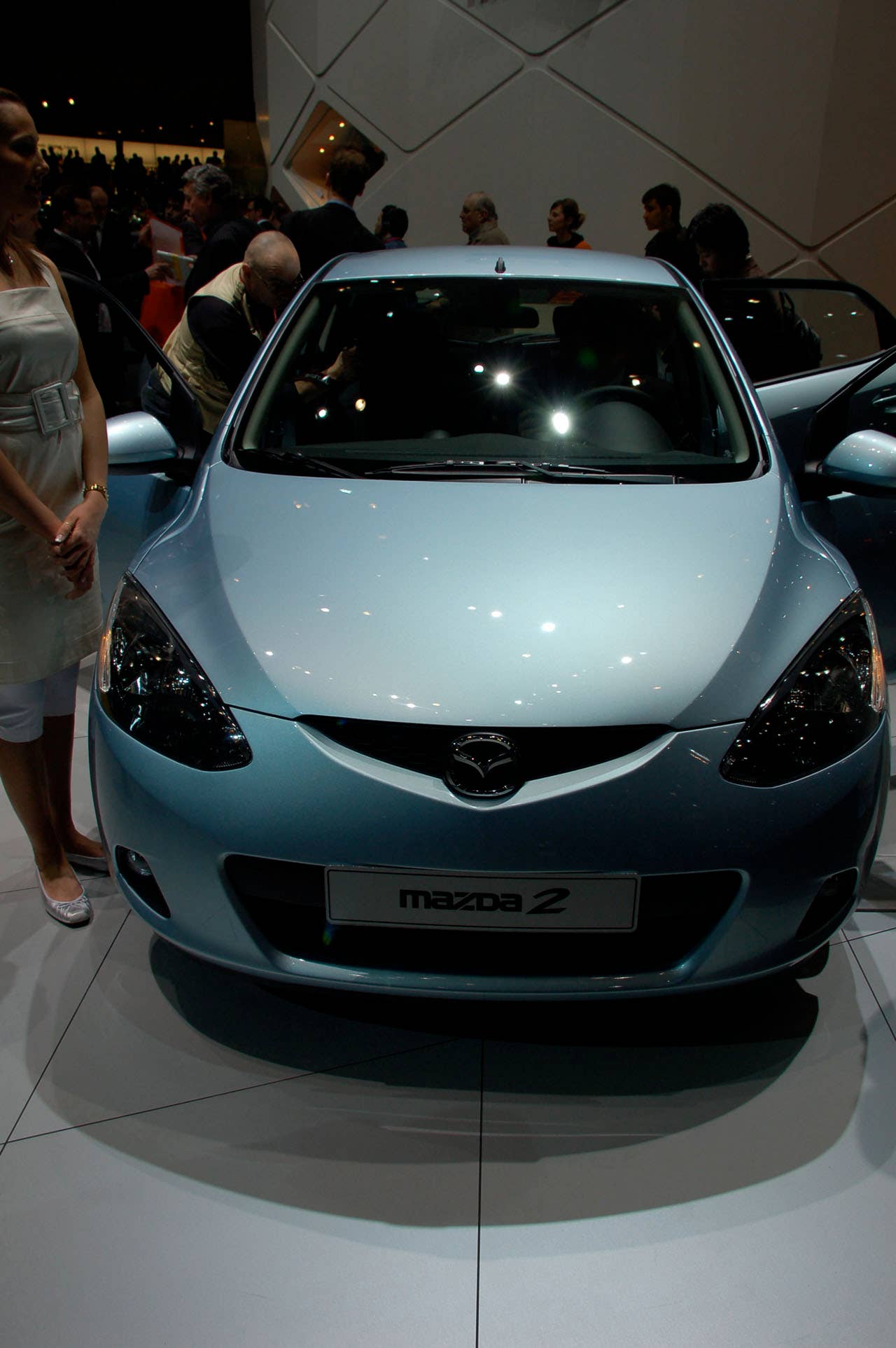
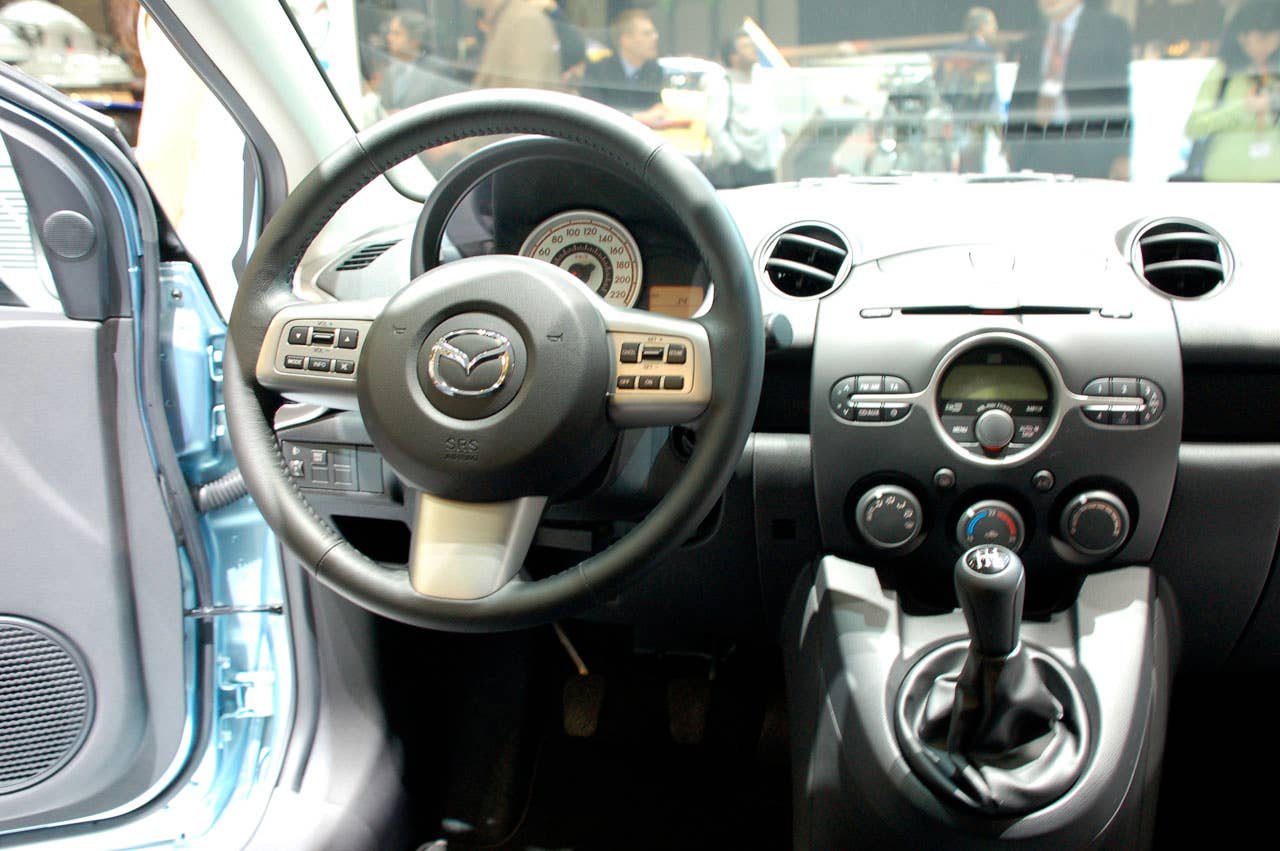
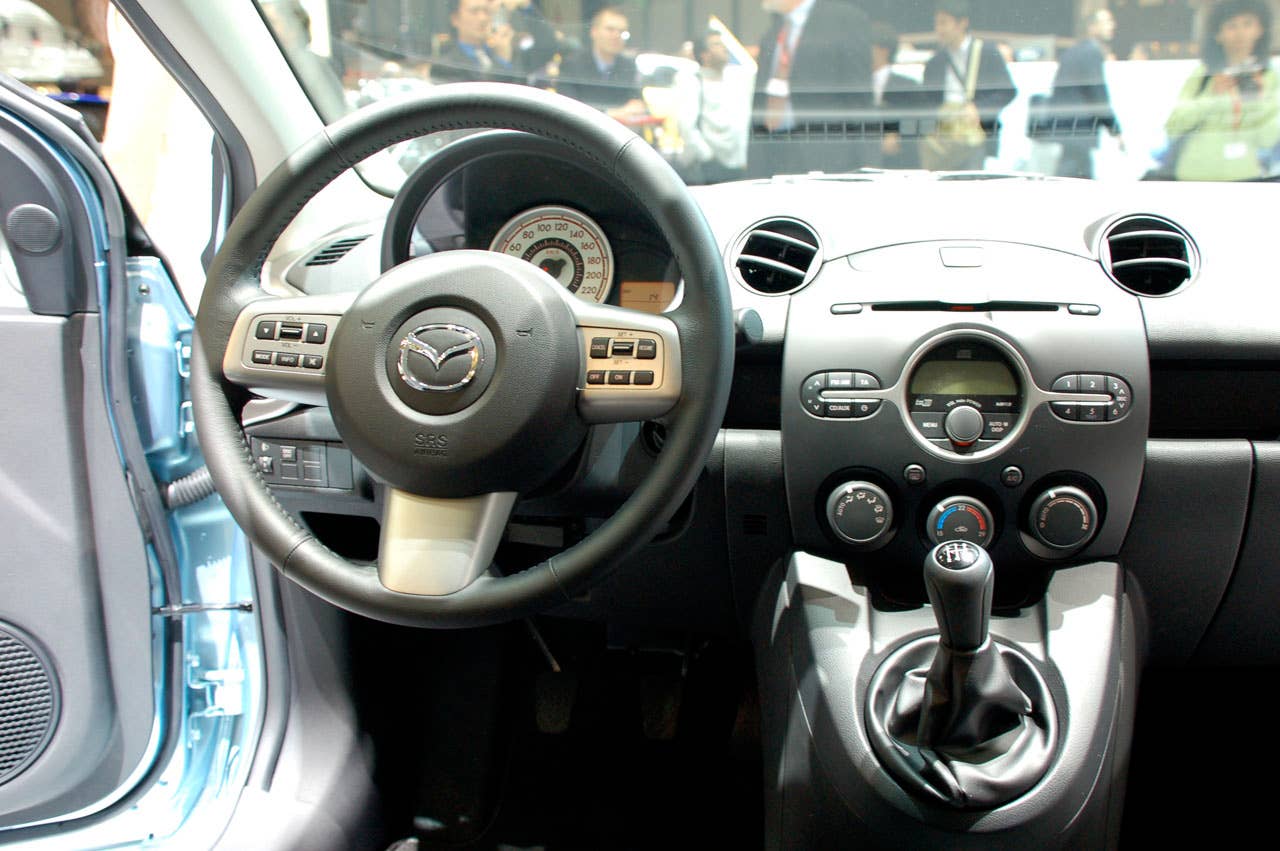
2010 Mazda2 (Thailand-spec) – Click above for high-res image gallery
Until now, Mazda’s most notable alternative fuel programs have been the hydrogen-powered Wankel rotaries currently being used in an RX-8 test fleet. The “Zoom-Zoom” automaker has acknowledged plans to build new hybrid-powered vehicles in the coming years, but to date has avoided the battery electric vehicle arena.
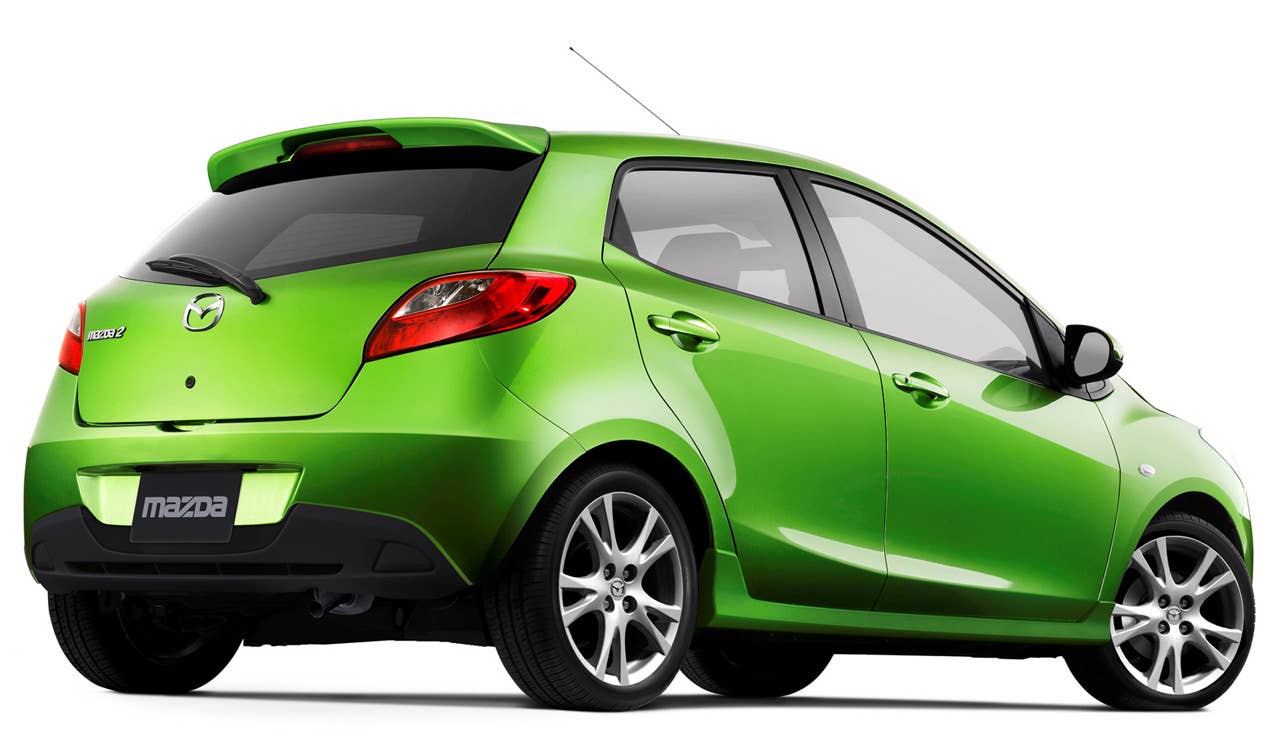
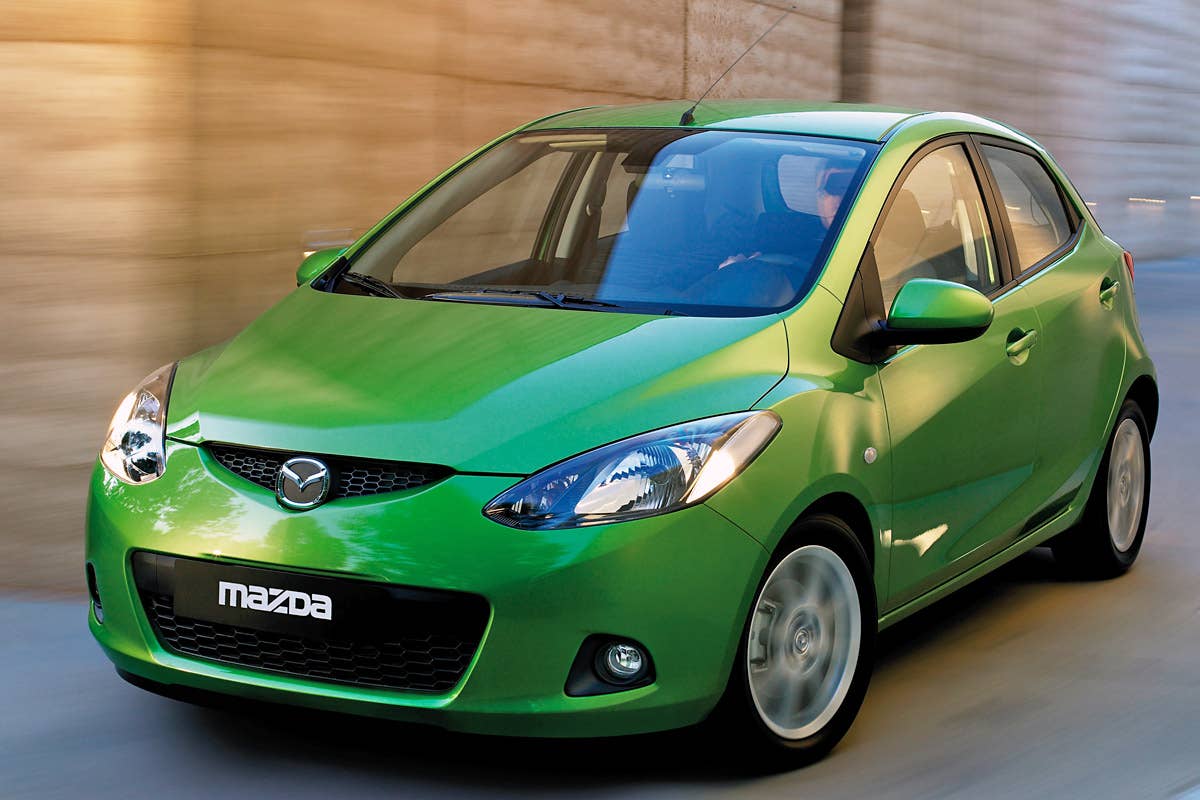
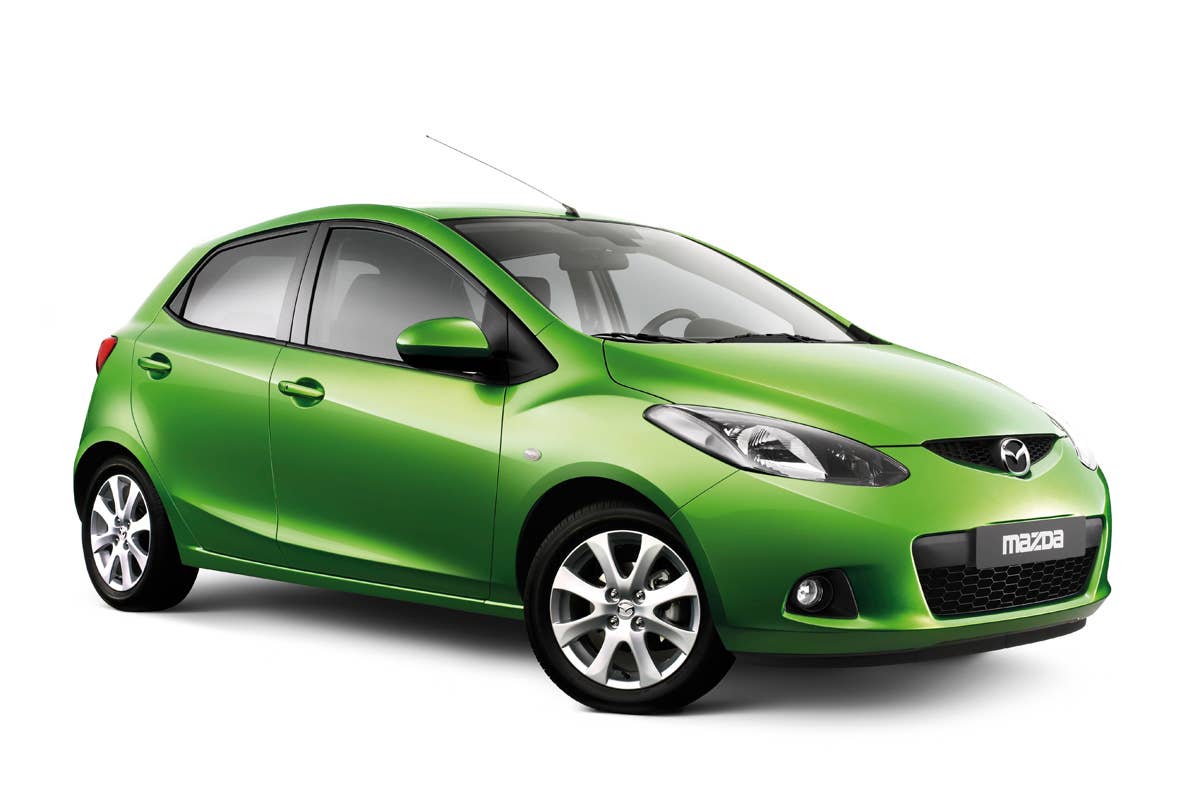
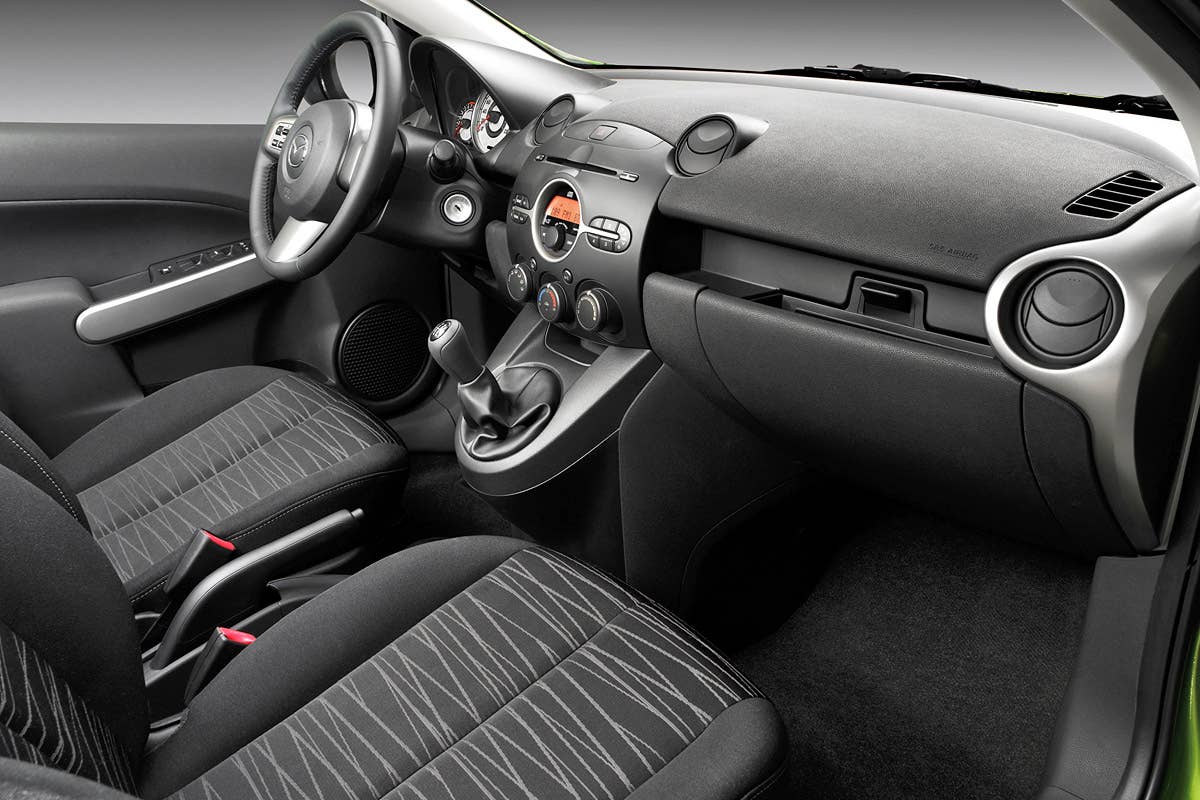
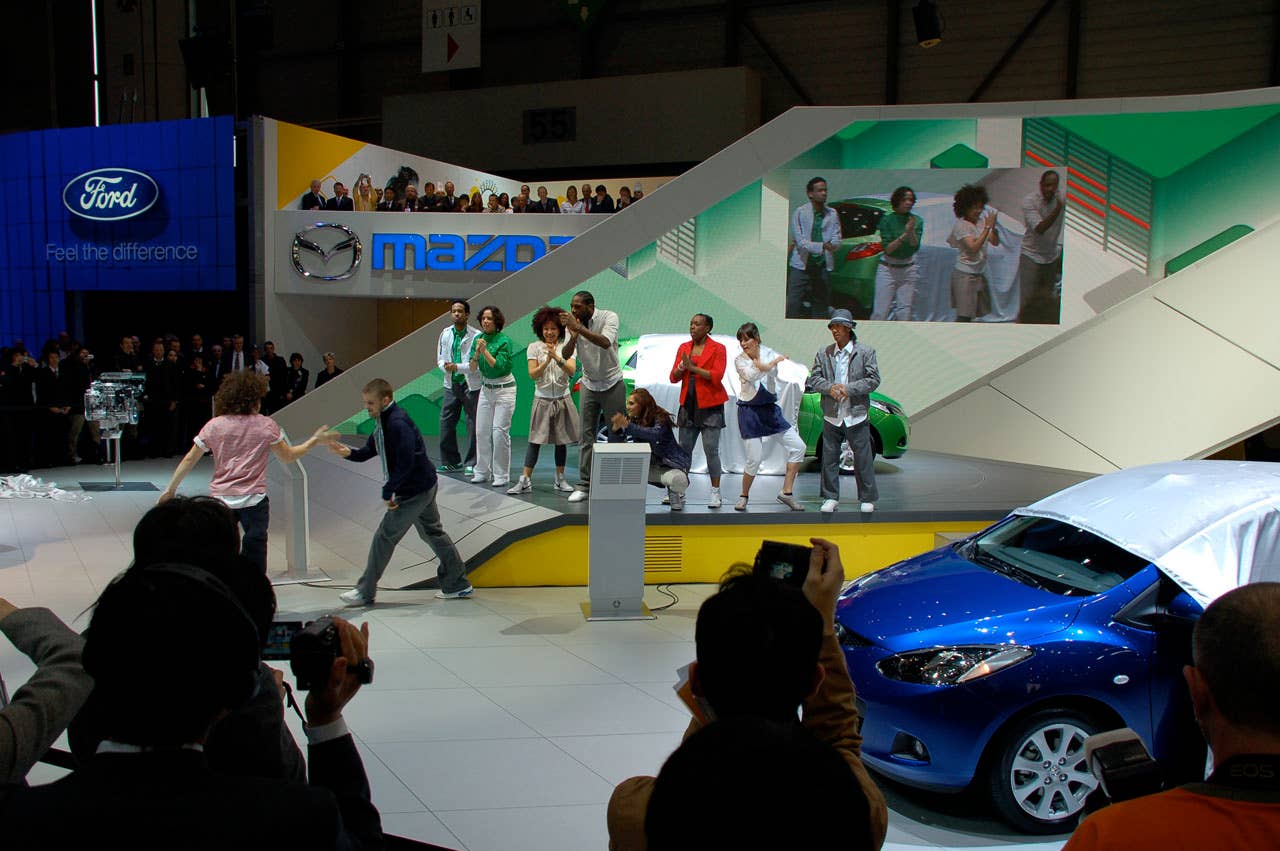
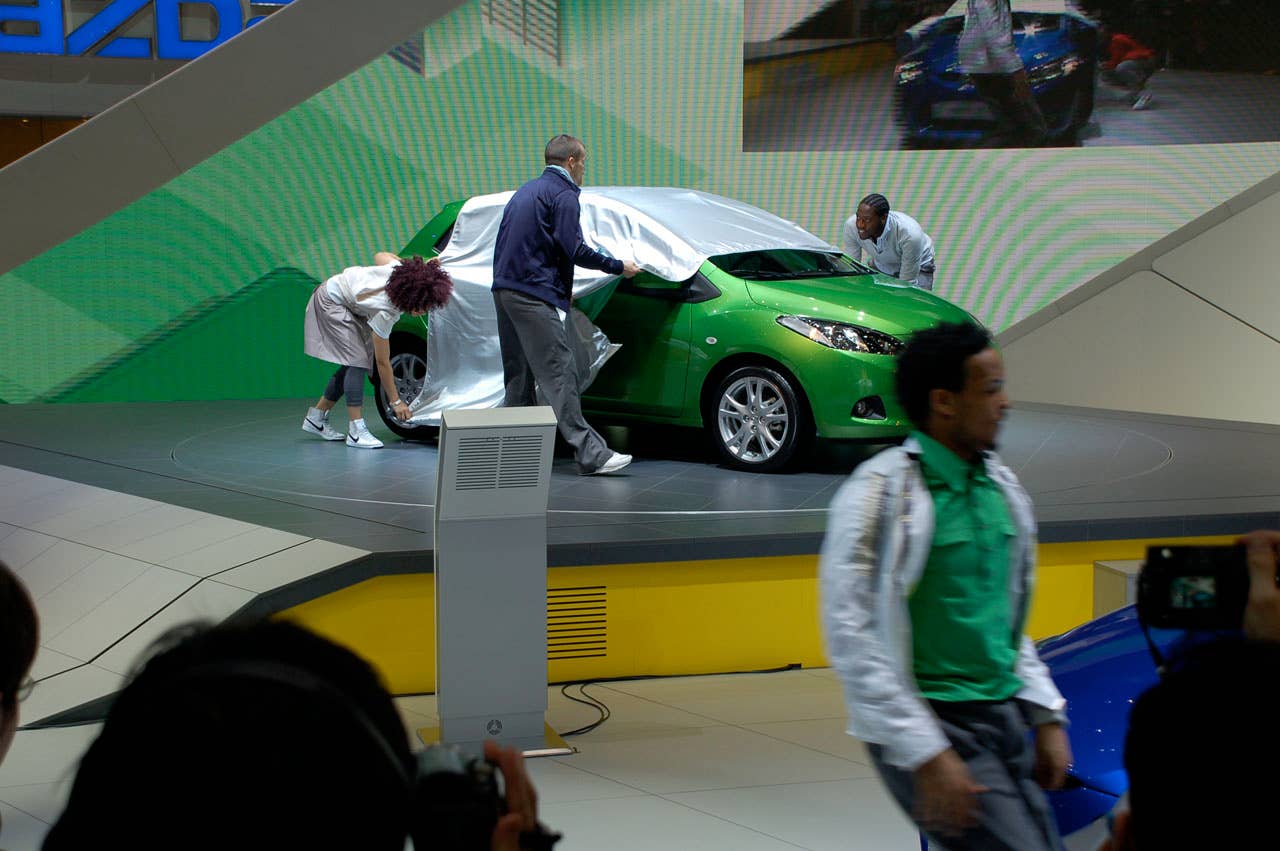
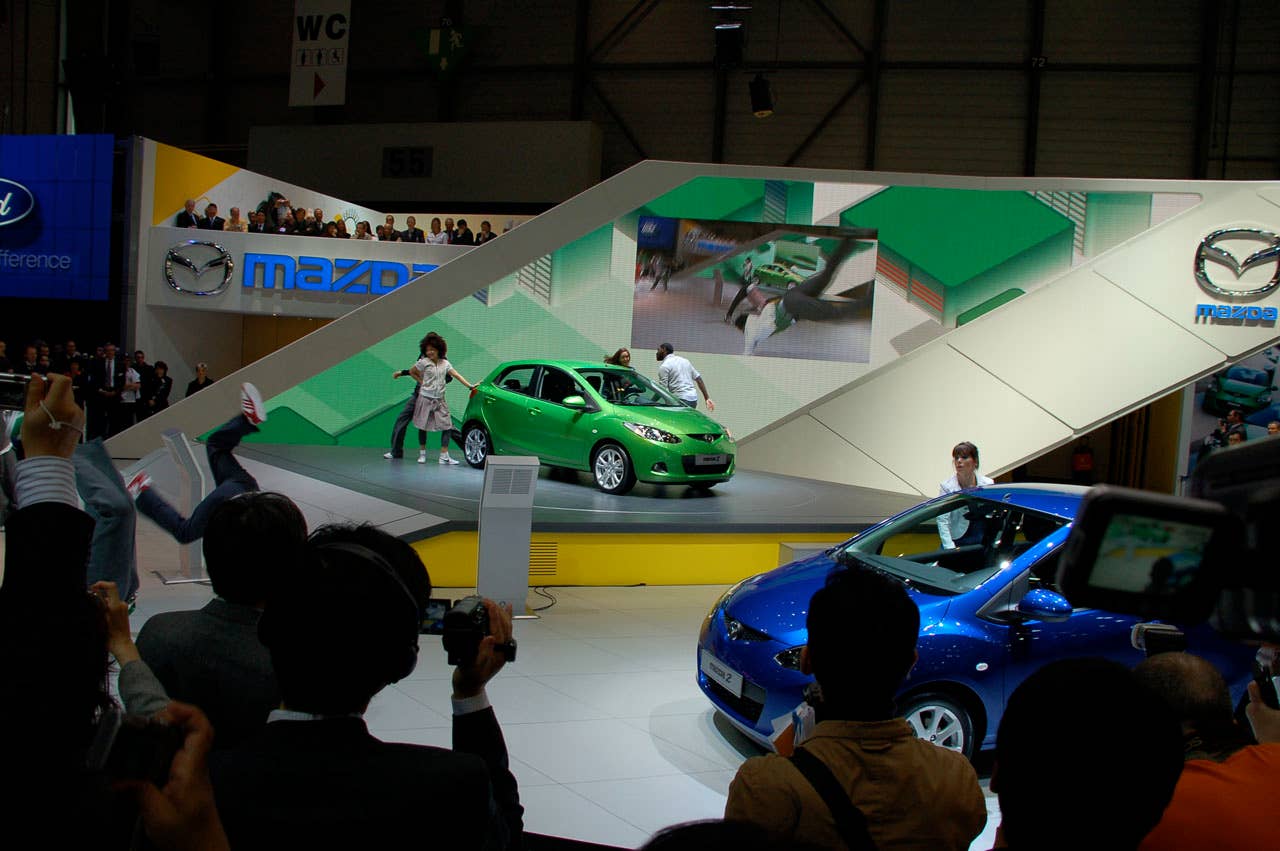
That is about to change thanks to a newly-announced partnership with Itochu Corporation and Tsukuba City. Mazda and Itochu will convert three Demios (known as the Mazda2 outside of Japan) to plug-in battery power. Besides just testing the electric drives, the program will also test car sharing services using the EVs as well as using renewable energy to charge the vehicles. The program will also evaluate battery reuse programs that put used EV energy systems into use in fixed applications. The test program will launch in March 2010.
Featured Gallery


Featured Gallery








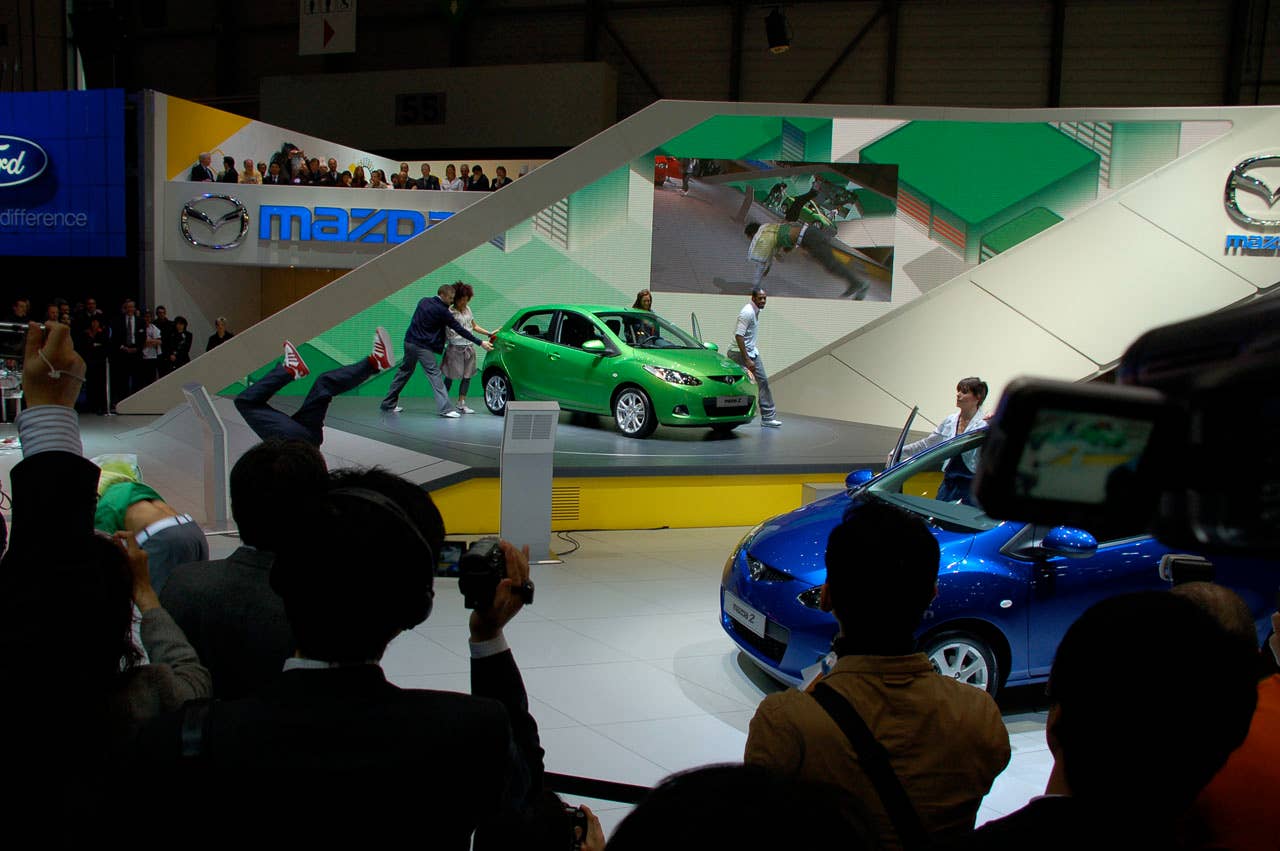
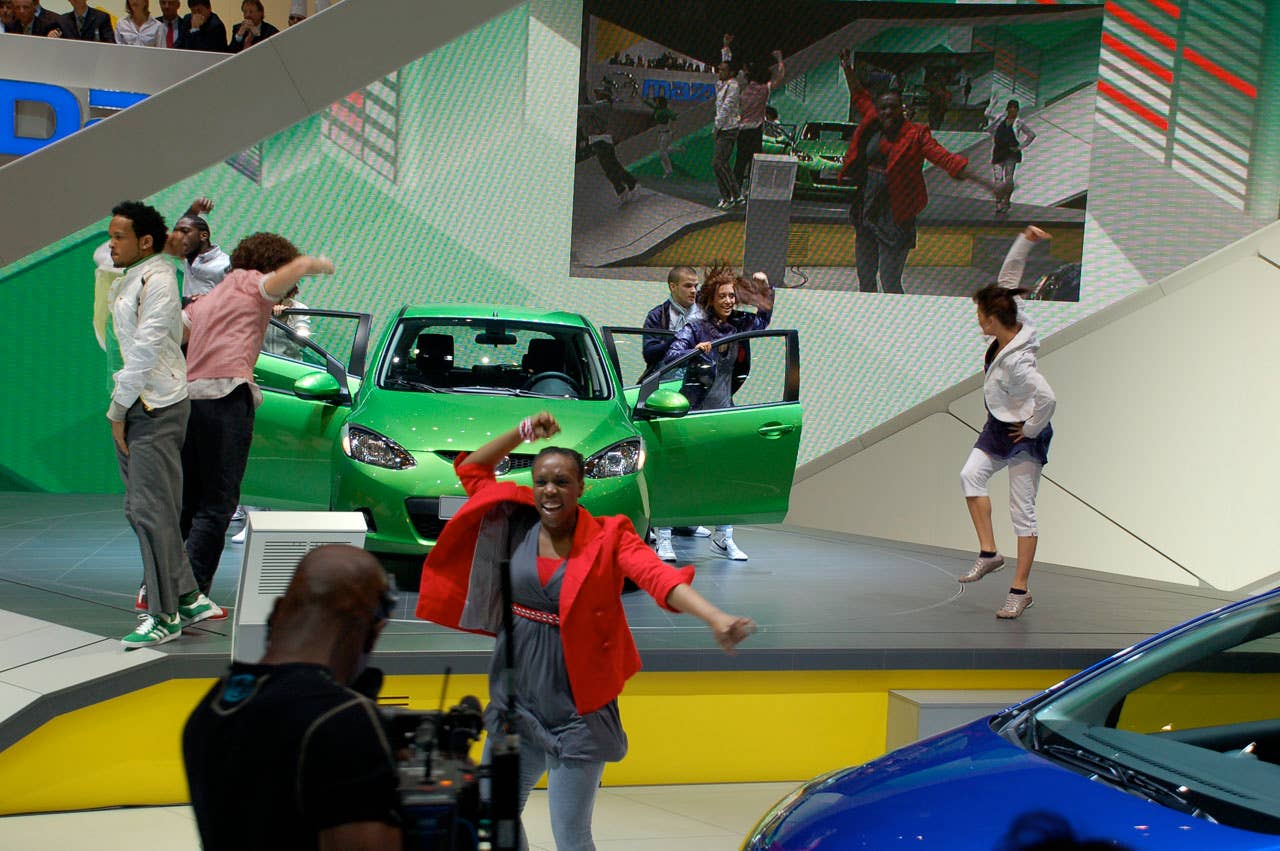
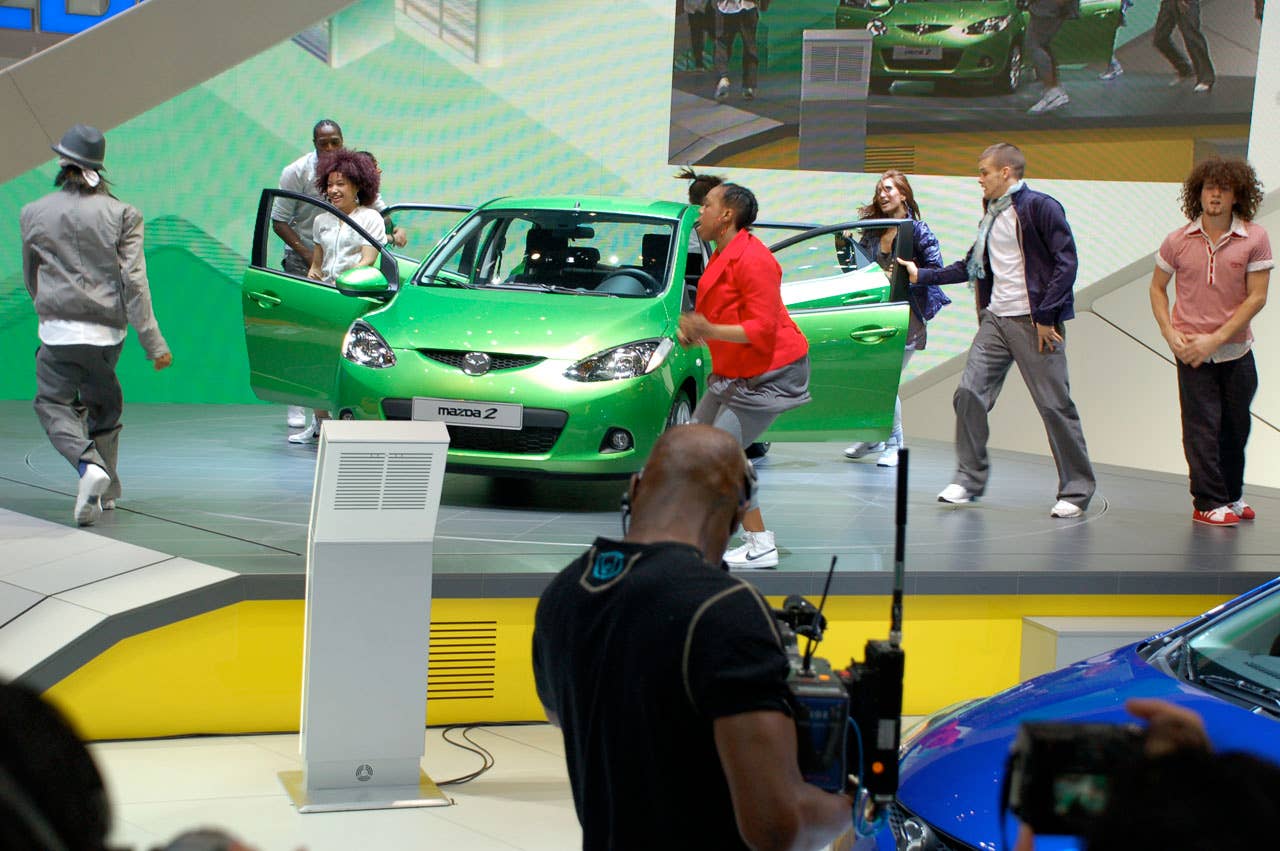
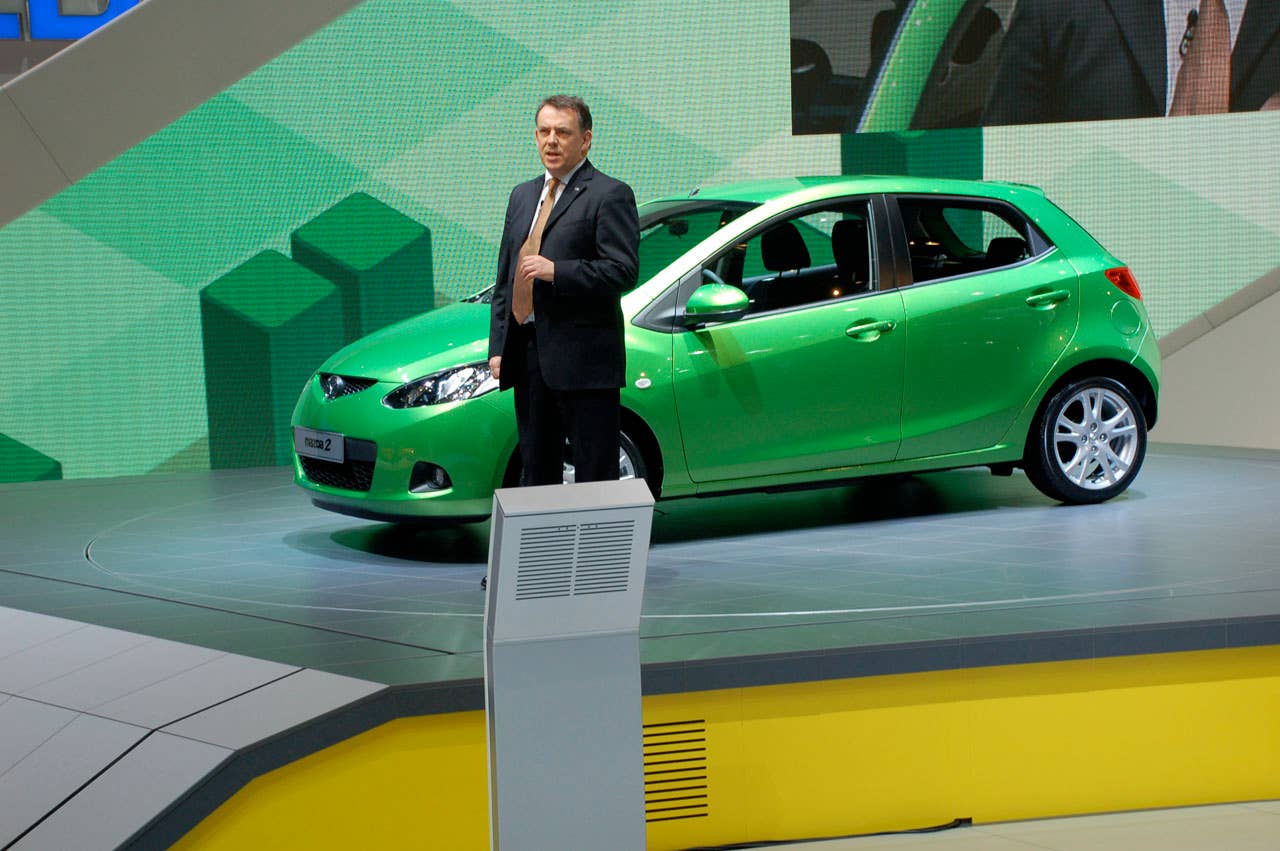




[Source: Mazda]
press release
Mazda Demios to be Base Architecture for Electric Vehicle Test Project
– Mazda to provide three Mazda Demios for the “Tsukuba Environmental Style Test Project” –
HIROSHIMA, Japan-Mazda Motor Corporation will collaborate with Itochu Corporation and other companies in conjunction with Tsukuba City on a joint project to test a low-carbon transport system which uses clean energy. The Tsukuba Environmental Style Test Project is scheduled to commence in March 2010 in Tsukuba city, near Tokyo, Japan.
The project aims to comprehensively assess a low-carbon energy network composed of electric vehicles (EVs), rapid chargers, fixed battery stations, solar panels and a car sharing service. Mazda will provide three Mazda Demios for conversion to EVs, and will assist in determining optimum vehicle specifications and evaluating vehicle performance.
In order to provide all its customers with driving pleasure as well as superb environmental and safety performance, Mazda has adopted a policy to comprehensively improve its internal combustion engines and then progressively combine them with electric devices. This process includes the i-stop idling stop system, regenerative braking and hybrid systems. Through its participation in the Tsukuba Environmental Style Test Project, Mazda aims to further strengthen the base of its future R&D activities. Mazda’s collaboration with various corporations and organizations will enable a broader knowledge base, including expertise related to EV infrastructure and the reuse of EV batteries. This will also benefit Mazda as it advances development of its electric drive technologies.
Going forward, Mazda will proactively work toward the establishment of a sustainable society and the evolution of environmental and safety technology based on its long-term vision for technology development, Sustainable Zoom-Zoom, which was announced in 2007.
About the Tsukuba Environmental Style Project
1. Main initiatives of the Tsukuba Environmental Style Test Project (each initiative will be the first case in Japan)
(1) Test the viability of reusing EV batteries in fixed battery stations
– Develop a system to reuse EV batteries in fixed battery stations, including remote battery monitoring technology.
(2)Test a model to optimally use renewable energy in EVs and in participating stores
– Using information and communications technologies (ICT) in conjunction with control and electricity storage technology, develop an effective system to optimally use electricity that is generated through solar panels, stored in fixed battery stations and supplied to EVs and participating stores.
(3) Test the viability of a new service to accelerate the establishment of a low-carbon transport society
– Introduce an EV car sharing system based at convenience stores.
– Test an integrated contactless smart card payment system for the rapid chargers and the car sharing service.
2. Participating organizations
Project leader
Itochu Corporation |
List of collaborating companies and roles & responsibilities
Family Mart | Provide sites for the project at convenience stores |
Itochu Enex | Provide sites for the project at service stations |
Tokyo R&D | Electric vehicle-related |
Th!nk (Norway) | Electric vehicle-related |
Kyuki | Supply rapid chargers |
EnerDel Inc. (US) | Supply vehicle batteries and fixed batteries |
Seiko Electric | Fixed battery system integration |
Itochu Techno-Solutions | Supply ICT technology, data center |
Windcar | Car sharing service operation |
Century Tokyo Leasing Corporation | Car sharing-related |
Nippon Car Solutions Co. | Car sharing-related |
Ecosystem Japan | Supply solar panel systems |
Mazda Motor Corporation | Electric vehicle-related (provide Mazda Demio vehicles) |
Advisory Committee
Tsukuba City |
National Institute of Advanced Industrial Science and Technology (AIST) |
Japan Automobile Research Institute (JARI) |
The Japan Research Institute, Limited |