
Featured Gallery

2019 Mazda MX-5
Autoblog
2019 Mazda MX-5
Autoblog
2019 Mazda MX-5
Autoblog
Mazda

2019 Mazda MX-5
Autoblog
2019 Mazda MX-5
Autoblog
Mazda

Mazda

Mazda

Mazda

Mazda

Mazda

Mazda

Mazda

Mazda

Mazda

Mazda

Mazda

Mazda

Mazda

Mazda

Mazda

Mazda

Mazda

Mazda

Mazda

Mazda

Mazda

Mazda

Mazda

Mazda

Mazda

Mazda

Mazda

Mazda

Mazda

Mazda

Mazda

Mazda

Mazda

Mazda

Mazda

Mazda

Mazda

Mazda

Mazda

Mazda

Mazda

Mazda

Mazda

Mazda

Mazda

Mazda

Mazda

Mazda

Mazda

Mazda

Mazda

Mazda

Mazda

Mazda

Mazda

Mazda

Mazda

Mazda

Mazda

Mazda

Mazda

Mazda

Mazda

Mazda

Mazda

Mazda

Mazda

Mazda

Mazda

Mazda

Mazda

Mazda

Mazda

Mazda

Mazda

Mazda

Mazda

Mazda
The next Mazda Miata is at the embryonic stage of development. The men and women in charge of the project are debating whether to electrify the roadster, or if it’s better to keep it true to its roots.
The Miata is not a high-volume model in any market, so it doesn’t need a plug to help Mazda comply with looming emissions regulations. The company explained it’s not a matter of compliance; it’s about how the definition of a sports car and the expectations of motorists could change in the 2020s.
“The preferences of people who enjoy driving sports cars might be changing, so we need to think about what direction society is going in. We want to look at the best powertrain to keep the vehicle lightweight, but because of the diversifying requirements and preferences, we need to explore various options,” Ikuo Maeda, Mazda’s global design director, in an interview with Autocar.
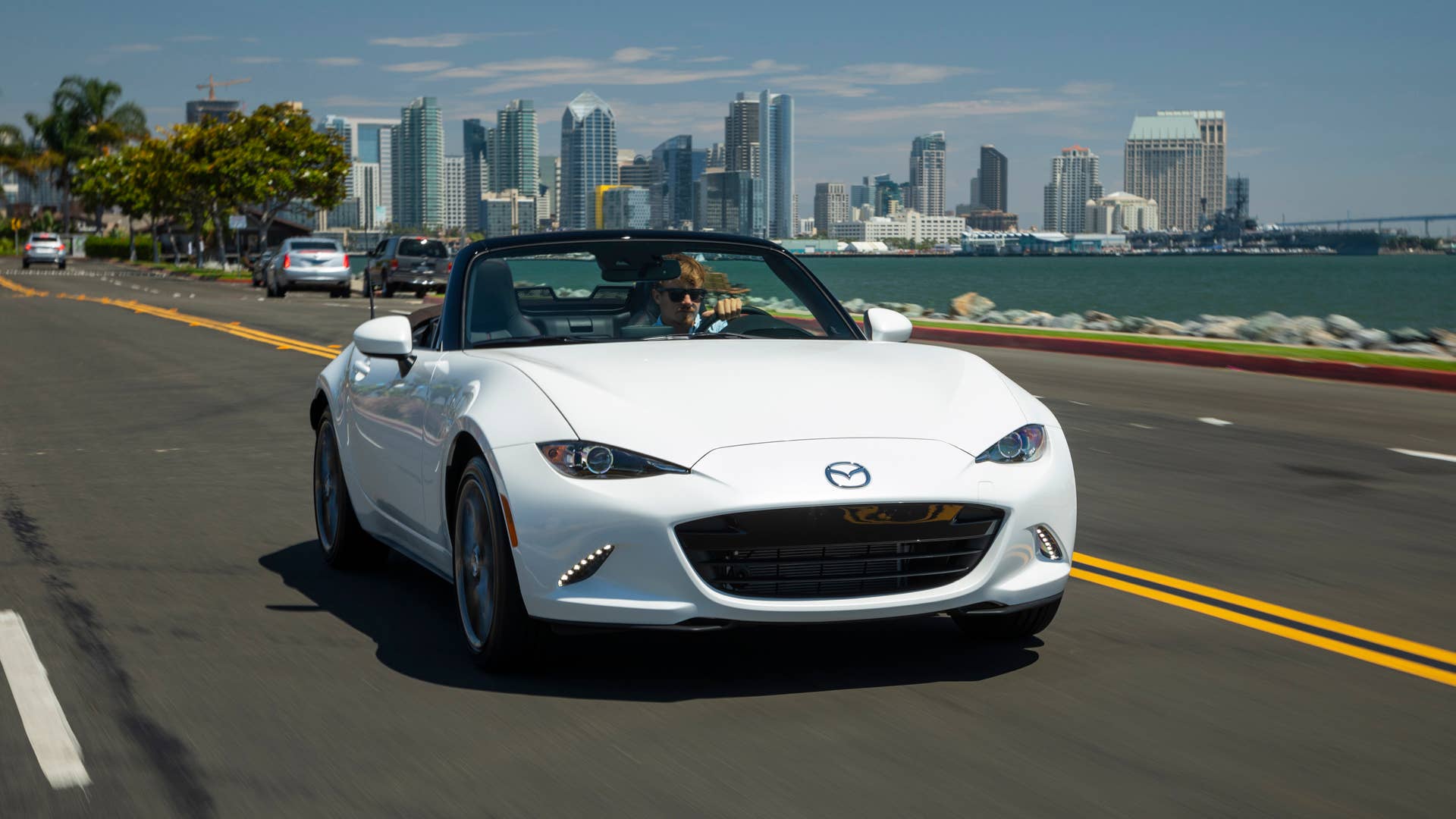
Adding any degree of electrification to the Miata beyond a relatively basic mild-hybrid system is easier said than done. An unusually low weight and a compact footprint defined the original model introduced in 1989, and these attributes continue to characterize the fourth-generation car (pictured) sold in 2019. Electrification requires batteries, batteries add weight and require space, and Mazda doesn’t want to end up with a 3,000-pound Miata, or one that’s the size of a Mercedes-Benz S-Class Convertible. Keeping its chassis balanced is a delicate task, too. Overcoming this challenge is not impossible, however, and batteries are expected to become lighter and smaller during the 2020s.
The next-generation Miata isn’t expected out until the middle of the 2020s, so Mazda has time to figure out whether it should go hybrid, arrive as an electric car, or carry on with a rev-happy, naturally-aspirated four-cylinder engine. Maeda stressed a final decision on the matter hasn’t been made yet.
“I don’t have the answer right now, but we need to make a vehicle that people can own without worrying that they are not being eco-friendly,” he concluded.