
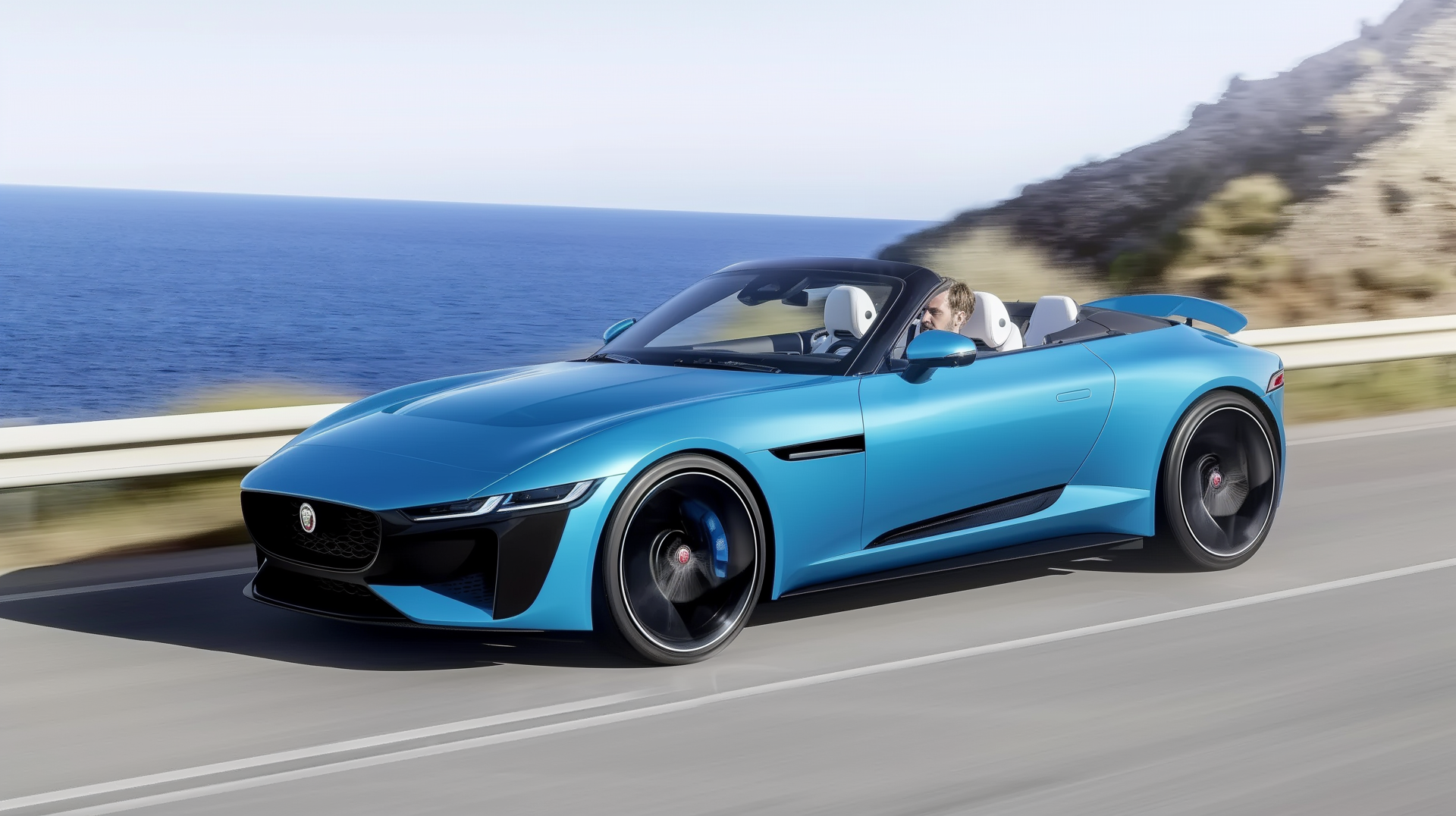
As Jaguar transitions its brand into its promised full-EV lineup, skepticisms have arisen concerning the viability of this bold approach. Throughout 2024, EV sales have seen a decline in global demand, which has been a major cause of concern for automakers who expected continuous growth over the years. Having poured immense resources into EV research and development it’s a bet that’s looking less likely to pay off.
Some manufacturers, such as Ford, have announced billions in losses from EV development. When you consider that many of these manufacturers still offer combustion-powered model lineups to buyers in the meantime, the future looks ominous for Jaguar, a brand which has had a historical difficulty turning a profit as is.
A marketing precedent for Jaguar to follow
Jaguar, being a brand known for its eclectic concentrations of performance, style, and supreme comfort, squanders its vibrant history and motorsport pedigree in its contemporary marketing strategies.
Take a look at Porsche, for example, a manufacturer that celebrates its history and injects its heritage into each and every one of its products. The 911 retains its position in the marketplace as the benchmark for all sports cars, and by bleeding its performance pedigree into the dynamics of its crossovers, the Macan and Cayenne, which have become the brand’s best-selling products.
Porsche have developed a product lineup strategy that transformed a niche sports car manufacturer once on the verge of bankruptcy into a global premium brand powerhouse. We believe Jaguar would be well-suited to employ a similar strategy.
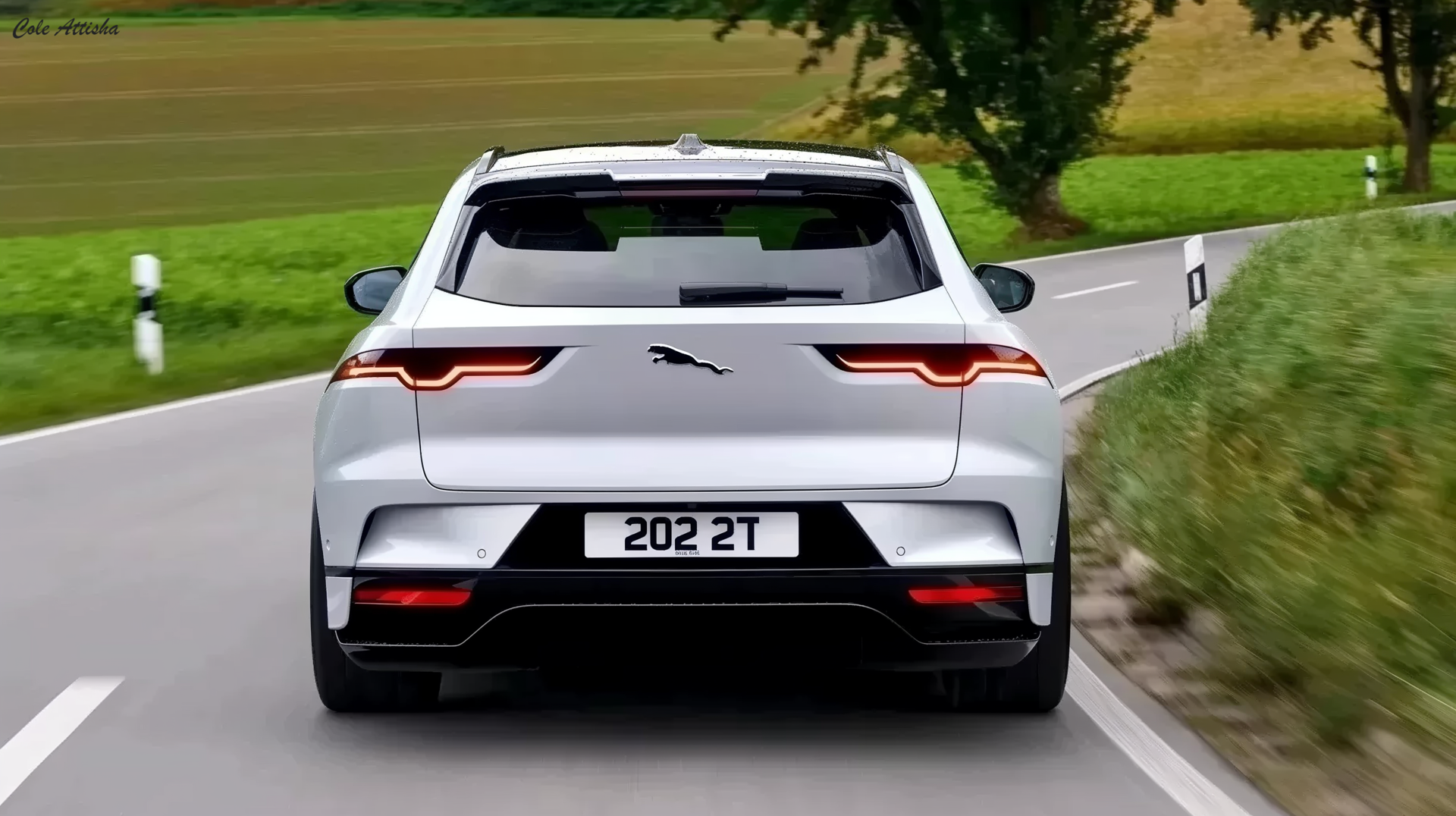
The following renders depict an imagined Jaguar product lineup for the upcoming 2025 model year, including a mix of combustion-powered and electric vehicles. Each visual render has been created using generative text-to-photo artificial intelligence software, employing official manufacturer press images as canvases.
Featured Gallery

Front Quarter
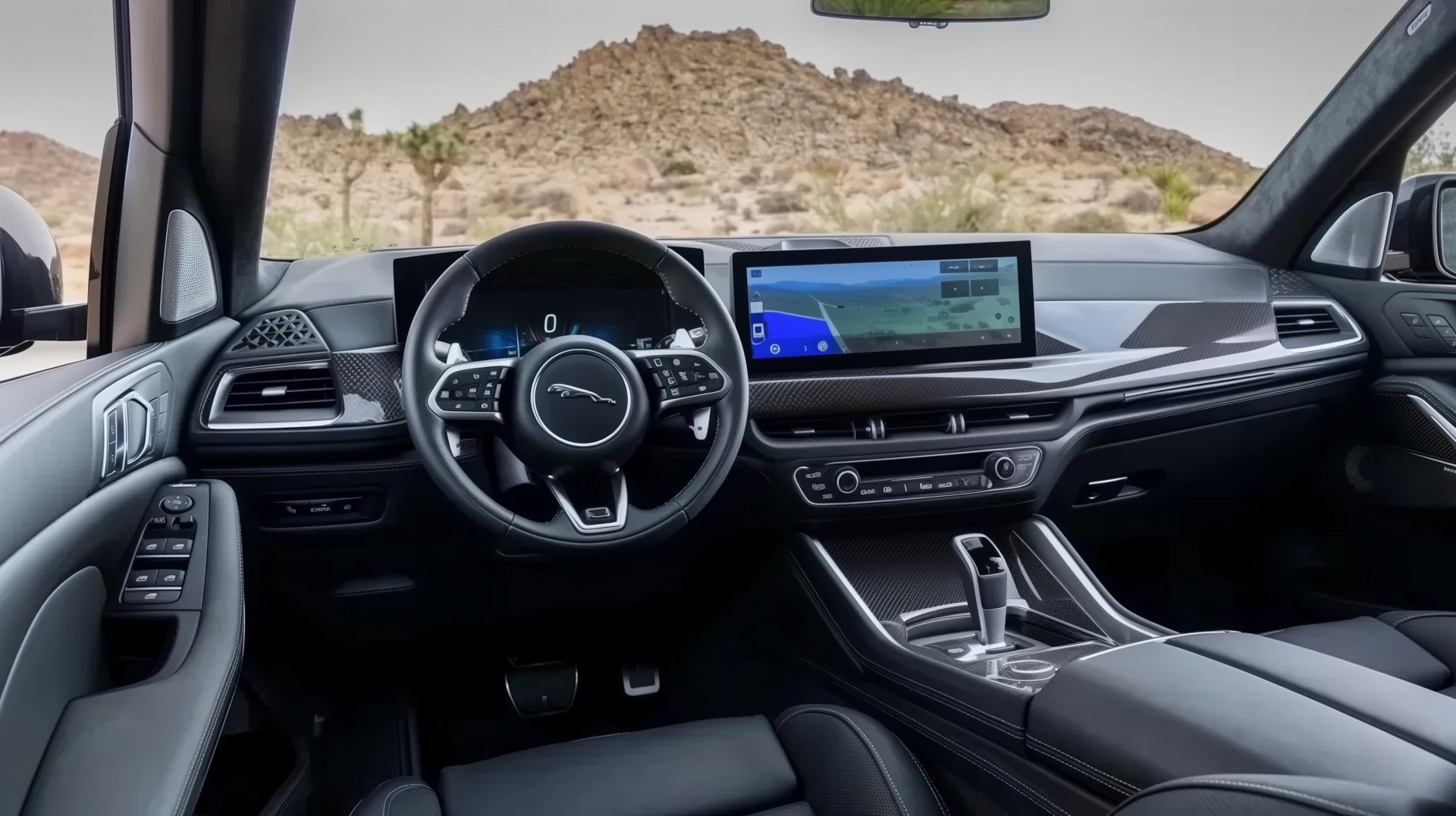
Cockpit
Jaguar F-Pace: Updating the proven best-seller
Upon its introduction to the automotive marketplace for in 2016, the F-Pace was the recipient of both the “2017 World Car of the Year” and “World Car Design of the Year” awards at the New York International Auto Show.
Following its celebrated release, the F-Pace quickly became Jaguar’s best-selling car, by a long shot, thanks to its everyday usability combined with the athletic driving dynamics Jaguar’s buyers expect and appreciate.
As diesels are being phased out in favour of hybridization, the current strategy of offering four unique powertrain levels in the F-Pace seems most viable for an updated model.
Jaguar’s turbocharged 2.0L Ingenium straight-four still serves as a solid base offering, offering 296 horsepower and 295 lb-ft of torque in the Land Rover Defender P300. This powertrain offering would allow the F-Pace to slot well under the Porsche Cayenne in its base form while still offering more potent powertrains for those willing to shell out the extra coin.
Featured Gallery
Cockpit
Two mid-level powertrains would be present, including the turbocharged and supercharged 3.0L straight-six, combined with a mild-hybrid system to produce 395 horsepower and 406 lb-ft of torque, offering a 47 horsepower surplus over the base Porsche Cayenne.
The alternative mid-level option would be turbocharged 2.0L plug-in hybrid variant of the Ingenium straight-four, which forks out 398 horsepower and 472 lb-ft of torque
To top off the F-Pace lineup would be the SVR, which itself presents an interesting dilemma in its hypothetical powertrain application. Jaguar could take the old-school route and include the most potent iteration of its supercharged 5.0L AJ V8, producing 592 horsepower in the XE Project 8. This would certainly keep brand loyalists satisfied and allow the F-Pace SVR to retain its unique charm and character that buyers have fallen in love with.
Alternatively, the F-Pace SVR could follow in the footsteps of the Range Rover Sport SV, replacing the antiquated 5.0L V8 with a BMW-sourced twin-turbocharged 4.4L V8 which provides 626 horsepower in its current Range Rover application.
This may prove tricky, as it would likely cannibalize both X5M and Range Rover Sport SV sales. However, this strategy seems to work well for Volkswagen, which uses their MLB Evo platform to underpin the VW Touareg, Audi Q7 & Q8, Bentley Bentayga, Porsche Cayenne, and Lamborghini Urus. If these models can still prove successful, then surely the sales cannibalization argument can be ruled out.
Featured Gallery

Front Quarter
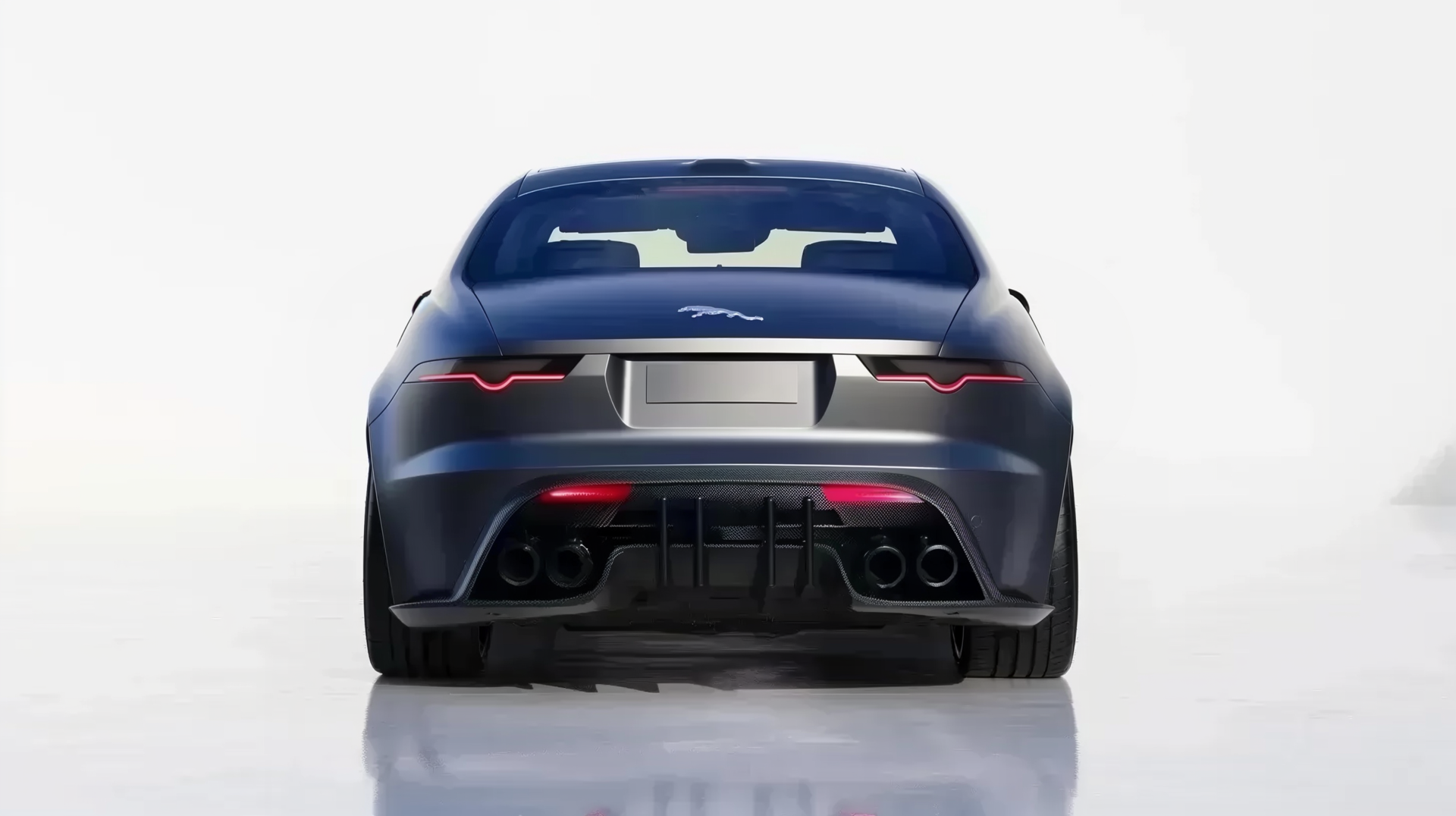
Rear Profile
Jaguar S-Type: The sport sedan for the Jaguar purist
Jaguar’s heritage for sport sedans dates back to the 1930s with the SS 2.5L “Sports Saloon”, which employed a recipe that combined a powerful, front-mounted engine with rear wheel drive, four doors, and two comfortable rows of seating. This recipe has lived on in Jaguar’s lineup, winning over the hearts of loyalists with the likes of the Mark II, the 420, the XJ, S-Type, XF, and more.
However, in recent years, Jaguar has almost entirely neglected its sport sedan heritage in favour of better-selling crossovers and the sport-focused F-Type. The XF still exists within the lineup, but since 2021, it has only been offered in North America with a lacklustre four-cylinder powertrain option.
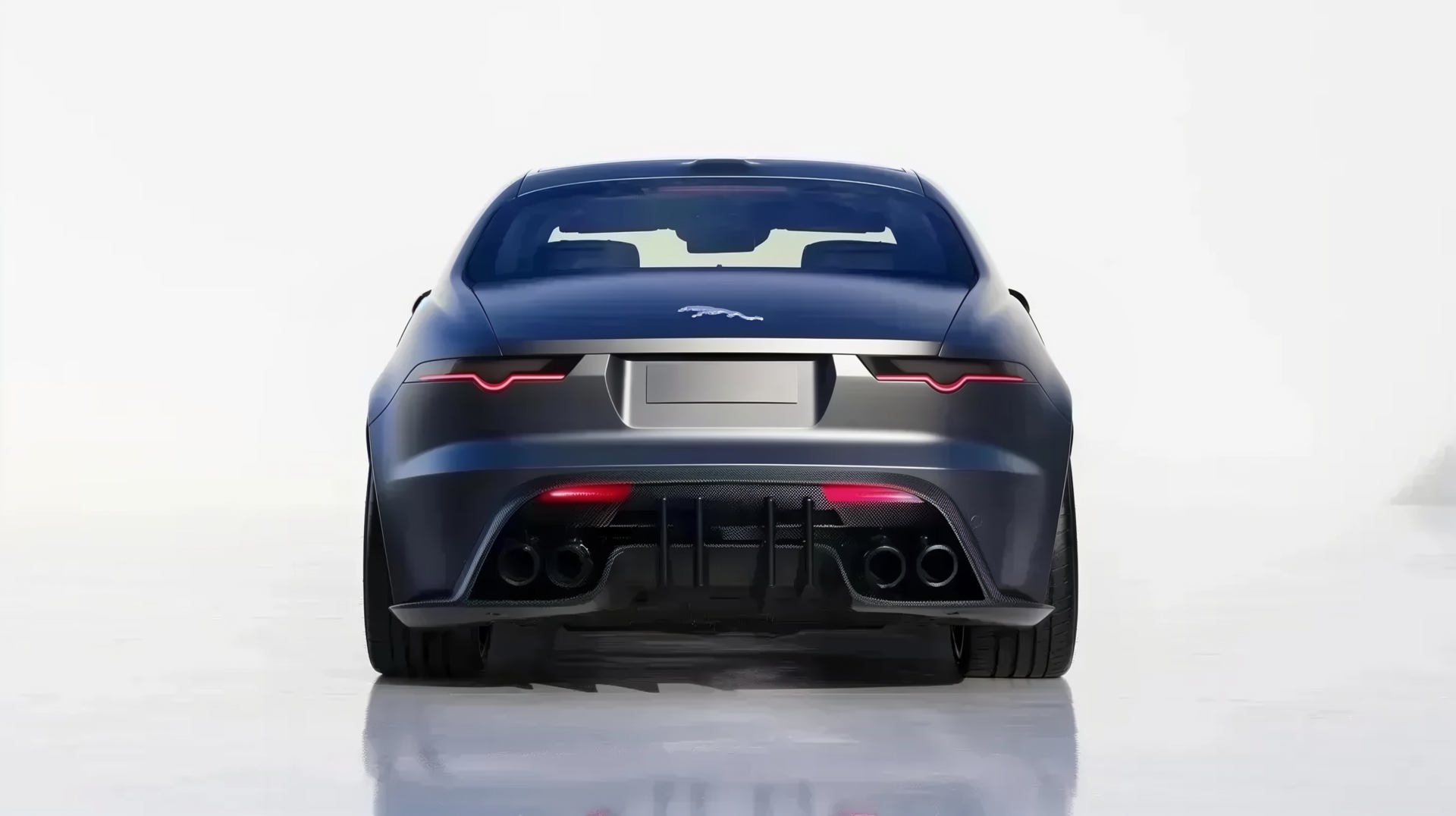
With the current XF, Jaguar demonstrates a failure to understand what buyers of Jaguar saloons of the past desire. By employing a lengthened variant of the F-Type platform, a new S-Type would offer substantial performance to underpin a comfortable cabin shrouded in style and sex appeal.
Powertrain options should match those of the F-Type, rather than those of the F-Pace, leaving the crossover to cater to buyers who prefer comfort to performance.
The reincarnation of the Jaguar S-Type would include the use of Jaguar’s turbocharged and supercharged 3.0L mild-hybrid straight-six, producing 395 horsepower, as the powertrain starting point, mated to a ZF-sourced eight-speed automatic and all-wheel drive.
For the Jaguar purists who require a V8 but want to maintain friendly relationships with their neighbours, the F-Type P450’s powertrain makes for the perfect middle-ground, offering a healthy yet modest 444 horsepower and 428 lb-ft of torque from a detuned, supercharged 5.0L AJ V8. This option would send power exclusively to the rear wheels.
For the Jaguar extremists, who will undoubtedly install a leaper hood ornament and remove the mufflers from the exhaust system, the S-Type R would offer the 592 horsepower variant of the V8 paired with all-wheel drive.
Sights aimed at Audi’s E-Tron GT: The Jaguar i-Type
Continuing with the theme of Jaguar’s sport saloon heritage, the inclusion of a fully-electric offering would honour Jaguar’s past while simultaneously ushering the brand into the future.
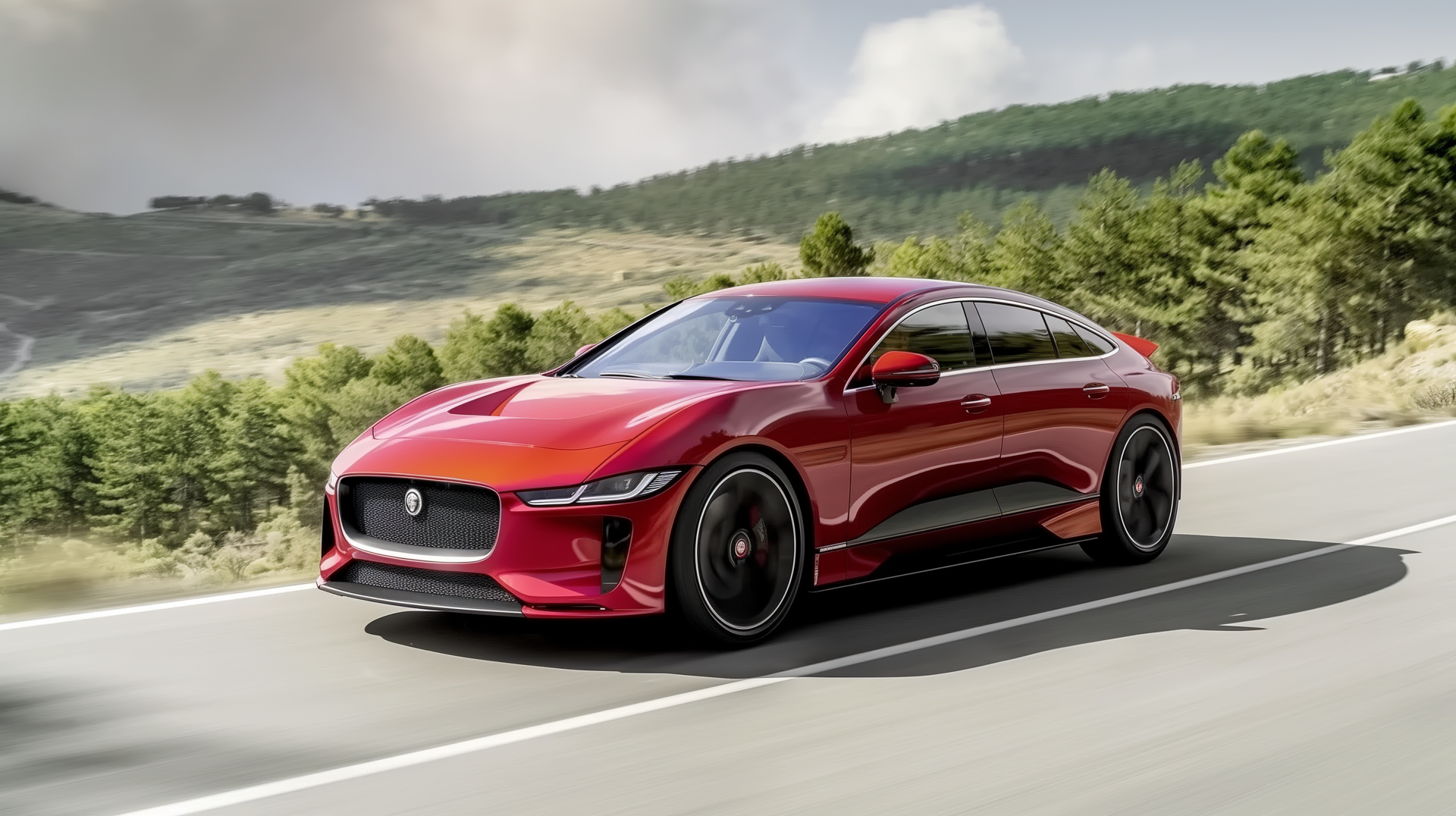
We know that Jaguar is currently in the development stages of producing such a model, but seeing its rather lengthy and large proportions in recent spy shots makes us wonder if Jaguar would have been better off targeting the likes of the Audi E-Tron RS, Mercedes-Benz EQE, and BMW’s i5. This would see the model aim at a lower price demographic and potentially offer better handling and overall performance.
Prolonging an institution: The Jaguar F-Type
The bedroom wall poster is a source for inspiration, reminding us each time we glance at its subject that if we work hard enough, maybe one day, it won’t be just a poster, but rather the real thing.
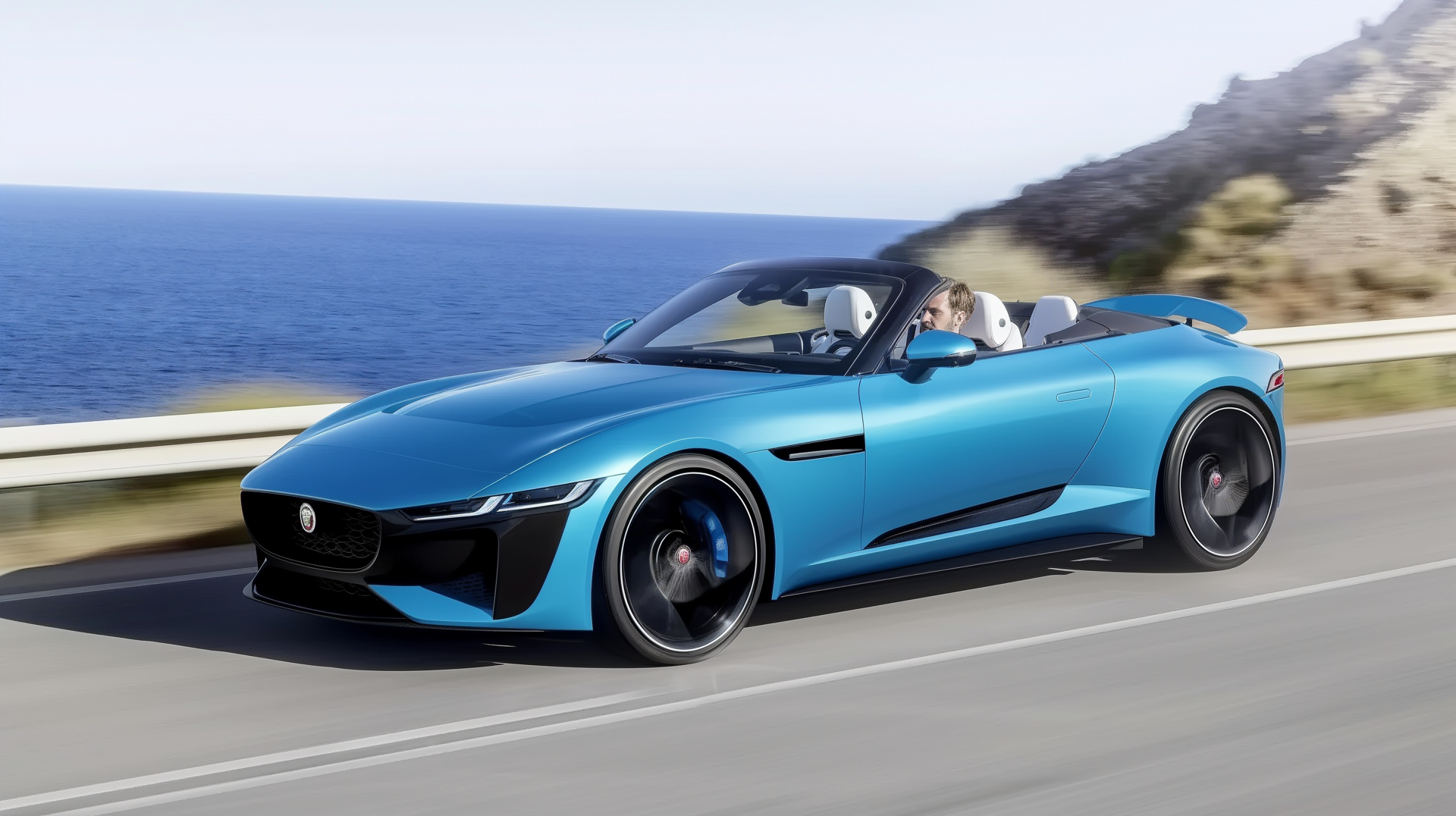
Jaguar’s sport coupes and roadsters of the past have possessed a remarkable ability to belong, proudly puttied on bedroom walls, alongside far more expensive Italian dream cars, and in favour of conservatively styled German dream cars.
Jaguar’s sports cars are not only a source of inspiration for enthusiasts, nor merely relatively inexpensive performance bargains when compared to German alternatives. Icons such as the legendary E-Type and XJS are sources of national pride for Great Britain.
The E-Type was given the stamp of approval by Italian automotive holiness when Enzo Ferrari claimed that it was “the most beautiful car in the world”, and the latter earned the respect of its German rivals during the 1980s when Tom Walkinshaw Racing dominated the European Touring Car Championship with a team of V12 XJS coupes, thanks to their superior power-to-weight ratio. TWR has since been revived to offer a limited run of incredible, supercharged-V12 powered XJS ground-up resto-mods.
The continuation of the Jaguar sports car legacy is necessary for the brand to retain its identity, something that has become more important for buyers in recent years as products become increasingly homogenized thanks to stringent industry regulations.
The F-Type has succeeded in prolonging Jaguar’s sporting legacy, and a major refresh of the model would mean retaining the beating heart of Jaguar’s model lineup. After all, how could something live without a heart?
Featured Gallery

Front Quarter
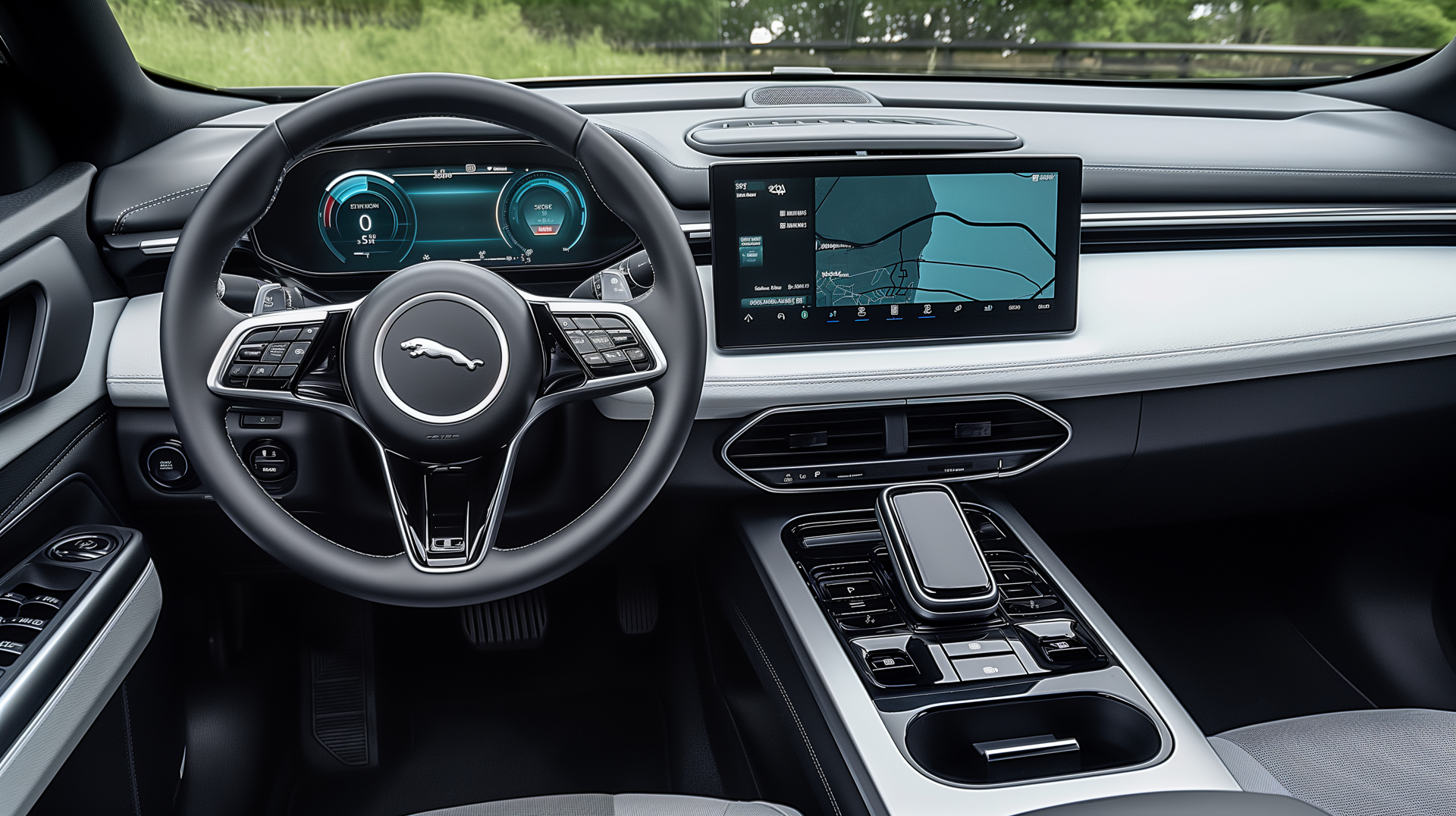
Cockpit
Romanticism be damned: Why Jaguar should look downmarket for a new EV offering
It may seem like pedantic romanticism to fantasize about a return to form for Jaguar, re-popularizing glamorous performance and timeless style. Imagining a budget-friendly, downmarket electric crossover most certainly is not that.
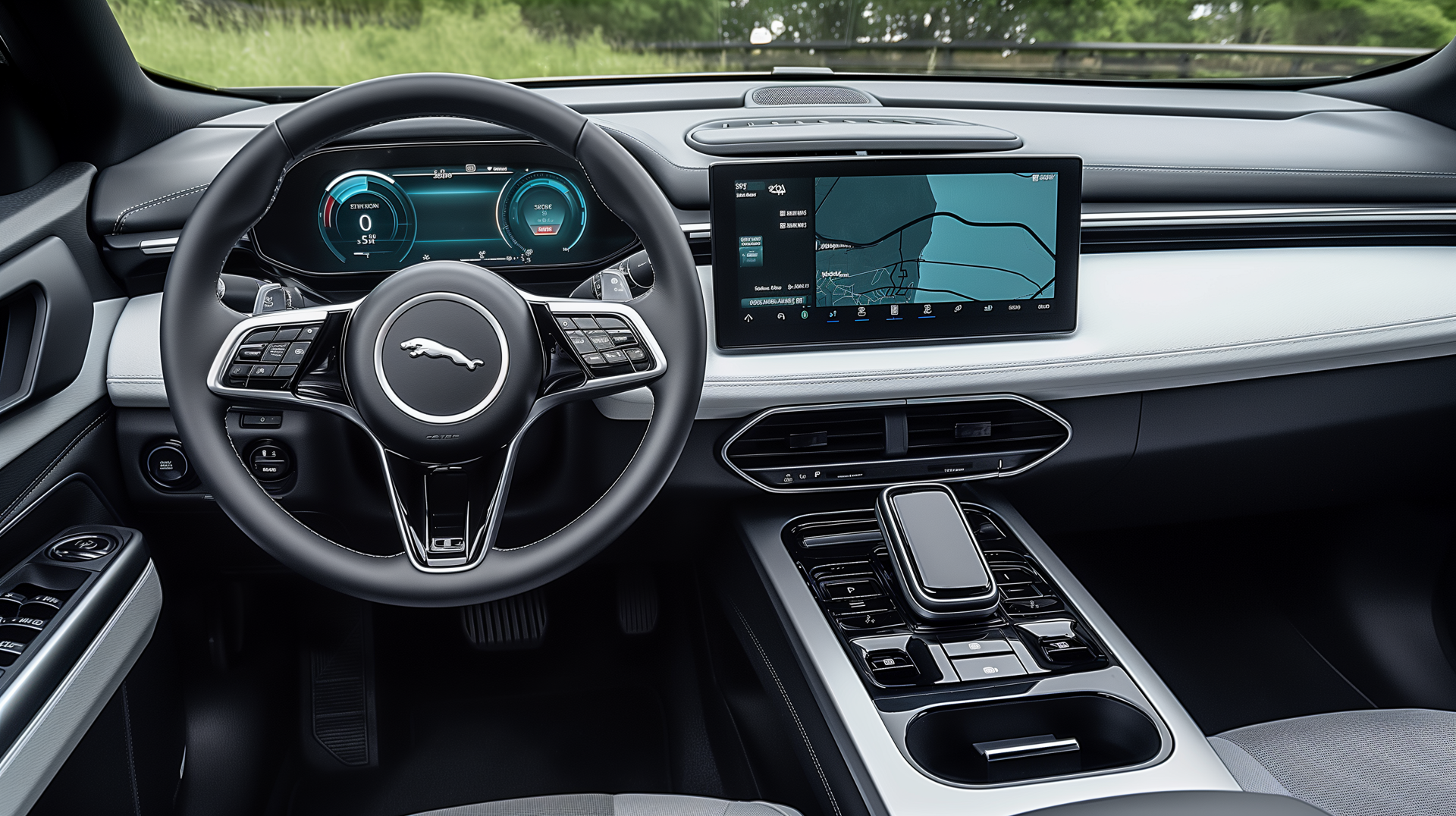
Based on the Tata Curvv EV, a fully-electric compact crossover designed for the Indian market, Jaguar’s research and development costs would be limited. This crossover would go up against the likes of the Hyundai Ioniq 5, VW’s ID.4, and Chevrolet‘s Bolt EUV, providing a slightly more upscale experience at a similar price point.
An estate wagon renaissance: The viability of a Jaguar S-Type Sportbrake
With the recent reintroduction of European sport sedans into the North American market, there is opportunity for Jaguar to exploit the cult following of its past station wagons. By offering a package with crossover practicality and sport saloon driving dynamics, station wagons are quickly replacing traditional saloons as the choice for buyers who dislike the drawbacks of crossovers.
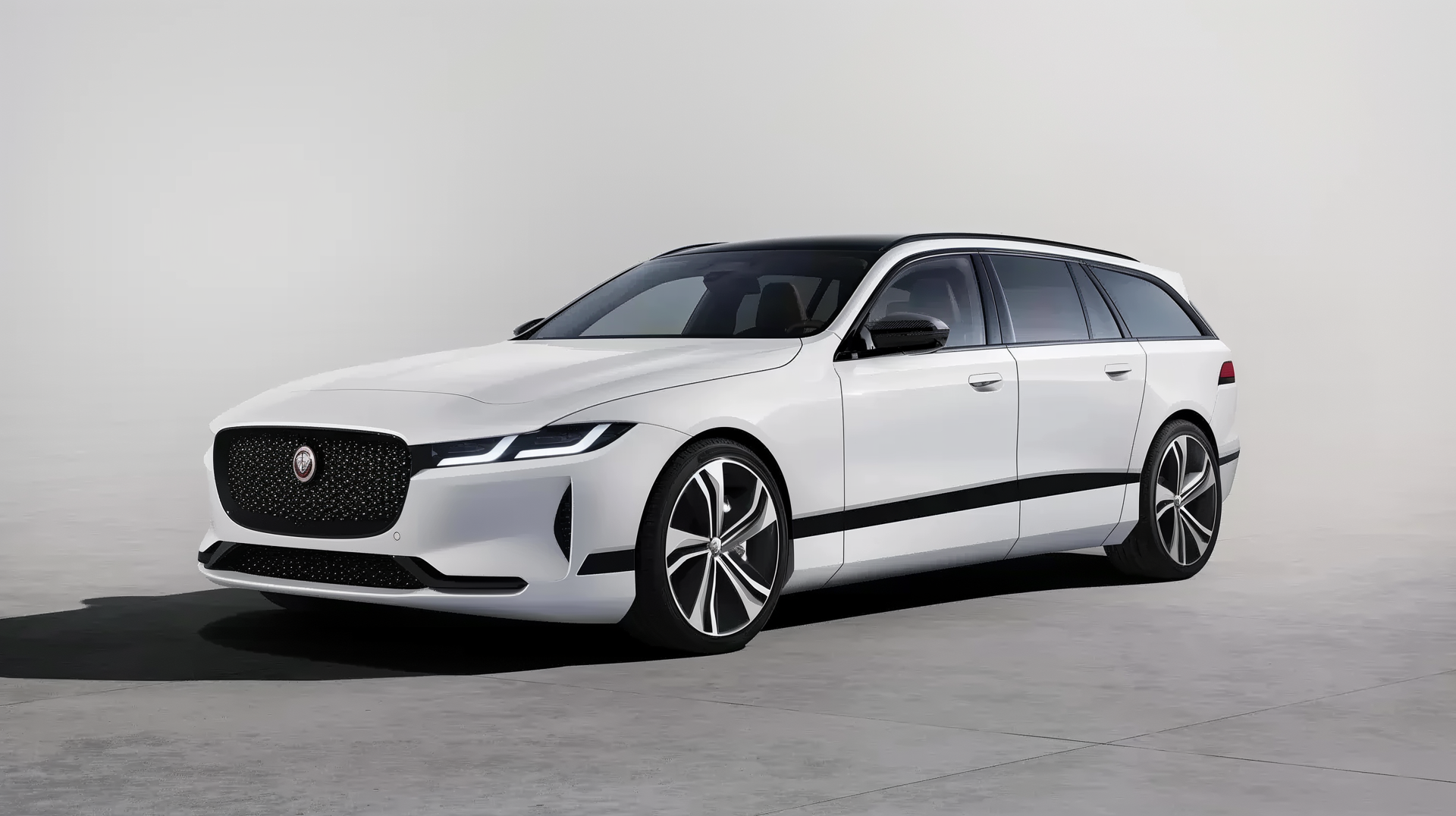
The S-Type wagon would directly rival the Audi A6 Avant, the Mercedes-Benz E-Class Estate, and the BMW i5 Touring. Jaguar could market the wagon in three formats: a softened premium estate, a rugged and lifted version akin to Audi’s Allroad, and a high-performance version to take on the RS6 Avant and M5 Touring.
Respectively, powertrain options would include the 296 horsepower turbocharged 2.0L Ingenium straight-four, 395 horsepower 3.0L straight-six, and 592 horsepower supercharged 5.0L AJ V8. The ZF-sourced eight-speed automatic and all-wheel drive would be standard features across the range.
Featured Gallery
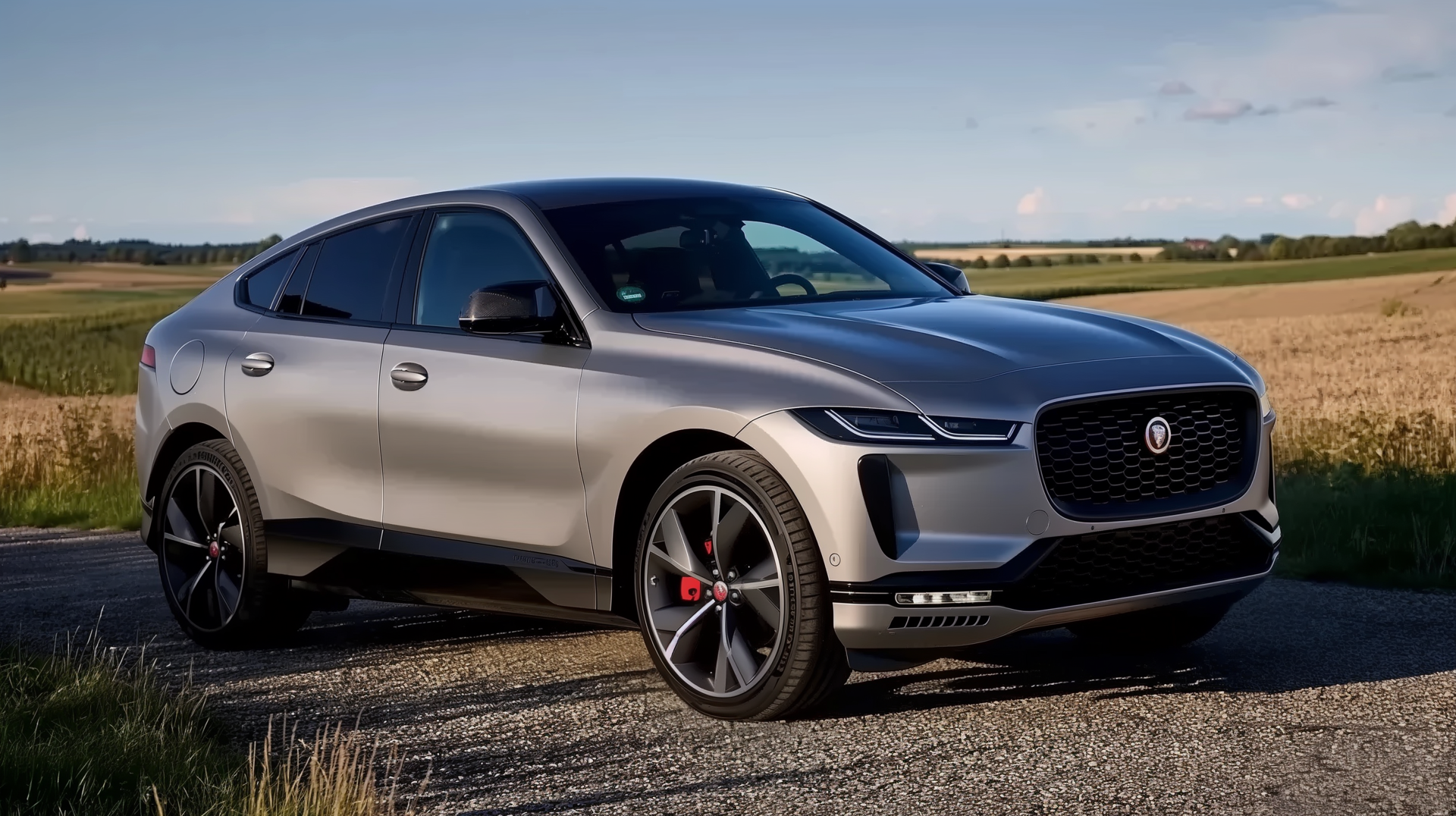
Front Quarter

Rear Quarter
A potential second best-seller: Jaguar R-Pace
Slotted beneath the F-Pace and replacing the unloved E-Pace, the R-Pace would represent a Macan fighter in Jaguar’s lineup. The R-Pace would offer the style of a coupe fused with the usability of a crossover, a perfect fit for the Jaguar brand ethos. The platform of choice would either be the current F-Pace platform or a slightly shortened version thereof.
Since Porsche has replaced the combustion-powered Macan with an EV-powered upgrade, there is an opportunity for Jaguar to scoop up previous Macan buyers who are hesitant or unwilling to give up their beloved exhaust notes and lighter handling dynamics. The R-Pace could do just that, offering up a choice between four-cylinder, six-cylinder, and possibly even some cheeky eight-cylinder powertrain options to tempt possible buyers.
Bringing Jaguar’s performance pedigree to the masses: Jaguar J-Type
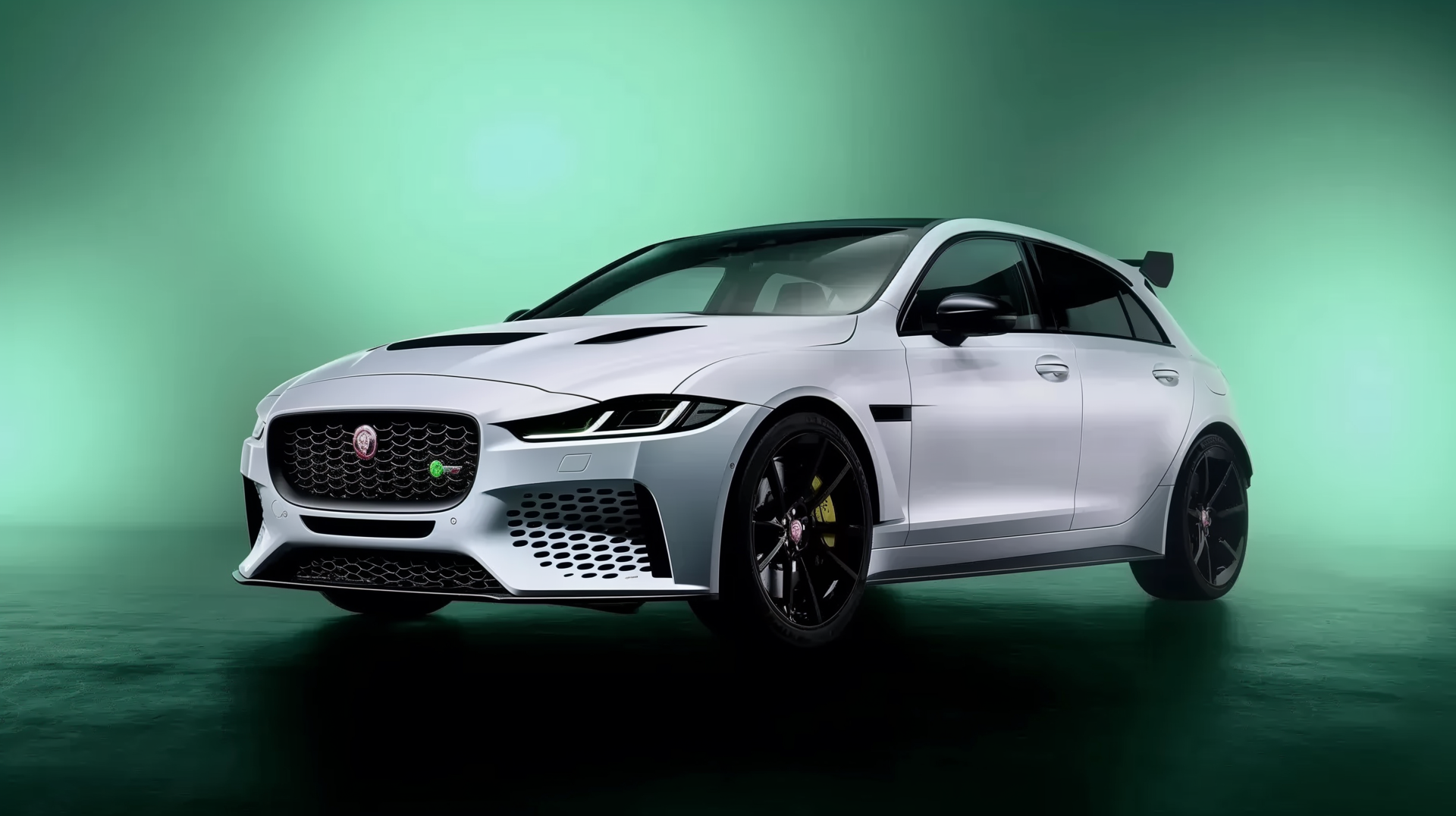
When Jaguar released the X-Type, a budget-friendly compact sedan that shared a platform with the Ford Mondeo, buyers were critical of its front-wheel drive architecture and uninspired performance. A “hot hatch” constructed on the current E-Pace platform could give Jaguar the opportunity to offer an accessible product without compromising excitement for savings.
Mercedes-Benz
Chasing down the Mercedes-AMG A45 and Audi’s RS3 Sportback, the J-Type SVR could use a modified version of Jaguar’s turbocharged 2.0L Ingenium straight-four with a power goal of almost 400 horsepower. Thrust would be routed to all four wheels through a dual-clutch automatic transmission and its exhaust would make Spitfire noises.
Of course, not every compact hatchback buyer needs to push the limits of understeer, and less expensive powertrain options would be included, such as the 247HP turbocharged 2.0L Ingenium straight-four found in the E-Pace. Unlike the SVR model, this would equip a ZF-sourced nine-speed automatic, also found in the E-Pace.
Should Jaguar honour its heritage or aspire to something new?
It seems the big philosophical question for Jaguar these days is whether to stick to tradition or aim for progressiveness. While it seems they have decided to bet on the latter, it’s hard to believe this will be a healthy long-term bet for the brand.
Even Porsche has recently decided to add combustion-engine options to their electric models, citing declining demand. For a relatively niche automaker with fewer comparable resources than major manufacturers, perhaps finding balance in their lineup is the key to success.
The hypothetical lineup above imagines a Jaguar brand philosophy that aims for an ideal balance of past and future. It offers provoking models that remind buyers of the brand’s achievements and celebrate Jaguar’s vibrant history, while including progressive new options that push the envelope of Jaguar’s innovative capability.
Do you have any suggestions for additional models in Jaguar’s hypothetical lineup? Do you think Jaguar’s big bet on EVs will pay off? Let us know in the comments, we’d love to hear what you think!
About the author

Cole Attisha
Staff Writer, Autoblog