
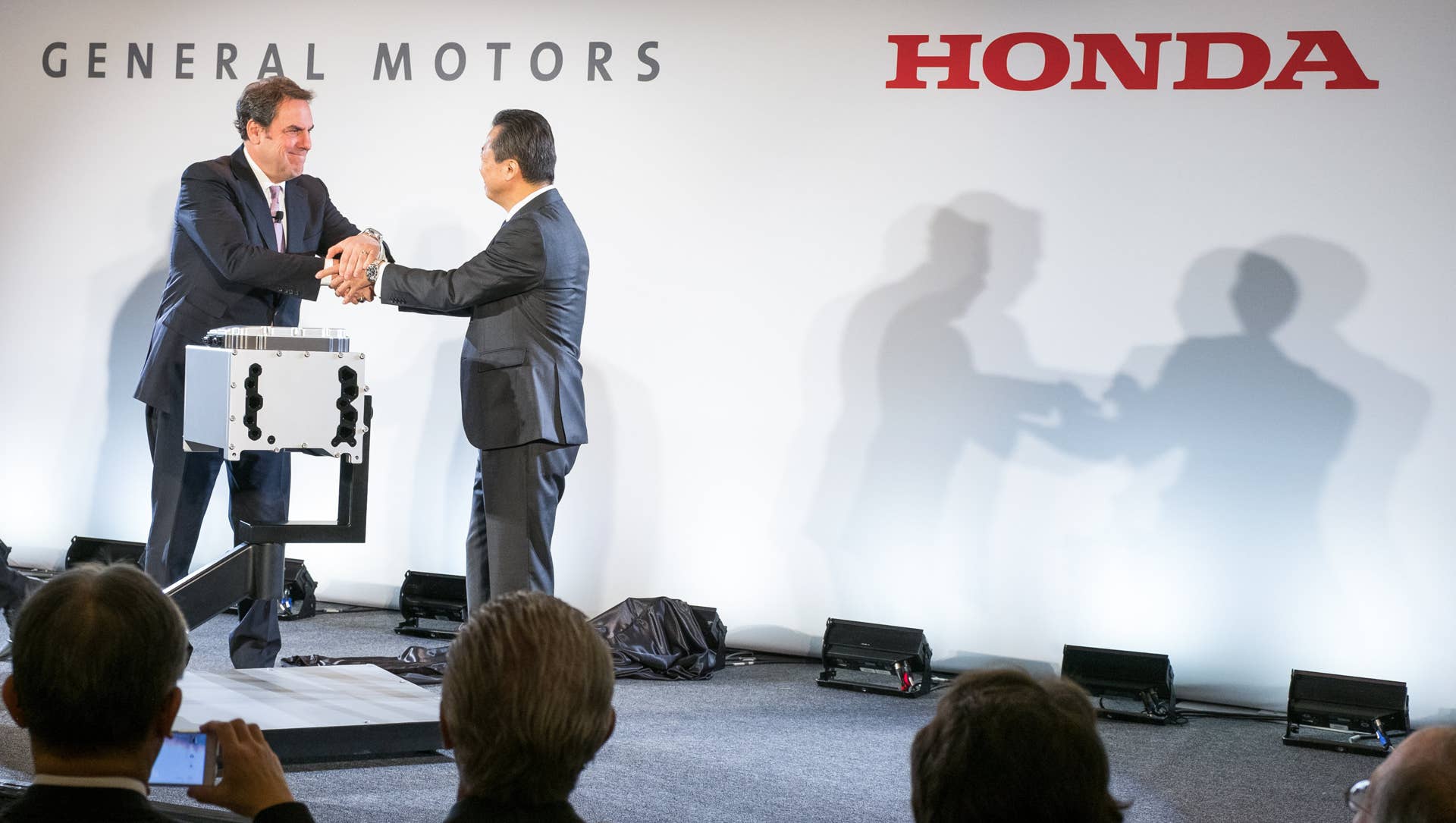
Honda and GM are working together on hydrogen fuel cells, and in fact
they have been for the past three years. The result of this joint venture is a new, more economical fuel cell stack that the two companies have codeveloped and will mass produce in Michigan by 2020.
The joint venture is unimaginatively called Fuel Cell System Manufacturing, LLC, and will produce the stacks at GM’s existing Brownstown battery facility outside Detroit. Today’s announcement touted an $85 million investment from the two companies and the creation of 100 jobs.
We’re told the new stack is roughly the same size as the one Honda currently uses in the Clarity FCV, but with fewer materials (including reduced use of precious metals) and is simpler in construction. There will also be more automation used in producing the newly designed stack. Both the simplicity and ease of manufacture should contribute to the lower cost that the joint venture is seeking to achieve.
We know Honda has committed to selling fuel cell vehicles like the
Clarity, while GM has tested several iterations of its Equinox FCV but never offered them for sale to the public. At today’s announcement, GM’s Mark Reuss said the company may “think outside the box” when it comes to applications, which we take to mean the fuel cell stacks could be used outside of automobiles. GM is currently testing fuel cells in aviation and maritime settings. All we know is that the new stacks will be used in future products from both companies.
While cost is one hurdle for fuel cell vehicles, the infrastructure for distributing the hydrogen has been and continues to be a major issue.
Related Video:
Video ID:
7bd01657-1545-3d2f-86ca-21158a49a965
Playlist ID:
Autoplay:
false
Mute:
false
Continuous:
false
Ad Key:
Ad Value: