
A police officer and college intern saved the life of an unconscious teenager on Sunday night, pulling the injured man from a burning car.
Officer Zac McDowell made multiple attempts to get into the burning car when he arrived on the scene in Urbandale, Iowa. The smoke was so thick, he couldn’t see the victim even as he crawled through the car.
“I’m no more than half a foot to a foot away from this guy’s head, and I still couldn’t see him,” McDowell tells Patch.com. “I look down, and I dropped my head to get away from the smoke, and I see part of a hand on the driver’s seat.”
As you can see in the video above, which police released without sound, McDowell pulls the victim, Ian Waseskuk, 18, from the burning wreck. Waseskuk was listed in serious-but-stable condition at a local hospital.
He was charged with reckless driving. Police said the accident began when Waseskuk was doing doughnuts in the snow-covered parking lot of a local church, spun out of control and hit an air-conditioning unit.
A college intern was doing a ride-along program with McDowell when they responded to the accident.
“I’m just really proud of myself that I was able to help out,” police intern Nick Schroeder tells KCCI-TV. “About the only thing that was going through my mind was trying to assist officer McDowell in getting the guy out as quickly as possible.”
Featured Gallery
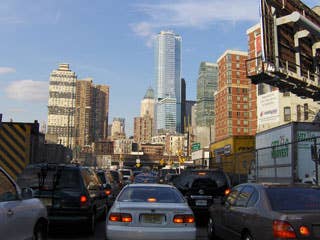
The vast majority of Americans — approximately 250 million — live in or around a city. That means most of you know how frustrating it can be to putter along traffic-choked roads and sit in endless delays.
And traffic doesn’t only cost time. Drivers lose money idling away their gasoline.
There are a number of studies that analyze exactly how much time and gas drivers fritter away. When you combine the two factors, and add in a look at overall population density, you can get a more complete, city-by-city look at the worst overall cities to operate a car.
The folks atNerdWallet.com did just that. Using data from a study done by the Texas Transportation Institute on the annual hours commuters spend in traffic delays, gas price data from 304 different urban areas compared to the national average and census information on population density to give the 50 largest metropolitan areas a final score.
The lower the overall score, the worse for the city’s drivers. Here’s a look at their 10 worst cities, and here’s hoping you’re not on the roads of these cities today:
Image Credit:Joe Shlabotnik, Flickr

Annual hours of delay per commuter: 48
% Difference between cost of a gallon of gas and national urban average: -2.71%
Population density (people per square mile): 11,379.5
Overall score for car owners: 58.2
Image Credit:dennis, Flickr
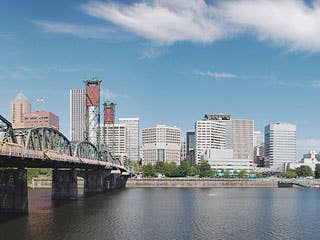
Annual hours of delay per commuter: 44
% Difference between cost of a gallon of gas and national urban average: +15.16%
Population density (people per square mile): 4,375.3
Overall score for car owners: 55.1
Image Credit:Si1very, Flickr
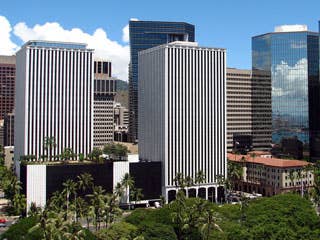
Annual hours of delay per commuter: 45
% Difference between cost of a gallon of gas and national urban average: +17.28%
Population density (people per square mile): 5,572.6
Overall score for car owners: 51.3
Image Credit:lrargerich, Flickr
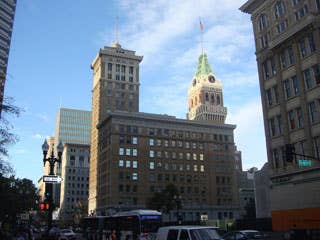
Annual hours of delay per commuter: 61
% Difference between cost of a gallon of gas and national urban average: +5.38%
Population density (people per square mile): 7,004.0
Overall score for car owners: 49.4
Image Credit:Chris and/or Kevin, Flickr

Annual hours of delay per commuter: 67
% Difference between cost of a gallon of gas and national urban average: -3.07%
Population density (people per square mile): 9,856.5
Overall score for car owners: 48.9
Image Credit:dherman1145, Flickr
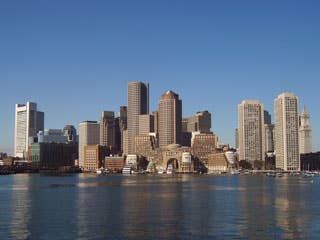
Annual hours of delay per commuter: 53
% Difference between cost of a gallon of gas and national urban average: +3.04%
Population density (people per square mile): 12,792.7
Overall score for car owners: 48.7
Image Credit:Willem van Bergen, Flickr
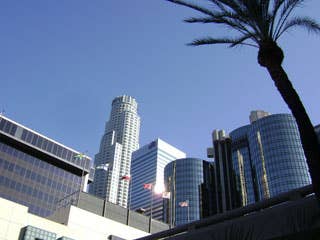
Annual hours of delay per commuter: 61
% Difference between cost of a gallon of gas and national urban average: +7.24%
Population density (people per square mile): 8,092.3
Overall score for car owners: 46.5
Image Credit:RodneyRamsey, Flickr
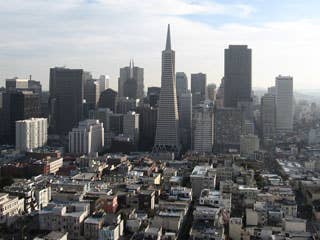
Annual hours of delay per commuter: 61
% Difference between cost of a gallon of gas and national urban average: +5.75%
Population density (people per square mile): 17,179.2
Overall score for car owners: 36.1
Image Credit:moonlightbulb, Flickr
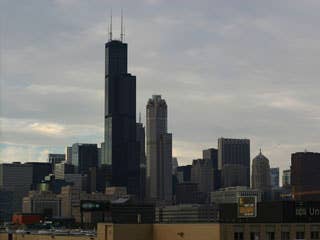
Annual hours of delay per commuter: 51
% Difference between cost of a gallon of gas and national urban average: +30.30%
Population density (people per square mile): 11,841.8
Overall score for car owners: 29.1
Image Credit:grendelkhan, Flickr
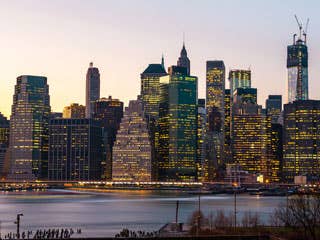
Annual hours of delay per commuter: 59
% Difference between cost of a gallon of gas and national urban average: +7.67%
Population density (people per square mile): 27,012.4
Overall score for car owners: 23.2
Image Credit:danielfoster437, Flickr