
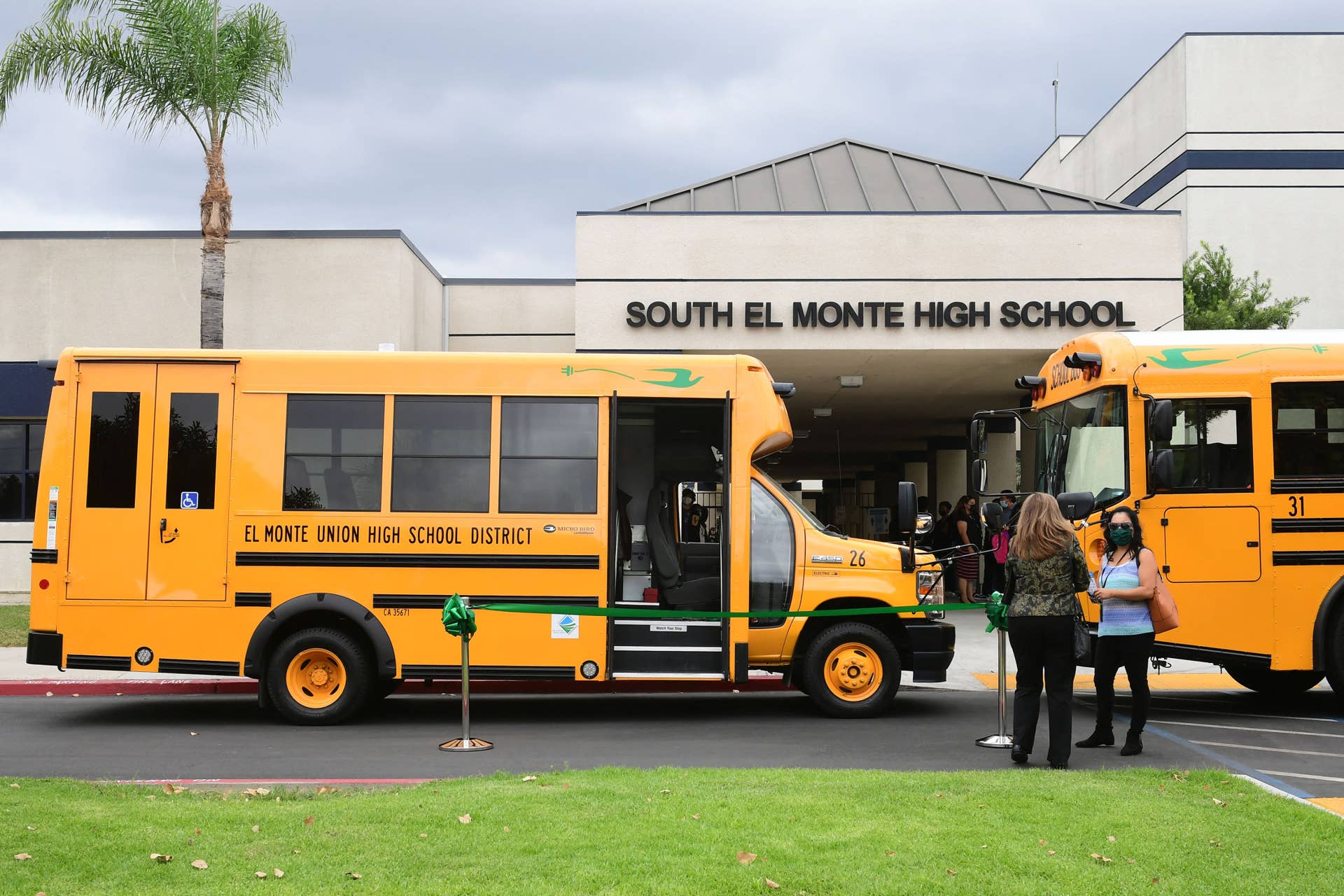
As part of the Bipartisan Infrastructure Law, the EPA is making a total of $5 billion available to school districts to replace old diesel or gasoline buses with electric, CNG or propane buses. The funding will be spread out over five years, with $500 million available in the first year.
The goal is to both reduce greenhouse gases as well as provide cleaner local air. The EPA also noted the potential for lower fuel costs as well as the ability to use electric buses as storage batteries, potentially for back-up power.
Eligibility for the government rebates depends on a few factors, as does the amount of money provided for replacement buses. School districts classified as high-need, rural and/or in Tribal communities will get priority when applying. Also, while CNG and propane buses are eligible to be purchased with these rebates, they get significantly lower rebates than electric buses. Previously mentioned priority districts will be eligible for additional funding, too. The EPA will also make available rebates for installing electrical panels and charging equipment for school districts that opt for electric buses. Finally, older buses being replaced (primarily diesel buses from 2010 or earlier) must be scrapped. Models from 2011 or newer can be sold or donated as an alternative.
School districts can start applying for this funding now through August 19, and they can apply for funding to replace as many as 25 buses. The selection process begins in September, with recipients being notified in October. Naturally, there will be additional rounds of submissions and selections for the remaining five years and $4.5 billion in funding.
Related Video: