
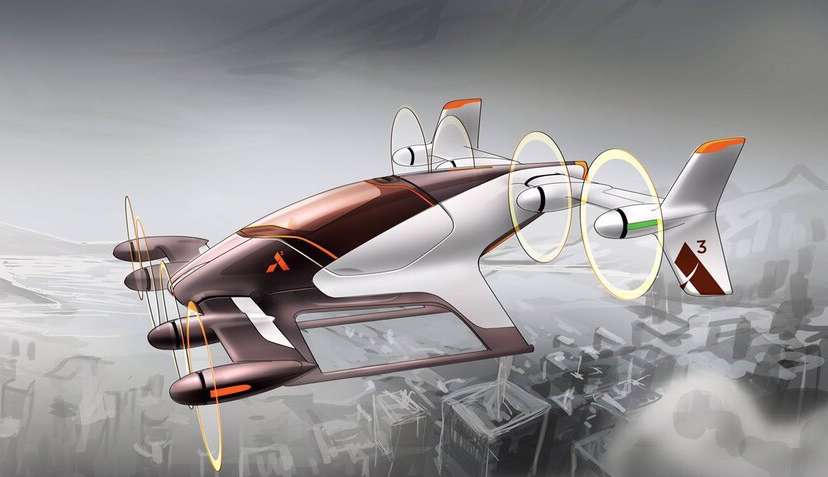
Apparently, Vahana is
a Sanskrit word that “denotes the being, typically an animal or mythical entity, a particular Hindu deity is said to use as a vehicle.” Put more simply, Vahana is a vehicle fit for a god. Or, if you’re
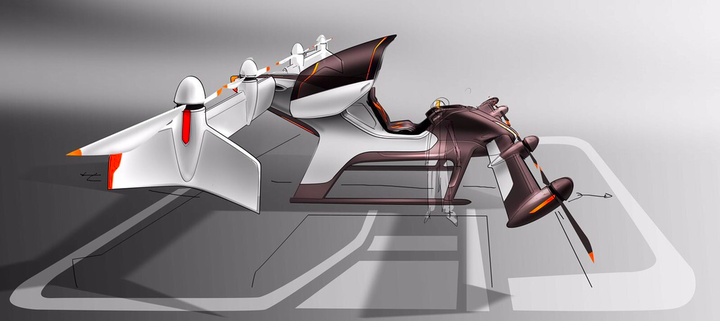
A3 (that’s A Cubed), a Silicon Valley-based subsidiary of Airbus, Vahana is the name of a fully electric autonomous vehicle. And not just any autonomous vehicle –
this is airborne travel. As you’d expect from Airbus, Vahana travels in the sky, not on roads.
A3 hopes to have a full-size prototype ready to fly by the end of 2017, and an actual demonstrator is scheduled to follow by 2020. “Full automation also enables us to make our aircraft as small and light as possible, and will significantly reduce manufacturing costs,”
according to company CEO Rodin Lyasoff. To what end? “Beyond developing the vehicle itself, we’re seeking to move key technology categories forward, foster development of the regulatory regime for the certification and operation of automated aircraft, and to otherwise nurture an ecosystem that will help enable the vertical cities of the future,” says Lyasoff.
And what about safety? Not to worry. Vahana only has room for a single passenger, and there’s an onboard “ballistic parachute that works even at low altitudes.” Still, building a self-flying vehicle is bound to be rife with challenges. There are regulatory hurdles galore, not to mention what we’re sure is going to be a very high cost of entry. We’ll see how it goes.
Related Video:
Video ID:
a5196204-a9b9-3dc9-bc49-1d5a67a6041f
Playlist ID:
Autoplay:
false
Mute:
false
Continuous:
false
Ad Key:
Ad Value: