
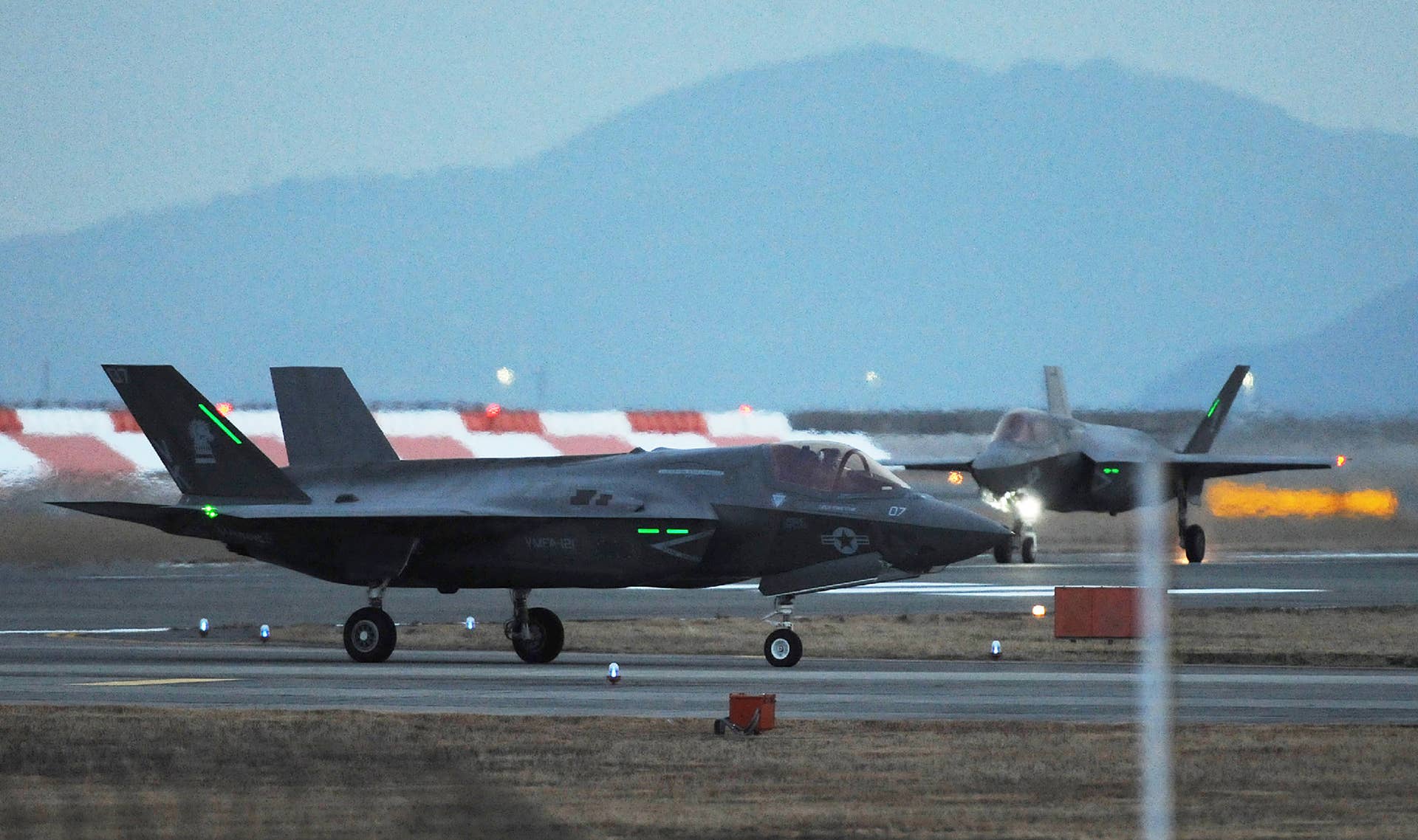
The United States Navy has 10 Nimitz-class aircraft carriers, eight Wasp-class amphibious assault ships, one America-class amphib ship. Each of these can launch the new F-35 Lightning II, whether in catapult-assisted C variant or short-takeoff and vertical landing B trim. That’s 19 Lightning-capable of ships. And now, we can officially kick that figure up to 20.
Defense News reports Secretary of Defense Ash Carter and British Defense Secretary Michael Fallon officially inked a deal to deploy US Marine Corps F-35Bs on the Royal Navy’s new carrier, HMS Queen Elizabeth. The American aircraft will join the British ship on her first operational deployment, in 2021. The deal is advantageous for both sides of the long-running alliance – for a start, both the USMC and the Royal Navy will fly the F-35B. Eventually.
The Royal Navy has struggled to fund a purchase program to deploy aircraft on the first Queen Elizabeth-class carrier, and won’t start aircraft trials with British F-35s until late 2018. The QE won’t have a suitable number of British-flagged fighters until 2023, so attaching Marine F-35Bs gives the Royal Navy’s carrier a reason to exist during its first deployment. It’s unclear if American aircraft will deploy to the second Queen Elizabeth-class carrier, the HMS Prince of Wales – she’s currently two years behind schedule and probably won’t be commissioned this decade.
For the Marines, the benefit is obvious – yet another platform to deploy from. It also provides a nice balance to the British sailors serving aboard US Navy carriers, where they’re honing their skills in preparation for service on the Royal Navy’s twin flattops.
“Embarking USMC F-35s does get the UK out of an embarrassing position of having a lot of floating real estate with very little to go on it. But it’s convenient for both sides and there is operational utility in such a policy,” Doug Barrie, a senior air analyst at the International Institute for Strategic Studies, told Defense News.