
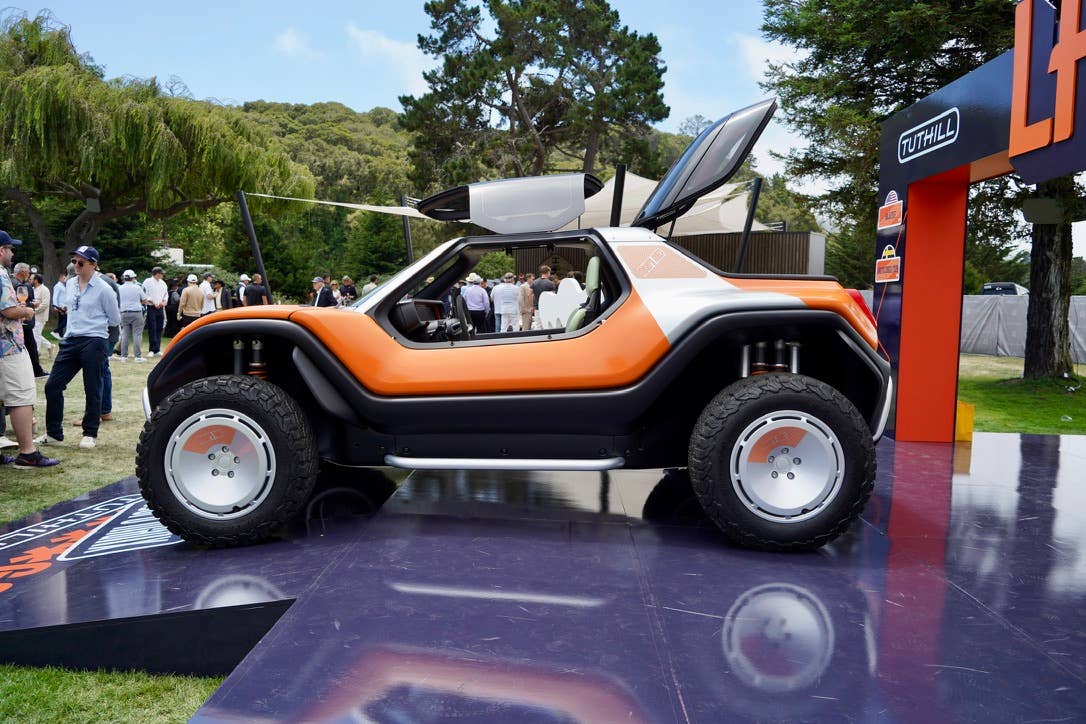
While a dune buggy may not fit with your lifestyle, deep down, you know you want the lifestyle that fits with a dune buggy
Since Bruce Meyers created the original Meyers Manx in 1964, the rebodied VW Beetle has been a cultural icon that represents California surf culture. But it’s more than that. The original Manx was lightweight, fun to drive, and could be considered a forerunner of the SUVs that are ubiquitous today. More importantly, it was designed to win races, like the Mexican 1000, the forerunner of today’s Baja 1000. In fact, prior to the Manx tackling the Baja Peninsula, it was thought that no car could ever beat a motorcycle in the sandy environment.
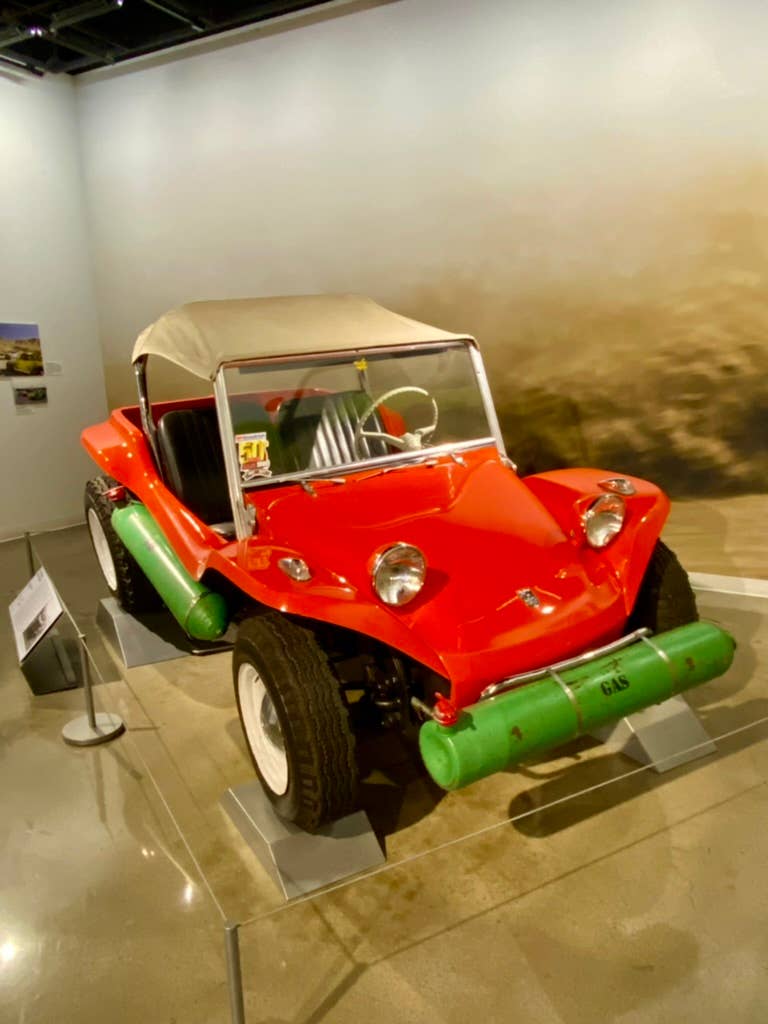
This Manx, Old Red, was the first of thousands to have been built. But 50 years later, the Meyers Manx company languished. Enter Phillip Sarofim and legendary car designer Freeman Thomas. They purchased the company with Meyers’s blessing and set about reinventing the brand.
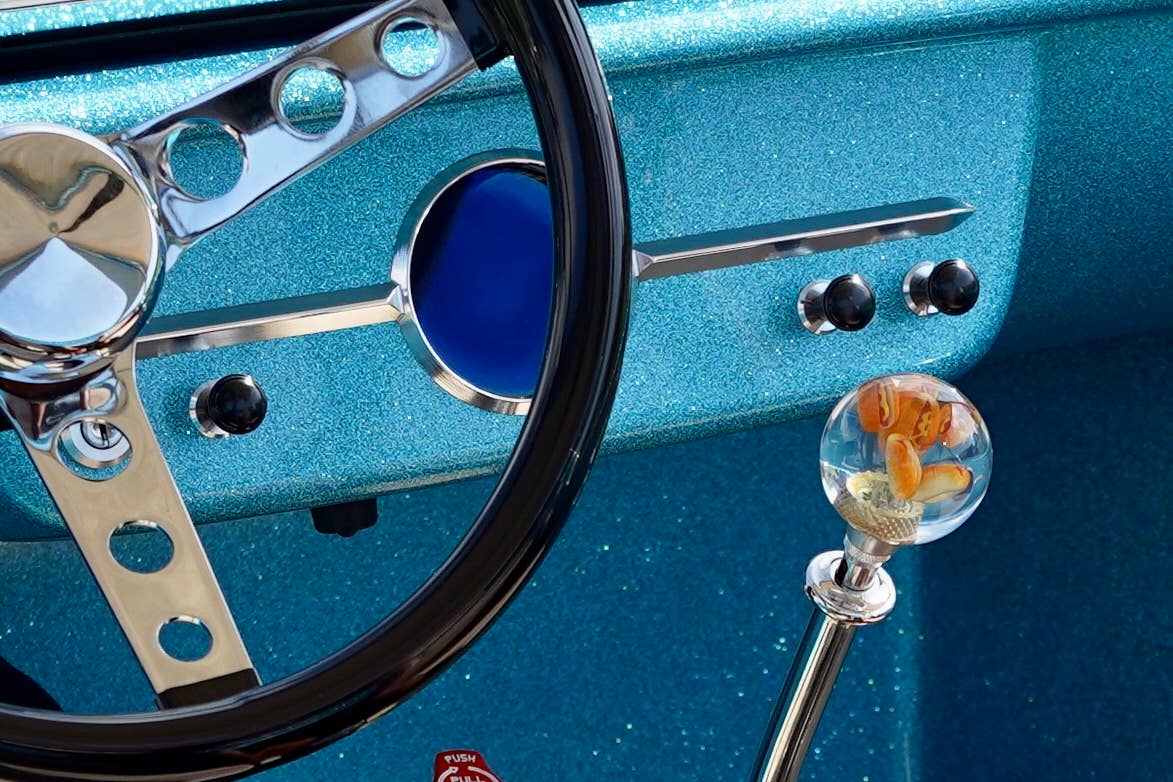
If you’re so inclined, you can buy a brand-new Manx, with your choice of powerplant, including a radial airplane engine. Customization options are endless. Matt Farrah’s new Manx was a hit at Monterey Car Week, making appearances at Motorlux and The Quail, as well as being Farrah’s primary mode of transport for the week. Yes, those are tiny hot dogs floating in the shift lever.
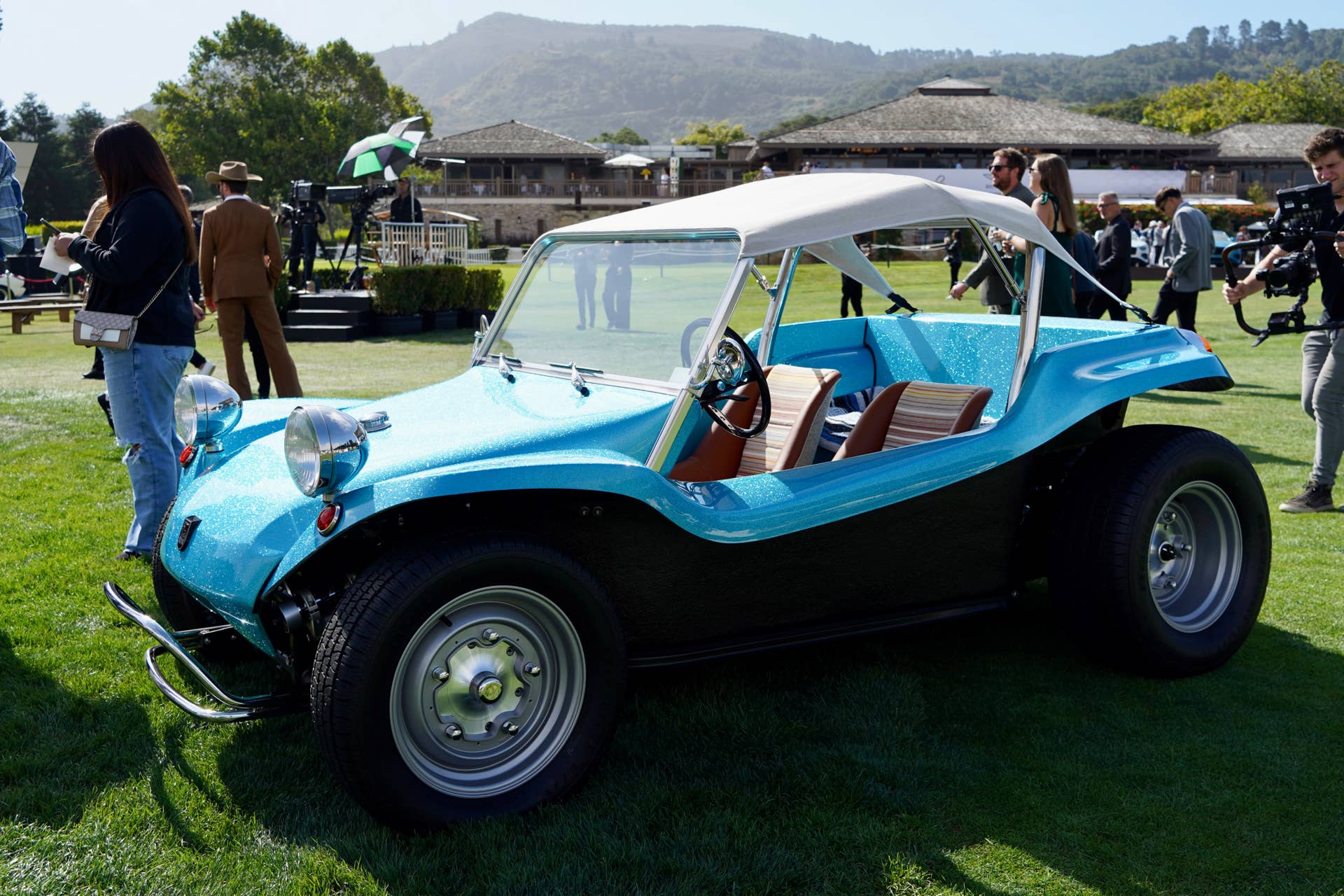
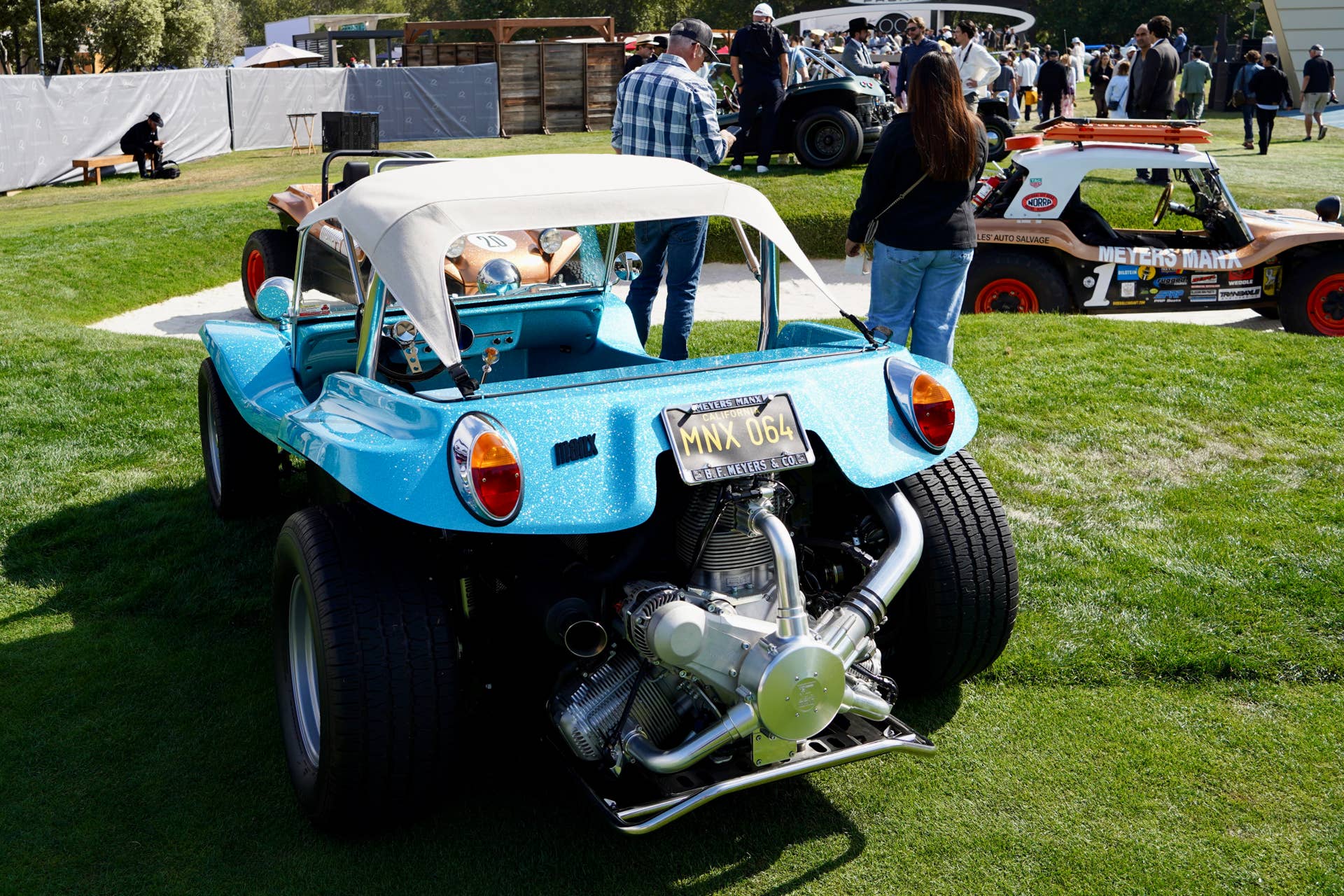
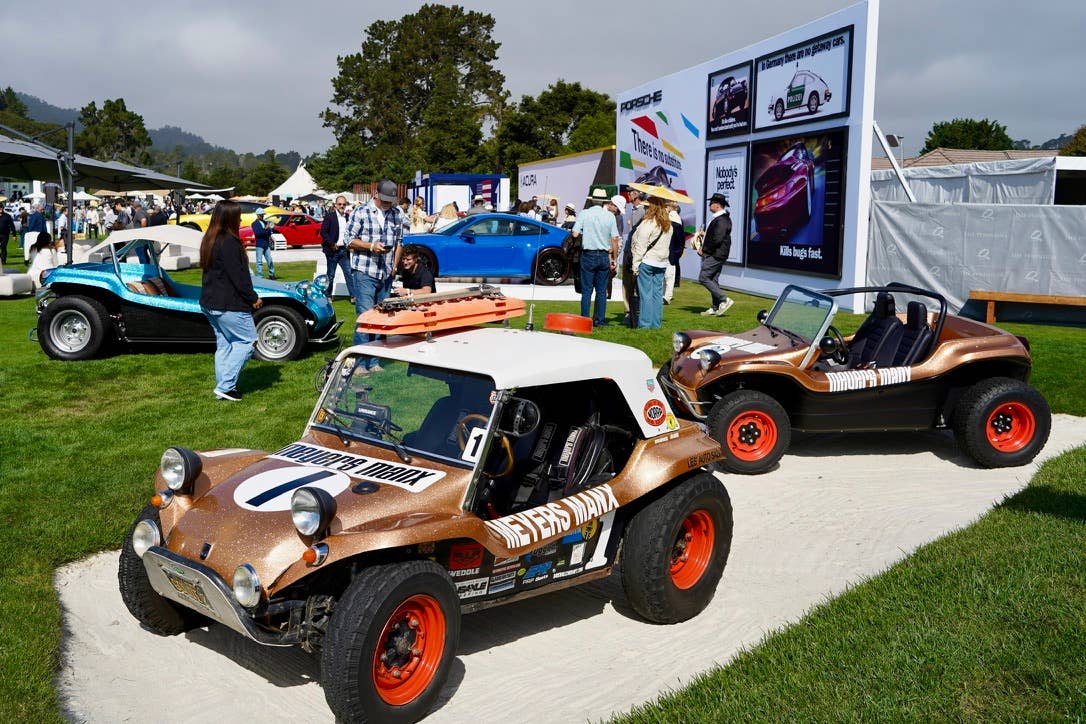
The Manx display at The Quail was nothing but fun, with Manx buggies appearing ready to leap out of the sandtrap and cause mayhem. However, Manx’s early history started with off-road racing, and the new team at Manx has deep connections with the Porsche tuning community. That’s where Richard Tuthill comes in.
Tuthill is known for some insane Porsche builds. His 911K is a carbon fiber-bodied classic 911 whose engine revs to 11,000 RPMs and spits flames when driven in anger. If you’ve got the funds, he’ll not only build you a car, but transport it to different events for you, like the Swedish Rally with No Name, where you’ll drive your race car across the arctic landscape.
(Note to the Tuthill team, I’m always available if you need a journalist to cover your events from the driver’s seat)
That brings us to the LFG
Collabs are all the rage these days, so why not do it with cars? This isn’t like one of those ironically cheesy collaborations between Pierre Cardin and AMC or Cadillac. Rather, this kind of collaboration could only come about when a heritage brand with a reputation for fun meets a top-level race shop that wants to party.
The two met and said, LET’S F*****G GO! Then they set about building a dune buggy that lived up to its name, with no better place to introduce it to the world than at The Quail during this year’s Monterey Car Week. Several years ago, Tuthill collaborated with Singer to build the ACS. According to a Tuthill employee I spoke with at The Quail, the problem with the ACS was that, while it was a brilliant car, there was nowhere for it to be used. It wasn’t a streetcar, and there were no events that welcomed it.
The LFG starts where the ACS left off. Rather than sharing the form factor of a 911, it looks like a rally car with a sense of humor. It’s muscular but friendly, like Arnold Schwarzenegger in Twins.
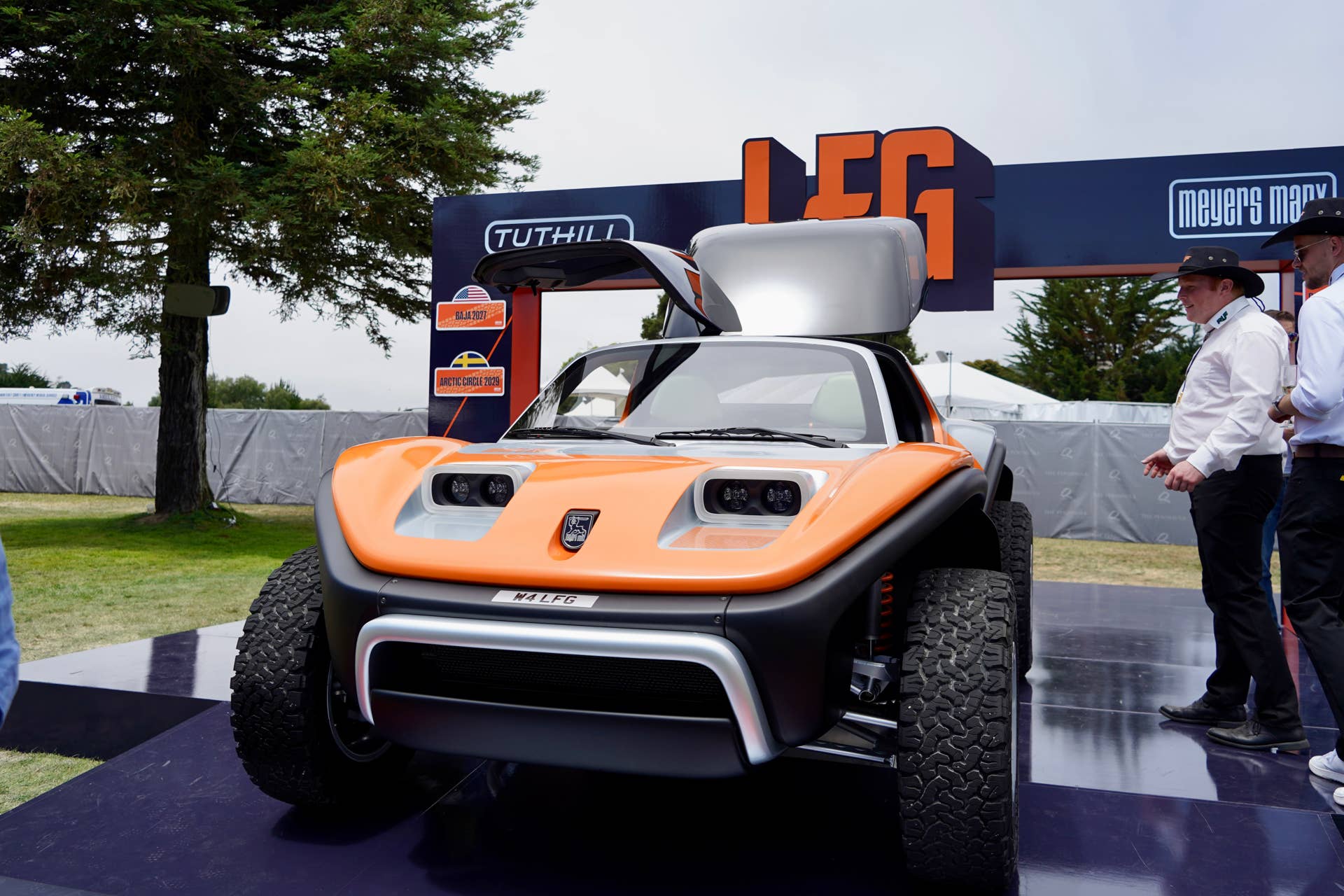
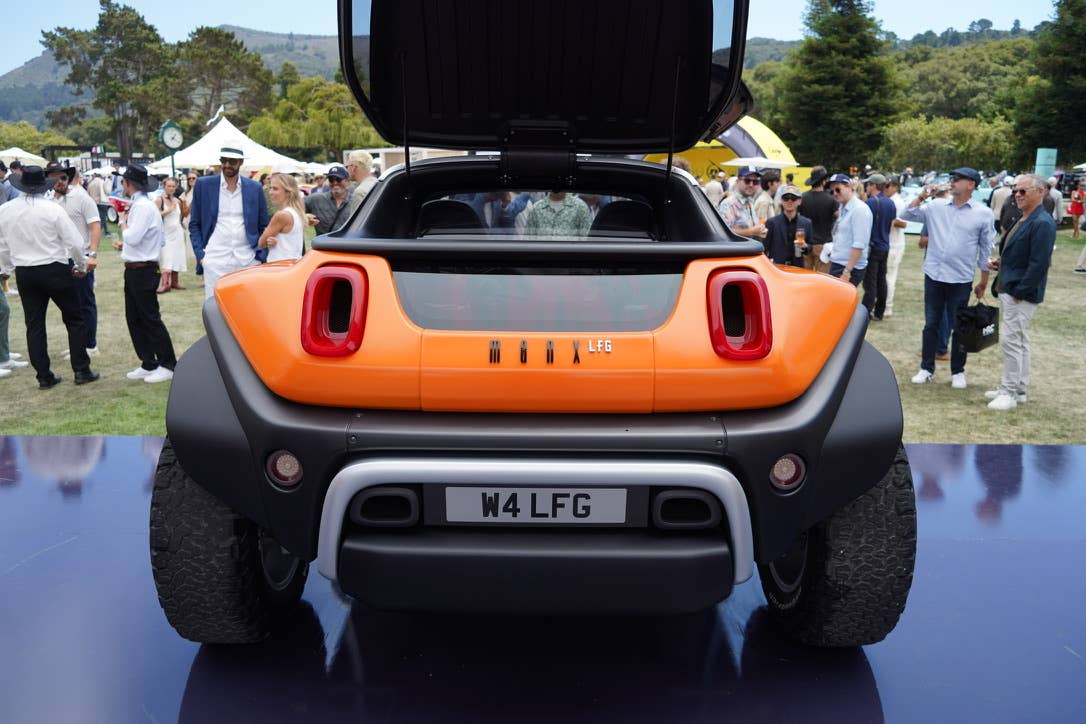
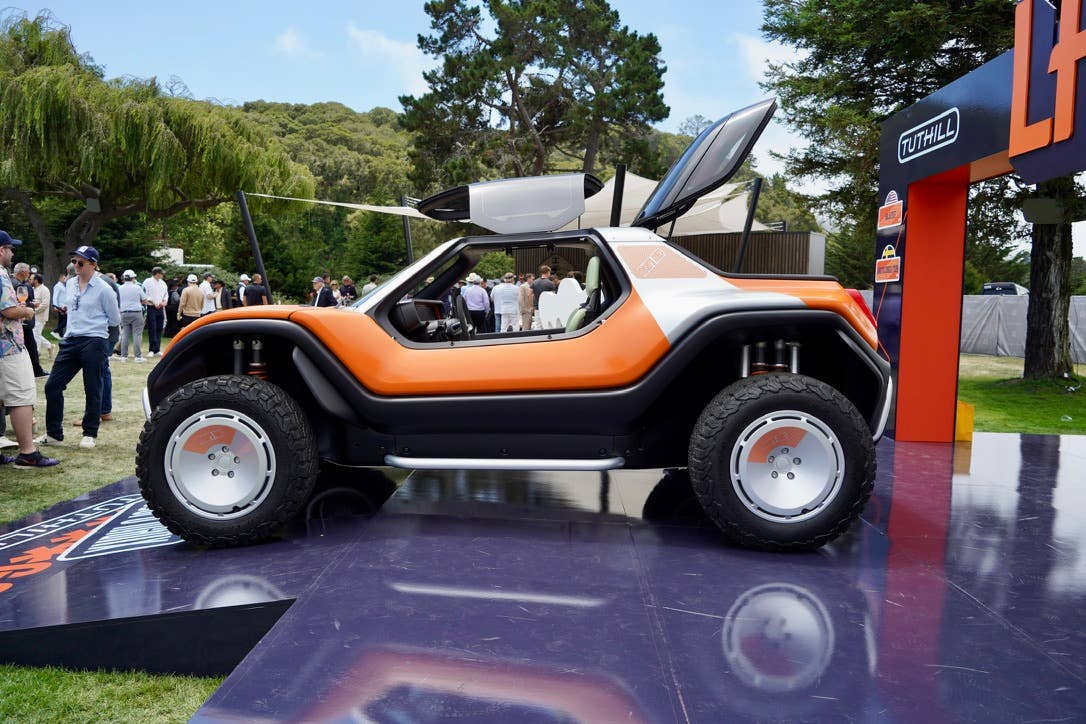
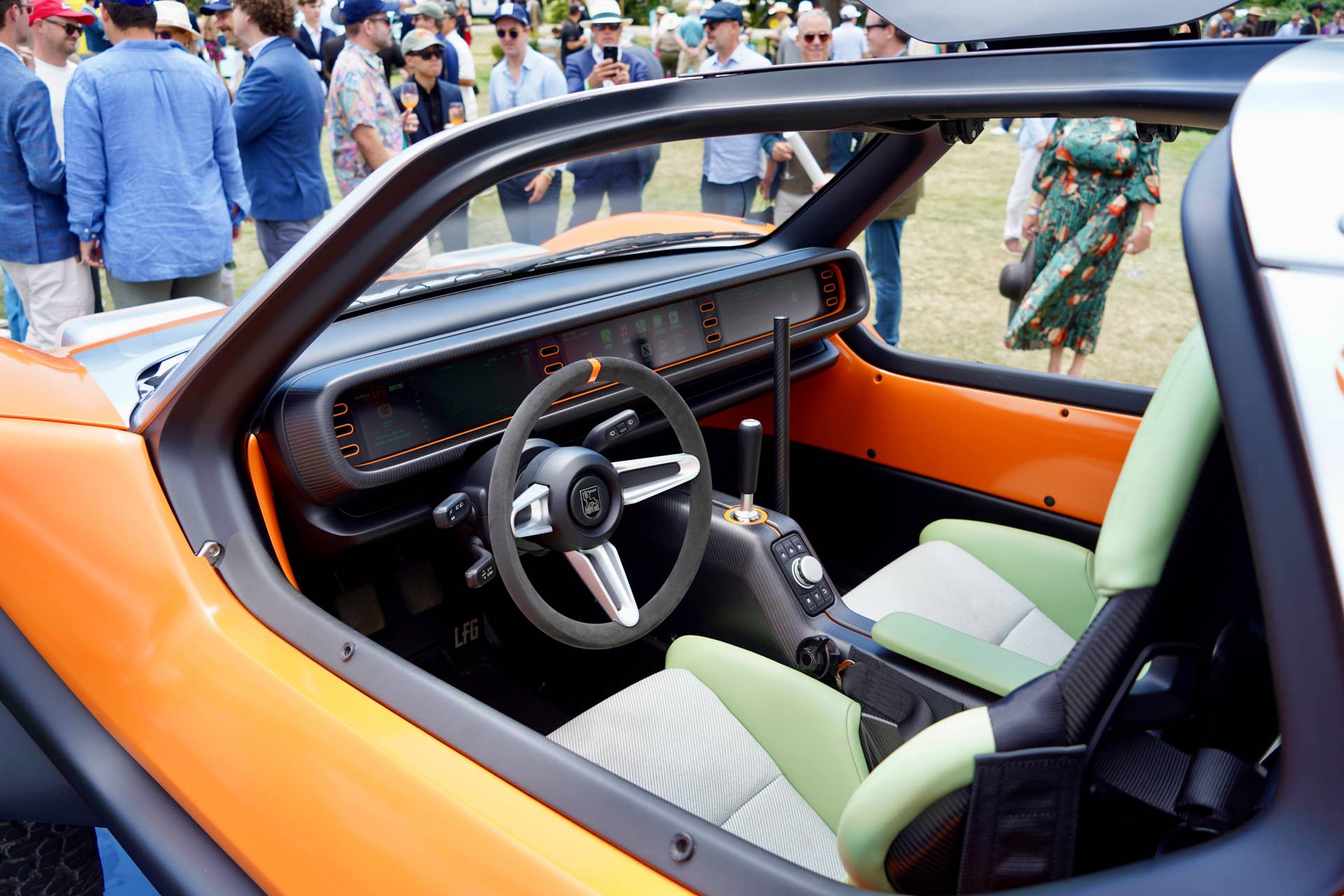
That body is made of full carbon fiber and mounted to a race-quality space frame. The body parts can also be quickly unbolted for crash repair or to provide more airflow to the driver when rallying across Baja. If you’d prefer to keep cool, just flip on the AC. The interior sports three screens. While the one in front of the driver contains the usual array of gauges, the two on the left are for CarPlay and navigation.
The prototype is powered by a 3.5-liter flat-six engine driven through a six-speed sequential gearbox, mounted in the middle of the LFG, to achieve excellent weight distribution. Yes, it’s four-wheel drive, and the center differential is integrated into the back end of the car and sends power forward to the front differential using a prop shaft. Production versions will use a 4.5-liter engine that’s under development and will reportedly rev to 11,000. I hope it will spit flames, too.
Underneath, this is a pure WRC rally car. It uses the suspension from the ACS, including double dampers and double wishbones at all four corners. Unlike the ACS, though, the LFG is ready to party. Literally. Tuthill plans four different events for LFG owners, which will include full support and luxury accommodations. Baja comes first, in 2027, and owners will follow the race course just behind the Baja competitors. In 2028, lucky owners will drive the Dakar Experience, then the Arctic Circle in 2029, and the Safari Rally in 2030.
It’ll be fast and handle well, and the Tuthill team will pamper you when you step out of the car. What’s not to like? All of this fun won’t come cheap, though. I can’t recall the price that was whispered to me, but it was well above my means. However, 100 lucky people will be able to take one home. Better yet, they can leave their LFG with Tuthill and show up to events around the globe.
Final thoughts
It’s 2025, which puts us right in the middle of the Roaring ‘20s. It’s only right that a dune buggy should be hopped up on steroids and rev to 11,000. Indeed, this is not the vehicle that fits any normal person’s lifestyle, but it represents the lifestyle we wish we had. LET’S F*****G GO!
About the author
Jason Meshnick
Editor-at-Large, Autoblog