
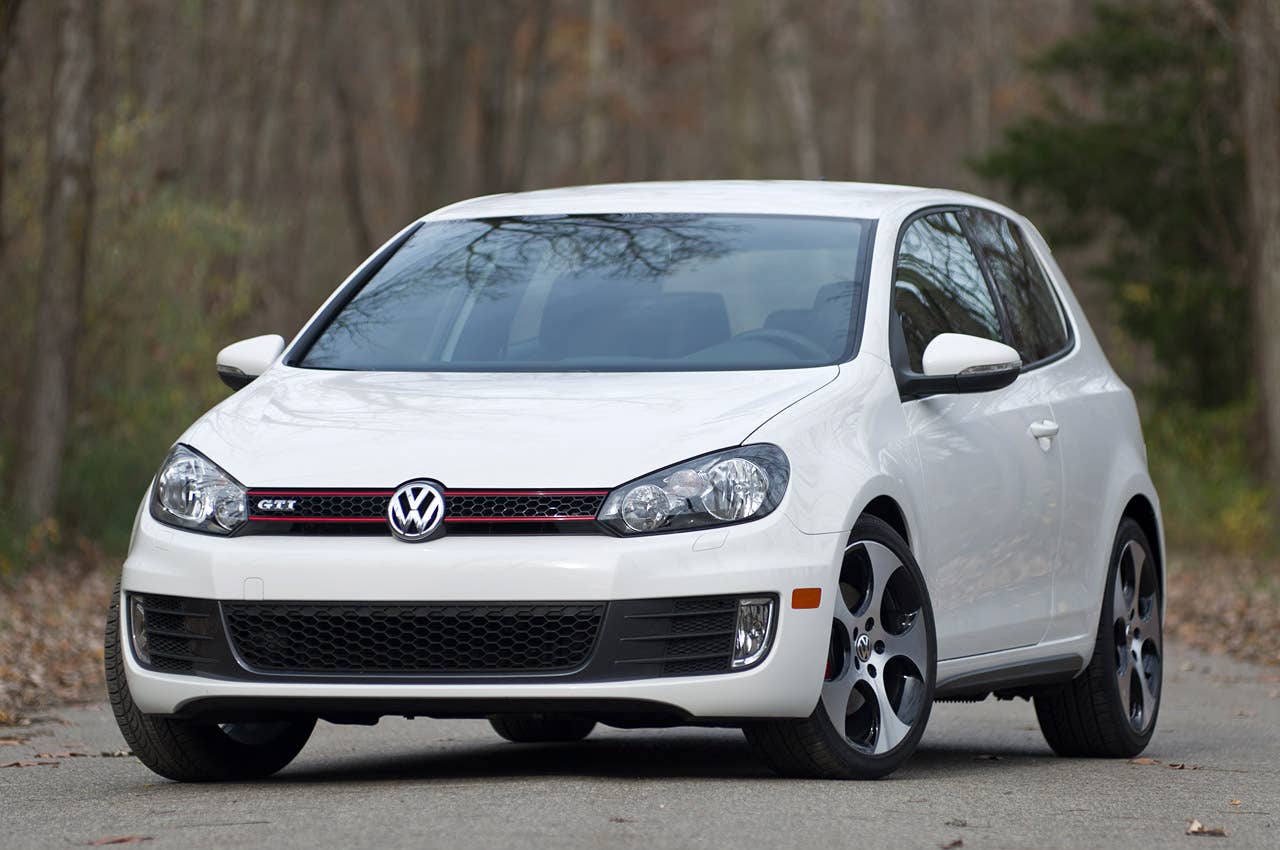
The Volkswagen GTI started the hot hatch trend. It’s always been geared as an affordable enthusiast’s car you can drive every day, and while newer versions are quite pricey, depreciation lends a helping hand to buyers looking for a deal. Cheap GTIs can be found across several pricing segments, but the sixth-generation model is particularly enticing. Otherwise known as the MK6, these are now extremely cheap, not all that old, and aren’t the horrifically unreliable nightmares most German performance cars are.
How Much You’ll Pay For A MK6 GTI
The sixth-generation GTI ran from 2010 to 2014. Mechanically, it was effectively a heavily updated MK5 GTI, equipped with the same powertrain and transmission choices. However, a much more modern and quality interior meant that MK6s became much more livable than their older counterparts. Despite this, they’re darn cheap. Moreover, there wasn’t a litany of special editions that added complexity and therefore pricing to the lineup, the Wolfsburg Edition aside. 3,000 of those were made for the final year of production, and added only cosmetic updates like a golfball-style shifter – a callback to the original. Over the last year or so, sales have averaged around $9,800, but you’ll want to pay a bit more than that. A nicely sorted six-speed model with good service history will come in around $15,000.
MK6 GTI Powertrain
All MK6 GTIs used the same powertrain: Volkswagen’s familiar EA888 turbocharged four-cylinder. Here, the 2.0-liter turbo engine made 200 horsepower and 207 lb-ft of torque to exclusively the front wheels. All GTIs were equipped with a new e-differential, which was effectively torque vectoring by brake. Under the right conditions, the GTI will apply braking to individual wheels to help keep the car tracking straight and true, instead of understeering. No matter what, power went to the front wheels – for more than that, you’d have to turn to the all-wheel drive Golf R.
Either a six-speed manual or a 6-speed “DSG” dual-clutch automatic was offered. Nowadays, stick models carry a premium, while dual-clutch models have become known for their pricey services. However, they are quicker to 60 mph. Testing put the six-speed manual GTI at a 6.1-second 0-60 mph run, while the manual was capable of hitting the same in 6.3 seconds. It’s a fractional difference, but one that may matter more if you spend a lot of time in traffic rather than at the track.
The MK6’s Interior Has Aged Beautifully
The GTI’s first row is about as back-to-basics as interiors get. Two dials, a small screen for fuel economy and speed readouts, and a three-spoke wheel with a few controls dominate your view. Visibility is excellent, especially in three-door models, thanks to their larger glass rear windows. Five-door models, of course, are more practical. Meanwhile, the front bucket seats are nicely bolstered and plenty comfy. All GTIs came with lumbar support, and a great many have heated seats, too. Some may feature automatic climate control. You can easily upgrade the GTI’s radio to bring some modern convenience into the interior by way of Carplay or Android Auto. Storage in the front seats is excellent, too, with large door pockets, cupholders, a good-sized glove box, and a large center console.
The second row is all but devoid of features, with naught but an air vent behind the front seats. However, even in two-door models, passengers will have plenty of room. Five-door models offer easier ingress and a touch more legroom. There’s also some child seat bracketry for parents, and a center console pass-through will let longer items fit within the GTI.
Meanwhile, the rear hatch space is cavernous. The GTI has 15.2 cubic feet of cargo space in both the three- and five-door models in the back. The rear seats fold, and increase cargo space to 46 cubic feet, which is enough to carry nearly anything you’d need besides large furniture or hardware items.
Need New Tires? Save Up To 30% at Tire Rack
Find the perfect tires for your exact vehicle and driving style. Click here to shop all top-tier brands, including Michelin, Bridgestone, and more, directly at Tire Rack.
The GTI Driving Experience: Why You Buy One
Of course, the GTI’s on-paper attributes aren’t why you buy one. Instead, you buy it for the stuff you can’t quantify. The way the turbocharged engine builds power in a rush, coaxing you to repeat through the gears on every corner. Mid corner, if you get going hard enough, the GTI will hike up a wheel. These were one of the last GTIs to offer a physical handbrake, and a good yank will send the GTI sideways on a slick enough surface, enough to overwhelm the stability control that (annoyingly) stays on even though you’ve turned off the traction control. Shifting is light and precise, and six-speed models don’t have gearboxes that feel cut-rate, unlike WRXs of similar vintage. In a word, the GTI is sublime, and even a decade and change down the road, its ride and handling balance is some of the best out there, especially considering the price point.
About the author

Chase Bierenkoven
Senior Editor, Autoblog