
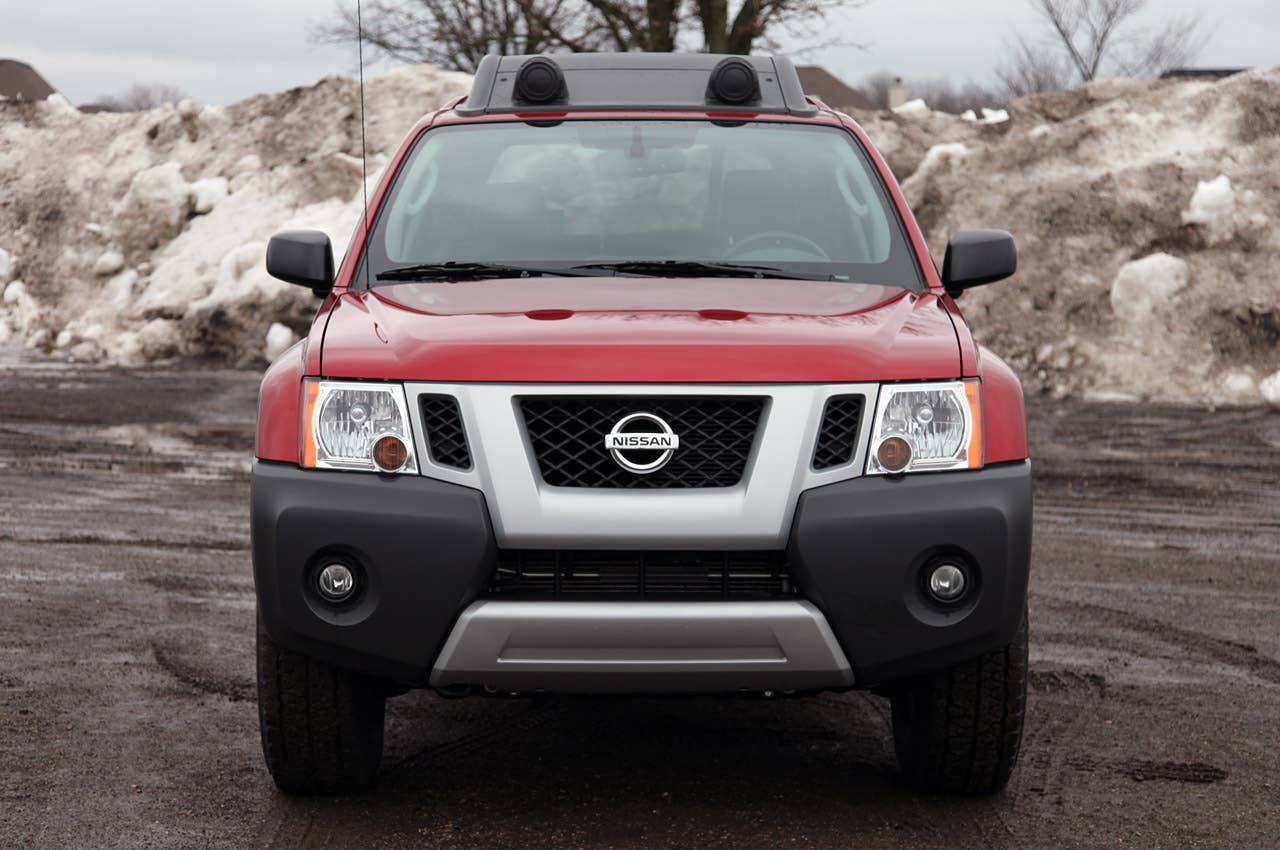
Do you get mad when you look at used 4Runners for sale? It’s easy to. Between the tasteless buffoons modifying them into giant, overbuilt off-roaders that never leave the REI parking lot to the speculators holding low-mileage examples betting they’ll be worth something one day, it’s a crap time to be shopping for a 4Runner. Nissan, though, has known this for a while. Enter: the Xterra. A body-on-frame, rugged SUV powered by a durable V6, it’s hard to find a better alternative to the famed 4Runner. Here’s how the Xterra got there.
First Generation: WD22
Nissan
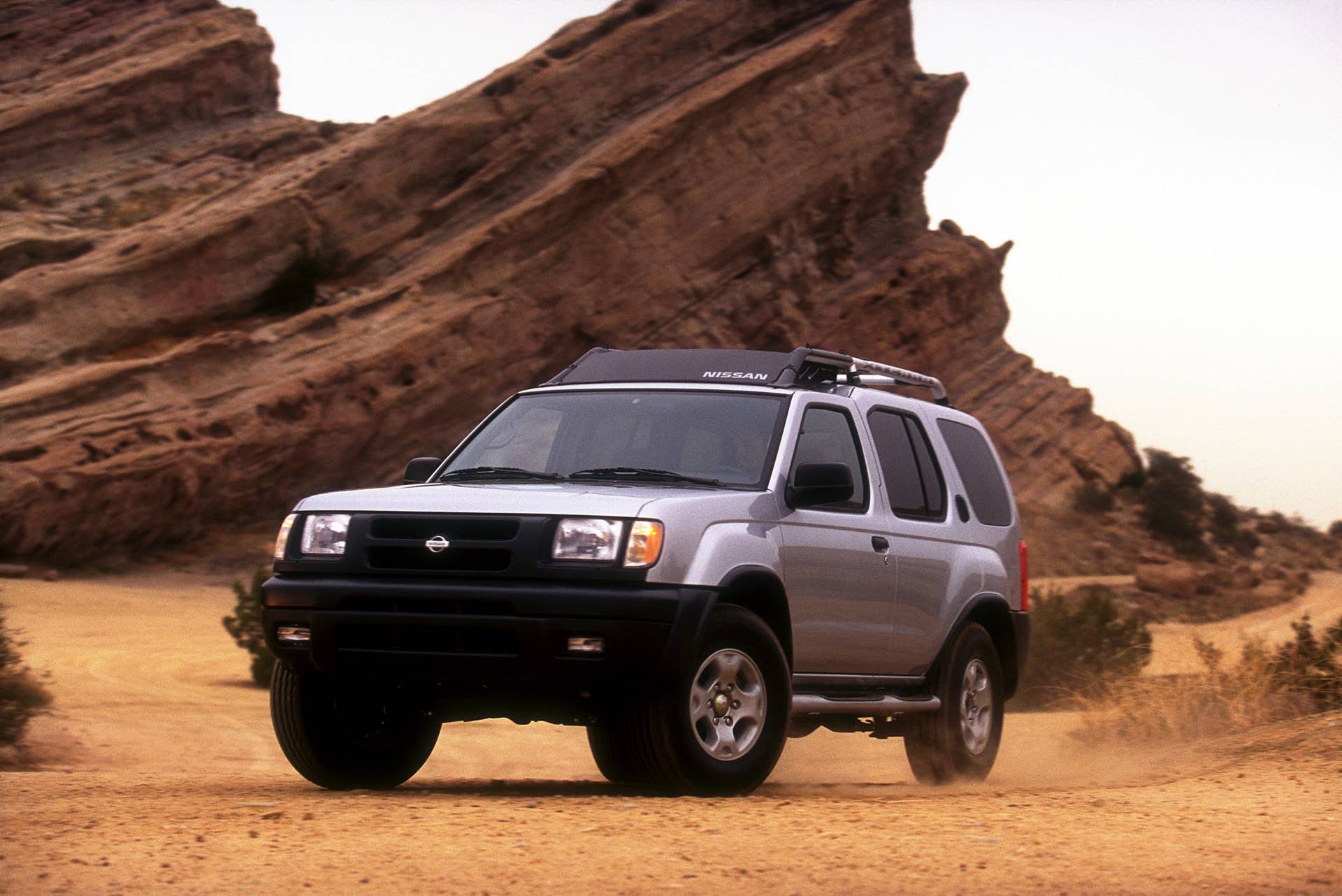
The first-ever Xterra debuted in 1999. Nissan said at the time it was made to be “about what people do with the vehicle, as much as what the vehicle can do.” It was part of a burgeoning group of more affordable, lifestyle-focused vehicles popping up in the US market through the preceding decade. The Xterra followed the same loose approach as those SUVs before it, with a body-on-frame design, rugged styling, and sensible pricing.
Under the hood was one of two powertrains: either a four- or six-cylinder engine with a five-speed manual transmission or a four-speed automatic. The vehicle also featured an integrated roof rack capable of holding up to 125 pounds and fold-flat rear seats to accommodate larger cargo. Base SE models came only with rear-wheel drive, while getting part-time four-wheel drive meant stepping up to XE trims. That was the one you wanted, with the larger 170-horsepower V6. The four-cylinder was anemic even then, making just 143 horsepower. Though you did get to say you had the same engine as the 240SX, which is kind of neat.
A 2002 Facelift Made The Xterra Much More Appealing
Nissan
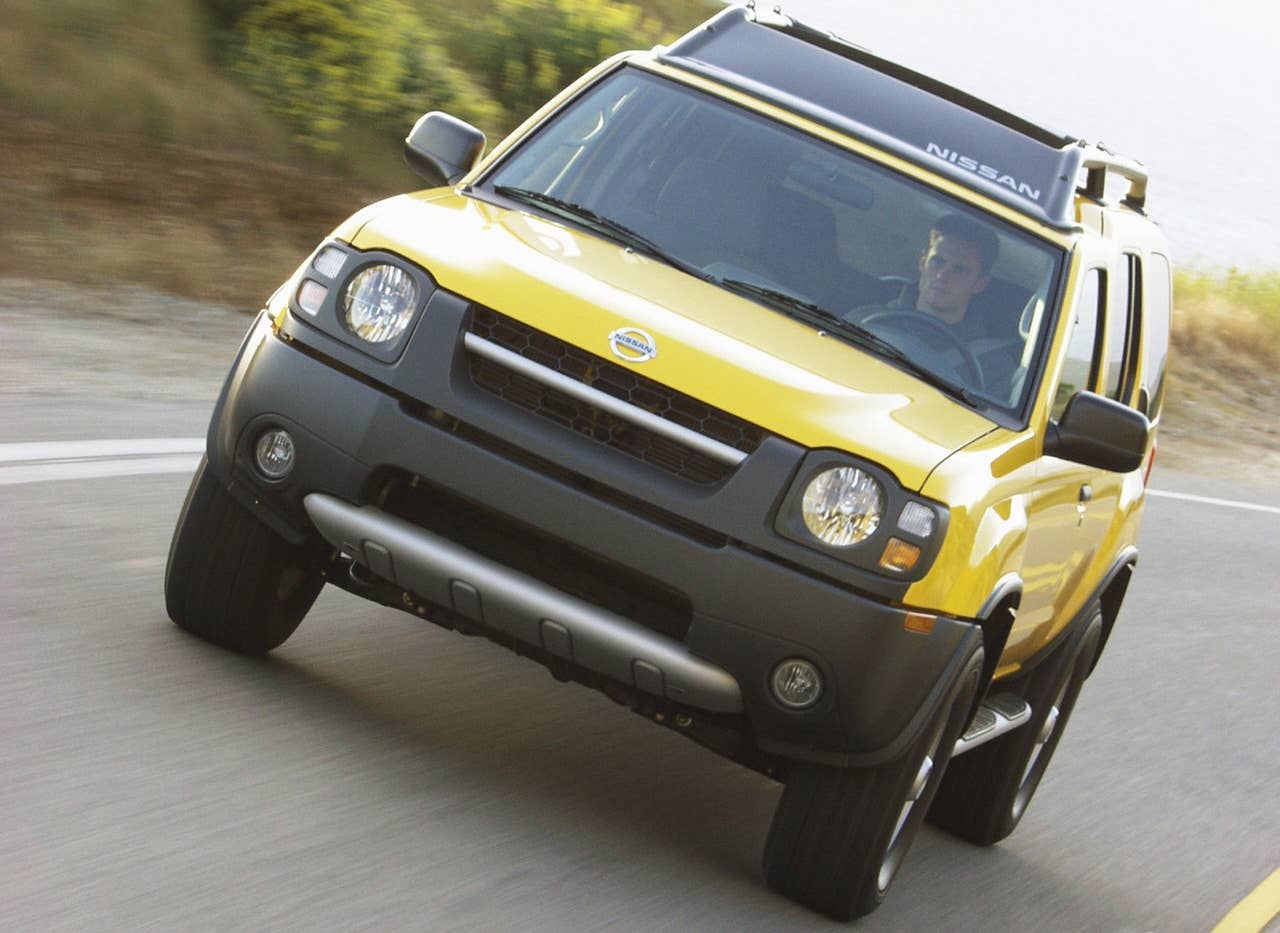
2002 saw a raft of updates to the Xterra that helped make the rugged 4×4 more livable. Again, two- and four-wheel drive options were available, but revised front-end styling, a raised hood, and an updated color palette brought the Xterra’s look out of the 90s. More critical were updates to the interior. Nissan fitted a new instrument panel that was easier to read, the glove box grew by 25 percent, and the dash and doors got new HVAC and map pockets, respectively. To fit the SUV’s rugged nature, SE models also got an integrated compass with new map lights, so that one might divine their location based on a map and the markings of whatever deserted arroyo they found themselves in ( or so the marketing brochure insisted). You could also get a new upgraded sound system for cruising the mall instead of the mesa.
The V6 grew to 180 horsepower and 202 lb-ft of torque, which went a long way to making Xterras much more competent on and off-road. There was also a new supercharged version, carried over from the Frontier. Like the 4Runner and the Tacoma, Nissan decided to create a pair of rugged vehicles, a truck and an SUV. Regardless, the addition of the supercharger boosted output to 210 horsepower and 246 lb-ft of torque for the automatic, and 231 lb-ft of torque with the 5-speed manual. 2003 brought further changes, including lumbar support for SE models and a CD changer. Production ended in 2004.
N50: The Xterra Everyone Knows And Loves
That same year, Nissan showed off the successor to the first-generation Xterra, known internally as the N50. Production had been waning since the Xterra’s debut in 2002, falling from around 80,000 units that year to just over 66,000 units in 2004. The wildly popular update put the Xterra back on its feet, with around 72,000 units sold in 2005.
Largely, that’s down to just how much better the Xterra got with time. Recovering from a few cash-strapped years, Nissan was looking hopeful. The new SUV got larger in all four directions, sharing a platform with the larger Titan and Armada. The engine also got a big overhaul, growing to an immense four liters. Now, the VQ-series V6 made a healthy 261 horses and 281 lb-ft of torque. Again, your choice of automatic or 6-speed manual was offered. Nissan opted to offer two- and four-wheel drive again, too. Manual models got a beefier axle with a Dana 44 diff. Off-Road trims got that too, along with a locking rear diff and a hill descent control or clutch interlock bypass switch on automatic and manual examples, respectively.
2009 brought a facelift as sales continued to falter. Nissan wanted to get production back on track and beefed up the Xterra correspondingly. The model got more colors and options, new leather seats, an updated painted grille, and roof lights for Off-Road (later called Pro-4X) models.
Sales never really recovered, though, and soon, the Xterra was pulled from production. These days, the SUV has earned a cult following. It’s easy to see why: the Xterra is a rugged, simple SUV that saw ample production throughout a decade and change of production. They’re capable, cheap, and best of all, way easier to find in better condition than the 4Runners of the day. Now, though, we have a new Xterra, once again promising to take the fight to the 4Runner.
About the author

Chase Bierenkoven
Senior Editor, Autoblog