Two seats are better than four
The Jaguar E-Type is one of the most significant developments in sports car history, and that is not a claim that can be made lightly. The nameplate ran for 13 years, from 1961 to 1974, across three generations. Inspiration for the E-Type came from Jaguar’s racing division, where its D-Type had not only earned acclaim for styling and design work but also backed that up with three consecutive wins at the 24 Hours of Le Mans in 1955, 56, and 57.
That initial inspiration led to considerable innovation and change before the E-Type rolled out, though that effort paid off in one of the most beautiful sports cars ever made. It is even rumored, though the story may be apocryphal, that Enzo Ferrari, upon seeing the E-Type debut, praised it as “the most beautiful car ever made”. The design was so groundbreaking that it even earned a spot as a full-on exhibit in the Museum of Modern Art (MoMA) in New York.
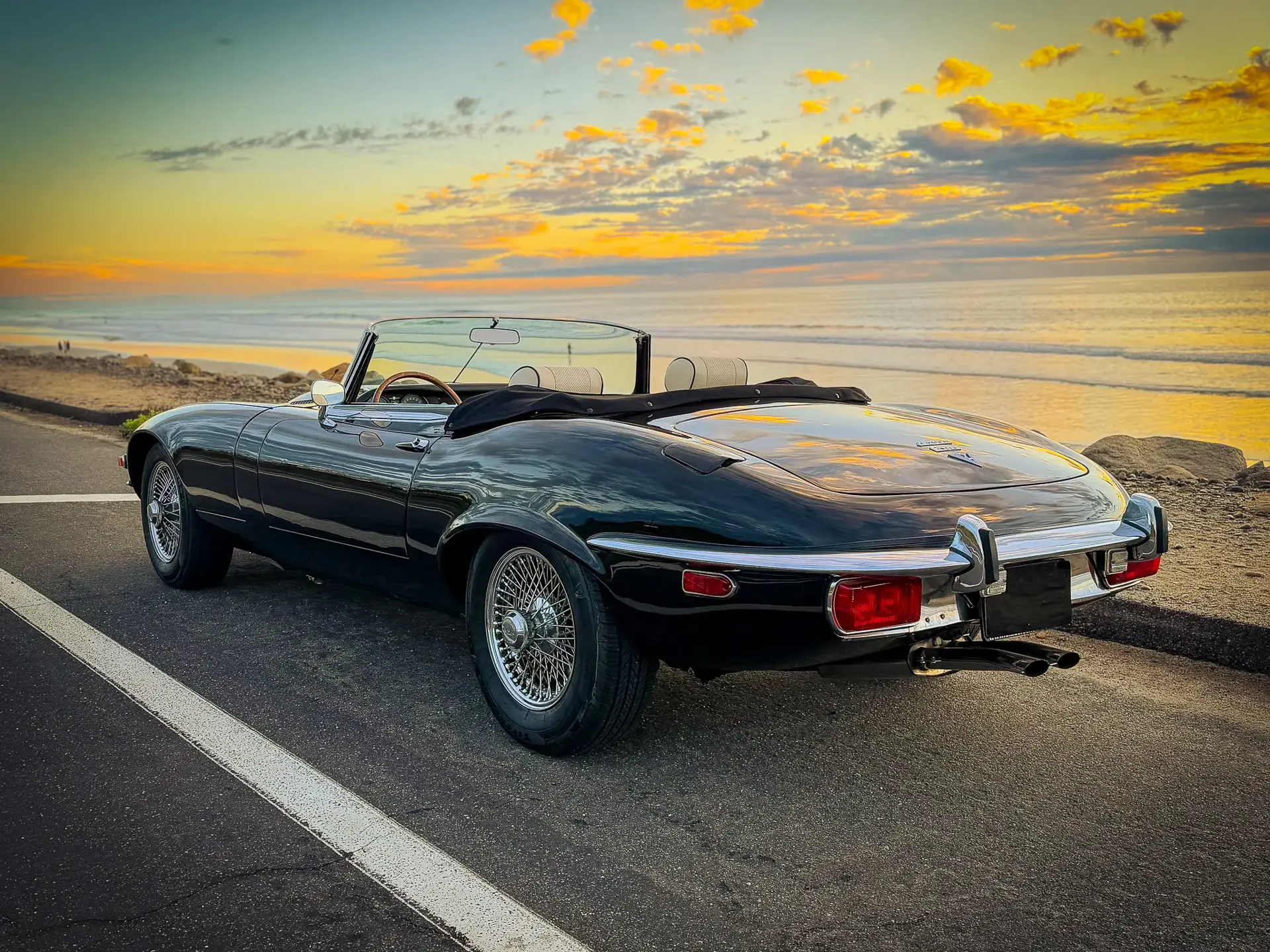
By the time the Series 3 rolled around in 1971, several changes had been made. The engine was expanded from an earlier inline-six configuration to an impressive V12, necessitating a larger front grille. The wheels were also widened, with flared arches to accommodate the size change. There were also rubber overrides installed on American export models to meet highway safety requirements. This particular chassis was changed from the factory-original 2+2 coupe configuration to a two-seater Roadster sometime before current ownership in 2007, with additional work performed between 2020 and 2025.
Thinking of selling your car?
Get a value estimate and list it online with Exotic Car Trader. Click here to learn more.
Black is the new yellow
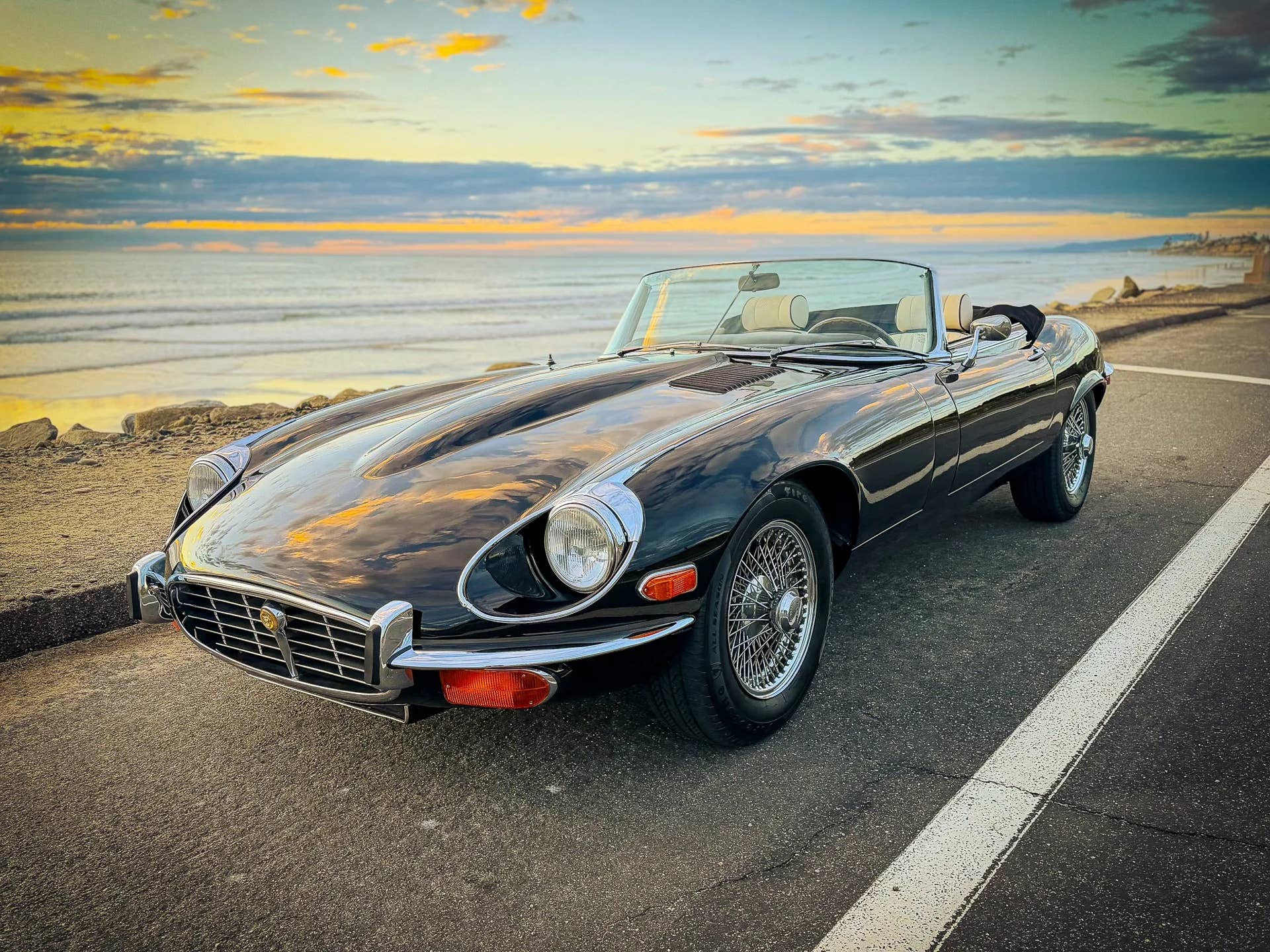
This Series 3 E-Type is believed to have left the factory with a yellow paint scheme, which was covered in a glossy black coat before current ownership and again during its early 2020s refurbishment. As mentioned above, the oval grille is larger on the Series 3 than on the prior year models, with a golden Jaguar logo in the center.
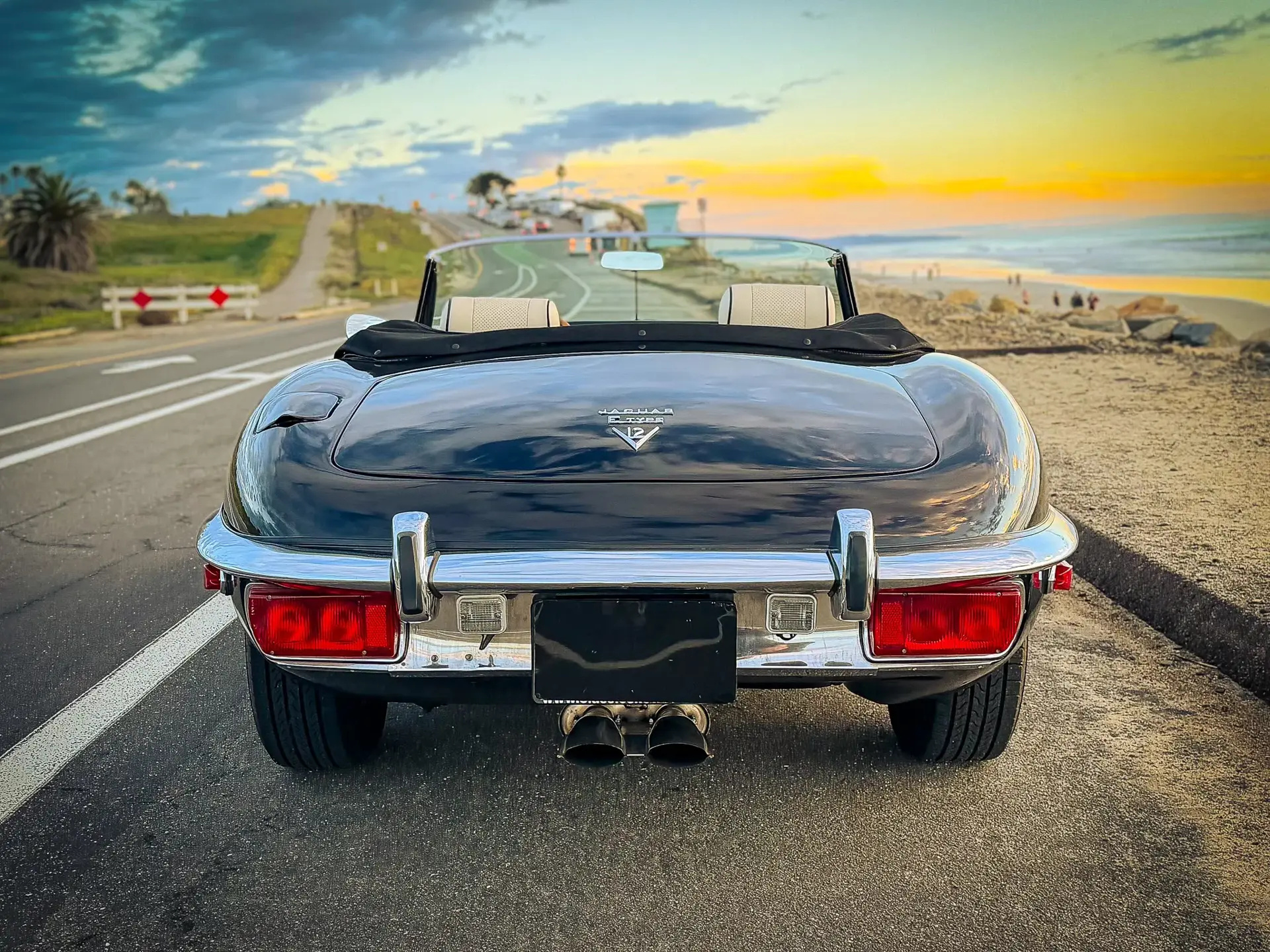
To either side lie bright, round headlights, fairly deeply set into the fenders, with corner bumpers featuring the smallest possible safety-compliant black rubber overriders. The rear bumper is a thin swopping piece of chrome that wraps well around the sides, with two similar black overriders.
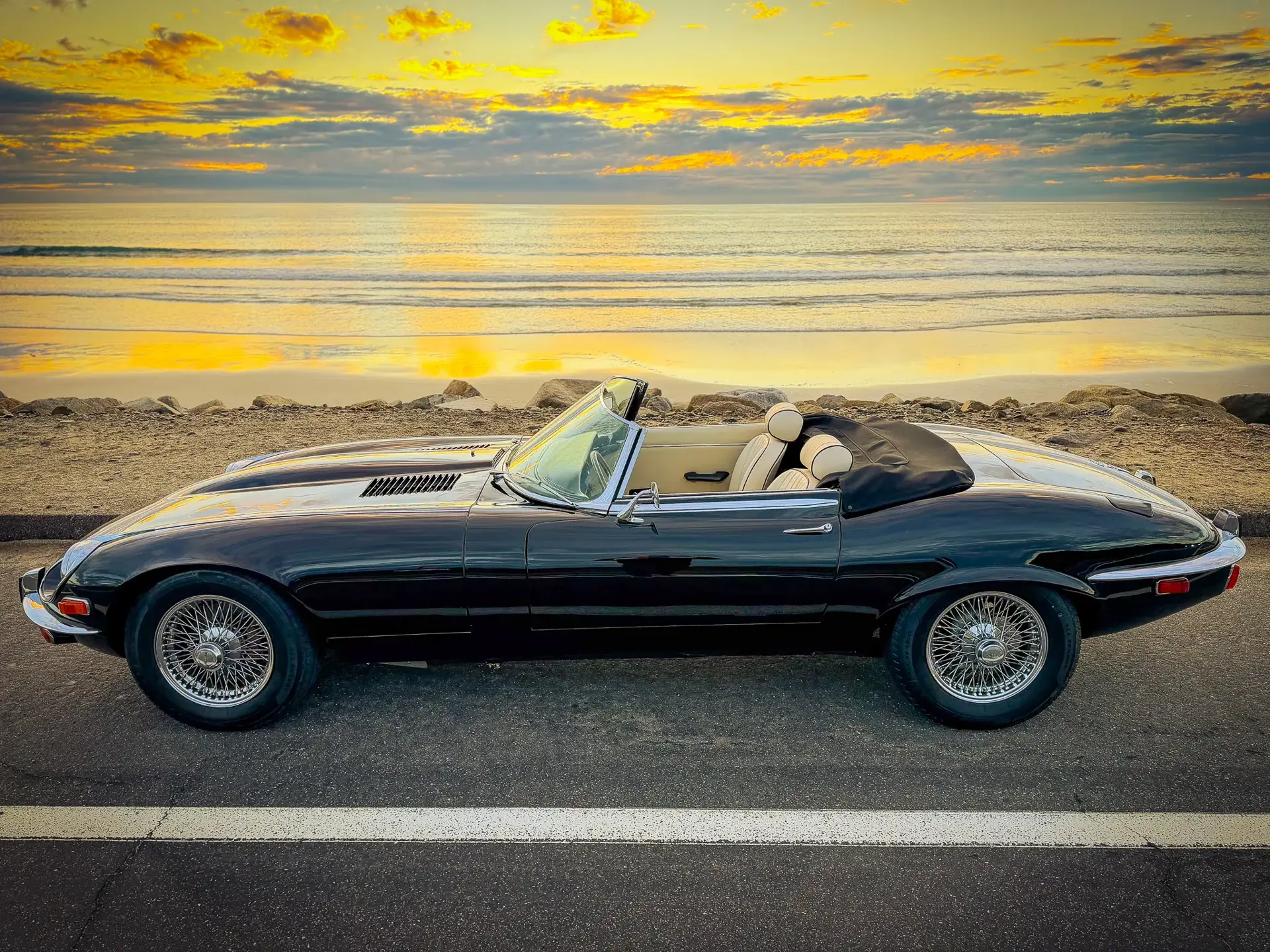
A single driver’s-side mirror gives a sporty, retro look, while the hood features two louvered sections just before the windshield. The black soft top and matching tonneau cover appear to be additions after the removal of the second row of seats, and in back, an aftermarket Bell stainless-steel muffler with dual exhaust tips has been installed. Wire-spoke 15″ chrome wheels with knock-off spinners are shod in 205/70 Firestone All-Season tires.
A little cream with your coffee
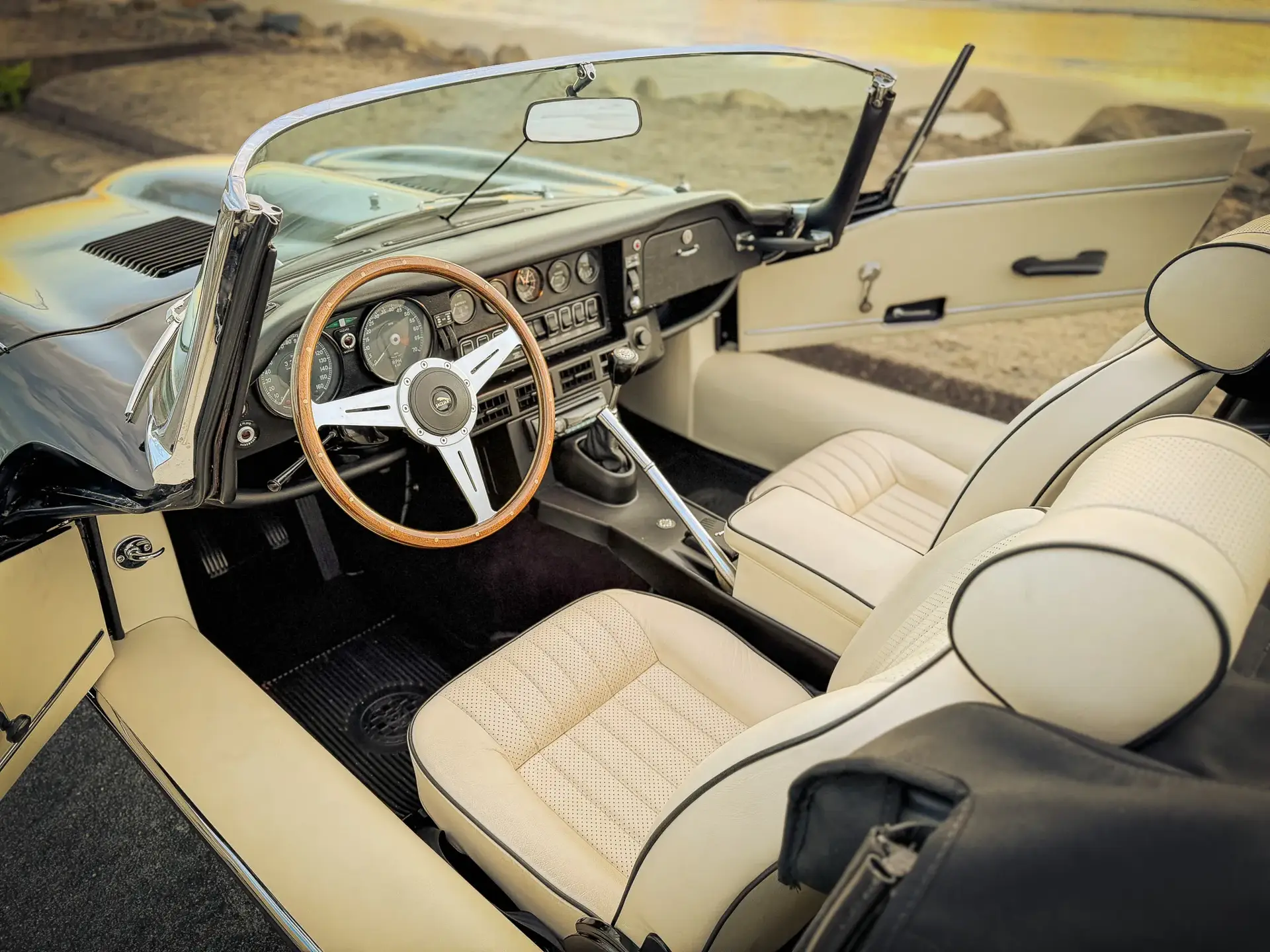
The interior is reported to have been reupholstered in cream leather with black piping trim during the original refurbishment, including the two seats and the door panels. The dash, center console, and floor are all black, as well as the rubber mats.
Amenities include heating and air conditioning, a passenger-side grab handle and locking glovebox, and an Alpine CD player and radio. A light wood-rimmed tri-spoke steering wheel with silver slats sits in front of a Smiths gauge cluster, with a 0-160 mph speedometer, a tachometer that redlines at 6,500 rpm, an analog clock, and a line of auxiliary gauges for voltage, oil, and coolant temperature.
Upping the ante with a V12
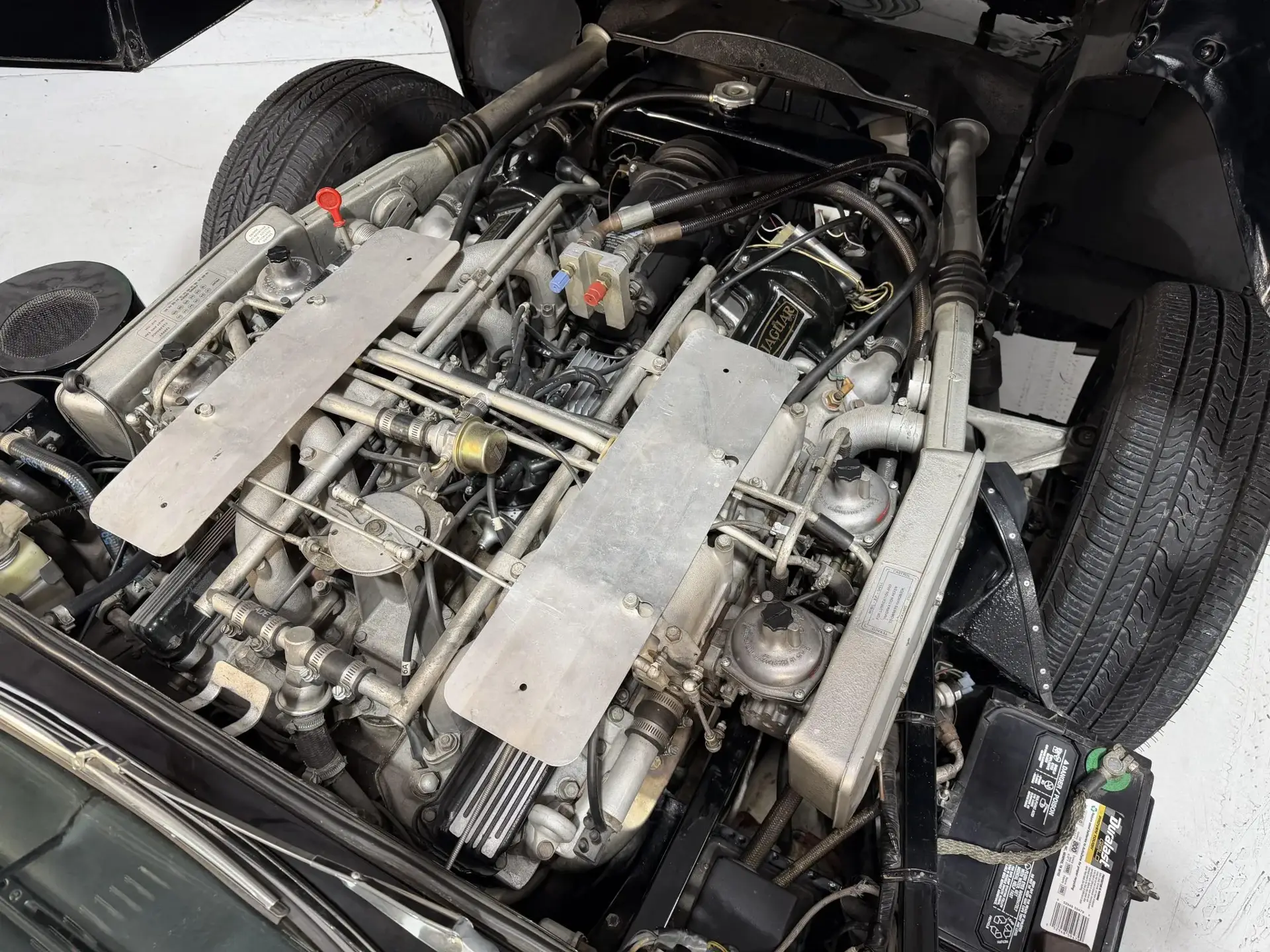
Under the hood of this British beauty is something even her American contemporary sportscars would be jealous of: a 5.3L (323ci) V12 engine that came right out of the factory with quadruple Zenith-Stromberg carburetors. In that configuration, this Jaguar would have made around 272 horsepower and 285 lb-ft of torque in ideal conditions. All of that power is channeled through a four-speed manual transmission and limited-slip differential back to the rear wheels. All four corners feature disc braking, and power steering was also a factory option that appears to have been included right from the start. The odometer shows 71,000 miles.
Final thoughts: A car that changed the world
As we’ve seen in our review of what makes this vehicle so special, the Jaguar E-Type was a truly stunning machine that pushed the envelope of what a sports car could be. Its introduction landed like a bombshell in the automotive space, with a design that was ahead of its time and left others scrambling to catch up. This particular example has had not one but two restorations, and thanks to a gorgeous sunset, its pictures reveal that it’s, maybe, more beautiful than ever. Don’t miss your chance to claim this prize as your own.