
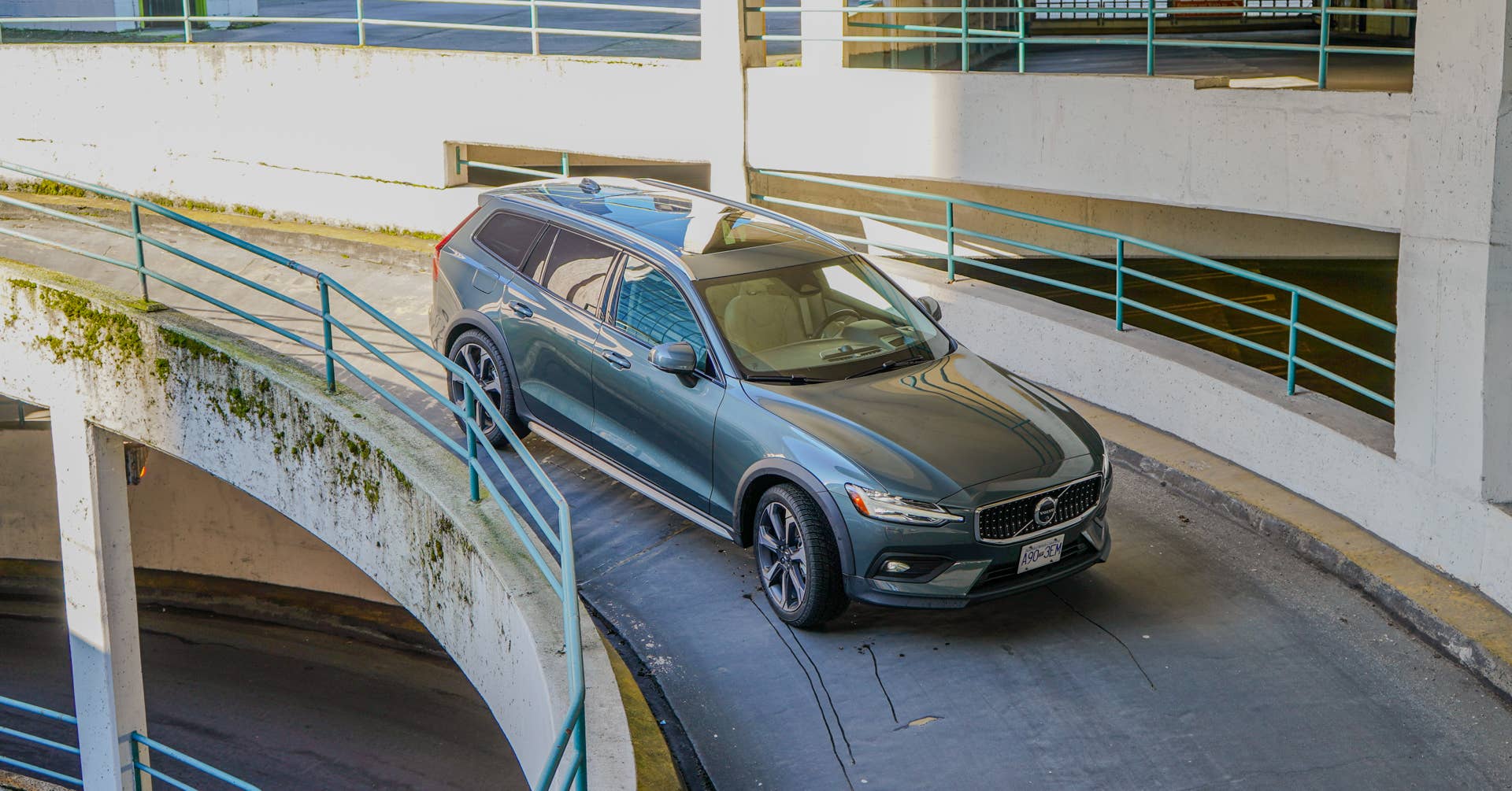
Most people believe that in the automotive world, progress always moves upward. That can mean taller ride heights, higher horsepower figures, bigger screens, and wider profit margins. Evolution, so we’re told, is vertical. For decades, Volvo understood that better than almost anyone. Its long roofs weren’t lifestyle accessories or fashion items, but rather rational tools shaped by characteristically Scandinavian restraint; elegant in silhouette, superbly practical, and highlighted by understated confidence. This coveted, utilitarian-like philosophy is what makes the 2026 Volvo V60 Cross Country feel like a closing chapter we all knew would come, but hoped to never face.
As far as we know, this might be the final station wagon Volvo will ever produce. Not just the last V60. The last of a long and cherished lineage of cult classic family haulers, revered by many for their unwavering functionality, brick-like durability, and distinctly self-assured composure. Volvo has confirmed that 2026 will be the final model year for the V60, and although Polestar—Volvo’s EV-only offshoot brand—supposedly has a wagon or two up its sleeve, there’s no replacement in sight for the body style that shaped the Swedish brand.
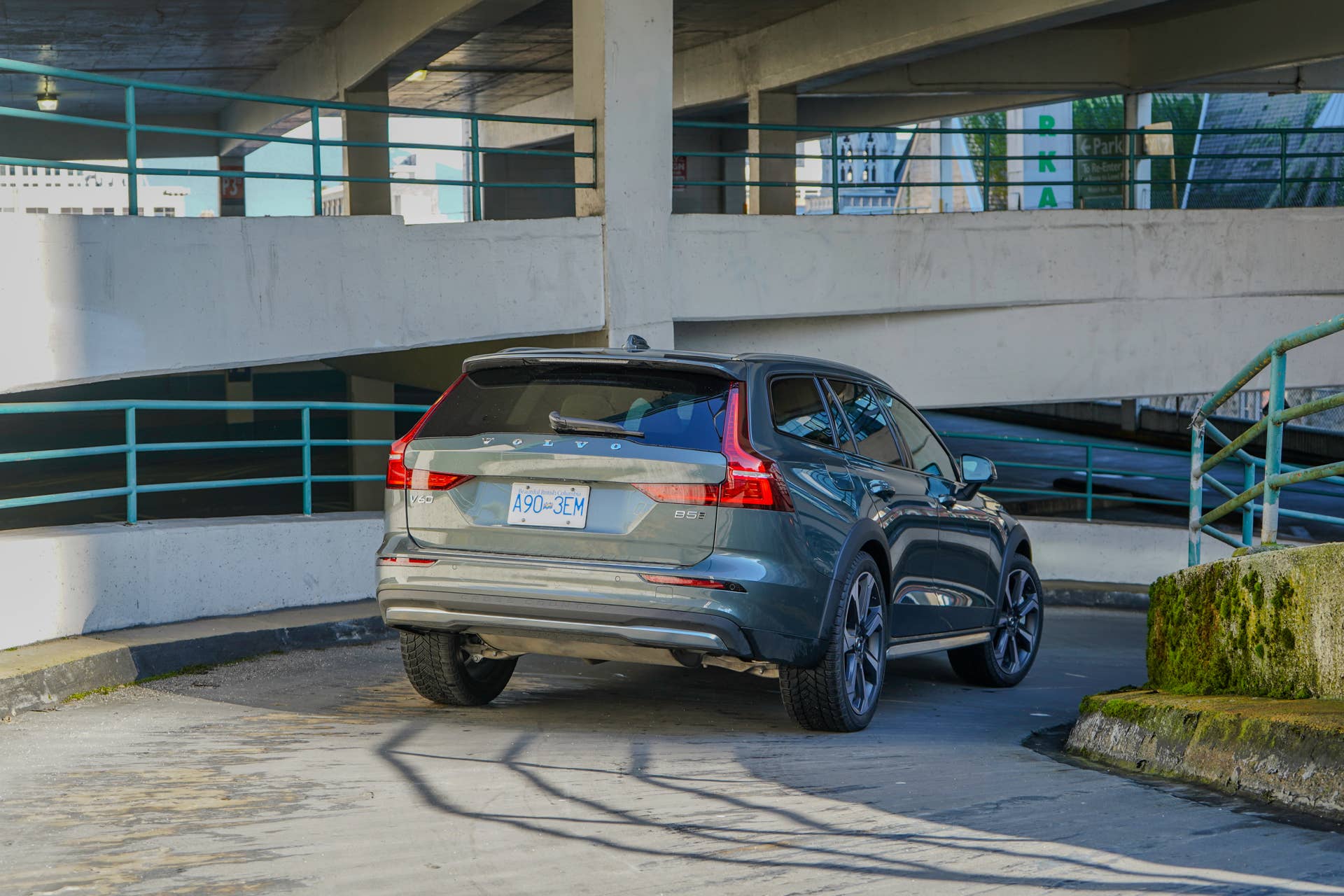
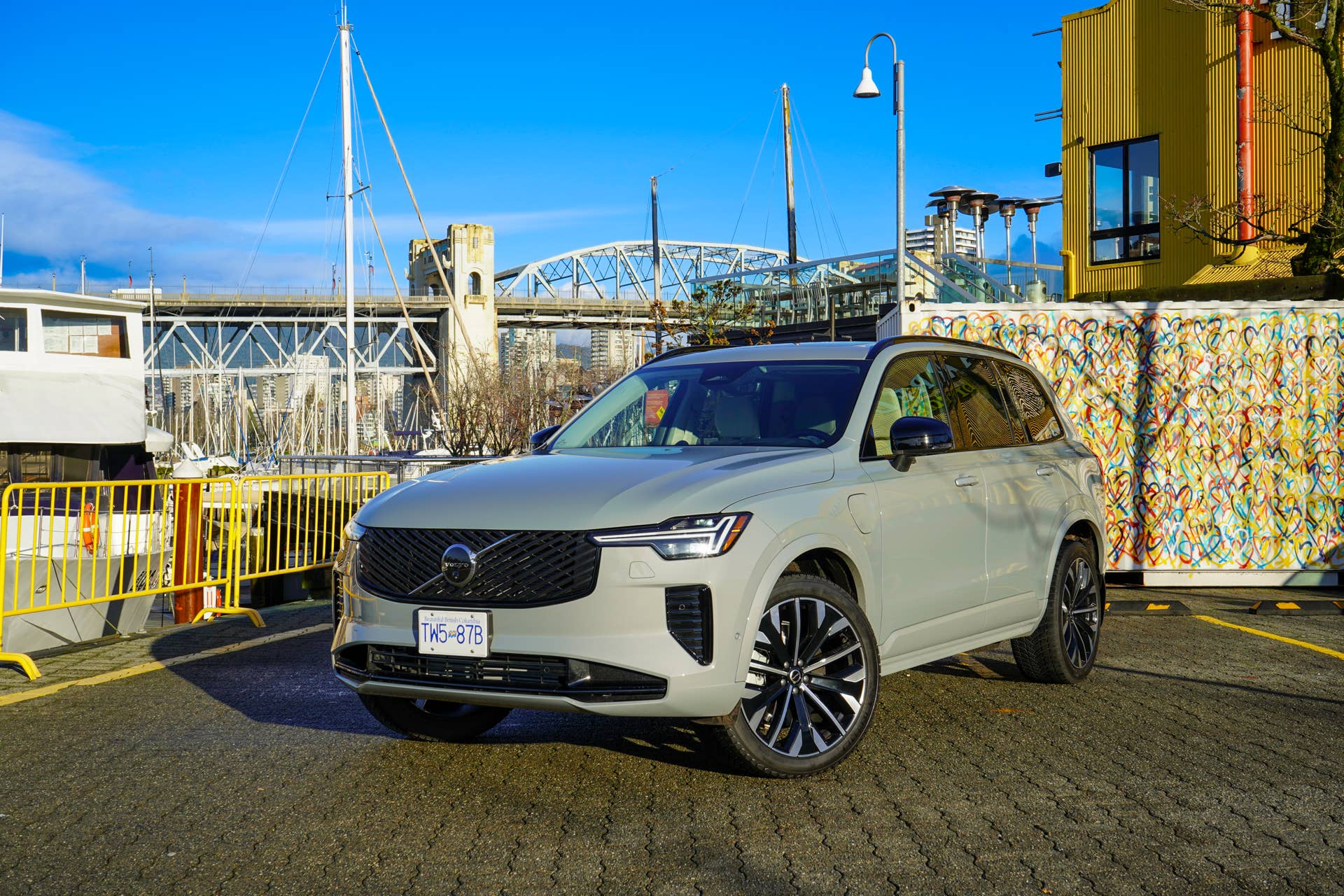
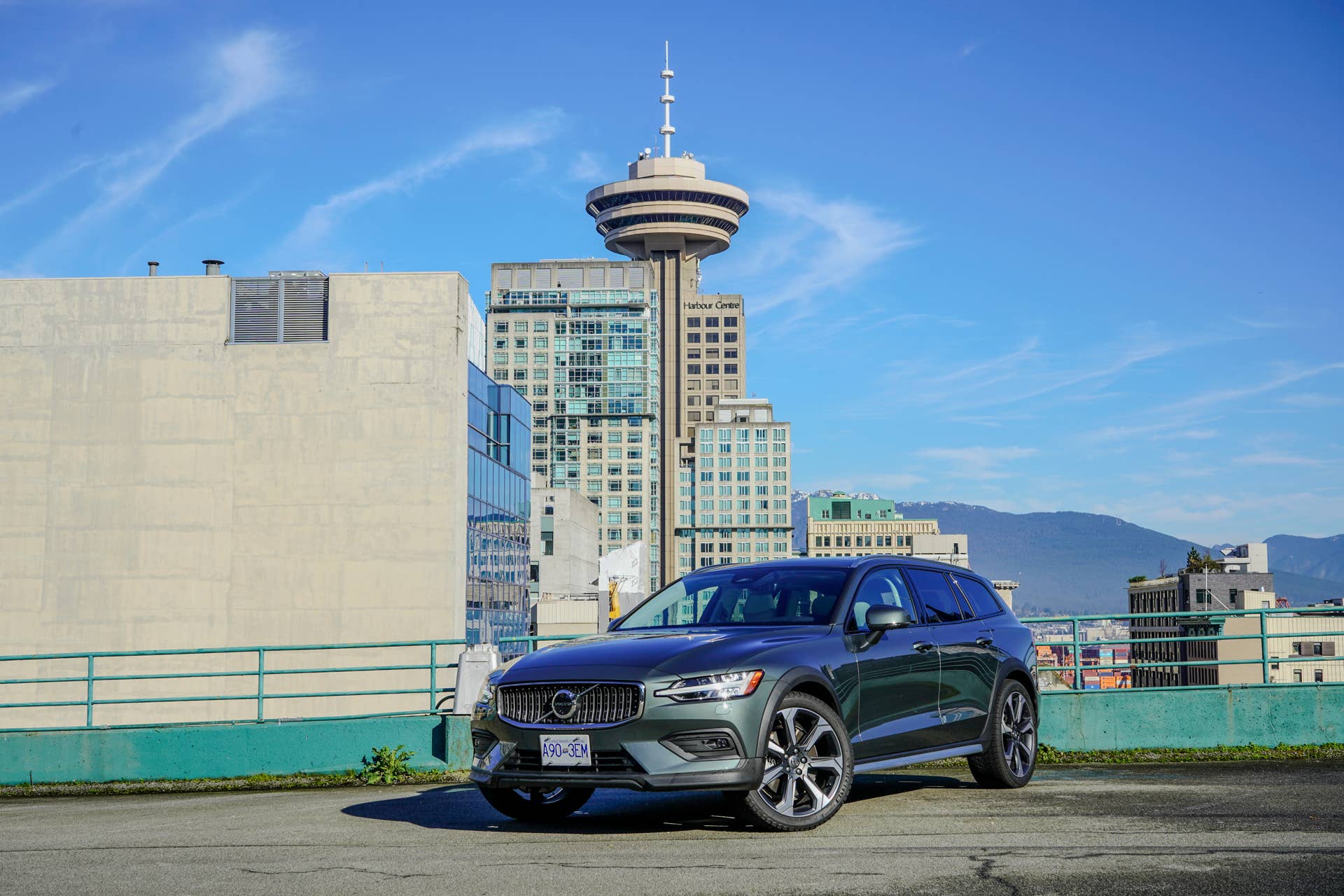
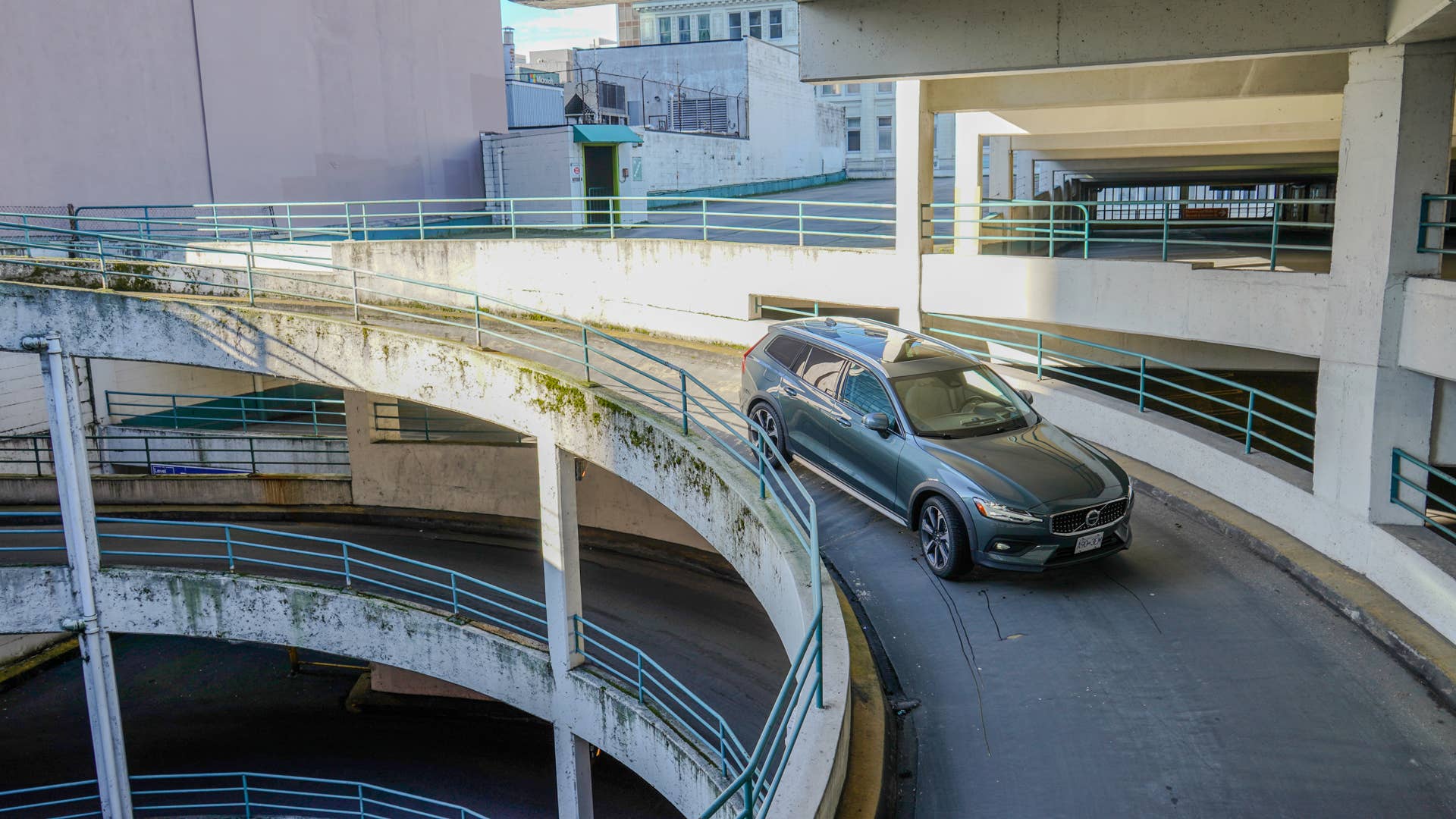
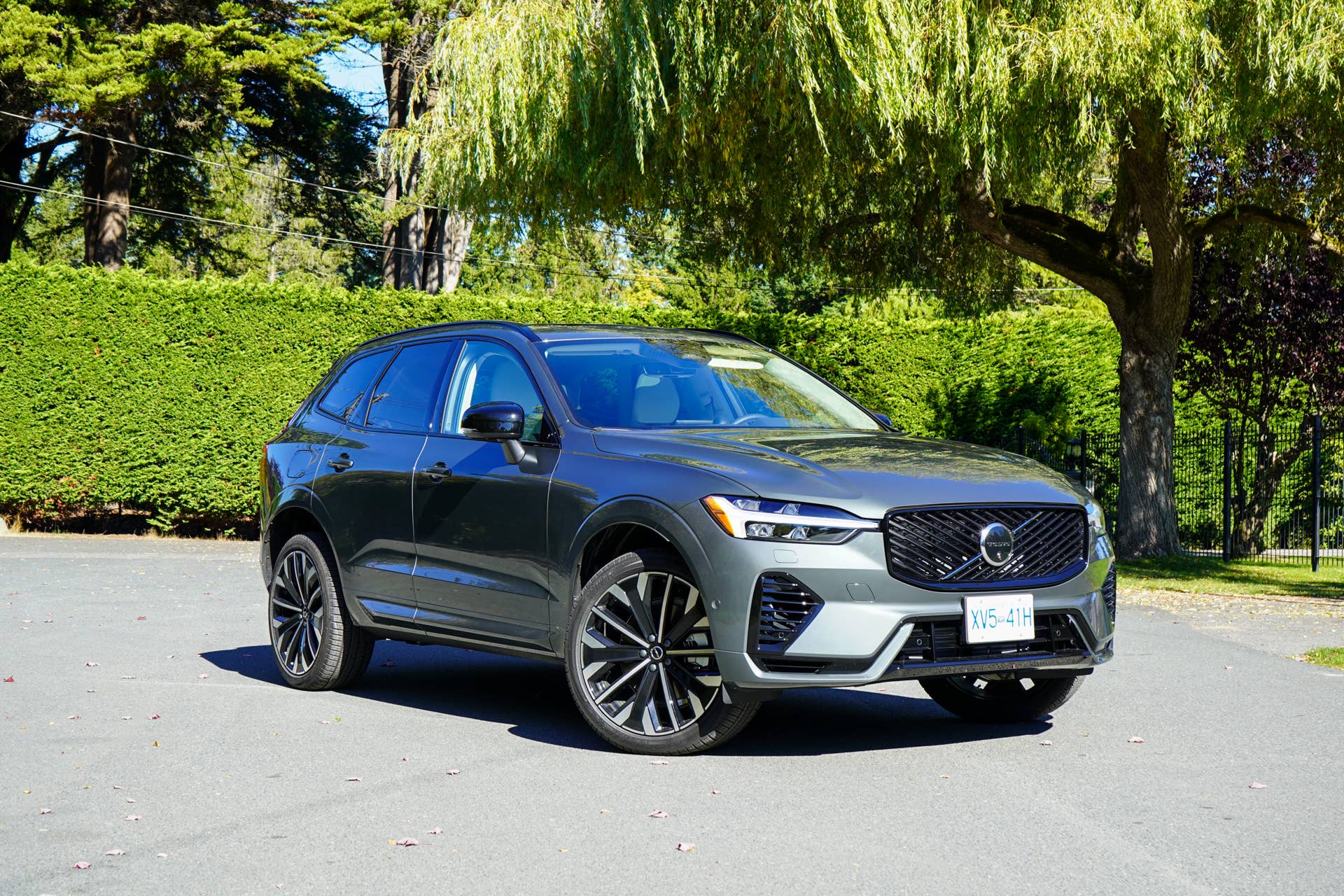
My tester—a 2026 Volvo V60 B5 Cross Country Ultra—wore Forest Lake Green over Blonde ventilated Nappa leather; a combination that feels like a subtle corporate rebellion. Grey and professional like a business suit at first glance, then unmistakably green when the light hits it just right. Park it in front of an office tower, and it looks executive. Park it in the woods, and it looks picturesque. Under the hood sits a turbocharged 2.0-litre four-cylinder paired with a 48-volt mild-hybrid system producing 247 horsepower and 258 lb-ft of torque, routed through an eight-speed automatic to all four wheels. It’s good for 0–100 km/h in 6.9 seconds. Although it’s not Volvo’s headline T8 plug-in hybrid, after a week spent with it, I’m convinced that’s precisely why it works so well.
Cole Attisha
Powertrain & Driving Dynamics: 8/10
After stepping out of Volvo’s T8 plug-in hybrid models—the XC60 and XC90 with their electrified muscle and torque-heavy theatrics—the V60 B5 initially feels like a step backward on paper. 247 horsepower and 258 lb-ft of torque don’t make for dramatic headlines in 2026, but within a few miles, the numbers no longer mattered. The turbocharged 2.0-litre four-cylinder and mild-hybrid system settle into a rhythm that feels refreshingly intuitive, and there’s no powertrain identity crisis or layered drive modes demanding interpretation. You press the throttle, and the wagon moves forward with a calm, linear sense of confidence. The eight-speed automatic shifts unobtrusively, and the mild-hybrid system smooths over stop-start transitions so cleanly that you forget it’s doing anything at all.
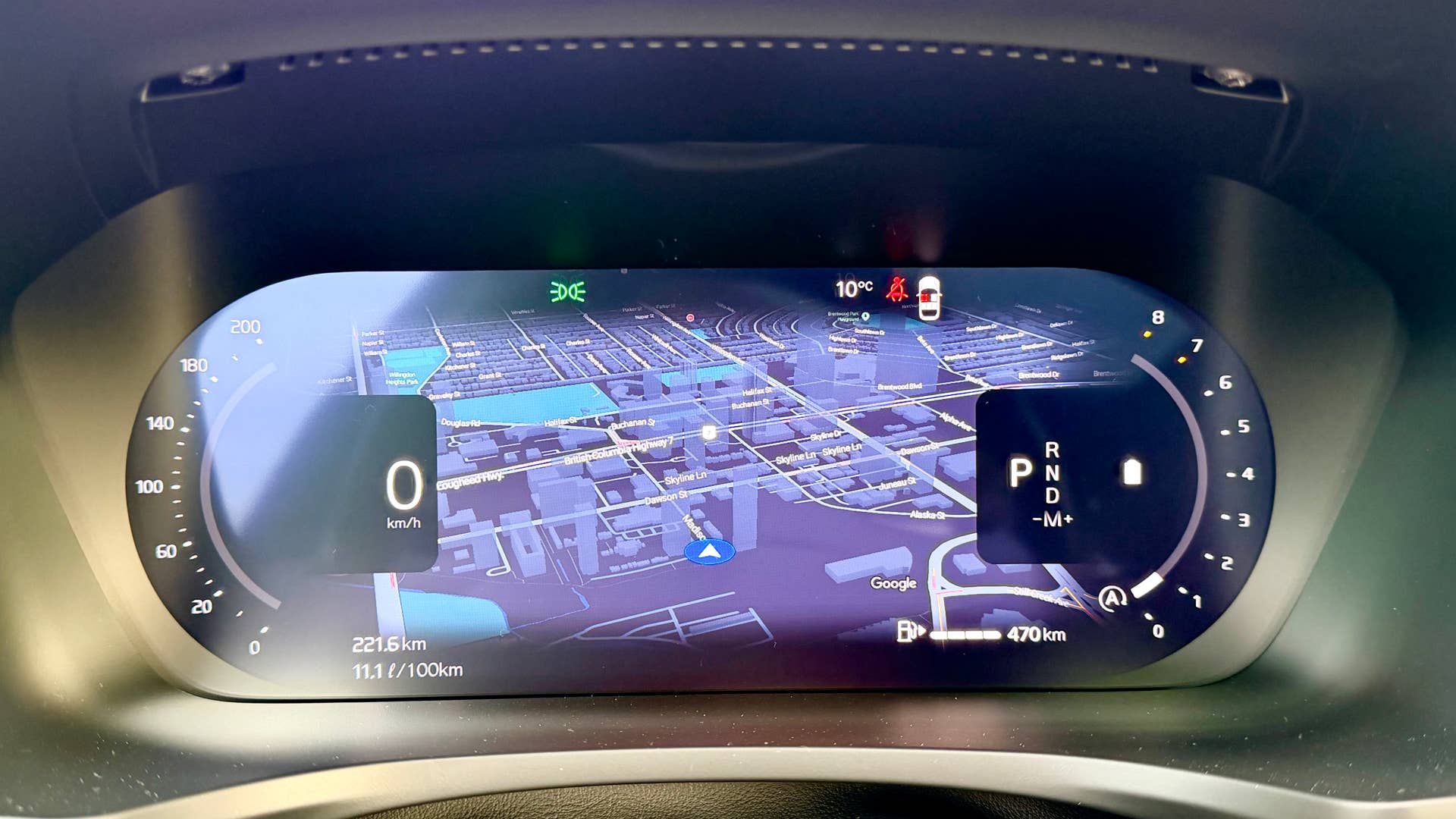
It’s quick enough, capable of doing 0–100 km/h in a claimed 6.9 seconds, but that’s far from its defining trait. What really defines it is comfort-forward composure. The Touring chassis gives the Cross Country a poignant, slightly cushioned demeanour. It absorbs rough pavement with old-school Volvo confidence. In fact, of all the modern Volvos I’ve driven, this one feels the most like old Volvos—substantial steering feel, planted highway stability, and that undoubted sense of solidity. Fuel economy is rated at 8.9 L/100 km combined, but I averaged 11.1 L/100 km in mixed driving (roughly 21 mpg). Not impressive, but nothing to scoff at, either. This is a car built to glide through town in fluff-lined Uggs while Sade’s voice fills the cabin. Comfort here isn’t sterile detachment, but rather a textured, three-dimensional sense of calm.
Cole Attisha
Technology: 5/10
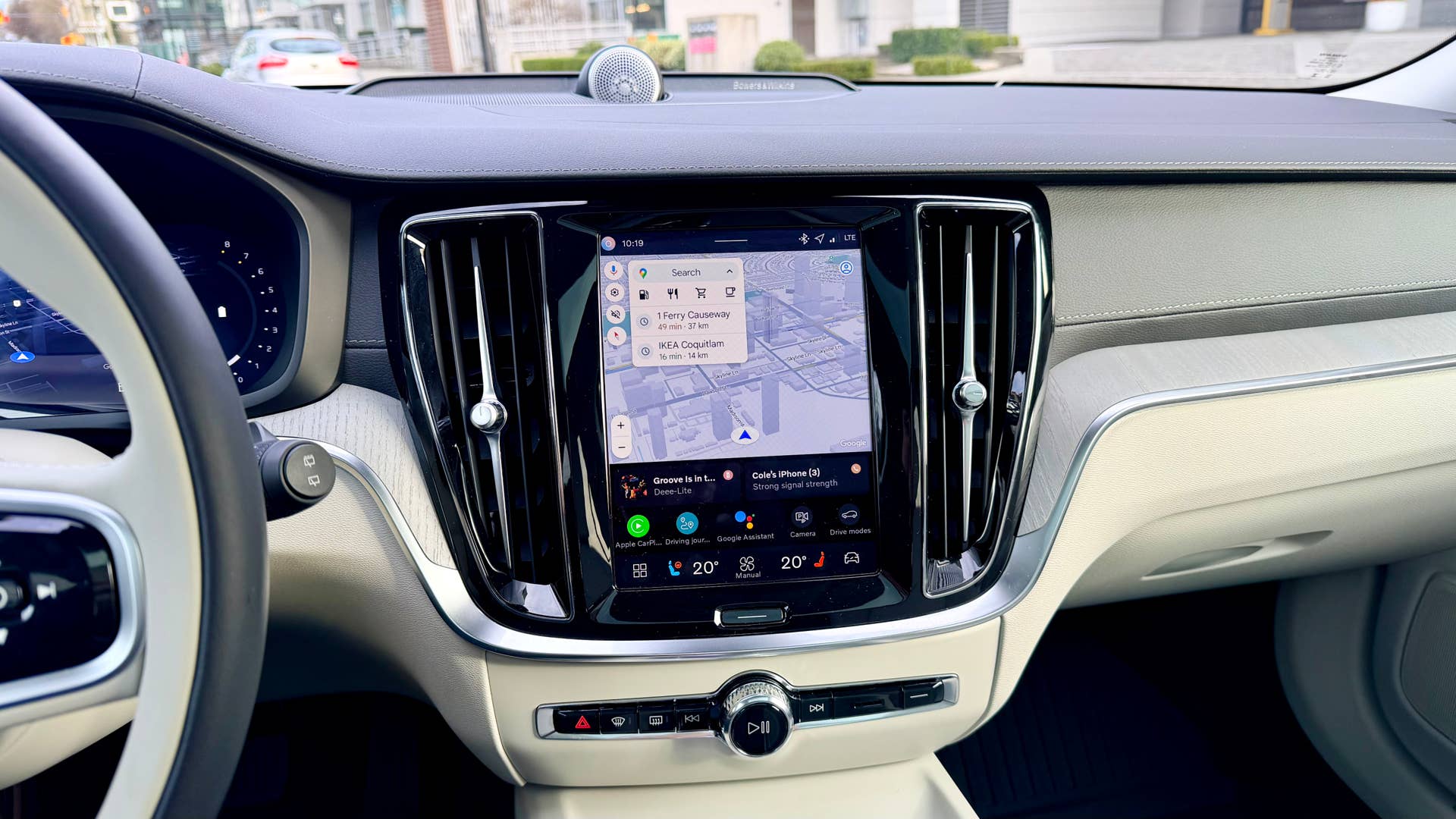
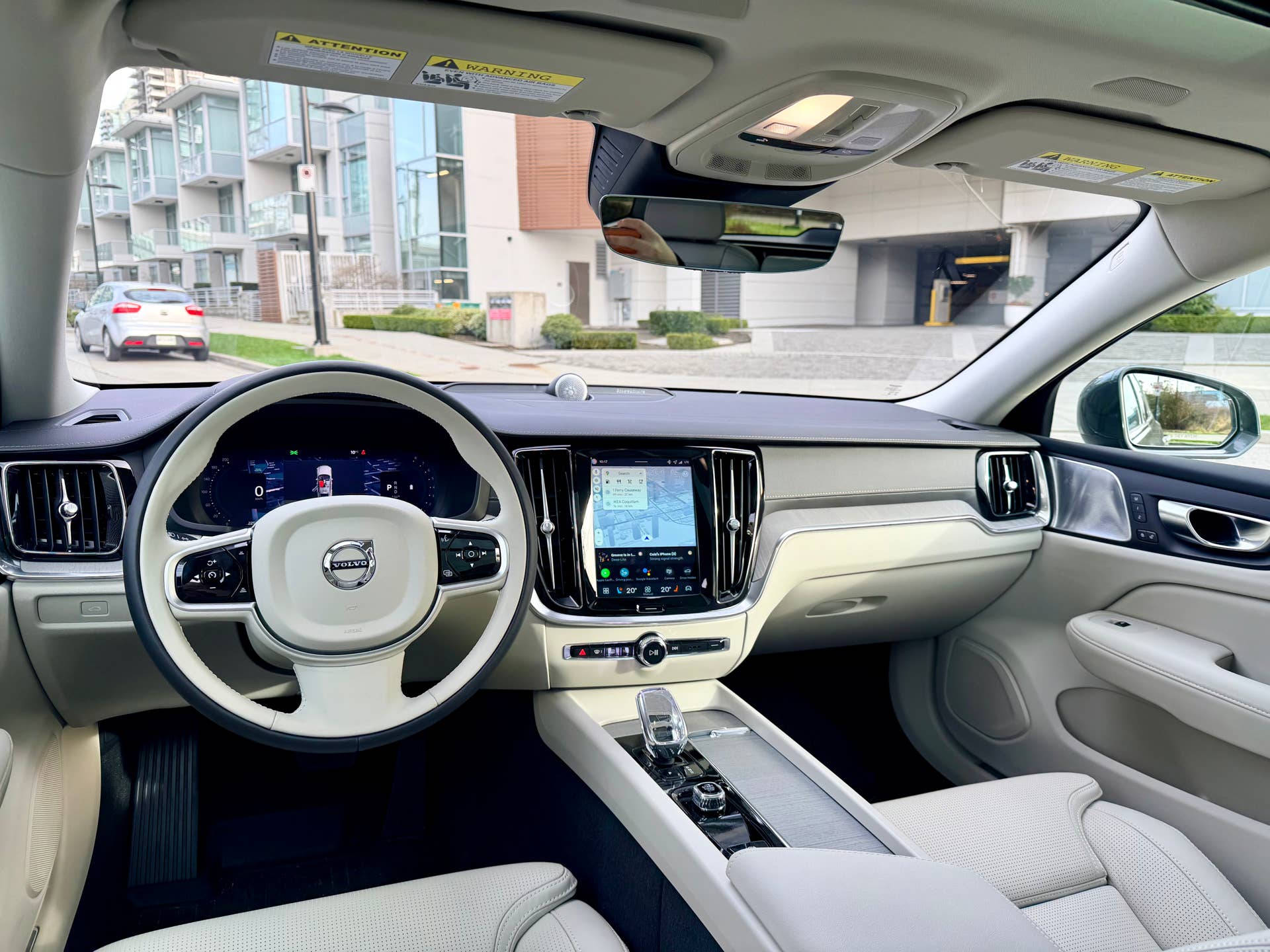
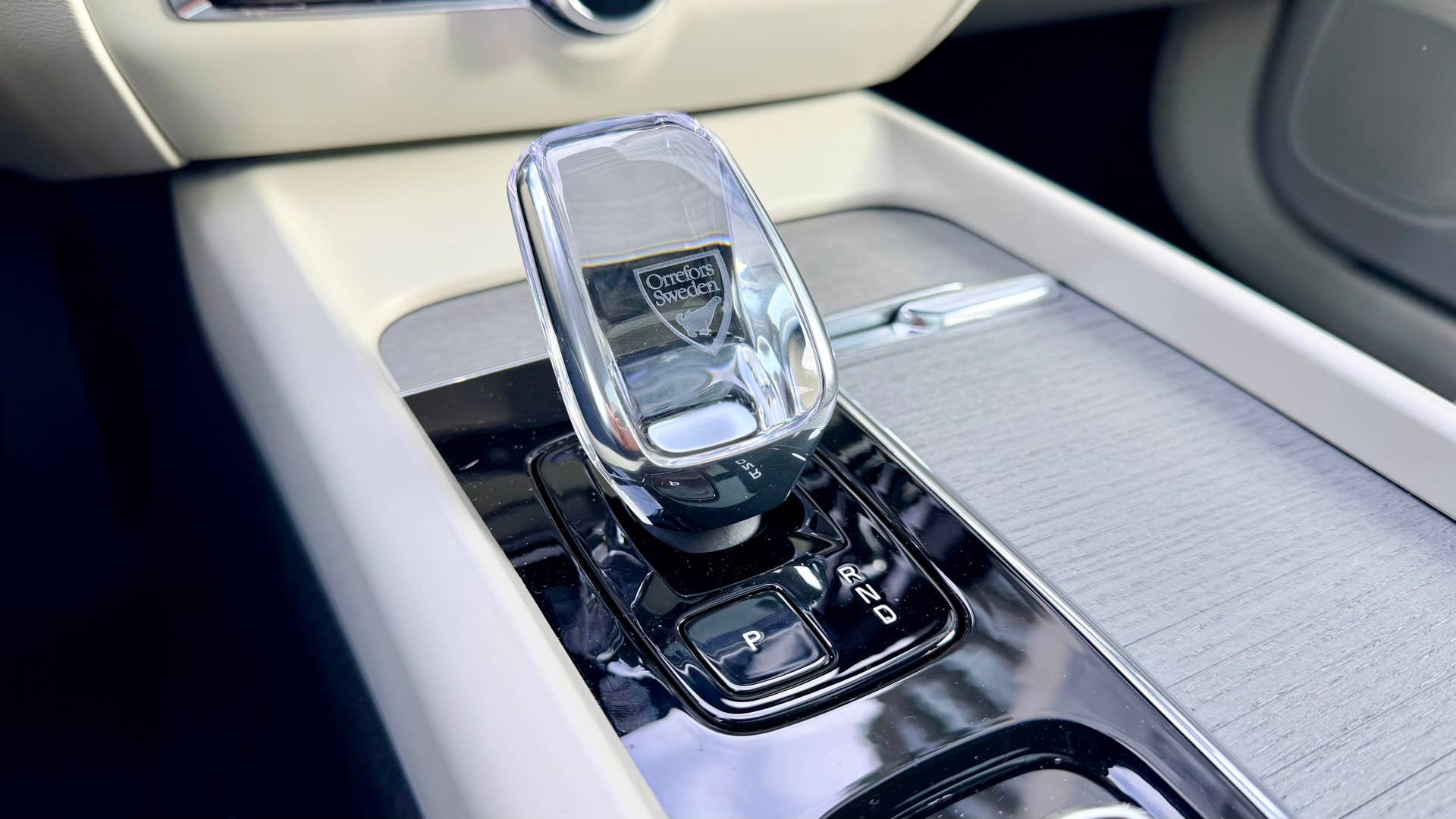
The V60’s composure, unfortunately, doesn’t extend to the infotainment system. On paper, Volvo’s Google-based interface is compelling: built-in Google Maps, Assistant, and Play Store integration, a crisp 12.3-inch driver display, a head-up display, and a 360-degree camera. The hardware is strong. The screen resolution is sharp. Pilot Assist with adaptive cruise control remains one of the smoother semi-autonomous systems in the segment, and its Bowers & Wilkins hi-fi sound system is crisp and as crystal clear as the V60’s Orrefors crystal shifter. Still, daily use tells a story that’s far from a fairy tale.
Cole Attisha
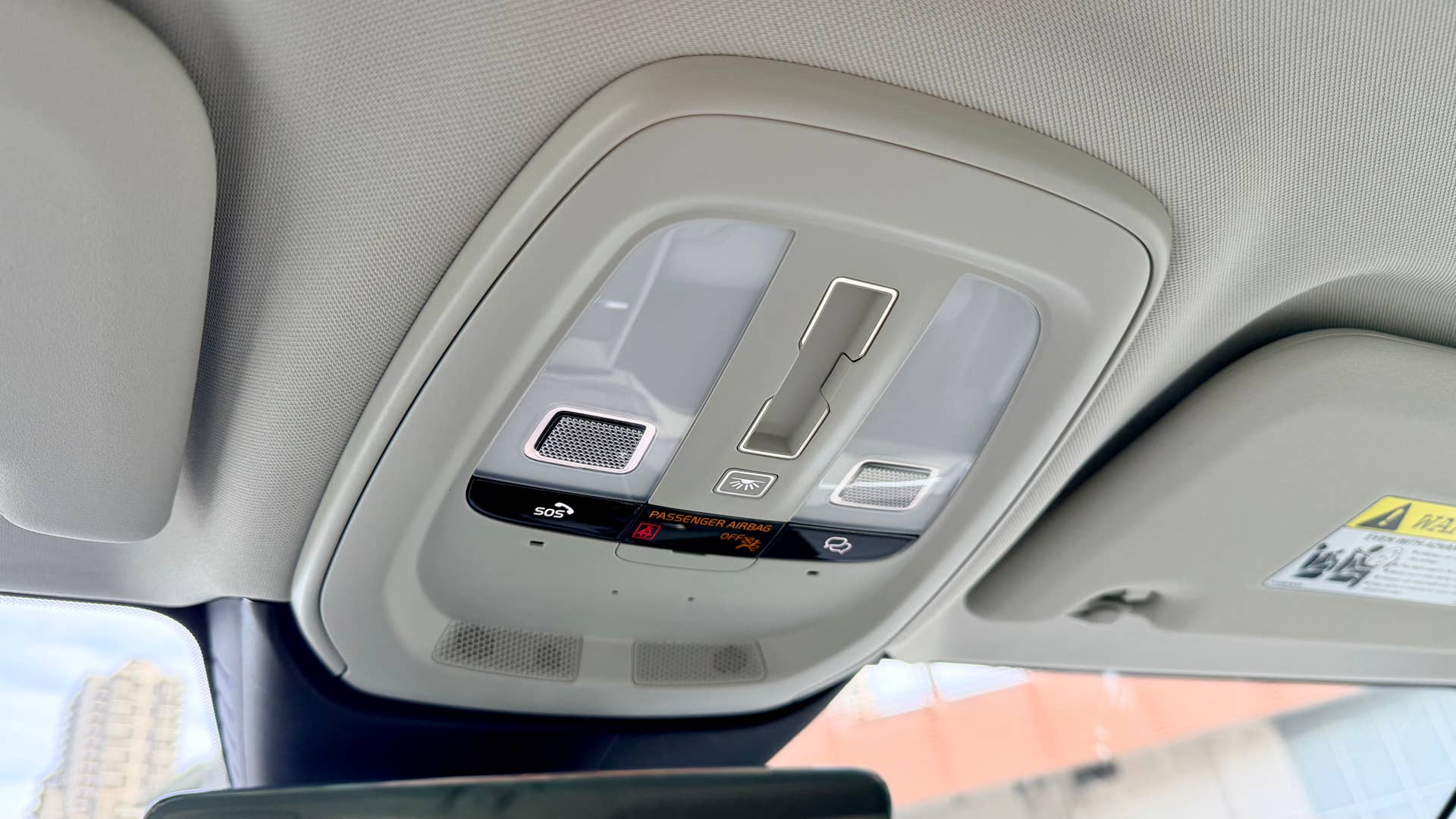
Bluetooth connections occasionally needed to be re-established even after being paired previously. Music had to be initiated from the center screen rather than from the phone itself, or the system would ignore it. On different mornings, different functions simply didn’t respond—sometimes the volume knob, sometimes voice commands, sometimes the media interface altogether. It was never catastrophic, though, and restarting the vehicle typically resolved the issue. But inconsistency erodes trust, and trust is the foundation of adept technology.
Cole Attisha
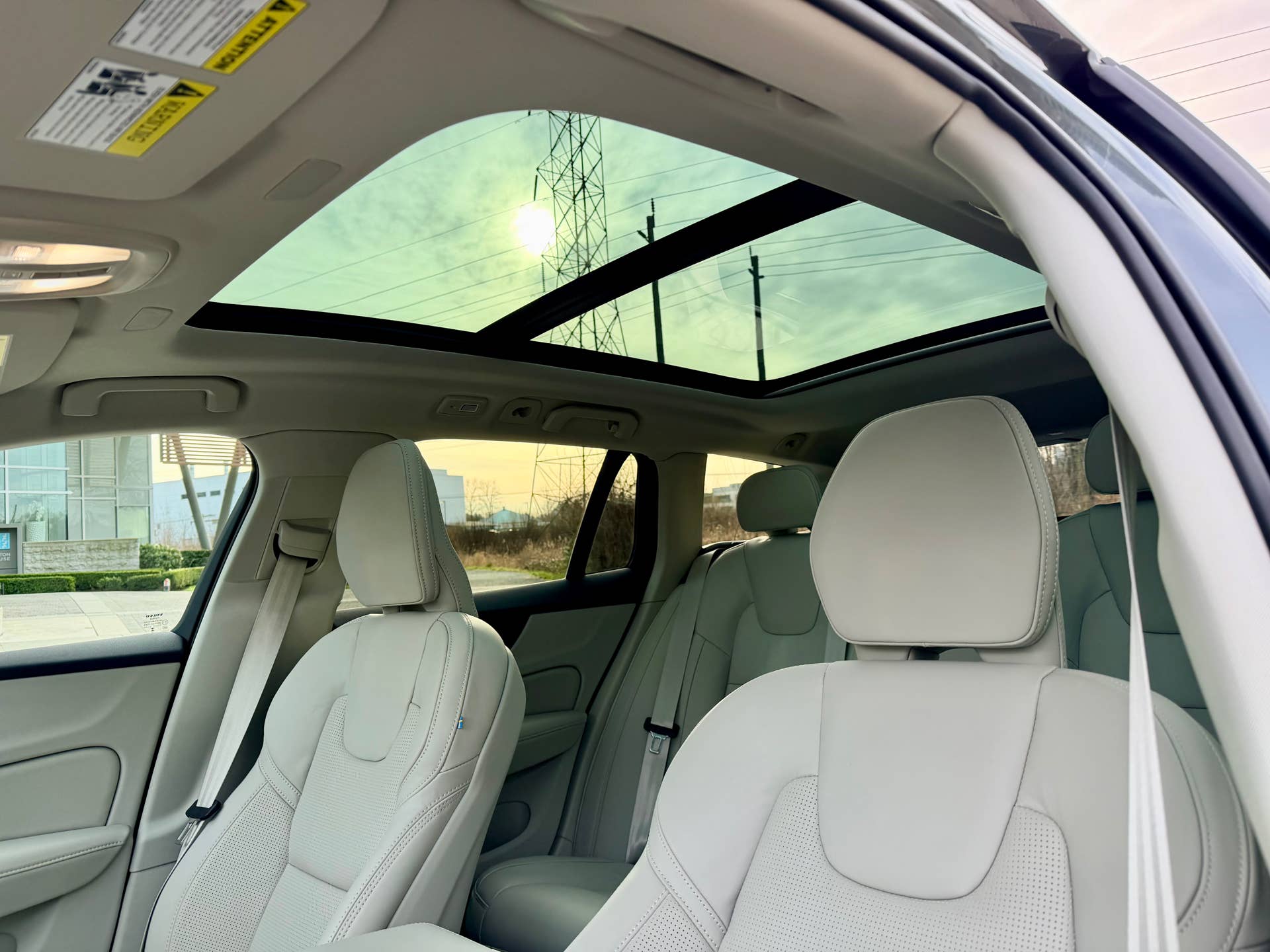
Even the physical dash buttons occasionally failed to register input, making the otherwise clean Scandinavian layout feel fragile rather than confident. Then there’s the sunroof control: a glossy panel that requires you to stroke your finger across it rather than press a button. It’s oddly sensual, almost comical. Sometimes it doesn’t even register the stroke right away, and on multiple occasions, I had to step back and realize I was essentially trying to arouse the Volvo into spreading open its glass sunroof for me. Not only did I feel somewhat violated, but that flourish also underscores the central issue: technology should feel seamless, not temperamental.
Cole Attisha
Exterior Design: 9/10
Although the technology feels occasionally unsettled, the V60’s design feels entirely at peace with itself. The V60 Cross Country’s proportions remain one of the cleanest in the industry. The slightly raised stance, black wheel arch cladding, and integrated roof rails add subtle ruggedness without turning the wagon into off-roader cosplay. Forest Lake Green elevates the entire presentation. In shadow, it reads as conservative grey. In sunlight, the car’s green undertones surface, giving it a subtle personality that never feels arrogant. And in an era of oversized grilles and theatrical surfacing, the V60’s restraint is incredibly refreshing—I really am going to miss it when it’s gone.
On Road Ethos, I often discuss cohesion and cars that know exactly what they are. The V60 Cross Country refuses to chase trends or exaggerate its identity. Like a loyal golden retriever, the V60 always presents itself as it truly is—never putting on a mask in hopes that everyone will like it. Its kind smile is genuine and heartfelt, and it never demands attention; it merely earns it.
Cole Attisha
Interior Design & Quality: 8/10
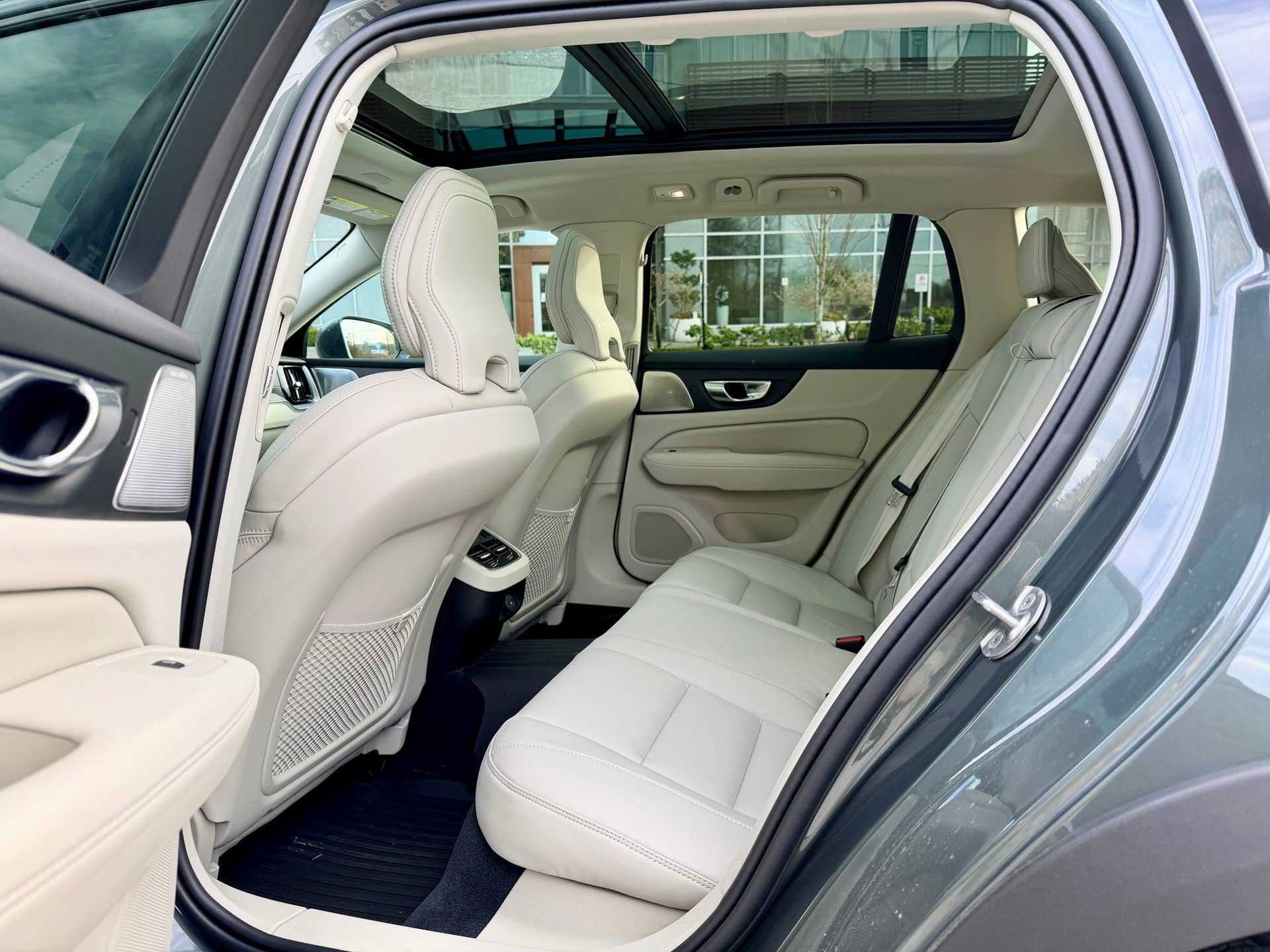
That same sense of restraint defines the cabin. The Ultra trim brings ventilated Nappa leather seats, four-zone climate control, heated rear seats, and an Orrefors crystal gear selector—details that elevate the experience without seeming tacky or overly conspicuous. The seats, in particular, deserve praise. With adjustable lumbar, side support, and cushion extension, they feel orthopedic in the best possible way. They’re supportive on longer drives without ever becoming rigid, and the Blonde upholstery brightens the cabin and contrasts elegantly with the darker exterior.
Material quality feels substantial. Every surface has weight, though the centre console could use a bit less plastic, which clashes uncomfortably with the shiny crystal shifter mounted upon it. Switchgear carries that quiet solidity that defined older Volvos. Cargo practicality remains the wagon’s ace card. Fold the rear seats, and you’re reminded why long-roofs make so much sense. The load floor is usable, and the shape is efficient. Like the cabin as a whole, it feels engineered for real life rather than to look sexy in marketing brochures.
On Road Ethos, I’ve argued that true luxury is subtle confidence and self-assuredness in the face of imposing competition. The V60 embodies that philosophy better than most.
Cole Attisha
Cole Attisha
Cole Attisha
Pricing & Value: 7/10
My tester came in at $62,250 CAD, or roughly $46,000 USD at current exchange rates. However, American pricing forces U.S. buyers to cough up at least $61,198 for the Ultra package (weren’t tariffs supposed to make things cheaper?) At that price, the V60 Cross Country competes directly with well-equipped compact luxury SUVs that offer more perceived versatility and, in some cases, more power.
However, value isn’t just about specifications. Here, you get standard all-wheel drive, Pilot Assist, a 360-degree camera, head-up display, Nappa leather, ventilated seats, and Volvo’s full safety suite. You also get a body style that is increasingly rare—and perhaps soon to be extinct altogether. What tempers the value equation is the inconsistent infotainment system. In a vehicle at this price point, seamless tech isn’t optional; it’s expected. Fix that, and the V60’s case becomes far stronger.
Cole Attisha
Final Verdict: 7.6/10
Spending a week with the 2026 Volvo V60 B5 Cross Country Ultra felt less like testing a revolutionary model and more like reacquainting myself with an old idea that’s been lost to the modern age. On paper, it isn’t the most powerful Volvo you can buy, nor is it the most efficient. Its infotainment system can test your patience in ways that feel unnecessary in 2026. And priced at over $60k, it sits in a crowded price bracket of polished, tech-forward SUVs, no matter which side of the U.S./Canada border you live on. And yet, the longer you live with it, the more its appeal becomes clear.
The powertrain is intuitive and smooth. The ride quality strikes that elusive balance between comfort, sportiness, and off-road readiness. The cabin feels substantial rather than flashy, and the design is restrained but appropriately executive. It doesn’t overwhelm you with features—it simply does its job well, day after day. The V60 Cross Country is not a car of spectacle, but rather one of balance. It represents a philosophy that values longevity over trendiness, usability over theatre, and subtlety over bold statement. In a market that continues to move upward, both literally and figuratively, it remains refreshingly grounded.
If you want maximum power, cutting-edge software perfection, or the commanding seating position of an SUV, there are better options. But if you appreciate thoughtful design, balanced driving dynamics, and the quiet confidence of a wagon that knows precisely what it is—and what it isn’t—the V60 B5 Cross Country still makes a compelling case. And if this truly is Volvo’s final long-roof, it doesn’t feel at all like a dramatic goodbye. Rather, it feels like a dignified final chapter of your favourite novel—one that leaves you wishing the industry had made room for just a few more so that you don’t have to put the book down just yet.
About the author

Cole Attisha
Staff Writer, Autoblog