
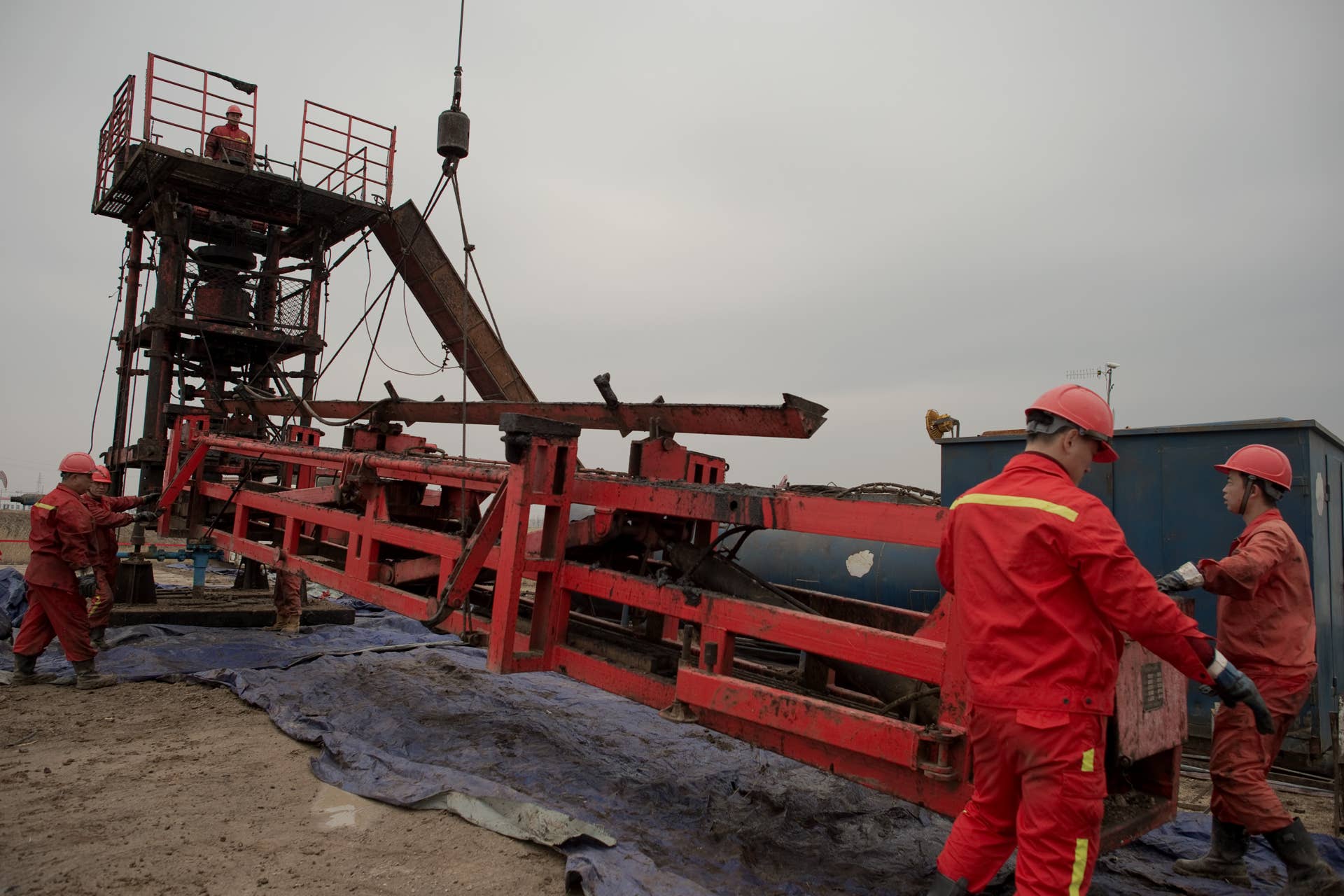
That $7,500 that the US federal government provides in subsidies for each new electric vehicle? That may be small potatoes compared to the perks two of the world’s largest governments are giving to Big Oil. Of course, estimates depend on who’s doing the counting.
The US and China in late 2013 both agreed to conduct reciprocal peer review reports of how much each government was funding the fossil-fuels industry, and not surprisingly, those numbers are pretty huge. Specifically,
China funds fossil fuels to the tune of $14.5 billion a year, while the US provides $8.1 billion a year in Big Oil perks,
Green Car Reports says. The numbers were released in a report that was recently presented at the G20 nations conference in Hangzhou, China.
More tellingly, many of such funding activities were classified as “inefficient” examples of upstream activities such as exploration, development, and extraction of fossil fuels. The 50-page report can be found
here.
The US subsidy estimate dwarfed an estimate released by the
New York Times last month. Citing the Council on Foreign Relations, the
Times said
the US spends about $4 billion on oil subsidies a year.
But those numbers are downright conservative compared to a 2013 study from the Earth Policy Institute, which is obviously going to take a pro-green approach to things. According to that report,
global governments provided $620 million worth of fossil-fuel subsidies in 2011. About 85 percent of that total was geared towards consumption by providing artificially low prices for the end user.
To put those statistics into further context, a
Los Angeles Times report estimated last year that Elon Musk’s Tesla Motors and SpaceX, and SolarCity (where Musk is chairman) had taken $4.9 billion in subsidies since they’d been in business.
Related Video:
Video ID:
59b1cd63-fec4-359b-98dc-018749ddece5
Playlist ID:
Autoplay:
false
Mute:
false
Continuous:
false
Ad Key:
Ad Value: