

Nissan has taken a significant step toward premiering its new autonomous mobility service by navigating a challenging urban road without a human in the driver’s seat using its Serena model—Japan’s best-selling minivan.
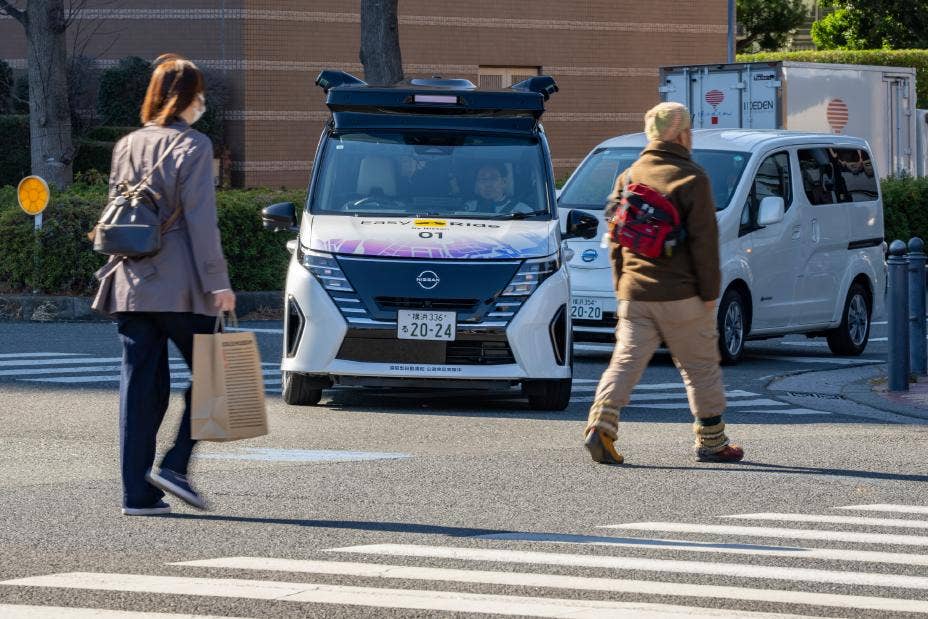
The developing service aims to reconcile local transportation challenges, such as driver shortages, stemming from the country’s aging and declining population. Nissan’s driverless test occurred in Yokohama’s Minato Mirai region on busy streets filled with cars and pedestrians within the area’s top speed limit of 25 mph.
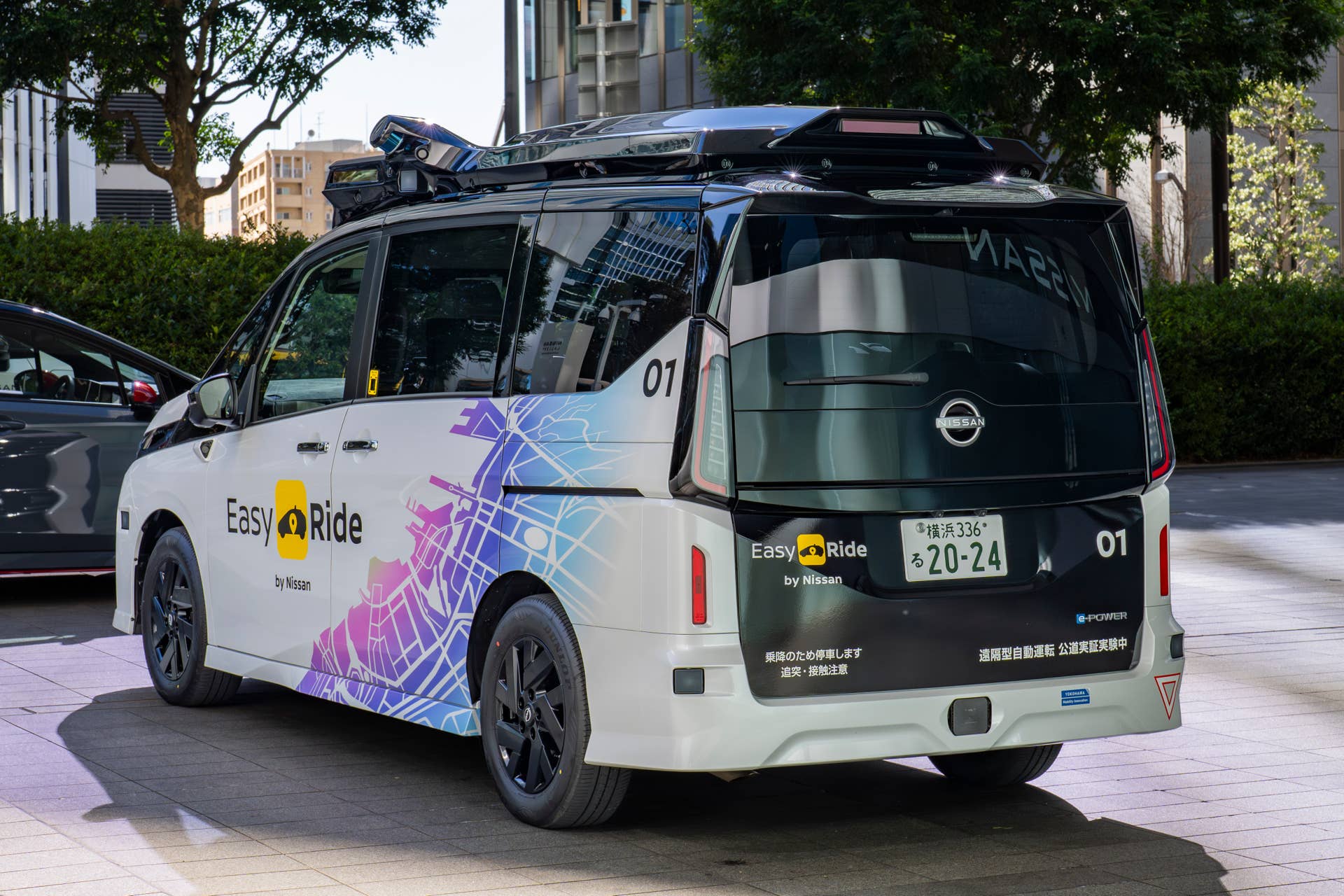
Nissan
How Nissan succeeded in its latest test
Nissan facilitated the Serena’s driverless operation with 14 cameras, nine radars, and six LiDAR sensors inside and surrounding the minivan.
The cutting-edge roof-mounted sensors excel at detection thanks to the Serena’s elevated height compared to the automaker’s previous test vehicles. Artificial Intelligence (AI) also played a key role in enhancing environment recognition.
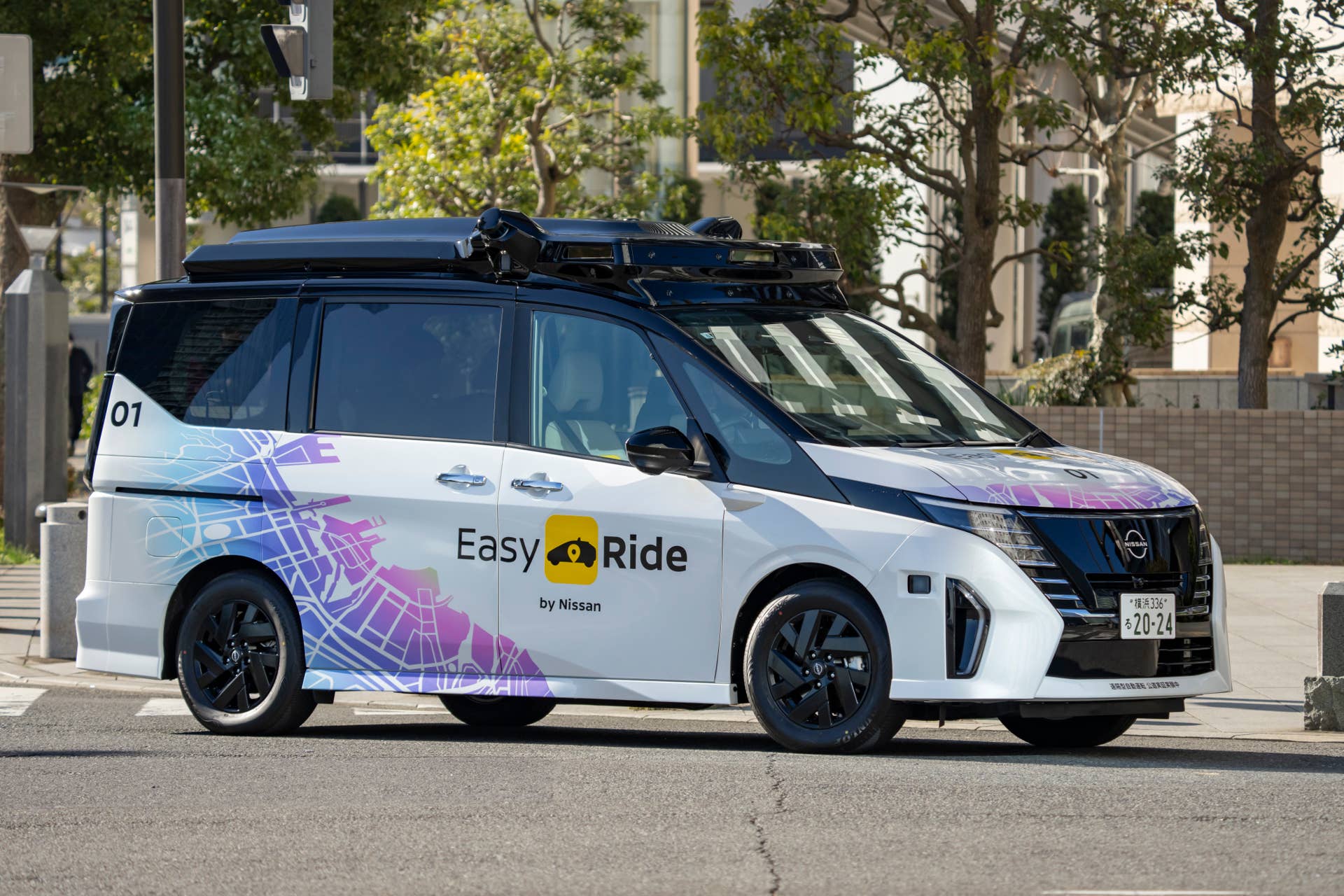
Nissan
Nissan didn’t fly by the seat of its pants during the test, however. Before the experiment, its engineers verified responses to several scenarios the route may present, including an immediate stop for emergencies.
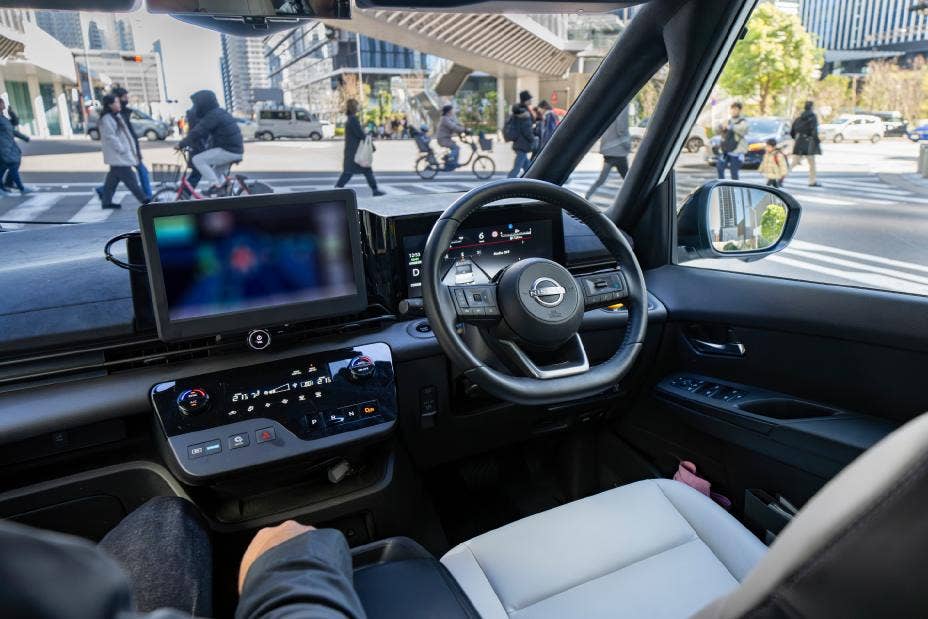
The Serena vehicles were monitored remotely, and the remote viewer could take over if necessary. A human was also present in the front passenger seat.
Nissan formed its autonomous tech using company-backed research in Japan and Silicon Valley and participation in the UK’s government-funded evolvAD project.
Waymo still has Nissan’s self-driving tech in its rearview mirror
While Nissan’s test in Yokohama’s Minato Mirai region marks significant progress in the company’s driverless tech development, competitors like Google’s Waymo still lead the race to Level 5 autonomy.
In US cities like Phoenix, San Francisco, and Los Angeles, Waymo’s mobility service operates at Level 4 autonomy using an all-electric fleet of Jaguar I-PACE SUVs. Level 4 autonomy requires no human intervention—even remotely.
Nissan remains optimistic despite intense competition
Nissan faces increasing competition, with Waymo heading to Japan later this year via a partnership with major taxi company Nihon Kotsu. Initial Waymo tests in Japan will occur in Tokyo with a human driver present.
Still, Nissan’s Mobility and AI Laboratory engineer, Takeshi Kimura, believes his company can stay competitive with Waymo, citing Nissan’s dedication to cars as fostering more organic integration of self-driving tech, AP reports.
After today’s evaluation, the Japanese automaker’s rollout plan for its autonomous mobility service will include tests involving 20 vehicles during the 2025 to 2026 fiscal years to launch the service in 2027.
Nissan is striving to reach Level 4 autonomy by 2029 or 2030. Japan currently limits Level 4 self-driving approval to slow-moving shuttle services in Fukui Prefecture and close to Tokyo’s Haneda Airport.
Where autonomy levels come from
The Society of Automotive Engineers (SAE) rates vehicle driverless abilities from Level 1 to Level 5, with 5 being the highest. Level 5 can handle driving tasks without human intervention under any conditions, while Level 4 doesn’t require intervention under specific conditions.
Nissan’s press release described how its Yokohama Minato Mirai region tests demonstrated Level 2 self-driving capability: “The tests are being conducted using remote AD systems equivalent to SAE Level 2 automation in line with Japan’s guidelines for deregulation approval for vehicles equipped with remote autonomous driving systems.”
The tech’s need for remote human observation is the primary reason it sits at Level 2 autonomy.
Final thoughts
Nissan claims its knowledge of cars will give Google-backed Waymo a run for its money in the race to Level 5 autonomy—but time will tell whether this industry experience pays dividends against Waymo’s large-scale testing.
Love reading Autoblog? Sign up for our weekly newsletter to get exclusive articles, insider insights, and the latest updates delivered right to your inbox. Click here to sign up now!
About the author

Cody Carlson
Contributing Writer, Autoblog