
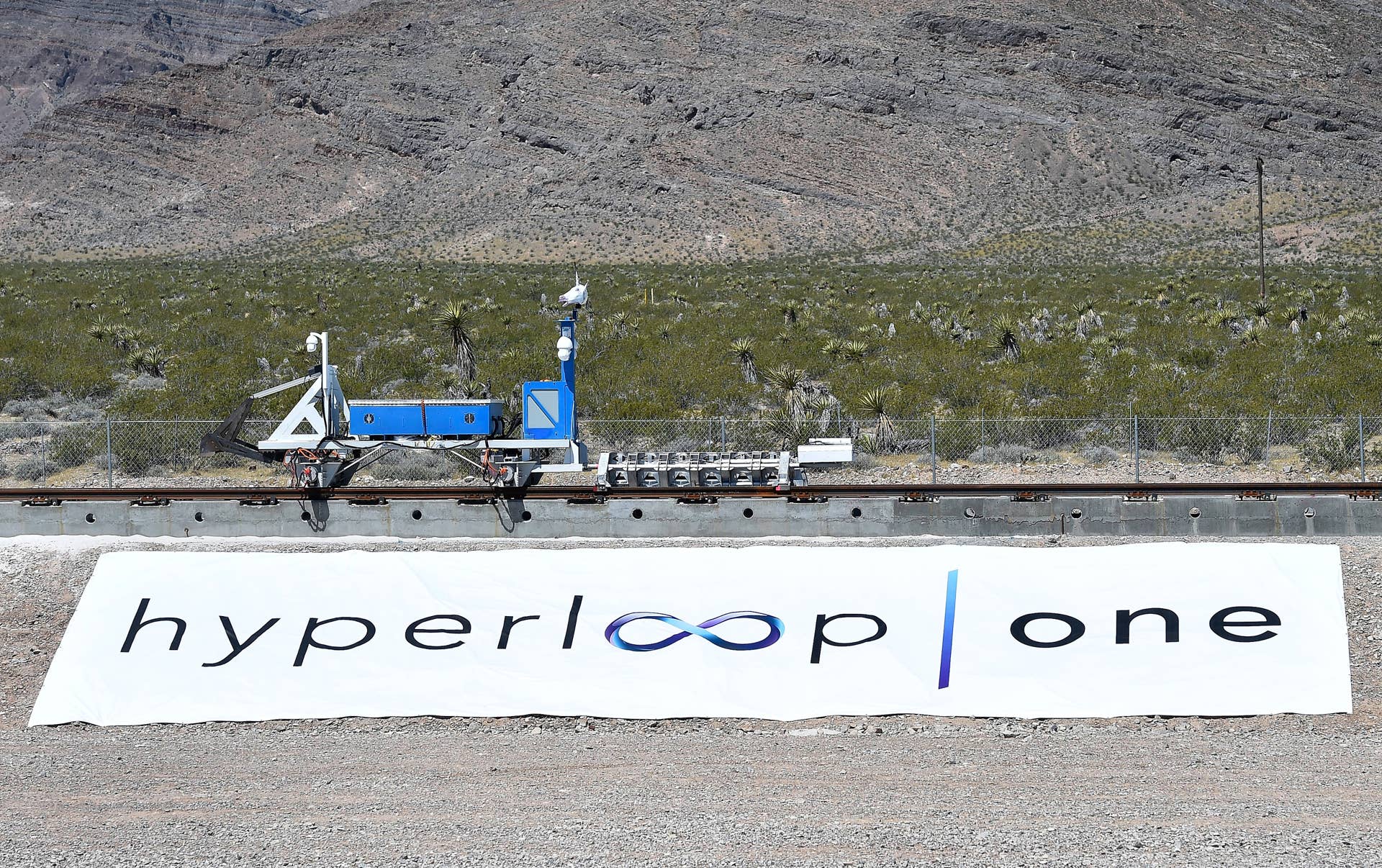
Until now, Hyperloop has been a charming idea. Affordable, high-speed transportation without TSA molestation and airplane food? Sign us up. Buh-bye Delta. And now, the first full-scale feasibility study into the tech is backing up the hype. In fact, one city, Salo, Finland, has already signed a letter of intent with Hyperloop One to become a stop on the line.
Hyperloop One looked at a historical transportation problem – connecting Helsinki, Finland with Stockholm, Sweden. By building a mere 500 kilometers (311 miles) of Hyperloop track, the trek that takes passengers 17.5 hours on an overnight ferry or 3.5 hours by air – including the aforementioned security groping and queueing – could be trimmed down to just 28 minutes. We use this word “revolutionary” sparingly, but it’s the only adjective that adequately describes the potential impact this technology could have on travel and freight transport.
It’s estimated that the 311 miles of track would cost 19 billion euros (about $21 billion at today’s rates) to build, which is a lot, but the time savings alone are worth 321 million euros ($355M) per year. Revenue from fares would ring in at a billion euros ($1.1 billion) per year, with an operating profit of 800 million ($885M) based on 43 million passenger trips. If our grossly oversimplified math is right, that’d put the fare price at just under $26. The addition of freight transport would likely speed up the money-making process even further.
But what makes Hyperloop One’s study truly fascinating is how it shapes up to high-speed rail projects. A Hyperloop connection between the Scandinavian capitals would cost just 38 million euros ($42 million) per kilometer, compared to 100M euros ($110M) per kilometer for the high-speed rail line between the British cities of London and Birmingham. And the new train project in California? That’s going for $76.4 to $87.4 million per klick.
Now here’s the part where we rain on the parade – this is a study by Hyperloop One. That means we’re approaching it with as much salt as we would any study not independently conducted. The study doesn’t explain how long it’d take to construct the underwater network. There’s also the issue of delays, budget overruns, and reliability. In short, Hyperloop will continue to sound like a brilliant idea, but until we’re running from Detroit to Los Angeles at 4,000 miles per hour, it needs to be approached with a degree of skepticism.