GM's patent application could give new life to aging battery packs

GM-Volt.com found an interesting patent application from General Motors (filed a year ago) that entertains the possibility of refurbishing worn out lithium-ion battery packs such as the one in the Chevrolet Volt. While the Volt’s 8-year, 100,000 mile battery warranty will cover a lot of people for a lot of miles, these lithium-ion batteries do not last forever and will need replacement eventually.

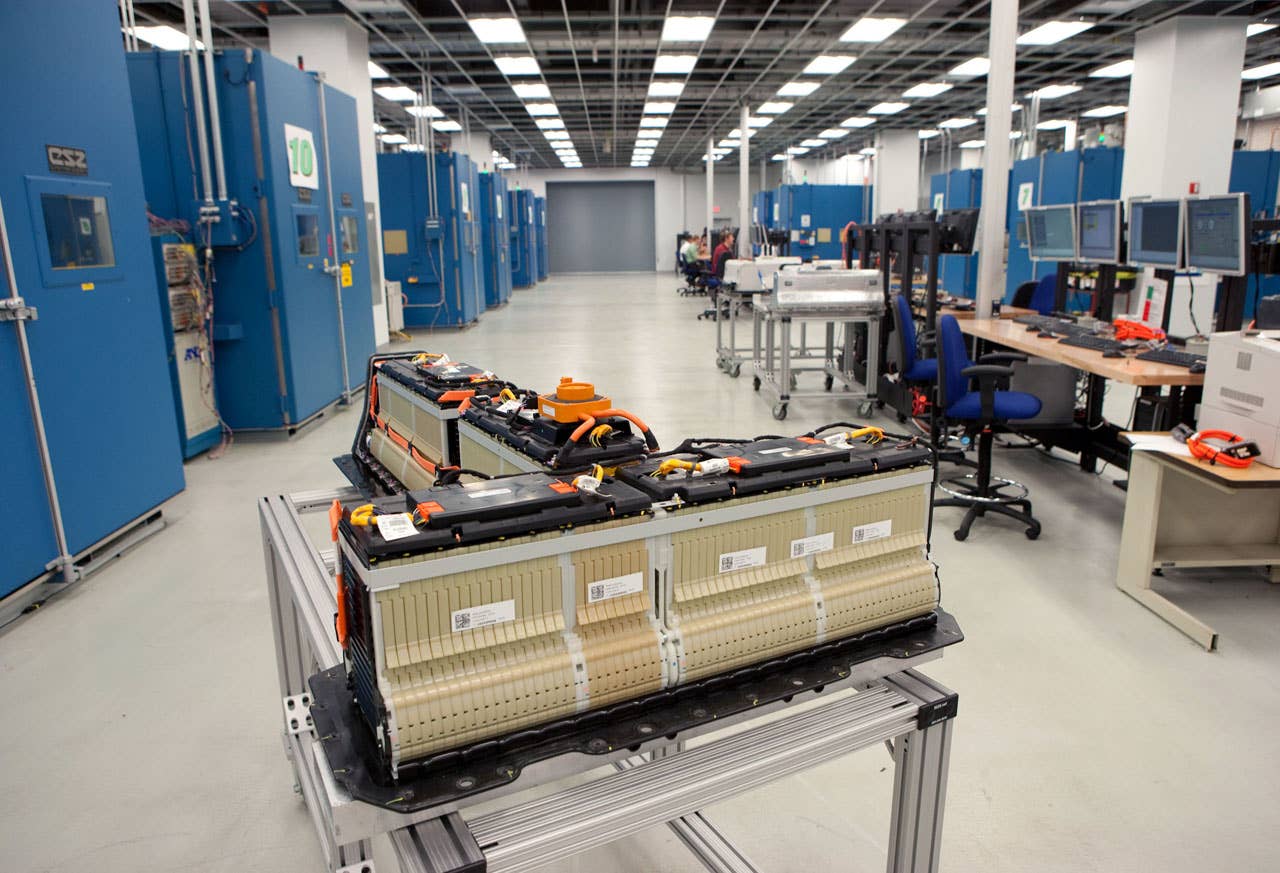
A Chevrolet Volt battery at the General Motors Global Battery Systems Lab in Warren, Michigan Wednesday, June 30, 2010. The Chevrolet Volt will offer customers an unprecedented standard 8 year/100,000 mile warranty on its lithium-ion battery. GM engineers have completed more than 1 million miles and 4 million hours of validation battery testing since 2007. Each Volt battery pack has nine modules and 288 cells. GM designed and engineered 99 percent of the 155 components in each battery. (Photo by John F. Martin for Chevrolet)
Get Autoblog in your Google feed

GM-Volt.com found an interesting patent application from General Motors (filed a year ago) that entertains the possibility of refurbishing worn out lithium-ion battery packs such as the one in the Chevrolet Volt. While the Volt’s 8-year, 100,000 mile battery warranty will cover a lot of people for a lot of miles, these lithium-ion batteries do not last forever and will need replacement eventually.

The patent application describes a process of replacing the electrolyte material within the cells by first injecting heated solvents into the cell to remove contaminants such as lithium salts and other polymeric materials on the electrodes. After the solvents have done their job, the cells are filled with fresh electrolyte. The entire process could be done in a short amount of time, leading to the possibility of taking your EV in for service while the rejuvenation takes place. Alternatively, the battery could simply be swapped with an existing refurbished unit and then later refurbished for use in another vehicle. Based on the patent, this refurbishing could be significantly cheaper than replacing packs with new ones, although the pack may not perform quite as well as a brand new one. This would help both GM and consumers, depending upon whether your pack needs replacement under warranty or after. For those of you interested in the full details of the patent, it can be found here.

[Source: GM-Volt via CNET]