
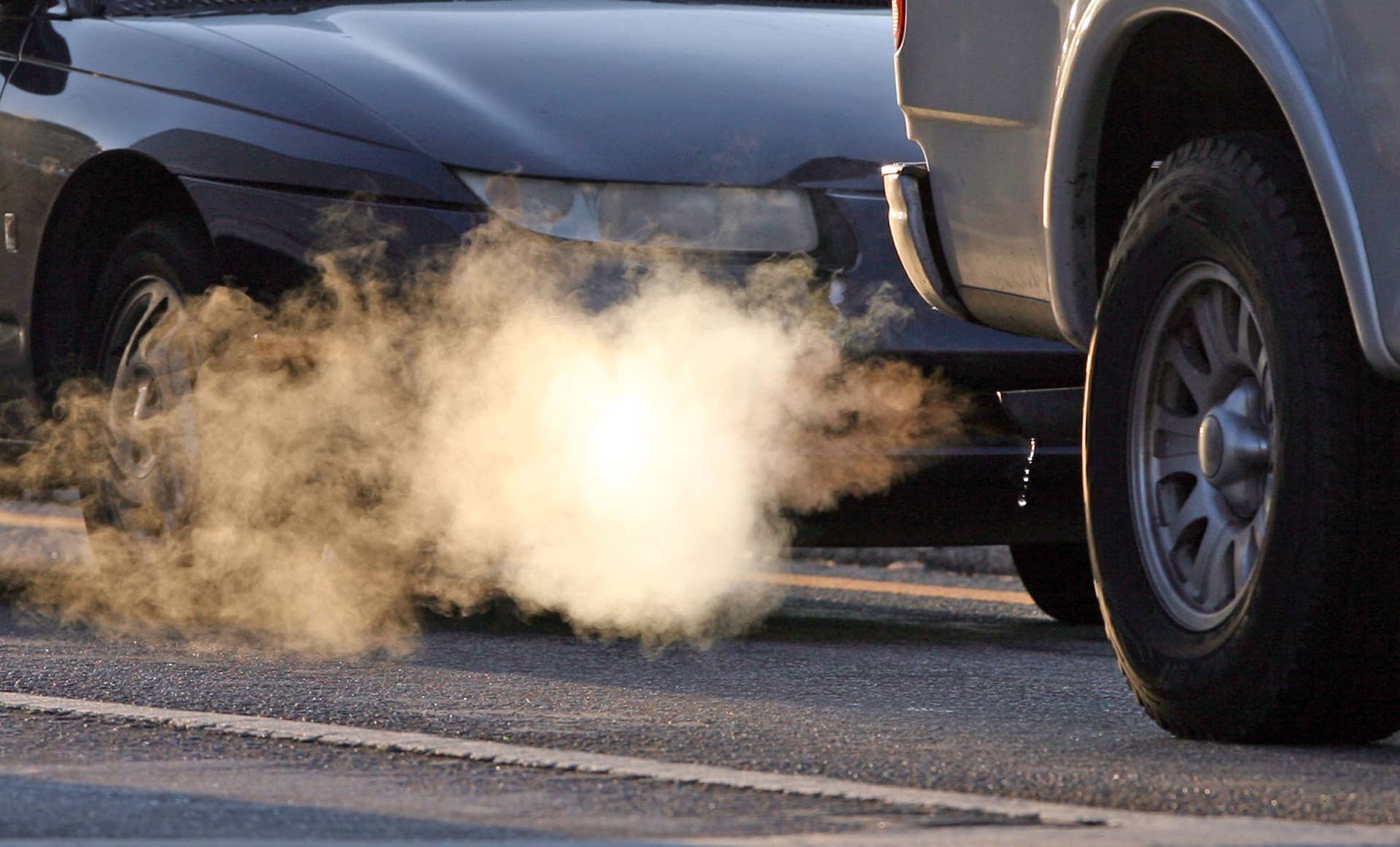
Environmental Protection Agency (EPA) Administrator Gina McCarthy confirmed on Friday that the agency will maintain its 2025 greenhouse-gas emissions targets. While some automakers have said that reaching those goals would be cost-prohibitive, McCarthy wrote that “automakers are well positioned to meet the standards through model year 2025 at lower costs than predicted.” The timing is fortuitous with a week left in the Obama Administration, as there has been fear among environmentalists that President-elect Donald Trump may roll back some of those emissions-reduction efforts. Take a look at the EPA’s press release
here, and a more detailed explanation of McCarthy’s findings
here.
McCarthy notes that, while the 2025 Corporate Average Fuel Economy (CAFE) goals are 54.5 miles per gallon for light-duty vehicles, that translates closer to a “sticker” figure of 36 mpg. That means that automakers would collectively need to boost their fleet wide fuel economy by about 10 mpg over the next eight years.
The decision follows up
the EPA’s November proposal to keep the 2025 emissions targets, and, with the CAFE standards being set in 2012, is part of what the EPA calls its Midterm Evaluation (MTE) for 2017-25 light-duty emissions standards.
How reachable such standards will be remains to be seen. Despite drivetrain technology that has been boosting fuel economy either through more efficient gas-powered systems or broader use of electrification through either hybrids, plug-in hybrids, or battery-electric vehicles,
US fleetwide fuel economy has remained at a three-year plateau of 25.1 mpg, according to the University of Michigan Transportation Research Institute’s (UMTRI). That’s because, while more people are buying plug-in vehicles, Americans continue to buy lots of pickups and SUVs as well.
Related Video:
Video ID:
65e3c1f9-090c-3708-93c8-44eaf25d8dce
Playlist ID:
Autoplay:
false
Mute:
false
Continuous:
false
Ad Key:
Ad Value: