
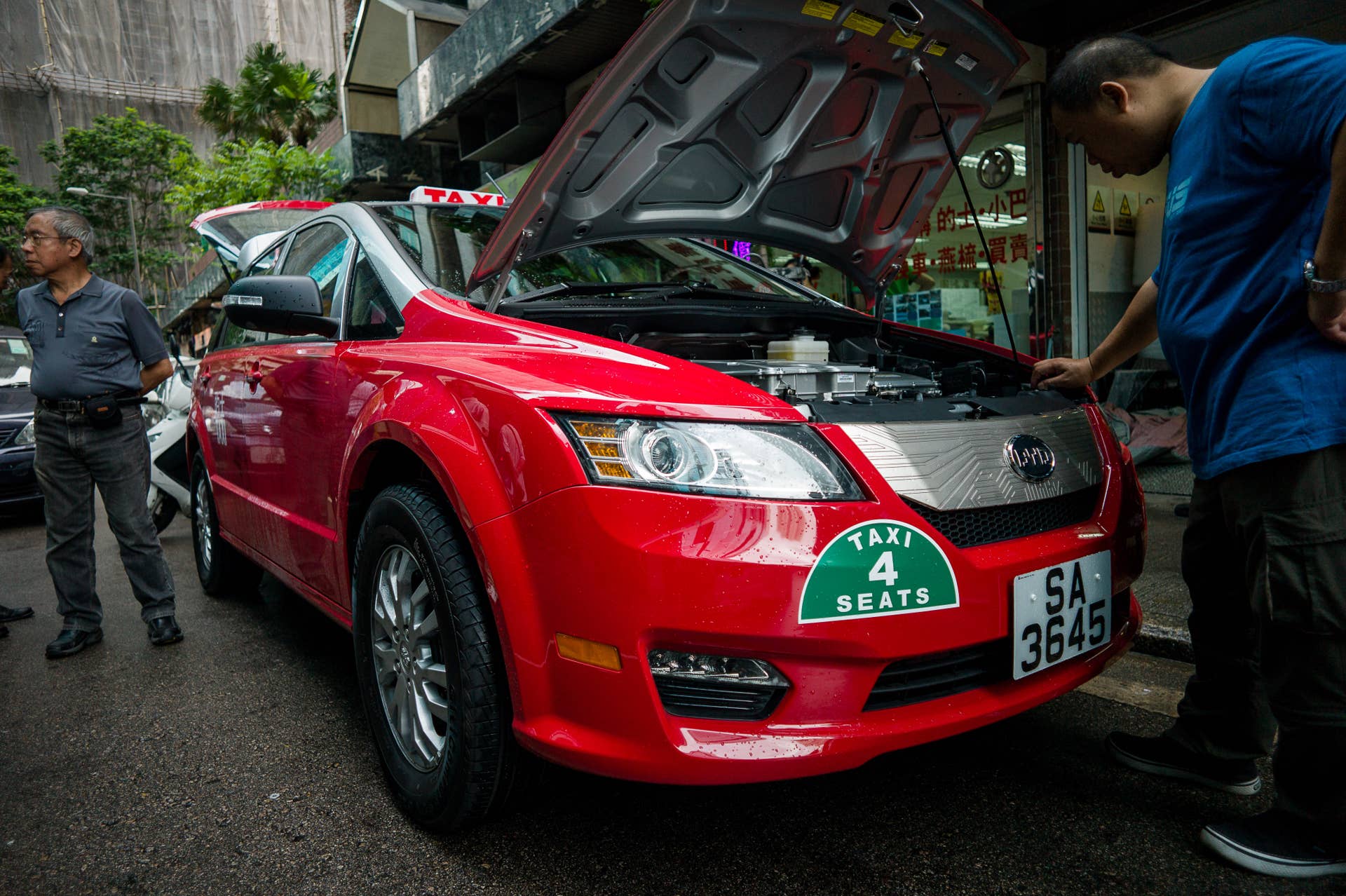
Beijing officials have hatched plans to replace all of the city’s gas-powered taxicabs with electric vehicles in an effort to help improve the China capital’s notorious pollution issues. Such a move would involve
replacing about 70,000 vehicles, the
National Business Daily says. The tab for that would be about $1.3 billion, which comes out to about $19,000 per cab.
How and when this would happen remains in question, but it appears the Chinese government would subsidize the effort. To put the fleet size in perspective, New York City has about 13,000 taxi medallions, or less than one-fifth the number of Chinese cabs that would need to be switched out.
Granted, this story has been told before. Back in 2014, Beijing was making noise about
replacing its approximately 46,000 cabs with electric vehicles within four years, according to the
Detroit Bureau.
But so far, few EV cabs have hit the road. In 2010,
China-based BYD deployed about 40 e6 electric taxis to the city of Shenzhen, and later upped that number to about 300. (BYD also secured an order from Shenzhen
for as many as 500 electric police cars in 2013). Meanwhile, Nissan ran a trial program for its
all-electric Leaf taxis in New York in 2013, though that involved just a half-dozen vehicles.
But the time may now be right. China has made big strides in green energy. Last year,
the country doubled its total of electric vehicles to more than 600,000 to become the world’s largest EV market, according to
Electrek.
Related Video: