

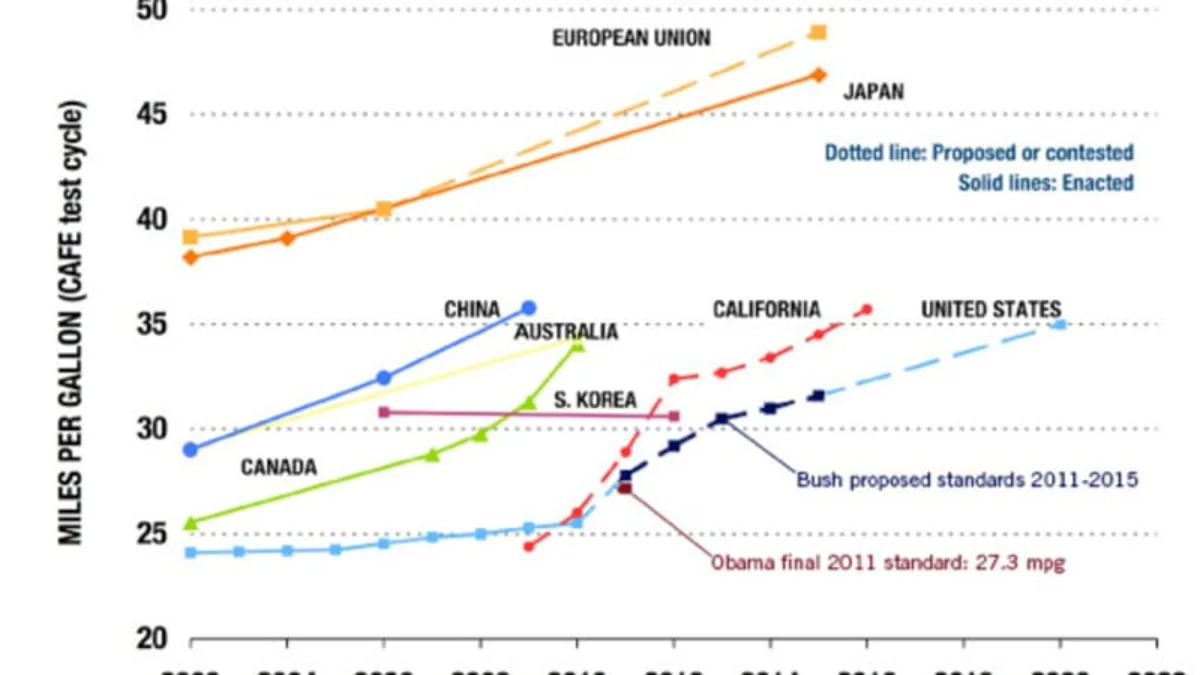
When the next step in the road to 35 mpg by 2020 CAFE standards was announced recently, those in the know made it clear that the Obama administration's upcoming goal of 27.3 mpg by 2011 would not be hard for automakers to meet. In fact, the 2007 average was already 31.3, so the 2011 goal would not require any change in product lineup (more difficult changes are scheduled to come into effect down the line). The 2011 standards were so light, in fact, that the Center for Biological Diversity took the National Highway Traffic Safety Administration and Department of Transportation to court last week, saying that the Obama administration's standards "ignore greenhouse gas emissions and the climate crisis, are illogical, illegal, and very disappointing from a president who has promised to make the United States a leader in the fight against global warming."
According to the San Francisco Chronicle, the Center filed suit in the Ninth U.S. Circuit Court of Appeals in San Francisco to push the 2011 standards to "the maximum feasible level, in light of current technology, economic impact, and the nation's need to conserve energy." Read the Center's press release after the jump.
[Source: Center for Biological Diversity, San Francisco Chronicle]
PRESS RELEASE:

Lawsuit Challenges Obama Fuel Economy Standards
National Gas-mileage Standard for Cars, Trucks, SUVs Weaker Than Bush Proposal, Fails to Account for Global Warming
SAN FRANCISCO- The Center for Biological Diversity today filed suit to strike down the Obama administration's corporate average fuel economy (CAFE) standards for cars, trucks, and SUVs for model year 2011. The Energy Policy and Conservation Act requires miles-per-gallon standards be set at the "maximum feasible level," yet the Obama rule sets a significantly lower standard than proposed by the Bush administration in 2008, and is much lower than current standards in Europe, Japan, China, and other countries.
The lawsuit was filed against the National Highway Traffic Safety Administration and Department of Transportation in the Ninth Circuit Court of Appeals in San Francisco.
The Obama rule, issued last Friday, requires that passenger cars achieve only 30.2 mpg and that SUVs and pick-up trucks achieve only 24.1 mpg in 2011. Both these numbers are lower than Bush's proposal of 31.2 mpg for passenger cars and 25 mpg for SUVs and light trucks. It will result in millions of tons of greenhouse gas emissions more than the Bush proposal.
"Reducing the proposed fuel economy standards is a step backwards from the clean energy future President Obama has promised," said Kassie Siegel, director of the Climate Law Institute at the Center for Biological Diversity. "These low standards, which ignore greenhouse gas emissions and the climate crisis, are illogical, illegal, and very disappointing from a president who has promised to make the United States a leader in the fight against global warming."
The current European and Japanese standards are about 43.3 and 42.6 mpg, respectively. China's current standard is 35.8.
"The technology for better, smarter, safer vehicles exists today," said Siegel. "The U.S. auto industry is collapsing in large part because it has rejected new, more efficient technologies. These standards embrace instead of reversing this failed approach."
The transportation sector accounts for about a third of U.S. greenhouse gas emissions, and any rational plan to address the climate crisis must achieve dramatic fuel economy improvements. Despite the existing legal mandate from the Energy Policy and Conservation Act that the standards be set at the "maximum feasible level," the U.S. standards lag far below current standards in Europe, Japan, China, and other countries.
"The Obama standards keep the U.S. in last place when it comes to fuel economy," said Deborah Sivas, director of the Environmental Law Clinic at Stanford Law School, who is representing the Center in the case. "This lawsuit will force the administration to live up to its promise to lead the way in technological innovation and greenhouse gas reductions."
The new standards come in response to a federal appeals court decision won by the Center and others in 2007 striking down the Bush standards issued in 2006. The court ruled that the standards failed to adequately consider the vehicles' greenhouse gas emissions. As the Bush administration was formulating new standards, Congress passed the Energy Independence and Security Act in December 2007, which mandates that the agency require the combined car and truck fleet reach a minimum of 35 mpg by 2020. In May 2008, the Bush administration issued a new proposal. While those standards were well below what are technically feasible and required by law, they were higher than the final decision issued by the Obama administration last week.
The standards finalized by the Obama administration for passenger cars are a full 1 mpg lower than the Bush proposal. The standards for the light truck category, which includes both SUVs and pick-up trucks, are 0.9 mpg lower than the Bush proposal and only .1 mpg higher than the 2006 standard, which was overturned by the Ninth Circuit Court of Appeals as inadequate.
The Bush administration postponed finalizing the standards as Congress and the administration developed options for a bailout of U.S. automakers. President Obama issued a memorandum in January directing the Department of Transportation to revise the rule to incorporate relevant technological and scientific considerations. Today's regulations affect only model year 2011; later model years will be the subject of a future rulemaking.
"Obama promised change, but this is change in the wrong direction," said Siegel. "With all the bailout money spent, the U.S. government practically owns the U.S. auto industry, but unfortunately the bankrupt policies of auto industry lobbyists are still behind the wheel at the Department of Transportation."
Table 1: U.S. Corporate Average Fuel Economy for Model Year 2011
Figure 1: Fuel Economy by Country/Region. Source: Passenger Vehicle Greenhouse Gas and Fuel Economy Standards: A Global Update, ICCT (December, 2008); Bush proposal for 2011-2015 and the final Obama standard of 27.3 mpg has been added to the ICCT graphic.
According to the San Francisco Chronicle, the Center filed suit in the Ninth U.S. Circuit Court of Appeals in San Francisco to push the 2011 standards to "the maximum feasible level, in light of current technology, economic impact, and the nation's need to conserve energy." Read the Center's press release after the jump.
[Source: Center for Biological Diversity, San Francisco Chronicle]
PRESS RELEASE:
Lawsuit Challenges Obama Fuel Economy Standards
National Gas-mileage Standard for Cars, Trucks, SUVs Weaker Than Bush Proposal, Fails to Account for Global Warming
SAN FRANCISCO- The Center for Biological Diversity today filed suit to strike down the Obama administration's corporate average fuel economy (CAFE) standards for cars, trucks, and SUVs for model year 2011. The Energy Policy and Conservation Act requires miles-per-gallon standards be set at the "maximum feasible level," yet the Obama rule sets a significantly lower standard than proposed by the Bush administration in 2008, and is much lower than current standards in Europe, Japan, China, and other countries.
The lawsuit was filed against the National Highway Traffic Safety Administration and Department of Transportation in the Ninth Circuit Court of Appeals in San Francisco.
The Obama rule, issued last Friday, requires that passenger cars achieve only 30.2 mpg and that SUVs and pick-up trucks achieve only 24.1 mpg in 2011. Both these numbers are lower than Bush's proposal of 31.2 mpg for passenger cars and 25 mpg for SUVs and light trucks. It will result in millions of tons of greenhouse gas emissions more than the Bush proposal.
"Reducing the proposed fuel economy standards is a step backwards from the clean energy future President Obama has promised," said Kassie Siegel, director of the Climate Law Institute at the Center for Biological Diversity. "These low standards, which ignore greenhouse gas emissions and the climate crisis, are illogical, illegal, and very disappointing from a president who has promised to make the United States a leader in the fight against global warming."
The current European and Japanese standards are about 43.3 and 42.6 mpg, respectively. China's current standard is 35.8.
"The technology for better, smarter, safer vehicles exists today," said Siegel. "The U.S. auto industry is collapsing in large part because it has rejected new, more efficient technologies. These standards embrace instead of reversing this failed approach."
The transportation sector accounts for about a third of U.S. greenhouse gas emissions, and any rational plan to address the climate crisis must achieve dramatic fuel economy improvements. Despite the existing legal mandate from the Energy Policy and Conservation Act that the standards be set at the "maximum feasible level," the U.S. standards lag far below current standards in Europe, Japan, China, and other countries.
"The Obama standards keep the U.S. in last place when it comes to fuel economy," said Deborah Sivas, director of the Environmental Law Clinic at Stanford Law School, who is representing the Center in the case. "This lawsuit will force the administration to live up to its promise to lead the way in technological innovation and greenhouse gas reductions."
The new standards come in response to a federal appeals court decision won by the Center and others in 2007 striking down the Bush standards issued in 2006. The court ruled that the standards failed to adequately consider the vehicles' greenhouse gas emissions. As the Bush administration was formulating new standards, Congress passed the Energy Independence and Security Act in December 2007, which mandates that the agency require the combined car and truck fleet reach a minimum of 35 mpg by 2020. In May 2008, the Bush administration issued a new proposal. While those standards were well below what are technically feasible and required by law, they were higher than the final decision issued by the Obama administration last week.
The standards finalized by the Obama administration for passenger cars are a full 1 mpg lower than the Bush proposal. The standards for the light truck category, which includes both SUVs and pick-up trucks, are 0.9 mpg lower than the Bush proposal and only .1 mpg higher than the 2006 standard, which was overturned by the Ninth Circuit Court of Appeals as inadequate.
The Bush administration postponed finalizing the standards as Congress and the administration developed options for a bailout of U.S. automakers. President Obama issued a memorandum in January directing the Department of Transportation to revise the rule to incorporate relevant technological and scientific considerations. Today's regulations affect only model year 2011; later model years will be the subject of a future rulemaking.
"Obama promised change, but this is change in the wrong direction," said Siegel. "With all the bailout money spent, the U.S. government practically owns the U.S. auto industry, but unfortunately the bankrupt policies of auto industry lobbyists are still behind the wheel at the Department of Transportation."
Table 1: U.S. Corporate Average Fuel Economy for Model Year 2011
Table 1: U.S. Corporate Average Fuel Economy for Model Year 2011
|
|
2006 Bush Final Rule |
2008 Bush Proposed Rule |
2009 Obama Final Rule |
| Passenger Cars |
n/a |
31.2 |
30.2 |
| Light Trucks |
24 |
25.0 |
24.1 |
| Combined Fleet |
n/a |
27.8 |
27.3 |
Figure 1: Fuel Economy by Country/Region. Source: Passenger Vehicle Greenhouse Gas and Fuel Economy Standards: A Global Update, ICCT (December, 2008); Bush proposal for 2011-2015 and the final Obama standard of 27.3 mpg has been added to the ICCT graphic.

Sign in to post
Please sign in to leave a comment.
Continue